

TL;DR:
- Most restaurant owners overlook linen, but high-quality fabrics signal standards that shape guest perceptions and overall dining experience. Selecting the right fiber blend, GSM, and finish is essential for ensuring linen durability, absorbency, and visual appeal, especially for guest-contact items like napkins. Proper maintenance, rotation, and strategic investment in premium linens lead to long-term operational savings and elevated ambiance.
Most restaurant owners treat linen as an afterthought. You pick something white, order enough to cover your tables, and move on to more pressing decisions. That thinking is exactly what separates a forgettable dining experience from a memorable one. Understanding what is premium restaurant linen means recognizing that every tablecloth and napkin your guests touch sends a signal about your standards. This guide breaks down the materials, qualities, and practical decisions that matter most when you are buying restaurant linens for the long term.
Table of Contents
- Key takeaways
- What defines premium restaurant linen
- How premium linens shape the dining experience
- Comparing linen types for restaurant use
- Practical guidance on buying and maintaining linens
- My honest take on linen quality in restaurants
- Gjergjihtextil’s restaurant linen solutions
- FAQ
Key takeaways
| Point | Details |
|---|---|
| Fabric composition matters | A 55% linen / 45% cotton blend delivers the best balance of softness, durability, and lower maintenance costs. |
| GSM determines performance | Choose 180–220 GSM for napkins and 200–260 GSM for tablecloths to meet professional washing demands. |
| Linens shape guest perception | Soft, absorbent napkins directly influence how guests rate service quality and overall dining comfort. |
| Maintenance extends lifespan | Professional laundering and regular linen rotation preserve fabric appearance and protect your investment. |
| Blend type matches your concept | Fine dining warrants pure or cotton-linen blends; banquet and casual settings perform well with cost-effective blends. |
What defines premium restaurant linen
The word “premium” gets used loosely in the textile industry. For restaurant use, it has a specific technical meaning tied to fiber origin, weave construction, fabric weight, and finishing.
Fiber composition
Natural fibers are the foundation of any premium linen program. Pure linen, woven from flax plant fibers, is the most traditional and demanding option. It can absorb up to 20% of its weight in water, making it exceptionally effective as a napkin material, and carries natural antibacterial properties that matter for hygiene-conscious dining rooms. The trade-off is cost and maintenance. Pure linen wrinkles easily and requires professional ironing to stay presentable through a service.
The most widely used fabric in premium restaurant settings is the 55% linen / 45% cotton blend. This combination retains the absorbency and tactile character of linen while cotton reduces wrinkling and softens the hand feel. It also holds up better across repeated industrial wash cycles, which matters when you are running linens through daily laundering.
Poly-linen blends sit at the lower end of the premium spectrum. They resist wrinkles and hold color well across wash cycles, but lack the absorbency and softness that define a genuinely premium napkin experience. They are practical for covers and runners but fall short where guest contact is highest.
Weave quality and GSM
Premium linens are identified by evenly woven threads with minimal slubs (uneven yarn thicknesses that indicate inconsistent manufacturing). The fabric weight, measured in grams per square meter (GSM), determines how a linen performs in practice. For napkins, 180–220 GSM is the professional standard. Tablecloths should fall between 200 and 260 GSM to drape properly and withstand the friction of service. Lighter fabrics may look fine on delivery but thin out quickly under commercial washing conditions.
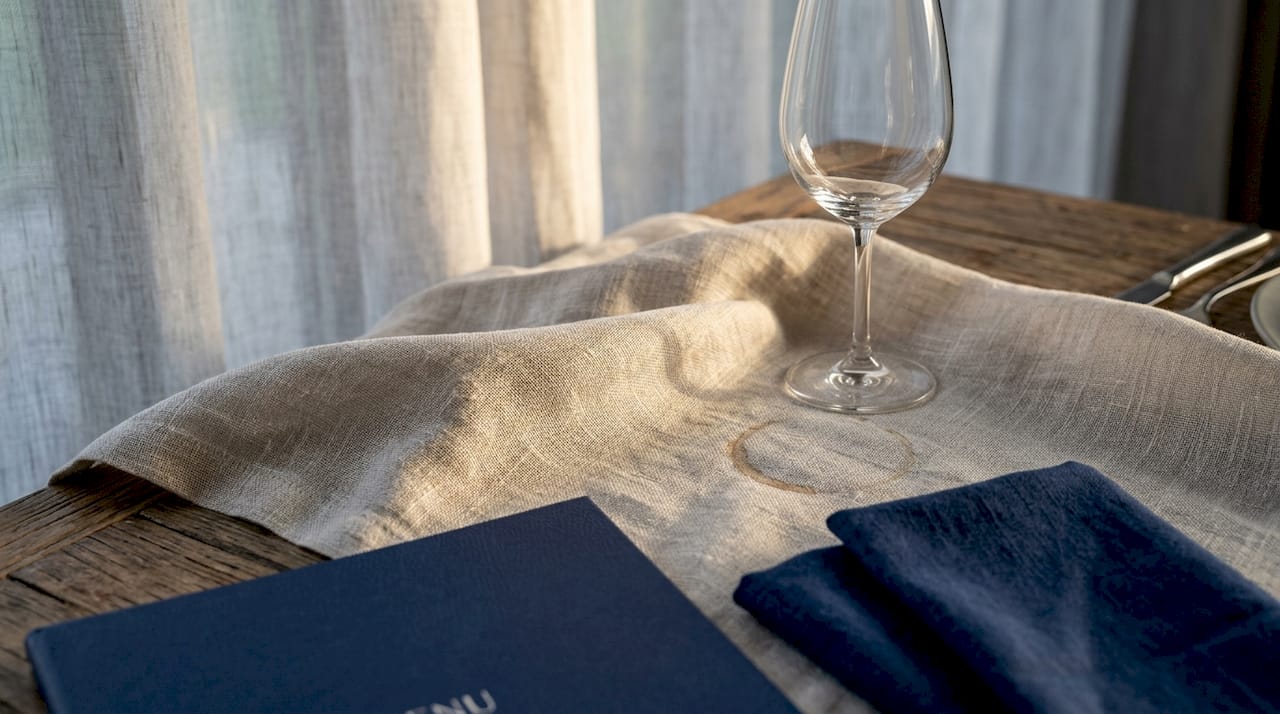
Finishing processes also separate commodity linens from genuine premium table linens. Pre-washing before delivery reduces shrinkage by setting the fibers, so dimensions stay consistent after laundering. Mercerization (a chemical treatment applied to cotton-linen blends) increases luster and dye uptake, giving the fabric that subtle sheen associated with fine dining presentations.
Pro Tip: Ask your restaurant linen supplier whether fabrics are pre-washed before delivery. Untreated linens can shrink 5–8% after the first wash, throwing off your table dimensions and presentation consistency from day one.
- Look for even thread density across the full fabric surface
- Check that GSM matches the intended use (napkins vs. tablecloths)
- Confirm pre-washing and finishing treatments before ordering
- Request fabric samples and wash them twice before committing to a bulk order
How premium linens shape the dining experience
A tablecloth does more than protect a table surface. It sets the visual and tactile tone of the entire cover before a guest orders or tastes anything. Getting this right has measurable consequences for how your restaurant is perceived.
Tactile comfort and guest perception
Soft, absorbent napkins contribute directly to how guests rate the quality of a meal. Guests notice when a napkin feels rigid, scratchy, or ineffective at its basic function. A premium napkin that is soft, absorbent, and well-pressed signals that the operation behind it is attentive to detail. That signal influences tipping, repeat visits, and online reviews more than most operators realize.
“The napkin is the most personal piece of linen on the table. It spends the entire meal in physical contact with the guest. Its quality is not invisible.”
Visual impact and ambiance
Premium linens carry a natural sheen and textured weave that create depth under dining room lighting. A tablecloth with proper drape and an even, consistent color reads as deliberate. The same table set with a thin, slightly transparent cloth reads as cost-cutting, regardless of the food quality. Colorfastness matters here too. Linens that fade unevenly after washing undermine the visual consistency of your room, particularly if you run multiple tables side by side under uniform lighting.
Pair quality linen choices with the broader selection of textiles for your dining space to create an environment that feels cohesive rather than assembled from whatever was available.
Hygiene and operational efficiency
Natural fiber linens, particularly those with a high linen content, carry inherent antibacterial properties. For restaurants where guest confidence in hygiene is high-stakes, this is a practical advantage, not a marketing point. Beyond hygiene, premium linens that are properly maintained actually reduce operational friction. Fabrics with the right GSM and construction hold up across industrial wash cycles, maintaining appearance without requiring replacement as frequently as cheaper alternatives. That translates to lower total cost over 12 to 18 months, even if the unit price is higher at purchase.
Comparing linen types for restaurant use
Not every restaurant needs the same linen program. The right choice depends on your service style, wash volume, and budget. Here is how the main options compare.
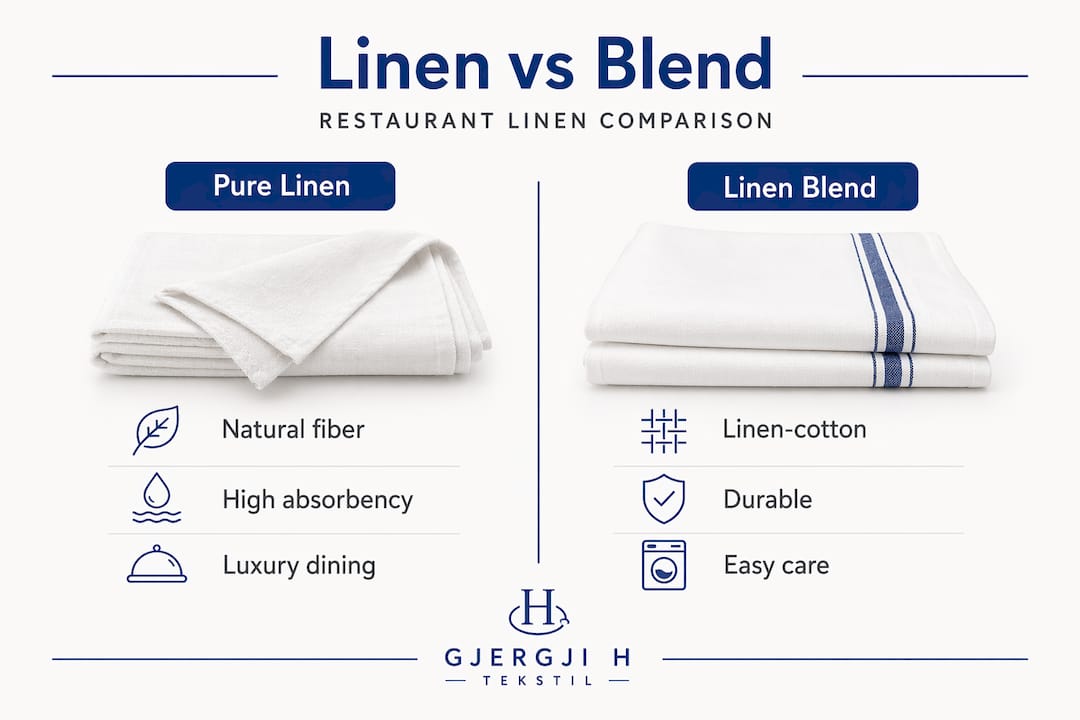
| Type | Durability | Absorbency | Maintenance | Best for | Cost |
|---|---|---|---|---|---|
| Pure linen | Very high | Highest (up to 20% of weight) | High, requires ironing | Fine dining, formal events | High |
| Cotton-linen blend (55/45) | High | Good | Moderate, less ironing | Fine dining, banquets | Medium |
| Poly-linen blend | Medium | Low | Low, wrinkle-resistant | Casual dining, table covers | Low |
Choosing the right blend for your concept
For fine dining operations, cotton-linen blends reduce costs and ironing frequency while preserving the luxury feel that guests expect at that price point. This is the most practical choice for most full-service restaurants running daily covers. Pure linen remains the choice for white-tablecloth establishments where the physical quality of every element is part of the offer and the budget supports professional laundering.
Poly-linen blends serve well in high-volume banquet settings where appearance consistency matters more than tactile softness, and where linens are changed rapidly between events. They are not the right choice for napkins in any service tier where guest satisfaction is being measured. Understanding why textile flexibility matters in hospitality operations helps clarify why no single blend works for every scenario.
Pro Tip: For restaurants running both à la carte service and private events, consider two separate linen programs. Use cotton-linen blends for daily dining covers and reserve higher-quality pure linen sets for private dining rooms or special occasion tables. This controls costs without compromising either experience.
- Match linen type to wash volume and turnaround time
- Factor ironing and pressing labor into total maintenance cost
- Test colorfastness before committing to a color-forward table program
- Order in quantities that allow a full rotation without relying on same-day laundering
Practical guidance on buying and maintaining linens
Making a sound investment in premium table linens starts before you place the first order and extends through the entire operational life of the fabric.
-
Define your GSM requirements first. Before contacting any restaurant linen supplier, know your intended use for each item. Napkins need 180–220 GSM. Tablecloths need 200–260 GSM. Runners and overlays can work at lighter weights. Having these specs ready prevents you from being sold whatever a supplier wants to move.
-
Request pre-washed samples. Always test fabric samples through at least two wash cycles at the temperature your laundry operation uses. Measure dimensions before and after. Check for color shift, texture change, and structural integrity. This step takes a week and saves months of replacement cost.
-
Calculate your rotation quantity correctly. Most restaurants underestimate how many sets they need. A workable linen rotation requires enough stock to cover service while one full batch is in the wash and a second is in reserve. For a 50-cover restaurant operating six days a week, that typically means three to four full sets per table position.
-
Work with suppliers who understand hospitality operations. A supplier who sells restaurant textiles as a commodity will not advise you on GSM, pre-washing, or rotation planning. Look for a restaurant linen supplier with direct experience in food and beverage environments, not general retail textile sourcing.
-
Establish a professional laundering protocol. Proper linen care and rotation directly extends fabric life and maintains appearance over time. Industrial washing at the correct temperature, with appropriate detergent chemistry for natural fibers, prevents premature breakdown of the weave. Train your team or contract with a professional laundry that handles hospitality textiles specifically.
-
Plan for replacement cycles. Even well-maintained premium linens have a lifespan. Budget for replacement every 18 to 24 months under heavy commercial use. Track wear indicators like thinning fabric, permanent staining, and loss of drape as signals that a set is past its presentable life.
For detailed guidance on managing textile cost efficiency across your hospitality operation, the math on premium versus budget linens over a full replacement cycle almost always favors the higher-quality purchase.
My honest take on linen quality in restaurants
I have seen the same pattern repeat across hundreds of hospitality operations. The restaurant invests seriously in the menu, the lighting, the tableware, and the staff uniforms. Then the linens come from whoever offered the lowest price per piece. The result is a room that feels subtly inconsistent, and the owner cannot identify why.
Guests rarely say “your tablecloths were thin” in a review. What they say is that the experience “felt a bit off” or “wasn’t quite what we expected for the price.” That gap almost always has a tactile or visual component tied to the table setting, and linen is the largest surface area on that table.
What I find most interesting is the math that operators miss. A set of premium cotton-linen napkins costs more upfront, but it survives 150 to 200 wash cycles rather than 80 to 100 for a budget alternative. Spread that cost difference over the actual lifespan and the premium option often costs less per use. The experience it delivers is incomparably better. That is not a minor consideration for a restaurant competing on ambiance and service quality.
My recommendation: treat linen as infrastructure, not decoration. Buy to a specification, maintain to a protocol, and replace on a schedule. That approach keeps your service “on rails” regardless of how busy the season gets.
— Xpert
Gjergjihtextil’s restaurant linen solutions
Gjergjihtextil has been supplying hospitality businesses across Albania and the region since 1994, and restaurant linen is one of the areas where that operational depth shows most clearly. The team understands the difference between a linen that looks good on a sample card and one that holds up across 200 wash cycles in a working kitchen environment.
For restaurant owners looking to upgrade their table program, Gjergjihtextil offers wholesale restaurant textiles including tablecloths, napkins, and runners in cotton-linen blends and pure linen, sourced from Italy, India, and Pakistan at competitive wholesale pricing. Custom dimensions, colors, and branded finishing are available for operations that want a more tailored presentation. The team can also advise on GSM selection, rotation quantities, and care protocols based on your specific cover count and service style. If you want to explore the broader range of textile solutions available for hospitality venues, the wholesale hotel and restaurant textiles catalog covers the full scope. For operators who want expert guidance before committing to an order, hotel textile selection tips offers detailed advice directly applicable to restaurant linen buying decisions.
FAQ
What is premium restaurant linen made from?
Premium restaurant linen is most commonly made from a 55% linen / 45% cotton blend, which balances absorbency, softness, and durability. Pure linen is used in the most formal fine dining settings where maximum absorbency and natural texture are priorities.
What GSM should restaurant tablecloths and napkins be?
Napkins should fall between 180 and 220 GSM, while tablecloths perform best at 200 to 260 GSM. Fabrics below these weights tend to thin out quickly under commercial washing conditions.
Are poly-linen blends suitable for restaurant napkins?
Poly-linen blends are wrinkle-resistant and colorfast, but they lack the absorbency and tactile softness expected of premium napkins. They work well for table covers and banquet overlays but are not recommended for guest-contact napkins in quality dining environments.
How many linen sets does a restaurant need?
A restaurant needs enough linen to cover active service while one full batch is being washed and a second is held in reserve. For a 50-cover operation running six days per week, that typically means three to four complete sets per table position.
How does linen quality affect guest perception?
Guests directly associate the softness and absorbency of napkins with overall service quality. A napkin that feels rigid or performs poorly as a guest experiences tactile discomfort signals cost-cutting at a point in the meal that should feel attentive and well-considered.