

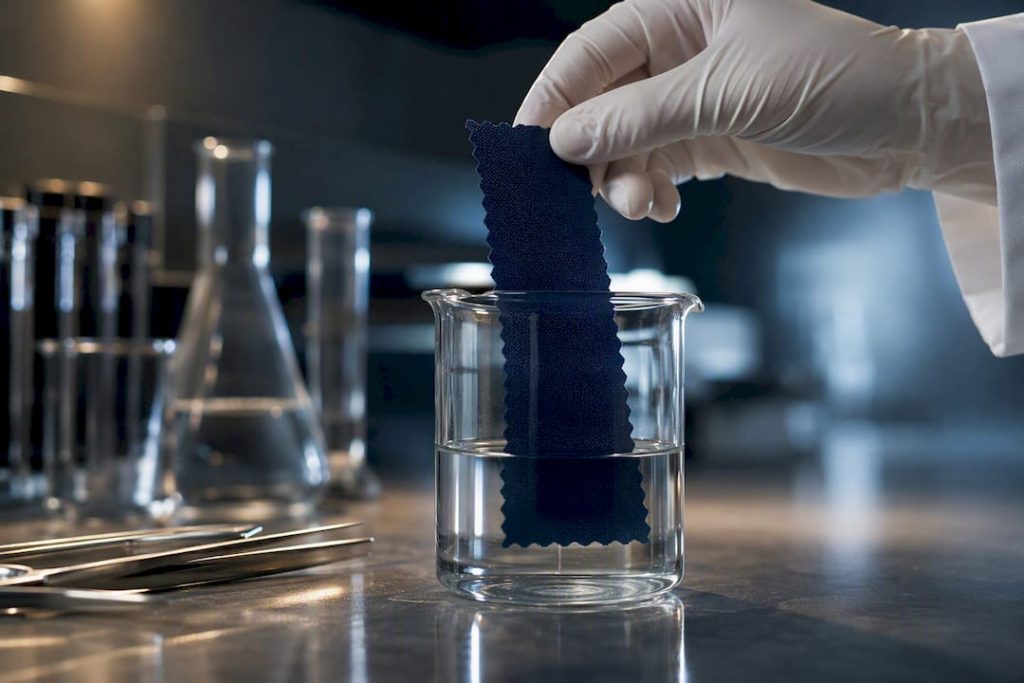
Solution-dyed acrylic holds up best for poolside upholstery, while polyester/PBT blends and engineered elastomers like LYCRA XTRA LIFE® or XLANCE® handle swimwear and training garments. None of that matters if you skip the one non-negotiable step: demand chlorine-fastness test data, ideally to ISO 105‑E03, before you sign a purchase order. Chlorine resistance is not a fiber trait alone. It’s a system outcome built from fiber, dye method, and finish working together.
TL;DR:
- Fiber selection sets the maximum lifespan for fabrics exposed to chlorine, but dyeing method determines whether that potential is reached.
- Solution-dyed acrylic and polyester/PBT with chlorine-rated elastomers outperform piece-dyed fabrics and nylon in chlorine-rich environments.
- Coated fabrics using silicone coatings are more chlorine-stable, but PVC formulations vary, and proper lamination is crucial for durability.
- ISO 105‑E03 offers the standard for testing chlorine fastness, with numeric results indicating true resistance; marketing claims without data are unreliable.
- Always request documented chlorine-fastness test reports and verify fiber, dye, and coating details before committing to bulk orders for pool or spa textiles.
Table of Contents
- Chlorine-Resistant Fibers: Solution-Dyed Acrylic, Polyester/PBT, and Durable Elastomers
- Coated Fabrics and Artificial Leather: Silicone, PVC, and Chlorine Stability
- Testing and Standards: How to Read a Chlorine-Fastness Report
- Specification and Procurement Checklist for Chlorine-Exposed Hospitality Textiles
- What Three Decades of Hospitality Supply Actually Taught Us
- Three Rules I’d Give Any Specifier Buying for Pool or Spa Use
- Working With Gjergji H Tekstil on Chlorine-Resistant Specifications
- Sources
Chlorine-Resistant Fibers: Solution-Dyed Acrylic, Polyester/PBT, and Durable Elastomers
Fiber choice sets the ceiling for how long a fabric survives chlorinated water, but the dyeing method decides whether it hits that ceiling. Solution-dyed acrylic locks pigment into the polymer melt before the fiber is even extruded, so the color sits inside the strand rather than on its surface. Piece-dyed fabrics, by contrast, carry color as a surface treatment that hypochlorite attacks directly. That’s why two fabrics that look identical off the roll can diverge dramatically after a season of pool use.
Polyester and PBT (polybutylene terephthalate) behave differently under chlorine exposure than nylon does. Nylon absorbs moisture and degrades faster under repeated chlorine cycling, while polyester and PBT resist the oxidative breakdown that causes fading and fiber weakening. This is why most commercial-grade swimwear and pool linens lean on polyester or PBT rather than nylon, despite nylon’s softer hand.
For stretch components, generic spandex breaks down quickly in chlorinated water. Engineered alternatives change that math. LYCRA XTRA LIFE® fiber resists chlorine damage and maintains shape retention for up to ten times longer than ordinary elastane in chlorine-exposed conditions. XLANCE® elastomer follows a similar logic, and fabric constructions that pair it with recycled polyester are increasingly common in performance swim lines. You trade a small amount of stretch feel for a much longer service life, and for high-turnover hospitality settings, that tradeoff usually favors durability.
Match the fiber to the use case:
- Poolside upholstery and cushions: solution-dyed acrylic, because it faces sun, splash, and chemical exposure simultaneously.
- Competitive or high-frequency swimwear: polyester/PBT with an elastomer blend rated for chlorine longevity.
- Pool towels and robes: cotton-poly blends with chlorine-stable finishing, since pure cotton bleaches and weakens faster under repeated hypochlorite contact.
- Training suits for clubs or hotel fitness centers: elastomer-forward blends where daily immersion makes fiber-level durability the deciding factor.
Coated Fabrics and Artificial Leather: Silicone, PVC, and Chlorine Stability
Coated textiles for poolside furniture face a different chemistry problem than woven or knit goods. The coating, not the base fabric, takes the brunt of chlorine exposure, and coating chemistry varies wildly in how well it holds up.
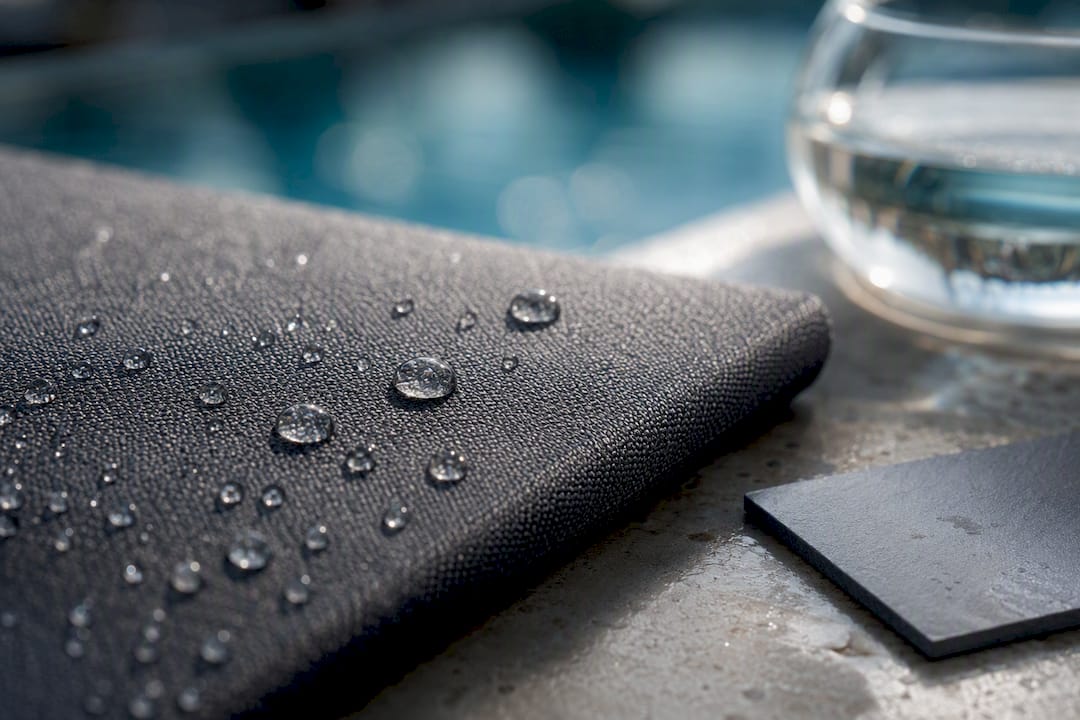
Silicone-based coated fabrics offer superior chemical stability against the oxidative breakdown chlorine causes, which is why they’ve become the default recommendation for cushions and upholstery near pools and spas. PVC formulations vary significantly by manufacturer. Some PVC products are chlorine-stable; many are not, and there’s no way to tell by touch or appearance alone.
Backing construction matters almost as much as the coating itself. A knit backing laminated properly to a chlorine-stable coating resists delamination under repeated wet-dry cycling, while cheaper bonding methods let moisture creep between layers and rot the fabric from the inside out.
Before specifying a coated product for pool decks, spa lounges, or cabana furniture:
- Request the specific coating chemistry, not just “waterproof” or “outdoor-rated.”
- Ask for chlorine-exposure lab data, not general weatherability results.
- Confirm the lamination method and expected delamination resistance under wet conditions.
Pro Tip: Ask the supplier for a small coated swatch and soak it in a diluted chlorine solution similar to pool concentration for 48 hours. Cheap PVC often shows surface tackiness or discoloration within that window, well before any lab report would arrive.
Testing and Standards: How to Read a Chlorine-Fastness Report
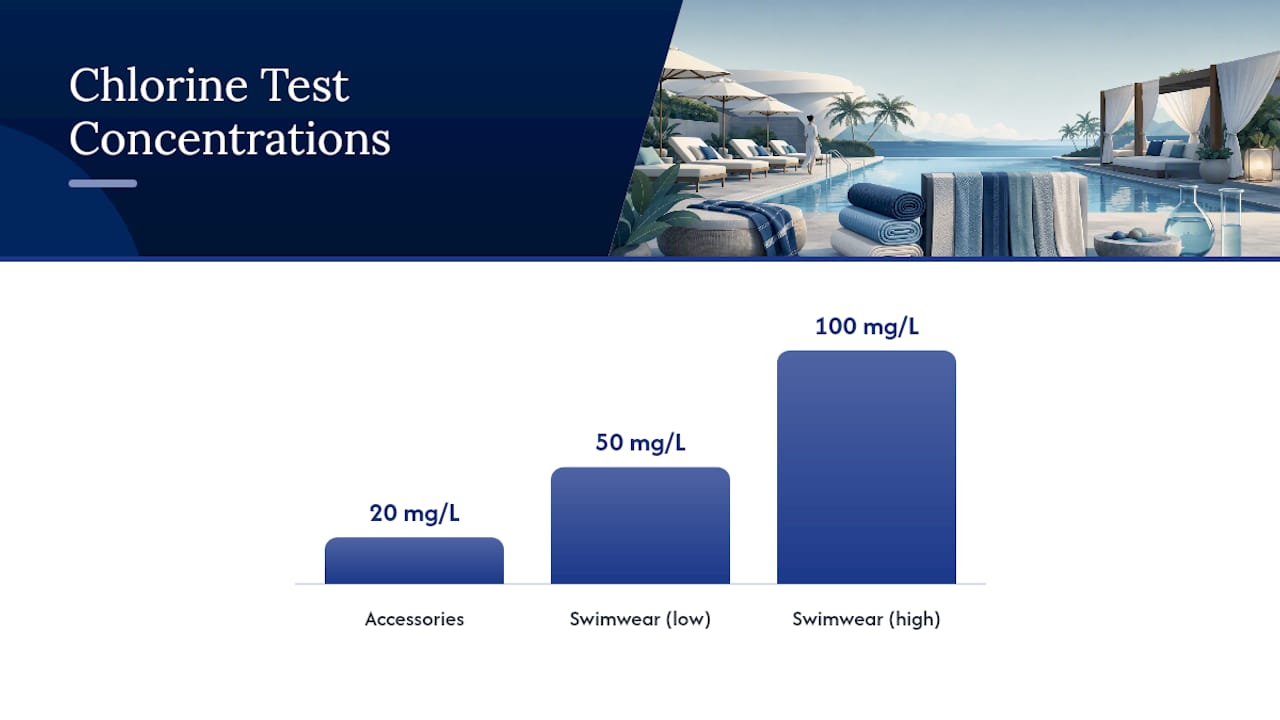
ISO 105‑E03 governs color fastness to chlorinated water and is the standard you should see referenced on any legitimate chlorine-fastness report. The standard provides multiple test conditions with different chlorine concentrations depending on end use. Accessories are typically tested around 20 mg/L, while swimwear fabrics are tested at higher concentrations, often in the 50 to 100 mg/L range, since garments face more direct and prolonged exposure.
Results are usually reported against a gray scale or delta E color-change measurement. A tighter delta E value means less visible fading after exposure. When a lab report doesn’t specify which test condition was used or omits the numeric rating entirely, treat that as a red flag rather than a pass.
This is also where marketing language gets misleading. Many suppliers advertise fabrics as “water resistant” or “outdoor rated,” but water resistance and chlorine resistance are not the same claim. UV and light-fastness ratings tell you nothing about how a fabric holds up under hypochlorite exposure.
When requesting documentation from a lab, ask specifically for:
- The test method (ISO 105‑E03 or an equivalent chlorine-fastness protocol)
- The chlorine concentration and exposure cycle count used
- The resulting gray scale or delta E rating, in numbers, not just a pass/fail label
Quality label programs have started codifying this expectation. QLabel includes chlorine fastness among the required performance attributes for certified beachwear and poolside textiles, which gives procurement teams a recognizable benchmark beyond a supplier’s own claims.
Specification and Procurement Checklist for Chlorine-Exposed Hospitality Textiles
Before you accept a shipment of pool or spa textiles, build your specification around documentation, not assurances. Here’s the sequence that catches problems before they reach a guest room or pool deck:
- Request the paper trail first. Ask for a chlorine-fastness report citing the test method and numeric results, fiber composition by percentage, the dyeing method used (solution-dyed versus piece-dyed), and, for coated goods, the coating formulation.
- Run receiving-dock checks. A quick visual inspection catches obvious inconsistencies; a small chlorine spot test on a swatch reveals fast bleachers within hours, and a dimensional stability check after one wash cycle flags shrinkage or warping before the goods reach service.
- Lock fiber choice to end use in the spec sheet. Solution-dyed acrylic for upholstery, polyester/PBT for high-frequency pool textiles, and a validated elastomer blend for performance swimwear, written into the purchase order rather than left to supplier discretion.
- Put warranty language in the contract, not the sales pitch. Specify expected wash or exposure cycles before noticeable fading and require the supplier to reference their own chlorine-fastness data as the basis for that warranty.
Pro Tip: Keep a signed swatch card with every bulk order. When a batch underperforms six months in, you’ll want the original approved sample on file to prove whether the delivered goods actually matched what was tested.
Procurement teams running recurring textile fabric testing programs catch these mismatches earlier, before a full order cycle is wasted on unvalidated material.
What Three Decades of Hospitality Supply Actually Taught Us
Gjergji H Tekstil has supplied hotel and hospitality textiles since 1994, working with a range of hospitality properties. That volume of turnover across pool decks, spas, and restaurant patios surfaces failure patterns that a single order never would.
The most common failure isn’t fiber choice. It’s piece-dyed upholstery fabric sold as “pool-ready” that fades within a season because the color never had a chance against sustained chlorine contact. The second most common: elastomer blends in rental swimwear that lose recovery within weeks because the supplier substituted generic spandex for a chlorine-rated fiber without disclosing it.
The gap between a supplier’s marketing sheet and their actual chlorine-fastness data is where most poolside textile budgets get wasted. We’ve stopped accepting “chlorine resistant” as a claim; we ask for the test report and the concentration it was run at.
Gjergji H Tekstil now requires documented color-fastness data from suppliers before any bulk agreement moves forward.
Three Rules I’d Give Any Specifier Buying for Pool or Spa Use
If you take nothing else from this, take three rules. First, insist on solution-dyed construction for anything sitting poolside long-term, upholstery especially. Second, never accept “chlorine resistant” as a claim without a test report behind it. Third, when coated fabric is on the table, default to silicone chemistry unless the PVC alternative comes with its own chlorine-exposure data.
The single action worth taking today: pull one sample from your current supplier and request a chlorine exposure test on it. You’ll learn more from that one report than from any spec sheet. If you want a second opinion on what that report actually means for your property, that conversation is worth having before the next bulk order, not after the fading shows up.
— Xpert
Working With Gjergji H Tekstil on Chlorine-Resistant Specifications
Gjergji H Tekstil gives you something most importers don’t: control over the entire chain from fiber sourcing to finished goods, so chlorine-fastness requirements get built into production instead of hoped for at delivery.
That matters for pool, spa, and hospitality textiles specifically, where a single unvalidated coating or piece-dyed batch can cost a property a full season of guest-facing furniture. Gjergji H Tekstil coordinates sample testing before bulk commitment, offers custom production runs when standard fiber blends don’t fit your exposure conditions, and advises on solution-dyed versus coated options based on how your property actually uses the space. Whether you’re refitting a hotel pool deck, outfitting a spa lounge, or sourcing training swimwear for a resort fitness program, the same supply chain that’s served Meliá, Marriott, and Sheraton properties can validate your spec before you commit to volume.
Start with a sample request and a specification review through Gjergji H Tekstil’s hotel textile selection guidance, and get chlorine-fastness documentation attached to your next order before it ships.
Sources
- LYCRA XTRA LIFE® fiber resists damage, maintains its shape, and lasts up to 10x longer
- Fabric for poolside, spa and chlorine-exposed environments — a specifier’s guide
- Qëndrueshmëria e zbardhimit të klorit – EUROLAB
- QLabel quality label for textile products — beachwear