


TL;DR:
- Textile traceability is a vital governance framework that verifies each stage of a product’s supply chain for compliance and sustainability. It enables stakeholders to meet regulatory demands like the EU Digital Product Passport and U.S. UFLPA through advanced digital systems and verified data, ensuring transparency and ethical sourcing. Implementing effective traceability improves operational efficiency, reduces risks, builds consumer trust, and supports long-term brand differentiation.
Understanding what is the importance of textile traceability is no longer a niche question for sourcing managers. It is a business-critical issue touching compliance, brand credibility, and supplier relationships at every tier. Most industry operators think of traceability as a data collection exercise. It is actually a governance framework, one that determines whether your sustainability claims hold up under regulatory scrutiny, consumer pressure, and supply chain audits. This article breaks down what traceability really covers, why it matters now more than ever, and how to build it into your operations before regulations force your hand.
Table of Contents
- Key Takeaways
- What textile traceability actually covers
- Social and environmental impact of traceability
- Operational benefits that affect your bottom line
- Regulatory requirements you need to prepare for
- How to build traceability into your supply chain
- My perspective on where the industry is getting this wrong
- How Gjergjihtextil supports traceable textile sourcing
- FAQ
Key Takeaways
| Point | Details |
|---|---|
| Traceability vs. transparency | Traceability tracks each custody step; transparency means sharing that verified information publicly with consumers and regulators. |
| Compliance is accelerating | EU Digital Product Passport enforcement for textiles begins around 2027, and U.S. UFLPA detentions are already active. |
| Ethical sourcing requires proof | Self-reported claims about labor and material origins no longer satisfy regulators, major retailers, or informed buyers. |
| Operations improve with traceability | Better supply chain data visibility reduces defects, isolates quality failures faster, and tightens procurement workflows. |
| Technology is the enabler | Interoperable digital systems, forensic fiber tracers, and DNA markers are turning traceability from paperwork into verified fact. |
What textile traceability actually covers
Traceability and transparency are often treated as the same concept. They are not. Fashion for Good draws a precise distinction: traceability means tracking and verifying each component’s custody at every stage of production, while transparency means making that verified information available publicly. You can have traceability without transparency. You cannot have meaningful transparency without traceability.
Effective traceability spans the full product lifecycle:
- Raw material sourcing: Where the fiber originated, how it was grown or produced, and under what conditions
- Processing and manufacturing: Spinning, dyeing, weaving, and cut-and-sew operations, including the facilities and their locations
- Distribution and logistics: Movement records linking production batches to specific shipment consignments
- Retail and end-of-life: Product identification data that supports resale, recycling, or responsible disposal
The technologies enabling this coverage range from basic barcodes and QR codes to more advanced approaches. Blockchain-based record systems create tamper-resistant custody logs. RFID tags track physical goods through warehouse and distribution channels. The next evolution is the Digital Product Passport, a machine-readable digital record tied to a specific product that carries verified data across its full lifecycle. The EU’s ESPR framework, which came into force on July 18, 2024, is driving DPP adoption as a mandatory standard for textile products sold in European markets.
Social and environmental impact of traceability
The ethical case for traceability is where the stakes are highest. For hospitality buyers and textile professionals sourcing at volume, the risks of opaque supply chains are not abstract. They are legal, reputational, and financial.
The U.S. Uyghur Forced Labor Prevention Act creates a rebuttable presumption that any cotton grown in China’s Xinjiang region involves forced labor. Under UFLPA enforcement, companies have 30 to 60 days to provide documented cotton origin verification before shipments face seizure or rejection. No documentation means no goods. For hotel and restaurant operators sourcing bed linens, towels, or tablecloths at scale, this is not a distant regulatory concern. It is an operational reality that demands verifiable fiber origin records.
On the environmental side, traceability supports genuine sustainability claims rather than marketing narratives. The Council of Fashion Designers of America notes that traceability underpins raw material proof, fair labor practice verification, and broader sustainability governance. Without it, your environmental claims are only as strong as your suppliers’ self-reports, which regulators and consumers are increasingly unwilling to accept.
Key social and environmental benefits include:
- Prevention of forced labor and child labor through auditable supplier records
- Reduction of greenwashing exposure by tying claims to verifiable product-level data
- Support for regulated chemical input disclosure, helping reduce dyeing and finishing pollution
- Enabling responsible end-of-life management, particularly for circular economy programs
Traceability acts as a governance transformation tool that shifts sustainability management from narrative to evidence. That shift is not optional for much longer.
Operational benefits that affect your bottom line

Beyond ethics and compliance, the impact of traceability in textiles shows up directly in operational performance. When you can track a specific production batch to its fiber origin, its manufacturing facility, and its shipping consignment, you can isolate problems fast. A defective towel lot traced to a single dyeing facility gets corrected at the source, not discovered across 500 rooms after guest complaints.
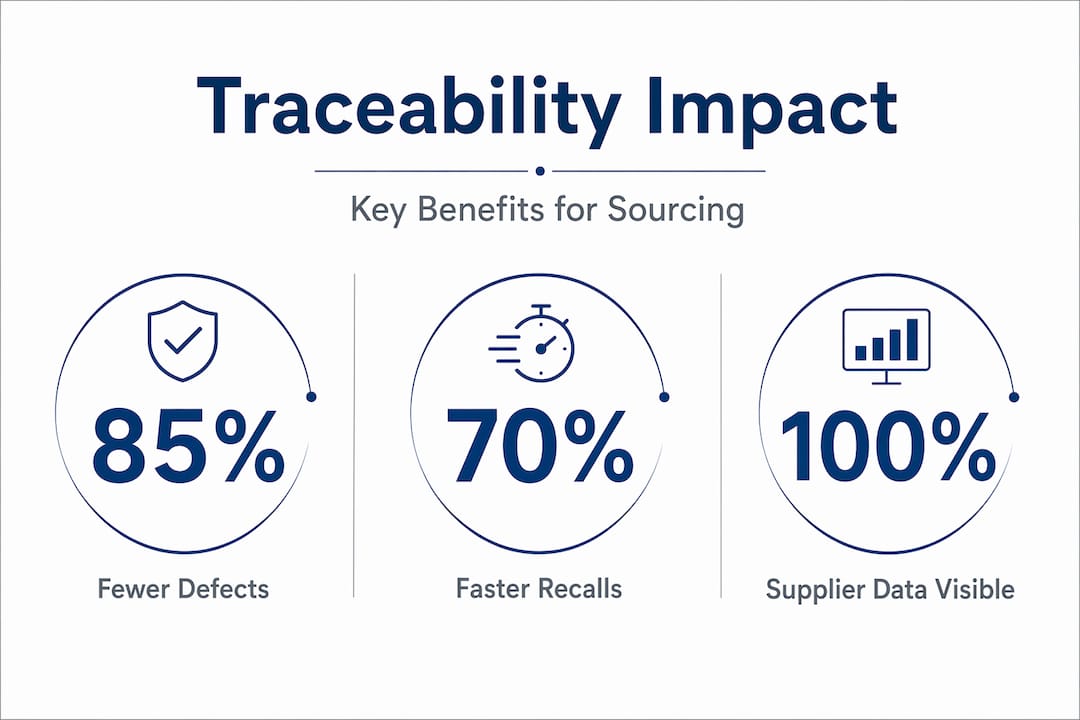
Traceability reduces errors, delays, and production defects through better data visibility at each supply chain tier. For high-volume hospitality operators, this directly affects stock reliability, washability standards, and the consistency of product performance across repeat orders. Knowing exactly where a product came from is the only reliable way to replicate quality at scale.
Procurement also improves. When supplier data is captured systematically, category managers can compare supplier performance across quality, lead time, and compliance metrics without chasing spreadsheets. That kind of structured visibility is how you negotiate better terms, cut underperforming suppliers early, and build a supply base worth trusting.
Pro Tip: Integrate traceability data requests into your standard supplier onboarding process. Collecting origin documentation at the point of contract setup takes minutes and eliminates months of remediation work if a compliance question arises later.
The hotel textile supply chain context makes this especially practical. Operators running 100 rooms or more cannot afford supply disruptions caused by delayed origin documentation. Traceability is what keeps procurement moving without regulatory stops.
Regulatory requirements you need to prepare for
The compliance calendar for textile traceability is moving fast. Here is a side-by-side view of the two most consequential frameworks currently shaping market access:
| Regulation | Region | Core Requirement | Key Timeline |
|---|---|---|---|
| EU ESPR / Digital Product Passport | European Union | Machine-readable DPP with verified material, environmental, and labor data attached to each product | In force July 2024; textile enforcement ~2027 |
| Uyghur Forced Labor Prevention Act (UFLPA) | United States | Documented cotton origin verification excluding Xinjiang-region forced labor | Active enforcement; 30-60 day documentation window upon detention |
| EU Corporate Sustainability Due Diligence | European Union | Documented supplier risk assessments and remediation plans across value chains | Phased compliance from 2025 onward for large companies |
The ESPR framework requires that DPPs carry machine-readable, updateable data rather than isolated supplier declarations. This is a significant technical requirement. A PDF certificate from a spinning mill does not satisfy ESPR. A linked, interoperable digital record that can be queried by customs systems and updated as the product moves through the chain does.
Digital Product Passports create living records that support both regulatory market access and circular economy programs. For textile professionals selling into EU hospitality procurement channels after 2027, DPP readiness is not a differentiator. It is table stakes. Companies that wait until enforcement begins will face a compressed and expensive compliance window. Those who build the data infrastructure now will face far less disruption.
How to build traceability into your supply chain
Knowing why traceability matters is one thing. Building it into your operations is where most programs stall. Here is a practical sequence that works for mid-to-large hospitality textile buyers and manufacturers:
- Map your supply chain tiers. Start with Tier 1 suppliers and work backward to raw material origins. Most operators discover suppliers they did not know existed beyond Tier 2.
- Select interoperable digital systems. Without consistent interoperability, traceability efforts collect many documents but fail to reconstruct true end-to-end product origins. Event-based, time-stamped digital records are the technical requirement.
- Address blended fiber verification directly. Material-level verification for blended fibers is one of the most common traceability failure points. Forensic tracers and DNA-based fiber fingerprinting are now practical options for high-risk material categories like cotton and wool.
- Integrate data collection into procurement workflows. Automated data requests reduced supplier turnaround to approximately 10 days in documented deployment cases. Embedding data capture into existing purchase order processes removes the manual burden that kills supplier participation.
- Prioritize your highest-risk categories first. Cotton origin, chemical finishing inputs, and Tier 3 yarn sourcing represent the greatest compliance exposure. Start there before expanding to lower-risk product lines.
Pro Tip: When evaluating textile traceability systems, ask vendors specifically about interoperability with your existing ERP or procurement platform. A system that requires manual re-entry of data at any point will fail at scale due to supplier fatigue and data entry errors.
For textile sourcing in hospitality, the quality dimension of traceability also feeds directly into fabric testing standards, where documented production origins help validate performance claims before products reach the guest room or dining floor.
My perspective on where the industry is getting this wrong
I’ve worked across enough supply chains to see the same pattern repeat itself. Companies invest in traceability only when a shipment gets detained, a journalist publishes a sourcing investigation, or an auditor flags a gap. By that point, the cost of remediation is ten times what prevention would have required.
The deeper problem is that many operators still treat traceability as a documentation exercise rather than a supply chain intelligence function. They collect certificates, store them in folders, and call it done. What they are missing is the ability to query that information, connect it across tiers, and use it to make procurement decisions. A certificate that cannot be verified against a live data record is not traceability. It is paper.
What I’ve seen work consistently is embedding traceability requirements into supplier contracts from day one. Not as an appendix, but as a performance criterion with consequences. When suppliers understand that verified origin data affects payment terms and contract renewal, the quality of data submission improves dramatically.
The most underrated benefit of traceability is consumer trust built over time. Hotels and restaurants that can tell a credible, documented story about where their textiles come from, and why that matters, create a layer of brand differentiation that pricing alone cannot replicate. That is the long-term value that most operators leave on the table by treating traceability as a cost center.
— Xpert
How Gjergjihtextil supports traceable textile sourcing
For hospitality businesses looking to align procurement with traceability and sustainability standards, Gjergjihtextil offers a supply chain built on 30 years of controlled sourcing, quality verification, and documented supplier relationships across Italy, India, Pakistan, and beyond.

Whether you are sourcing wholesale hotel textiles for a multi-property portfolio or selecting restaurant textiles that need to perform consistently under heavy use, Gjergjihtextil provides the origin visibility and quality consistency that modern hospitality procurement requires. For operators navigating EU and U.S. traceability compliance, the company’s sustainable sourcing practices and verified supplier network make traceability a practical reality rather than a compliance burden. Contact the team directly to discuss sourcing requirements and supply chain documentation standards. Hospitality businesses that want to meet sustainability benchmarks backed by certified textile standards will find a partner with the infrastructure to deliver.
FAQ
What is the importance of textile traceability?
Textile traceability allows brands and regulators to verify every stage of a product’s journey from raw material to end-of-life, supporting ethical sourcing, regulatory compliance, and credible sustainability claims backed by documented evidence rather than self-reported data.
How does textile traceability work in practice?
Traceability systems use event-based digital records, QR codes, RFID tags, and increasingly Digital Product Passports to log custody at each production stage, creating an auditable chain of origin that can be queried by compliance teams and regulators.
Why is the EU Digital Product Passport relevant to textile professionals?
The ESPR framework, in force since July 2024 with textile enforcement expected around 2027, requires machine-readable DPPs carrying verified material and labor data. Products without compliant passports will face market access restrictions in the EU.
What are the main benefits of textile traceability for hospitality buyers?
The primary benefits include forced labor compliance documentation, faster defect isolation in production batches, verified sustainability credentials that reduce greenwashing exposure, and improved supplier performance management through structured data visibility.
How do blended fibers affect traceability programs?
Blended fibers complicate origin verification because standard documentation cannot distinguish fiber sources within a single yarn or fabric. DNA-based markers and forensic micro-particle tracers are currently the most reliable technologies for validating geographic origin in blended textile products.