

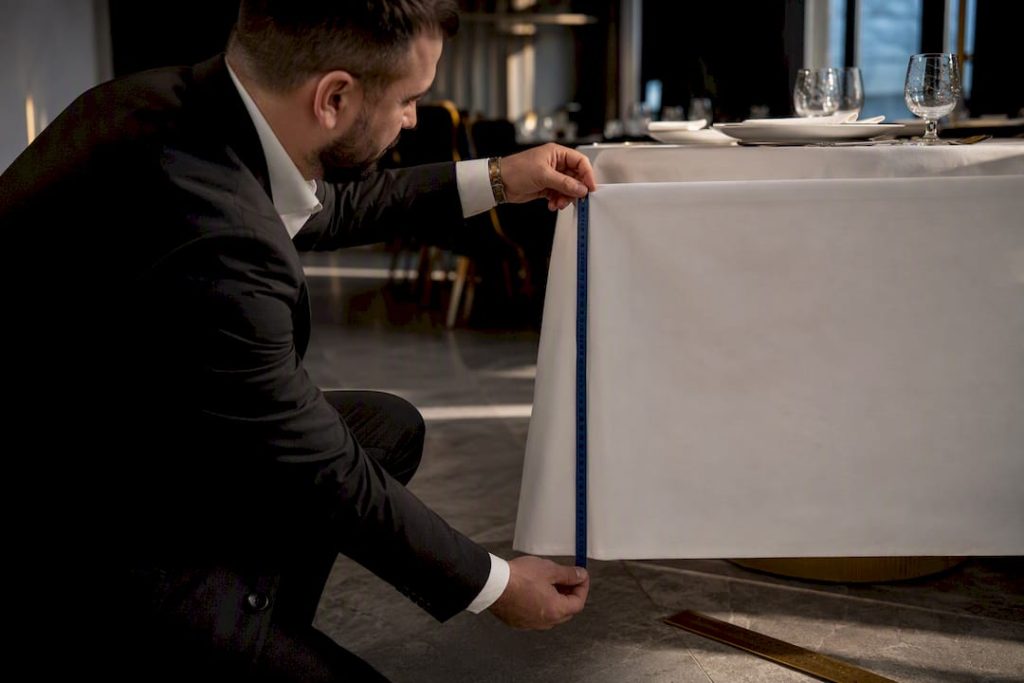
Measure your tabletop, length and width for rectangular or square shapes, diameter for round ones, then add the drop you want on each side. That total is the cloth size you need. A 140×80 cm table with a 25 cm drop needs roughly a 190×130 cm cloth, and a 150 cm round table with the same drop needs a 200 cm round cloth. The size charts, measuring steps, and material notes below cover every table shape you’re likely to run into.
TL;DR:
- Standard tablecloth sizes are calculated by adding the desired drop to tabletop measurements and rounding up to the nearest available stock size, with drops typically ranging from 15 to over 30 centimeters.
- Proper measurement involves recording exact tabletop length, width, or diameter, and considering table height for full drops, especially on custom or irregular shapes.
- Polyester and poly-cotton blends are preferred in hospitality due to their durability and ability to withstand industrial laundering, unlike pure cotton or disposable plastic alternatives.
- Outdoor or high-traffic event tables require clips, weighted hems, or non-slip pads to prevent shifting or lifting caused by wind or foot traffic.
- Buyers should inquire about supplier roll widths, minimum order quantities, and color consistency before choosing off-the-shelf or custom-sized tablecloths to ensure reliability and cost-effectiveness.
Table of Contents
- Mbulesa Tavoline Dimensione: Standard Size Charts by Table Shape
- How Do You Measure a Table for a Tablecloth?
- Which Fabric Should You Choose for Your Tablecloths?
- Securing Tablecloths Outdoors and at Events
- What Hospitality Buyers Should Know Before Ordering
- Off-the-Shelf or Custom: Which Fits Your Table?
- Get Sized and Sampled Through Gjergji H Tekstil
- Sources
Mbulesa Tavoline Dimensione: Standard Size Charts by Table Shape
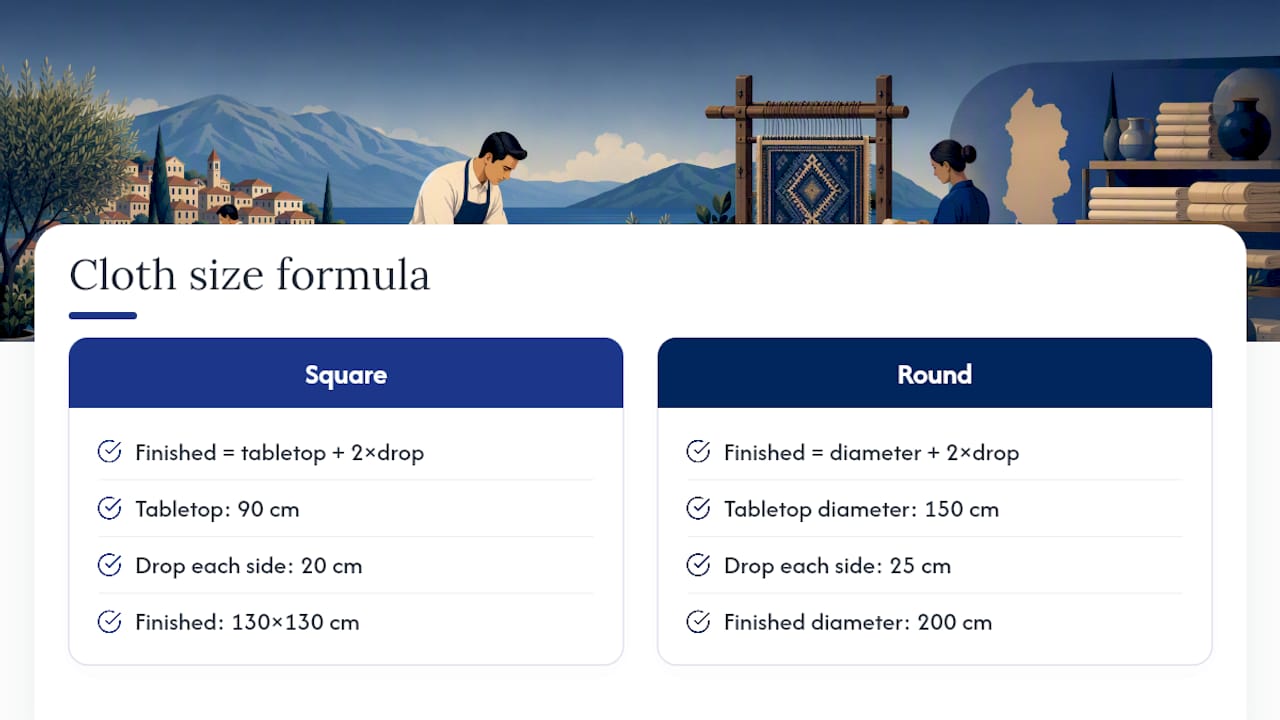
Every finished cloth size comes from one formula: tabletop dimension plus drop on both sides. A drop is how far the cloth hangs past the table edge. Casual settings usually use a moderate drop, while formal or “full drop” styles reach nearer to the floor, with the drop depending on table height.
Rectangular tables are the most common shape in restaurants and banquet halls, and they follow a predictable pattern once you know the tabletop measurements.
Round and square tables scale off diameter or side length the same way. A 90 cm square table with a 20 cm drop on each side lands at 130×130 cm. A 150 cm round table with a 25 cm drop needs a 200 cm round cloth, since the drop applies to both sides of the diameter.
Retail and wholesale catalogs in Albania and the wider region tend to stock a narrower set of finished sizes than the math above suggests, because manufacturers cut to whatever fits their roll widths efficiently. Common rectangular SKUs include 140×200 cm, 140×240 cm, and 140×250 cm, and round covers frequently show up at 180 cm diameter. If your calculated size falls between two stocked options, round up rather than down. A slightly longer drop looks intentional; a cloth that’s too short looks like a mistake.
Worth noting: the published size charts most Albanian shoppers reference map table dimensions to cloth size using this same add-the-drop logic, which is why the numbers above track closely with what you’ll find on shelf.
How Do You Measure a Table for a Tablecloth?
Getting the drop right starts with getting the tabletop measurement right, and that’s where most buyers cut corners.
- Rectangular or square tables: measure length and width edge to edge, not including any lip or overhang on the tabletop itself.
- Round tables: measure diameter straight across the center, not the circumference.
- Oval tables: measure the longest length point to point, then the widest width, and treat it like a rectangle for cloth sizing.
- Irregular or custom tables: measure at the widest points in both directions, then ask your supplier about a template cut rather than forcing a standard rectangle onto an odd shape.
- Table height: measure floor to tabletop if you’re planning a full drop, since that number determines how far the cloth needs to fall to look intentional rather than accidental.
- Choose your drop: casual dining or everyday café use calls for 15–25 cm; buffet and standard service calls for 25–30 cm; formal events and floor-length looks call for 30 cm or more, often to the floor.
- Round to a stock size: add your drop to each dimension, then round up to the nearest size your supplier carries, or request a custom cut with the exact numbers you’ve measured.
When you call a supplier for a custom cut, give them the tabletop dimensions, the drop you want, and the table height. That’s enough for most manufacturers to quote a finished size without back and forth.
Which Fabric Should You Choose for Your Tablecloths?
Size gets you the right fit. Fabric determines whether that fit survives more than a few washes. The four materials worth comparing are polyester, poly-cotton blends, pure cotton, and disposable plastic.
- Polyester resists wrinkling, holds color through repeated washing, and dries fast, making it the default choice for restaurants running daily service.
- Poly-cotton blends add some of cotton’s softer hand feel while keeping most of polyester’s durability, a middle ground many hotels use for banquet rooms.
- Pure cotton looks and feels premium but wrinkles easily and fades faster under industrial laundering cycles.
- Disposable plastic covers, sold in large diameters up to about 84 inches to fit oversized event tables, work well for one-off events where cleanup speed matters more than appearance.
Hospitality operators lean toward polyester or poly-cotton blends specifically because these fabrics handle industrial washing without losing color or shape, which matters far more once a cloth is going through a laundry cycle every day rather than once a month at home.
Pro Tip: Ask your supplier for the fabric weight in grams per square meter, not just the fiber content. A heavier polyester (roughly 200 to 250 gsm) drapes better and resists show-through under table lamps than a thin, lightweight version of the same material.
If your venue serves messy food or runs a bar, ask about stain-resistant or coated finishes. A coated poly-cotton blend sheds spills instead of absorbing them, buying you extra service between washes.
Securing Tablecloths Outdoors and at Events
Wind and foot traffic are the two things that ruin an otherwise perfect setup. A few inexpensive fixes solve most of it.
- Tablecloth clips are the first line of defense. Check the jaw opening before buying. Most consumer clips fit tabletops up to about 2.5 cm thick, and standard packs come in sets of four, one per corner.
- Weighted hems or sewn-in weight strips keep the cloth from lifting on breezy patios without needing clips at all.
- Non-slip pads placed between the tabletop and cloth stop the whole setup from sliding when guests lean on the table edge.
- Elastic corners or fitted covers work best for repeated outdoor use where wind is a constant issue rather than an occasional one.
For event setups, plan on four clips per table as a baseline, and add a non-slip underlay for any table set up on a hard, smooth surface like tile or sealed concrete. If the venue is outdoors, an outdoor-rated fabric built to resist moisture and sun will outlast standard indoor cloths by a wide margin.
What Hospitality Buyers Should Know Before Ordering
Thirty years of supplying hotels, restaurants, and event venues across Albania has taught us one thing about tablecloth sizing: the math is easy, but the sourcing decisions around it are where buyers lose money. Gjergji H Tekstil runs full supply-chain control, from import through in-house production, which is how the company has kept international hotel brands like Meliá, Marriott, and Sheraton supplied with consistent, hotel-grade linens for decades.
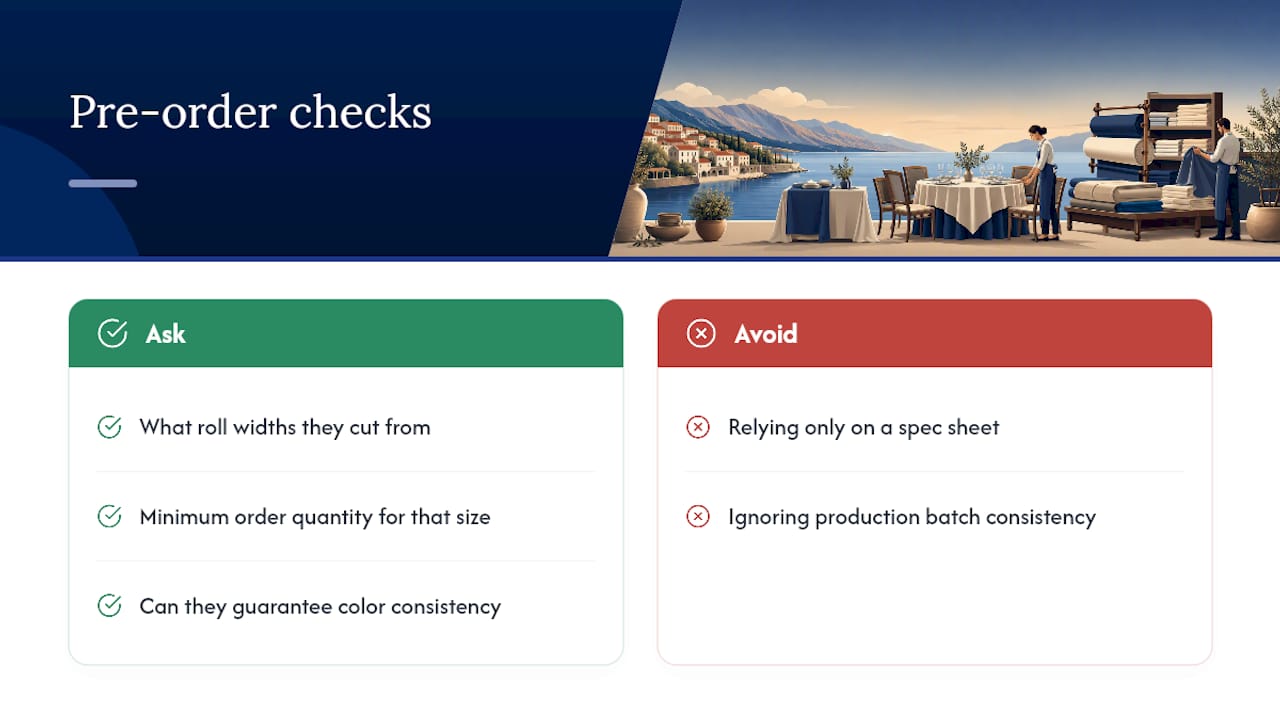
Before you commit to a size or a fabric, ask any supplier three questions: what roll widths do they cut from, what’s the minimum order quantity for that size, and can they guarantee color consistency across separate production batches. Those three answers tell you more about long-term reliability than any spec sheet.
Off-the-Shelf or Custom: Which Fits Your Table?
Ready-made sizes cost less and ship faster, but they force your table to fit the cloth rather than the other way around. Custom production costs more upfront and takes longer, but it guarantees exact fit. Before ordering custom, ask about lead time, minimum quantities, and whether sample swatches are available.
Large hotels, resorts, and event companies with nonstandard tables or branded color requirements almost always land on custom. A small café with two or three standard rectangular tables rarely needs anything beyond a stocked SKU. The deciding question isn’t budget alone. It’s whether your tables actually match a standard size in the first place.
— Xpert
Get Sized and Sampled Through Gjergji H Tekstil
Finding a supplier who can deliver exact sizes at volume without a long wait between reorders is a common problem among tablecloth buyers. Some suppliers control the whole chain from fabric sourcing to finished cut, which can support consistent batch-to-batch color and sizing for hotel groups working with international brands.
Getting started is straightforward. Reach out with your tabletop measurements and preferred drop, request fabric samples in polyester or poly-cotton blend, and discuss minimum order quantities for your venue’s table count. Restaurant operators building out a full table setup program can start with the practical guide to restaurant table textiles, while hotels evaluating linen programs at scale should look at the hotel textile selection tips for guest comfort and cost savings before requesting a quote.
Sources
Size chart data and drop calculations in this guide draw from MON CROCHET’s tablecloth size charts and SKU listings from Megateksa. Accessory specifications come from Tescoma Albania’s Presto clip listings. For material trade-offs specific to hospitality laundering, see Gjergji H Tekstil’s tablecloth material guidance and the internal breakdown of polyester-cotton use in hospitality settings.
- MON CROCHET — Madhësitë e mbulesave tavoline (size charts)
- Megateksa — mbulesa tavoline product listings
- Tescoma Albania — Presto tablecloth clips (4 pcs)