

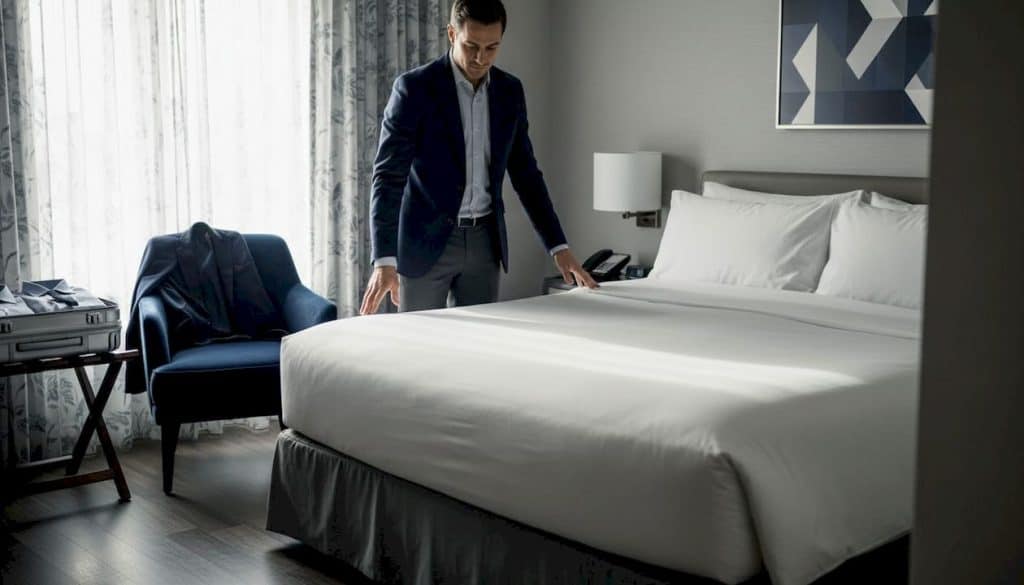
TL;DR:
- Textiles significantly influence guest perception, hygiene, and operational costs in hospitality.
- Innovations like antimicrobial and stain-resistant fabrics extend linen life, reduce energy use, and improve safety.
- Treating textiles as strategic infrastructure enhances long-term savings and guest satisfaction.
When most hospitality operators think about guest satisfaction, they focus on staff training, food quality, or room decor. Textiles rarely enter the conversation at the strategic level. Yet the sheets your guests sleep on, the towels they reach for after a shower, and the tablecloths framing their dining experience all send powerful signals about your brand’s standards. Advanced antimicrobial treatments can reduce bacteria by 99.9%, extend linen life by 15 to 20%, and allow lower wash temperatures that cut energy costs. That is not an aesthetic choice. That is a business decision.
Table of Contents
- Why textiles matter: Beyond aesthetics in hospitality
- Key textile types and functions in hospitality settings
- Quality matters: Textile innovations driving cost and guest satisfaction
- Operational impact: Textiles and workflow efficiency
- Why textiles deserve a seat at the decision table: An expert perspective
- Partnering for textile excellence in Balkan hospitality
- Frequently asked questions
Key Takeaways
| Point | Details |
|---|---|
| Textiles drive guest comfort | The right fabrics improve first impressions and recurring guest satisfaction in every hotel space. |
| Innovative fabrics cut costs | Antimicrobial and tested textiles lower energy use and extend linen lifespan reducing operational expenses. |
| Selection impacts efficiency | Practical textile choices streamline workflows, simplify maintenance, and boost profitability. |
| Choose proven partners | Work with specialized hospitality suppliers to ensure both quality and lasting ROI from textile investments. |
Why textiles matter: Beyond aesthetics in hospitality
The hospitality industry runs on details. A guest does not consciously notice a perfectly pressed pillowcase, but they absolutely notice a rough, discolored, or worn-out one. Textiles are one of the most consistent touchpoints across every guest interaction, and they carry more operational weight than most decision-makers realize.
Think about it from a guest’s perspective. From the moment they pull back the bedcovers to the moment they dry their hands in the bathroom, textiles are present. Those interactions accumulate into an overall perception of quality. A hotel that invests in custom textiles for guest experience communicates attention to detail without saying a word. One that cuts corners on linen quality will find that message surfacing in online reviews, often phrased as “the room felt cheap” or “the towels were scratchy.”
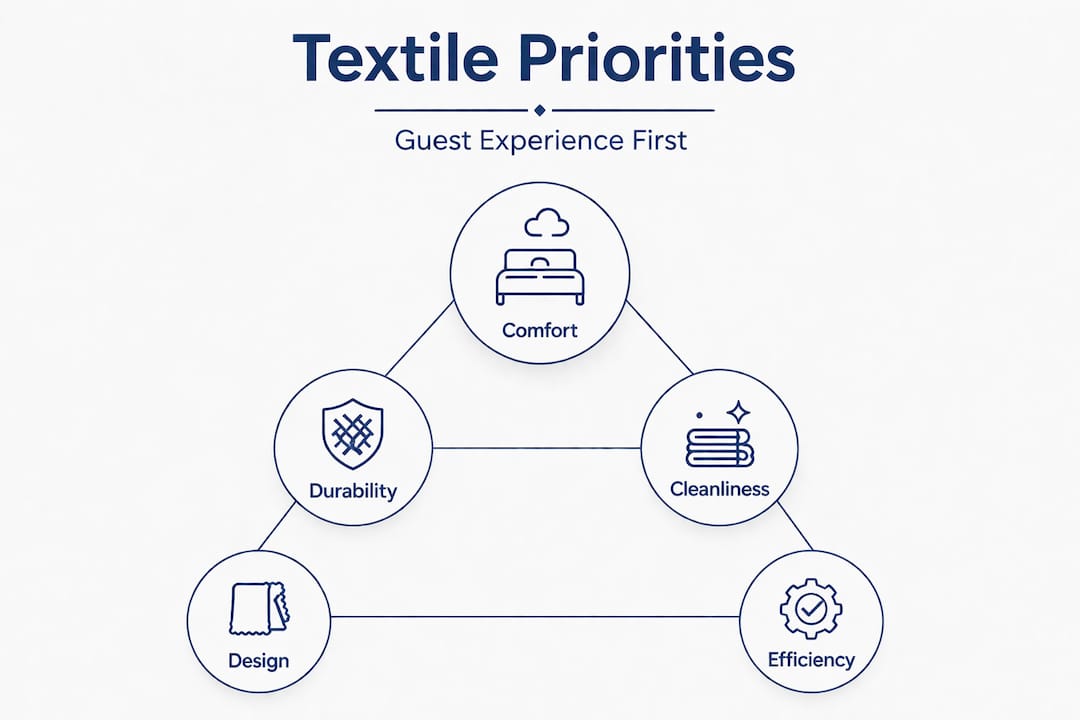
Beyond comfort and perception, textiles directly affect hygiene standards, which matter even more in a post-pandemic market. Certified hospitality textiles that meet recognized testing standards provide measurable assurance to both staff and guests. This is not a soft benefit. It is a quantifiable operational advantage.
The key reasons textiles matter at a strategic level include:
- Guest comfort and sensory experience: Fabric softness, breathability, and weight affect sleep quality and overall stay satisfaction.
- Hygiene and safety: Textiles that harbor bacteria or allergens create health risks and liability exposure.
- Brand alignment: Uniform colors, weave patterns, and materials reinforce your property’s identity.
- Energy and maintenance costs: Low-quality textiles wear out faster, require more frequent replacement, and often demand higher wash temperatures.
- Staff efficiency: Well-chosen textiles are easier to launder, fold, and manage, saving time across housekeeping operations.
“Antimicrobial treatments reduce bacteria by 99.9% and extend linen life by 15 to 20%, while allowing lower wash temperatures that directly reduce energy costs.”
The textile visual impact on a hospitality space is also underestimated. A well-appointed dining room with crisp, color-consistent table linens projects a completely different atmosphere than one with mismatched or faded fabrics. That visual coherence is not decoration. It is revenue protection.
Key textile types and functions in hospitality settings
With an understanding of why textiles matter, it is useful to examine the primary categories and what each demands in a professional hospitality context. Not all textiles serve the same function, and selecting the wrong product for a given application creates problems that are expensive to correct.
Bedding and pillow textiles are the most scrutinized category in hotels. Thread count is often discussed, but it is not the only indicator of quality. Weave type, fiber composition, and treatment for industrial wash resistance are equally important. A 300-thread-count percale sheet that survives 200 wash cycles at high temperatures outperforms a 600-thread-count sheet that pills after 50. Wholesale hotel textiles sourced from suppliers with industrial specifications will always outperform retail-grade products over time.
Bath textiles, including towels and bathrobes, need to balance absorbency with durability. The GSM (grams per square meter) rating is the standard measure here. Higher GSM means denser, more absorbent fabric. For a four-star or five-star property, 550 to 700 GSM is the standard range. Below that, towels feel thin and guests notice immediately.
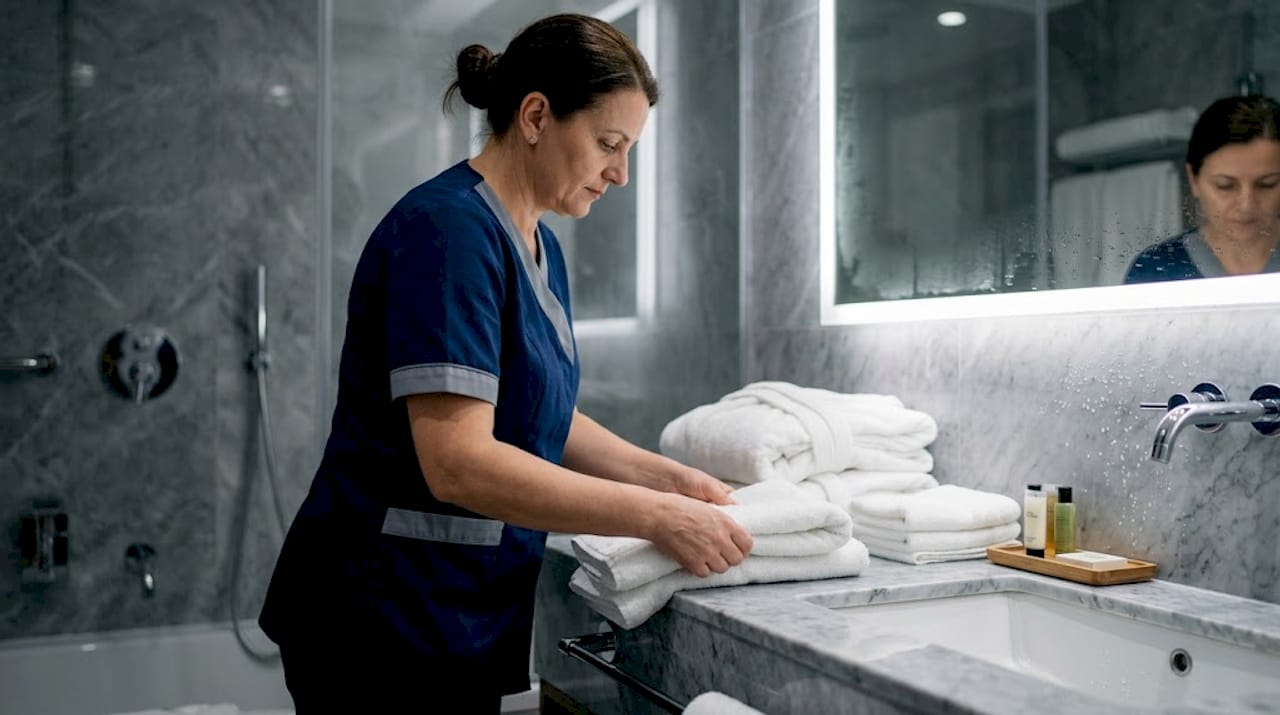
Table linens in restaurants and hotel dining rooms require resistance to staining, frequent laundering, and the visual demands of a formal setting. Color retention after repeated washing is a non-negotiable requirement, as is resistance to abrasion from cutlery and repeated folding.
Uniforms carry brand identity directly on your staff. They must be durable under daily use, comfortable enough for long shifts, and consistent in appearance across a team. Custom uniforms also simplify staff identification for guests, which contributes to service perception.
Curtains and decorative textiles manage light, privacy, and acoustic comfort. In hotel rooms, blackout curtain backing is a technical requirement, not a luxury. In restaurants, the acoustic properties of heavy drape fabrics can meaningfully reduce ambient noise, improving dining comfort.
| Textile type | Key quality criteria | Primary challenge | Selection priority |
|---|---|---|---|
| Bedding | Wash resistance, softness | Wear after industrial cycles | Fiber blend and GSM |
| Towels | Absorbency, durability | Color fade and pilling | GSM and weave type |
| Table linens | Stain resistance, color retention | High-frequency laundering | Treatment and fabric weight |
| Uniforms | Durability, comfort | Consistent appearance | Fit, fabric blend, colorfast |
| Curtains | Opacity, acoustic quality | Fading, lining durability | Lining type and fabric weight |
When selecting textiles for hotels, the guiding principle should be total cost of ownership rather than unit price. A towel that costs 30% more upfront but lasts twice as long is the economical choice. Antimicrobial treatments extend linen life by 15 to 20%, which compounds across a large inventory to produce meaningful savings over a three to five year cycle.
Quality matters: Textile innovations driving cost and guest satisfaction
Textile science has advanced considerably in the past decade, and the hospitality industry is only beginning to adopt some of the most impactful innovations. Understanding these advancements gives procurement teams a real edge when building long-term supply strategies.
Antimicrobial treatments are the most operationally significant development in hospitality textiles. Silver ion technology, for example, creates a surface-level barrier that prevents bacterial growth between wash cycles. This is particularly valuable for high-touch items like pillowcases, hand towels, and gym towels. The AATCC 100 standard is the benchmark test used to verify these claims. Fabrics tested under AATCC 100 reduce bacteria by 99.9% and can be laundered at lower temperatures without compromising hygiene performance.
Stain-resistant finishes are applied at the fiber or fabric level and dramatically reduce the laundering burden on high-use dining textiles. Nanotechnology-based finishes cause liquids to bead on the surface rather than penetrate the weave. This means table linens in a busy restaurant can be spot-cleaned and reused through a service, reducing daily laundry volume significantly.
Eco-friendly and sustainable fiber options are increasingly relevant as hospitality businesses face pressure from guests, investors, and regulatory bodies to reduce their environmental footprint. Organic cotton, recycled polyester, and Tencel (lyocell) alternatives offer competitive performance alongside measurable sustainability credentials.
Pro Tip: When evaluating antimicrobial or stain-resistant textiles, always request documentation of the specific test standard used. AATCC 100 is the recognized benchmark for antimicrobial performance. A supplier who cannot provide test data is not a reliable source for certified-grade textiles.
The table below compares innovations by operational impact:
| Innovation | Primary benefit | Operational impact | Cost implication |
|---|---|---|---|
| Antimicrobial (silver ions) | 99.9% bacteria reduction | Fewer health incidents, longer life | Moderate upfront, lower long-term |
| Stain-resistant finish | Reduced laundry frequency | Less water and detergent use | Low to moderate upfront |
| High-twist yarn construction | Greater abrasion resistance | More wash cycles before replacement | Moderate upfront |
| Sustainable fibers | Environmental certification | Brand value, regulatory compliance | Variable |
Working with suppliers who stay current on 2026 hospitality textile trends ensures your procurement decisions are aligned with where the industry is heading, not where it has been. And for hospitality textile testing, understanding which standards apply to each category prevents costly mistakes in the buying process.
Operational impact: Textiles and workflow efficiency
Once you understand the technological advantages available, the next question is how textile choices translate into day-to-day operational efficiency. This is where many procurement teams miss significant value. Choosing textiles purely on price or appearance, without considering workflow implications, creates operational drag that compounds over time.
Consider the housekeeping department in a hotel with 80 rooms. If the bed linen requires high-temperature washing because it lacks antimicrobial treatment, every laundry cycle costs more in energy and shortens the fabric’s life through thermal stress. Antimicrobial and durable textiles allow lower wash temperatures without sacrificing hygiene standards, which directly reduces energy consumption across thousands of laundry cycles per year.
Here is a practical framework for optimizing textile-related operations in a hospitality setting:
- Audit your current textile inventory. Identify which categories are generating the most replacement costs, complaint incidents, or laundry labor. This gives you a baseline and identifies where investment will have the most impact.
- Standardize specifications across your property. Inconsistent linen quality creates unpredictable outcomes for guests and extra sorting work for housekeeping. A uniform specification document, by room category and use type, eliminates this problem.
- Work with your laundry team to match textiles to equipment. Industrial washing machines operate within specific temperature and chemical ranges. Your textile specifications should be compatible with your laundry setup to avoid premature wear.
- Implement a textile lifecycle tracking system. Marking linens by batch and tracking wash cycles allows you to replace items proactively rather than reactively, avoiding the situation where worn linens reach guests before they are pulled from circulation.
- Partner with a supplier who provides advisory support. The right supplier does not simply deliver products. They consult on specifications, offer alternatives when supply conditions change, and help you plan for seasonal demand spikes.
Pro Tip: Standardizing towel GSM and bedding specifications across all rooms, even at different tier levels, simplifies purchasing and reduces inventory complexity. You can differentiate the guest experience through other means, such as room-specific amenities, without fragmenting your linen supply chain.
Reviewing your textile maintenance workflow periodically, ideally once per season, prevents small inefficiencies from becoming structural cost problems. Many hotels discover that one or two specification changes can reduce annual linen expenditure by 10 to 15% without any reduction in guest satisfaction scores.
Why textiles deserve a seat at the decision table: An expert perspective
Here is an uncomfortable truth that most hospitality procurement teams are not ready to hear: treating textiles as a commodity purchase is one of the most expensive decisions a hotel or restaurant can make.
The logic behind cheap linen procurement seems sound on the surface. Keep unit costs low, buy in bulk, replace as needed. But the actual cost model is completely different once you factor in replacement frequency, energy costs for high-temperature washing, and the subtler costs of guest dissatisfaction that never show up in a procurement spreadsheet.
In the Balkans market, where tourism is growing rapidly and international brand expectations are entering the region, this gap between commodity thinking and strategic sourcing is becoming increasingly visible. Properties that invested early in quality-certified textiles are now competing effectively against international brands. Those that treated linen as a line item to be minimized are caught in a cycle of replacement and complaint management.
The ROI on premium, tested textiles is not theoretical. A linen set that lasts 40% longer and requires 20% less energy to launder pays back its premium within the first 18 months in a high-occupancy property. Add the reduction in guest complaints and the positive effect on review scores, and the financial case becomes straightforward.
The lesson from three decades of experience in this market is simple: quality textile decisions are leadership decisions. They should involve operations management, not just purchasing. And the textile distribution guide for Balkan markets shows clearly that the properties performing at the highest level have one thing in common: they treat textiles as infrastructure, not inventory.
Partnering for textile excellence in Balkan hospitality
Understanding the strategic value of hospitality textiles is the first step. The second is finding a partner who can consistently deliver on that standard at scale, across categories, and with the kind of advisory support that turns a supplier relationship into a genuine operational asset.
Gjergji H Tekstil has built exactly this kind of operation over 30 years, supplying properties from boutique Albanian hotels to internationally branded properties including Meliá, Marriott, and Sheraton. The company imports large volumes from Italy, China, India, and Pakistan, giving clients access to competitive pricing that individual properties cannot access on their own. Whether you are sourcing wholesale hotel textiles for a new property opening or revisiting your current specifications, the team brings both product depth and practical experience to every engagement. For operators ready to make smarter textile decisions, the hotel and dining textile tips available through the Gjergji H Tekstil platform offer a clear, actionable starting point.
Frequently asked questions
How do antimicrobial textiles benefit hotels?
Antimicrobial textiles reduce bacteria by 99.9% and extend linen life by 15 to 20%, improving both guest hygiene safety and long-term procurement costs.
What types of textiles are most important in hospitality?
Bedding, towels, table linens, uniforms, and curtains are the core textile categories, each with distinct performance requirements for durability, hygiene, and guest comfort.
Do innovative textiles really help reduce operating costs?
Yes. Advanced fabrics last 15 to 20% longer and allow lower laundry temperatures, which reduces both replacement frequency and energy expenses across high-volume hospitality operations.
How do I ensure textile quality when sourcing for a hotel?
Request supplier documentation for recognized certifications such as AATCC 100, which verifies that advanced treatments lower bacteria by 99.9% and support energy-efficient laundering, and choose suppliers with direct hospitality sector experience.