

TL;DR:
- Long lasting textiles maintain their integrity, color, and surface quality through heavy use, supported by documented testing data. Natural fibers like flax linen and hemp, along with synthetic options such as solution-dyed acrylic and nylon, offer varying levels of durability suitable for contract environments, validated by standards like Martindale cycles. Selecting fabrics based on performance documentation and certifications is essential to ensure longevity, cost-efficiency, and sustainability in interior projects.
Long lasting textiles are defined as fabrics that maintain structural integrity, color stability, and surface quality through sustained heavy use, measured by standardized tests including the Martindale abrasion test, ISO 105-B02 lightfastness ratings, and fire retardancy certifications. For interior designers and procurement managers sourcing for hospitality or residential projects, the examples of long lasting textiles that matter most are those backed by documented performance data, not marketing language. Fabrics like solution-dyed acrylic, heavyweight linen, and nylon-blend upholstery textiles consistently meet contract-grade thresholds. Certifications such as Oeko-Tex Standard 100 and the Global Recycled Standard (GRS) add an additional layer of verified quality. Selecting by specification rather than appearance alone is the single most reliable way to reduce replacement costs and protect long-term project budgets.
1. Flax linen: the benchmark natural textile for longevity
Flax linen is one of the oldest and most structurally sound examples of resilient textiles in recorded history. Its tightly structured weave distributes stress across the fiber matrix, which reduces surface wear under repeated friction. Linen upholstery fabrics regularly achieve Martindale ratings between 20,000 and 40,000 cycles depending on weave density and finishing, placing mid-to-heavyweight versions firmly in the general contract category.
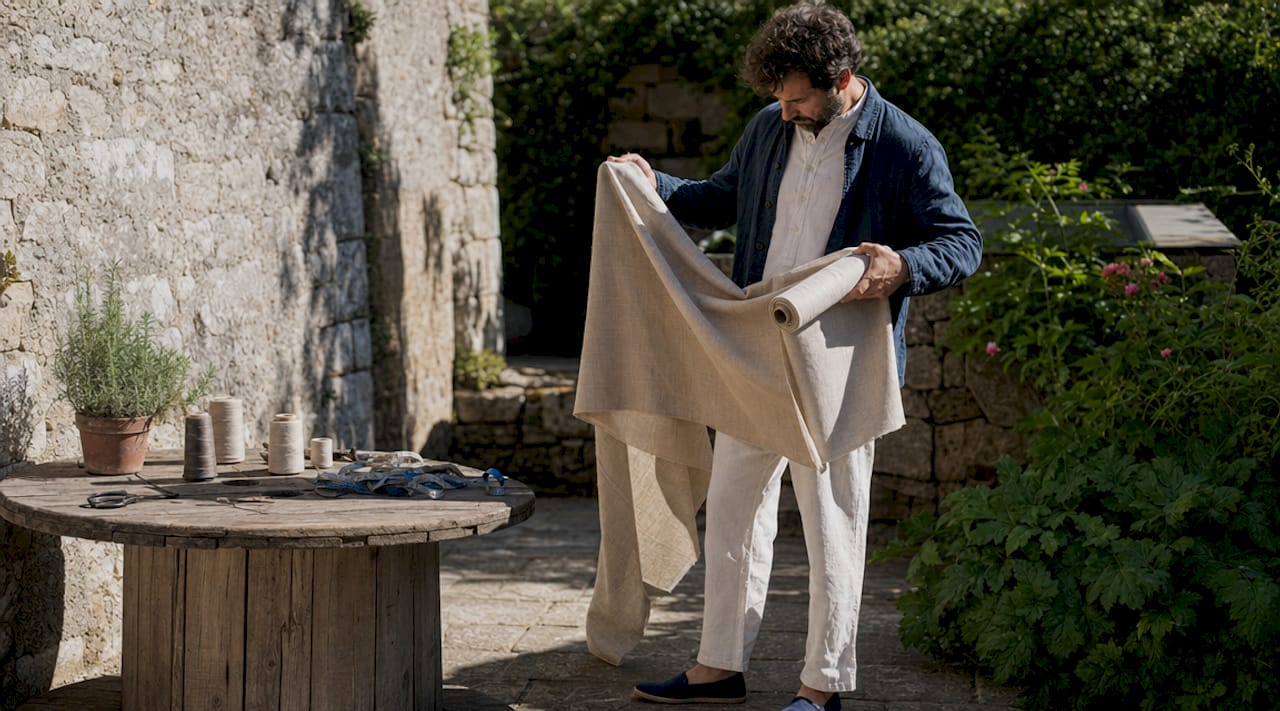
One of the most striking historical proofs of linen-class fiber durability comes from Māori textile tradition. A harakeke (flax) warrior cloak from the 18th century remains in excellent condition due to its close twining stitch, which made the fabric impenetrable. Only seven such cloaks exist worldwide, and this one returned to Auckland Museum on a five-year exhibition loan. The lesson for modern specifiers is direct: weave structure and finishing technique determine longevity as much as the raw fiber itself.
Linen also performs well in lightfastness, resisting UV-induced fading better than many cotton variants. For residential applications, linen drapery and upholstery in neutral tones can maintain appearance for 10 or more years with correct care. In hospitality contexts, linen-blend fabrics are a practical choice for dining chairs and lounge seating where moderate traffic is expected.
Pro Tip: When specifying linen for contract use, request the Martindale test report for the finished fabric, not just the raw fiber. Dyeing processes can weaken flax fibers, so a dyed linen may perform differently than its undyed counterpart.
2. Hemp: a high-durability natural fiber with sustainability credentials
Hemp is one of the most underspecified durable fabric examples in commercial interiors, despite its fiber tensile strength exceeding that of cotton by a significant margin. Hemp fabric resists mold, UV degradation, and abrasion, making it suitable for both upholstery and wall covering applications in hospitality environments. Its natural antimicrobial properties reduce maintenance frequency, which translates directly into lower operational costs over a fabric’s service life.
Hemp’s sustainability profile is equally strong. It requires minimal pesticide use, returns nutrients to the soil, and produces more fiber per acre than cotton. For procurement managers working toward sustainability targets, hemp qualifies under several eco-certification frameworks including Oeko-Tex and GOTS (Global Organic Textile Standard). This combination of physical durability and verified environmental credentials places hemp firmly on any serious sustainable textiles list for 2026 projects.
3. Wool: natural resilience with built-in performance properties
Wool is one of the top long lasting fabrics for contract upholstery because its crimped fiber structure gives it natural elasticity and recovery. When compressed under body weight, wool fibers spring back to their original form, which prevents the permanent deformation that shortens the life of flat-woven synthetics. Wool upholstery fabrics with tight weave constructions regularly achieve Martindale ratings of 30,000 to 60,000 cycles, qualifying them for heavy contract use.
Beyond abrasion resistance, wool carries inherent flame resistance, meeting many hospitality fire safety standards without chemical treatment. This is a significant advantage in hotel and restaurant procurement, where fire retardancy certification is a non-negotiable requirement. Wool also absorbs and releases moisture without feeling wet, which contributes to guest comfort in seating applications. The cost per use calculation for quality wool upholstery consistently favors wool over cheaper synthetic alternatives when measured across a five-year replacement cycle.
4. Cotton canvas: structured weight for utility and residential durability
Midweight organic cotton canvas at 10 oz is marketed as durable, holds creases well, and improves with wear, making it suitable for utility and workwear applications that parallel longevity in upholstery and accessories. The structured plain weave of canvas distributes load evenly, which is why it has been used for centuries in applications requiring sustained mechanical stress. In residential interiors, cotton canvas performs well for cushion covers, roman blinds, and casual upholstery where traffic is moderate.
Cotton canvas does have limitations in high-traffic contract environments. It is prone to fuzzing, and while cotton pills tend to break off rather than cling, the surface can lose its clean appearance faster than synthetic alternatives under heavy use. For residential projects where natural fiber aesthetics are a priority, canvas remains a reliable and cost-effective choice. Pairing it with a stain-resistant finish extends its service life considerably in family or pet-friendly environments.
5. Solution-dyed acrylic and polypropylene: the synthetic durability standard
Solution-dyed acrylics and polypropylenes resist stains, UV exposure, and bleach cleaning, with abrasion resistance of 50,000 or more Martindale cycles, making them suitable for heavy-use upholstery in hospitality settings. Solution dyeing means the color is integrated into the fiber during extrusion rather than applied to the surface afterward. This process produces colorfastness that surface-dyed fabrics cannot match, particularly under prolonged sunlight exposure in outdoor or sun-facing interior applications.
These fabrics dominate modern contract upholstery for good reason. A hotel lobby chair upholstered in solution-dyed acrylic can withstand daily cleaning with diluted bleach solutions without color loss or fiber degradation. For procurement managers specifying outdoor terraces, poolside furniture, or high-footfall reception areas, solution-dyed synthetics are the most reliable category of best durable fabrics available at scale.
- Solution-dyed acrylic: 50,000 or more Martindale cycles, UV stable, bleach cleanable, ideal for outdoor and sun-exposed interiors
- Polypropylene: Highly stain resistant, moisture resistant, cost-effective for high-volume hospitality procurement
- Nylon: Superior abrasion resistance, excellent recovery, preferred for seating with constant friction contact
Pro Tip: Always request the specific Martindale test report for the finished upholstery fabric, not just the fiber category. A polypropylene fabric with a loose weave can underperform a tightly woven cotton blend despite the fiber’s theoretical advantages.
6. Polyester-cotton blends: balancing performance and comfort
Polyester-cotton blends represent one of the most practical durable fabric examples for bed linens, table textiles, and light upholstery in hospitality environments. The polyester component contributes abrasion resistance and wrinkle recovery, while the cotton component maintains breathability and a soft hand feel that guests notice. A 60/40 polyester-cotton blend for hotel bed linens typically withstands 200 or more industrial wash cycles without significant fiber degradation, which is the operational benchmark for most hotel laundry programs.
Fabric construction matters as much as fiber content in blends. Compact spinning and vortex spinning reduce fuzzing and pilling in blended yarns, improving longevity without sacrificing hand feel. Polyester pills cling stubbornly to fabric surfaces, which creates a worn appearance even when the fabric retains structural integrity. Specifying blends produced with compact-spun yarns eliminates this problem and extends the perceived service life of the textile.
7. Nylon upholstery fabric: the abrasion resistance leader
Nylon is the highest-performing synthetic fiber for abrasion resistance among long wearing materials used in contract interiors. Its molecular structure gives it exceptional toughness under repeated friction, which is why airport lounges, stadium seating, and hotel corridors consistently specify nylon-based upholstery. Contract fabric specifications require at least 30,000 double rubs for general use and up to 100,000 or more for heavy-duty hospitality applications such as hotel lobbies and airport lounges. Nylon fabrics routinely exceed these thresholds.
The primary limitation of nylon in interior applications is its susceptibility to UV degradation without treatment. Untreated nylon fades and weakens under prolonged sunlight exposure, which limits its use to interior-only applications unless UV-stabilizing finishes are applied. For indoor contract seating in high-traffic environments, however, nylon remains the most reliable choice among high quality fabric examples for long-term performance.
8. How industry testing standards define durable textiles
The Martindale abrasion test is the primary method used to classify what are durable textiles in European and international contract markets. Martindale rub test cycle counts from 25,000 up to 100,000 or more determine fabric suitability from general contract to severe contract hospitality upholstery. Light domestic use requires 10,000 to 15,000 cycles, heavy domestic use requires 15,000 to 25,000 cycles, and severe contract environments such as hotel lobbies and transportation seating require 100,000 or more cycles. Matching the Martindale rating to the actual traffic environment is the most direct way to prevent premature furniture replacement.
Lightfastness is the second critical performance dimension. ISO 105-B02 ratings measure color retention under standardized UV exposure, and contract specifications typically require a rating of 5 or above on an 8-point scale. Fire retardancy standards vary by country and application type, but hospitality textiles in most markets must meet BS 5852, EN 1021, or equivalent national standards. Procurement teams should request abrasion-test reports, fire certificates, and lightfastness ratings as a standard documentation package before finalizing any contract textile specification.
| Test | Standard | Minimum for heavy contract |
|---|---|---|
| Abrasion resistance | Martindale | 40,000 to 100,000 cycles |
| Lightfastness | ISO 105-B02 | Rating 5 or above |
| Fire retardancy | EN 1021 / BS 5852 | Pass (hospitality mandatory) |
Pro Tip: Ask your supplier whether the test reports cover the finished upholstery system, including filling and treatments, not just the face fabric. Some upholstery failures originate in the backing or foam layer, not the textile itself.
9. Why durability is the most direct path to textile sustainability
Durability has one of the greatest sustainability impacts in interior textiles by reducing replacement frequency and waste generation. A fabric that lasts twice as long as a cheaper alternative generates half the waste, requires half the procurement cycles, and consumes fewer resources over its total service life. This is the core argument for specifying long lasting textiles in both hospitality and residential projects, particularly for designers and procurement managers with sustainability mandates.
The lifecycle cost comparison between short-life and long-life fabrics consistently favors investment in durable options. A contract upholstery fabric at twice the unit price that lasts four times as long delivers a 2x cost advantage over its service life, before accounting for labor costs associated with reupholstering or replacing furniture. For sustainability advocates, the environmental footprint calculation follows the same logic. Certifications like GRS (Global Recycled Standard) and Oeko-Tex Standard 100 validate eco-credentials, but they do not replace durability data. A certified fabric that fails in two years is not a sustainable choice regardless of its certification status.
Practical priorities for designers and procurement managers evaluating sustainability through durability:
- Specify Martindale ratings appropriate to actual traffic levels, not minimum thresholds
- Request full documentation packages including lightfastness and fire certificates
- Evaluate total cost of ownership across a five-year horizon, not unit price alone
- Prioritize suppliers who provide certified textile documentation as a standard offering
Key takeaways
Selecting long lasting textiles requires matching documented Martindale cycle counts, lightfastness ratings, and fire certifications to the specific traffic and environmental conditions of each interior application.
| Point | Details |
|---|---|
| Match Martindale to traffic | Heavy contract environments require 40,000 to 100,000 or more cycles; residential use needs 15,000 to 25,000. |
| Demand full documentation | Request abrasion, lightfastness, and fire test reports covering the complete upholstery system. |
| Solution-dyed synthetics lead | Solution-dyed acrylic and polypropylene deliver 50,000 or more Martindale cycles with UV and bleach resistance. |
| Durability equals sustainability | Longer service life directly reduces replacement frequency, waste, and total lifecycle cost. |
| Weave and finish matter as much as fiber | A tightly woven linen outperforms a loosely woven synthetic; construction and finishing determine real-world longevity. |
What 30 years of hospitality sourcing taught me about specifying durable textiles
The most common specification mistake I see is selecting textiles based on appearance in a showroom sample, then discovering the fabric fails within 18 months of installation. The sample looked right. The color worked. The hand feel was acceptable. But nobody requested the Martindale test report, and the fabric was rated for domestic use in a hotel lobby that needed severe contract performance.
The second mistake is treating sustainability certifications as a proxy for durability. A fabric can carry Oeko-Tex Standard 100 certification and still pill aggressively after 30 wash cycles. Certifications validate chemical safety and environmental production standards. They do not validate mechanical performance. You need both, and they come from different documents.
What actually works in practice is treating the documentation package as a non-negotiable part of the procurement process. Before any fabric reaches a shortlist, the Martindale report, lightfastness rating, and fire certificate should be on the table. Suppliers who cannot provide these documents quickly are telling you something important about their quality control processes. Transparency in documentation is a reliable proxy for overall supplier reliability. The textile procurement process for hospitality should be built around this documentation-first discipline, not around aesthetics first and performance as an afterthought.
— Xpert
Source durable textiles for your next hospitality or residential project
Gjergjihtextil has supplied contract-grade textiles to Meliá, Marriott, and Sheraton properties for over 30 years, with full documentation packages as standard practice for every product category.
Whether you are specifying hotel upholstery and linens that need to withstand industrial washing and heavy daily use, or sourcing restaurant textiles that combine stain resistance with presentation quality, Gjergjihtextil provides abrasion test reports, fire certificates, and lightfastness ratings with every order. The team works directly with interior designers and procurement managers to match fabric specifications to traffic requirements, budget parameters, and sustainability targets. Contact Gjergjihtextil to request a documentation package and product samples for your current project.
FAQ
What Martindale count qualifies a fabric as contract grade?
General contract use requires a minimum of 25,000 to 40,000 Martindale cycles, while heavy and severe contract environments such as hotel lobbies require 40,000 to 100,000 or more cycles.
Which natural fiber has the best abrasion resistance for upholstery?
Wool is the strongest natural fiber option for contract upholstery, regularly achieving 30,000 to 60,000 Martindale cycles in tightly woven constructions, with the added benefit of inherent flame resistance.
Are synthetic fabrics more durable than natural fibers?
Solution-dyed acrylics and nylon fabrics typically outperform natural fibers on raw abrasion resistance, reaching 50,000 or more Martindale cycles, but natural fibers like wool and linen offer performance advantages in fire resistance and moisture management that synthetics require chemical treatments to match.
What certifications should I look for when sourcing sustainable durable textiles?
Oeko-Tex Standard 100 validates chemical safety, GRS (Global Recycled Standard) confirms recycled content claims, and GOTS (Global Organic Textile Standard) certifies organic natural fibers. None of these replace Martindale and lightfastness test data, which must be evaluated separately.
Does fabric construction affect durability as much as fiber type?
Yes. A tightly woven linen or compact-spun polyester-cotton blend can outperform a loosely woven synthetic on real-world longevity. Weave density, yarn spinning method, and finishing treatments all directly influence how a fabric performs under sustained use.