


TL;DR:
- Fabric origin impacts hotel textiles by influencing fiber quality, durability, and wash-life, especially through staple length and yarn construction. Certifications like OEKO-TEX and GOTS verify chemical safety and organic standards, but origin labels alone are unreliable without technical documentation. Hotel procurement should focus on measurable fiber specifications, verified certifications, and laundering compatibility to ensure product performance and cost efficiency.
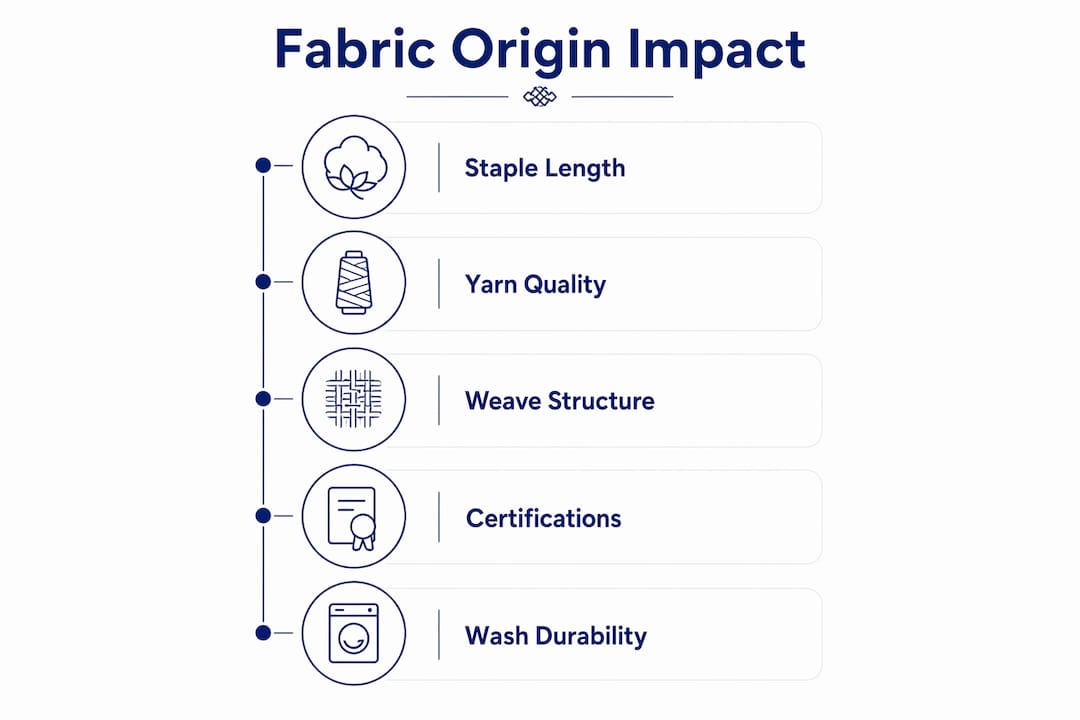
Fabric origin is defined as the geographic and production source of raw fibers, and it directly determines fiber grade, staple length, and yarn quality in hotel textiles. Hotel managers often treat thread count as the primary quality signal, but thread count omits critical details like staple length, yarn type, and finishing. The role of fabric origin in hotel quality goes far deeper than a label on a product spec sheet. Origin shapes how a sheet feels on night one, how it performs after 150 industrial wash cycles, and whether it carries the certifications your guests and brand standards require.
How does fabric origin affect hotel textile performance?
Fiber origin determines the physical properties that drive durability, softness, and wash-life in hotel linens. The single most important variable is staple length, which refers to the length of individual cotton fibers before spinning. Longer fibers produce stronger, smoother yarns with less surface fuzz and better resistance to pilling.
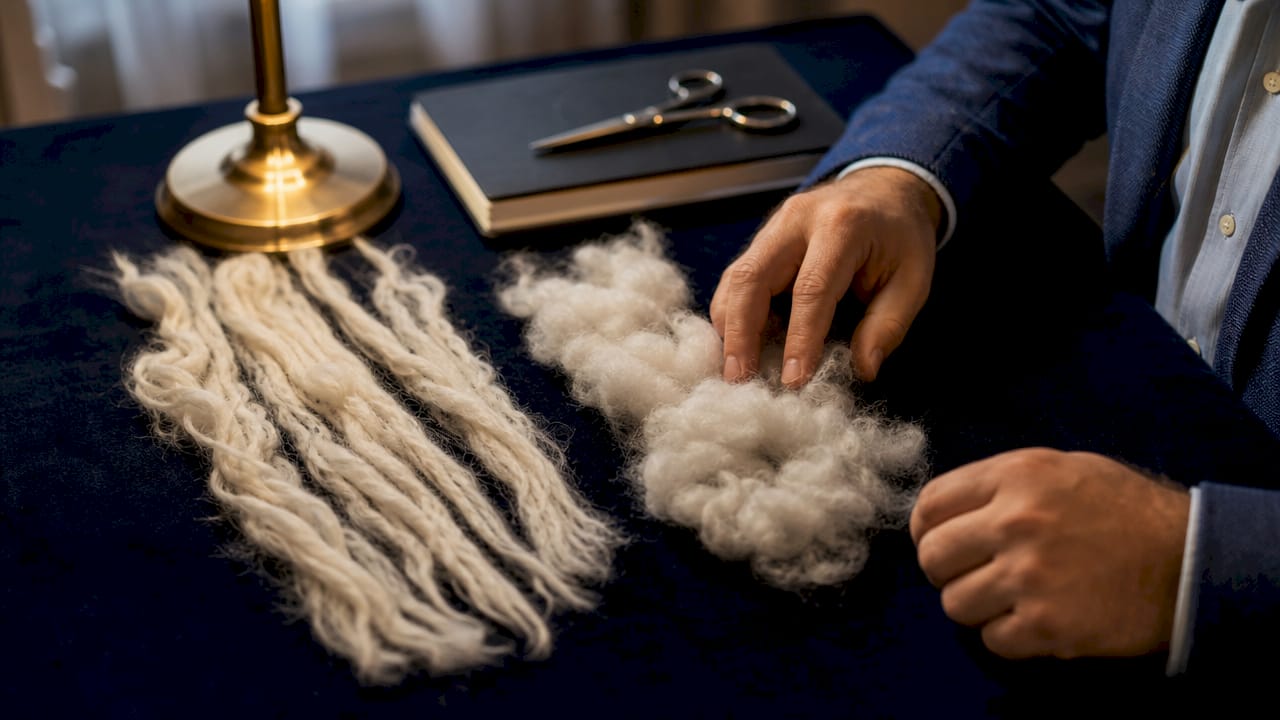
Long-staple cotton achieves 150–200 wash cycles in industrial laundry environments. Short-staple cotton degrades after just 30–50 cycles. That gap translates directly into replacement frequency and cost per occupied night.
Yarn construction compounds the effect of fiber origin. Ring-spun yarn, produced by continuously twisting and thinning fibers, creates a tighter, stronger thread than open-end spun yarn. Open-end spinning is faster and cheaper, but the resulting yarn is weaker and rougher. Hotels sourcing from origins where ring-spun production is standard get measurably better hand-feel and tensile strength.
Weave structure and finishing treatments also tie back to origin. Percale weaves from certified Egyptian or Supima cotton origins produce a crisp, cool feel that holds up under high-temperature washing. Sateen weaves from the same origins deliver a silkier surface but require gentler detergent chemistry to preserve the float structure. Understanding weave and finishing compatibility with your housekeeping regime is as important as knowing where the fiber was grown.
| Fiber Type | Staple Length | Industrial Wash Cycles | Typical Yarn Construction |
|---|---|---|---|
| Long-staple cotton (Egyptian, Supima) | 36–45 mm | 150–200+ | Ring-spun |
| Standard cotton | 25–32 mm | 80–120 | Ring-spun or open-end |
| Short-staple cotton | Under 25 mm | 30–50 | Open-end |
Pro Tip: Request a fiber specification sheet from every supplier before ordering. Ask specifically for staple length in millimeters and yarn spinning method. If a supplier cannot provide this data, the origin claim is marketing, not a measurable quality guarantee.
What certifications are linked to fabric origin in hotel procurement?
Certifications are the only reliable way to verify that an origin claim reflects real fiber and processing standards. Two certifications dominate hotel textile procurement: OEKO-TEX Standard 100 and GOTS.
OEKO-TEX Standard 100 certifies that a finished textile product has been tested for harmful substances. It does not certify organic fiber content or environmental production practices. OEKO-TEX is a product safety certification, not a supply chain sustainability certification. For guest-contact fabrics like bed linens and towels, OEKO-TEX Standard 100 confirms chemical safety but says nothing about where or how the fiber was grown.
GOTS certification requires at least 70% certified organic fibers for the “made with organic” label and at least 95% for the “organic” label. GOTS also mandates strict environmental and social processing standards across the entire supply chain, from fiber to finished product. That scope makes GOTS the stronger certification for hotels positioning themselves on sustainability.
The practical difference matters for procurement decisions:
- OEKO-TEX Standard 100: Use this to verify chemical safety in guest-contact fabrics. Confirm the certificate number applies to the specific finished product, not just the raw material.
- GOTS: Use this to verify organic fiber content and ethical processing. Confirm the certificate covers the full supply chain, including dyeing and finishing.
- Origin labels without certification: Terms like “Egyptian cotton” or “Indian cotton” describe geography, not quality. Without a fiber specification or certification, these labels carry no enforceable quality standard.
Certification scope verification is a critical step that many hotel procurement teams skip. A certificate issued for raw fiber does not automatically apply to the finished sheet. Always request the certificate number and confirm it covers the finished product category you are purchasing.
Hotels that supply certified textiles to guests gain a measurable brand positioning advantage, particularly in the four and five-star segments where sustainability credentials influence booking decisions.
Thread count myths: what hotel managers get wrong
Thread count is the most misused metric in hotel linen procurement. A high thread count does not indicate high quality. The number counts threads per square inch, but it says nothing about fiber grade, yarn construction, or finishing.
Multi-ply yarn inflates thread count without improving durability. A sheet woven from two-ply yarn counts each ply separately, so a 300-thread-count fabric made from two-ply yarn gets marketed as 600 thread count. The actual weave density has not changed. The fabric is not stronger or softer. It is just a larger number on a spec sheet.
A genuine 300–400 thread count sheet made from long-staple ring-spun cotton outperforms a 1,000 thread count sheet made from short-staple multi-ply yarn in every measurable category: wash-life, softness retention, and pilling resistance. Hotels that chase high thread count numbers often end up replacing linens more frequently, which increases total cost of ownership.
The same logic applies to origin branding. “Egyptian cotton” is a geographic designation, not a quality standard. Egypt produces both long-staple Giza cotton and lower-grade short-staple cotton. Without fiber specification data, the origin label tells you nothing about actual performance.
- Reject any supplier who cannot provide staple length and yarn spinning data alongside an origin claim.
- Treat thread count as a secondary metric. Prioritize fiber grade and yarn construction.
- Request product-specific durability data, including wash-cycle test results, before committing to a bulk order.
- Verify that origin claims are backed by traceable documentation, not just marketing copy.
Pro Tip: Ask suppliers for wash-cycle test results on the specific product SKU you are ordering. A reputable supplier will have this data. If they offer only general brand claims, request samples and conduct your own laundry trials before placing a full order.
How to apply fabric origin data in sourcing and laundry planning
Fabric origin data becomes operationally useful only when you connect it to your hotel’s specific laundering conditions. Industrial laundering conditions including temperature, detergent chemistry, and mechanical action directly affect how long a fabric lasts, regardless of fiber quality. A long-staple cotton sheet will degrade faster than expected if washed at temperatures or with detergents incompatible with its finishing treatment.
A practical sourcing workflow for hotel managers looks like this:
-
Request full fiber specifications. Ask every supplier for staple length in millimeters, yarn spinning method (ring-spun or open-end), and weave structure. This converts origin claims into measurable data points you can compare across suppliers.
-
Verify certification scope. Collect OEKO-TEX or GOTS certificate numbers and confirm they apply to the finished product, not just the raw fiber. Cross-check certificate validity on the OEKO-TEX or GOTS public databases.
-
Map your laundering regime. Document your housekeeping department’s wash temperatures, detergent types, and cycle frequencies. Share this information with suppliers and ask them to confirm fabric treatment compatibility with your specific regime.
-
Calculate cost per wash cycle. Divide the unit cost of a linen item by its expected wash-cycle life based on fiber grade. Long-staple cotton at a higher purchase price often delivers a lower cost per cycle than cheap short-staple alternatives that wear out in 30–50 washes.
-
Build a replacement schedule. Use cycle-based depreciation to project replacement timelines and capital expenditure. This turns fiber quality data into a budget planning tool, not just a purchasing criterion.
This workflow applies equally to bed linens, towels, and table textiles. The principle is the same across all categories: origin data is only useful when it connects to documented fiber specs, verified certifications, and laundering compatibility. Hotels that maximize textile durability through this kind of structured procurement consistently reduce their annual linen replacement costs.
Key Takeaways
Fabric origin determines hotel textile quality only when it is backed by verifiable fiber specifications, certified processing standards, and documented laundering compatibility.
| Point | Details |
|---|---|
| Staple length drives wash-life | Long-staple cotton lasts 150–200 wash cycles; short-staple cotton fails at 30–50 cycles. |
| Thread count is not a quality metric | Multi-ply yarn inflates thread count without improving durability or softness. |
| OEKO-TEX and GOTS serve different purposes | OEKO-TEX certifies chemical safety; GOTS certifies organic fiber content and supply chain standards. |
| Origin labels need technical backing | Geographic terms like “Egyptian cotton” require fiber specification data to be meaningful. |
| Laundering compatibility is non-negotiable | Fabric treatments must align with your housekeeping detergent and temperature regime to achieve rated cycle life. |
The real gap in hotel textile procurement
My experience working with hospitality supply chains shows one consistent pattern: hotel managers trust origin narratives far more than the data warrants. A supplier says “Italian linen” or “Pakistani cotton” and procurement teams treat it as a quality guarantee. It is not.
The hotels that get this right do something different. They treat origin as a starting point for investigation, not a conclusion. They ask for staple length data. They request wash-cycle test results. They check whether a certification number applies to the finished product or just the raw fiber. That documentation workflow is unglamorous, but it is the only reliable way to connect origin claims to actual performance.
The uncomfortable truth is that a well-specified sheet from a less prestigious origin will outperform a poorly specified sheet from a premium origin every time. I have seen this play out repeatedly with Marriott and Sheraton-level procurement standards. The brands that maintain consistent guest satisfaction are the ones that verify technical specs, not the ones that pay a premium for a geographic label.
The interplay between fiber origin, finishing treatments, and housekeeping chemistry is where most procurement decisions break down. A fabric that performs beautifully in a supplier’s test environment can degrade rapidly under your hotel’s specific detergent and temperature combination. That is why laundering compatibility documentation belongs in every supplier contract, not just the purchase order.
— Xpert
Gjergjihtextil’s hotel textile sourcing approach
Gjergjihtextil has supplied hotel textiles to properties including Meliá, Marriott, and Sheraton for over 30 years, importing from Italy, India, Pakistan, and China with full supply chain control from fiber sourcing to delivery.

Every product in Gjergjihtextil’s hotel textile catalog is specified with fiber grade, yarn construction, and certification documentation so your procurement team can verify quality claims before placing an order. The company’s in-house production and wholesale import model gives hotel managers access to origin-verified fabrics at competitive price points, with the technical documentation needed to match fabric specifications to your laundering regime. For managers who want to connect fiber origin data directly to guest comfort and cost planning, Gjergjihtextil’s textile selection guidance covers the full procurement workflow.
FAQ
What does fabric origin actually mean for hotel linen quality?
Fabric origin refers to the geographic and production source of raw fibers. It matters because different origins produce fibers with different staple lengths and yarn grades, which directly affect durability, softness, and industrial wash-life.
Is a high thread count a reliable quality indicator for hotel sheets?
Thread count is not a reliable quality indicator. Multi-ply yarn inflates thread count numbers without improving performance, and a genuine 300–400 thread count sheet from long-staple cotton outperforms a 1,000 thread count sheet made from short-staple multi-ply yarn.
What is the difference between OEKO-TEX Standard 100 and GOTS certification?
OEKO-TEX Standard 100 certifies that a finished textile is free from harmful substances. GOTS certifies organic fiber content and ethical processing across the entire supply chain. Hotels need both certifications for different quality assurance purposes.
How many wash cycles should hotel linens withstand?
Long-staple cotton linens withstand 150–200 industrial wash cycles. Short-staple cotton linens typically degrade after 30–50 cycles. Matching fiber grade to your laundering regime determines actual cycle life in your specific operation.
How should hotel managers verify supplier origin claims?
Request fiber staple length in millimeters, yarn spinning method, and certification numbers from every supplier. Confirm that certifications apply to the finished product, not just raw materials, by cross-checking certificate numbers on the OEKO-TEX or GOTS public verification databases.