

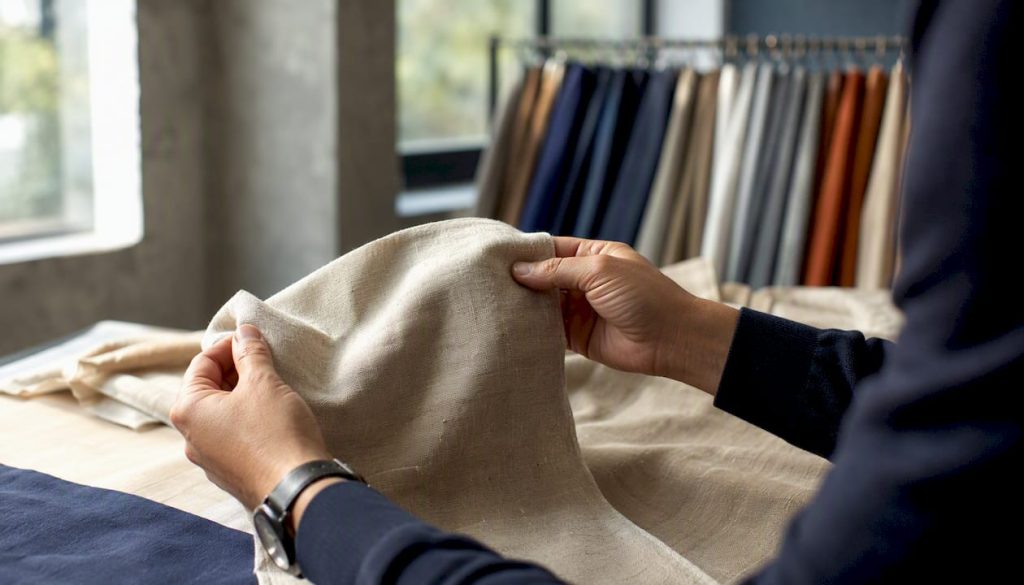
High-quality linen is defined by five factors above all: fiber length, weave density, weight (GSM), processing method, and provenance. Get those right, and durability, breathability, and long-term value follow. Miss one, and you may be paying a premium for fabric that pills, stiffens, or degrades after a dozen washes.
Before you commit to a purchase or a supplier, run through this quick checklist:
- Fiber content label: Confirm 100% linen or 100% flax. Blends change performance significantly.
- GSM or weight: Ask for the grams-per-square-meter figure. Heavier is not always better, but knowing the number lets you match the fabric to its use case.
- Crumple test: Squeeze a corner firmly, then release. Linen wrinkles naturally. If it springs back perfectly smooth, a heavy chemical finish is masking the fiber.
- Light test: Hold the fabric up to a light source. Even weave density with no thin spots signals consistent yarn construction.
- Selvedge and seam check: Inspect finished edges. Tight, even selvedges and dense stitching indicate production quality.
- Smell test: A sharp chemical odor suggests aggressive softening agents or coatings that wear off quickly.
- Certification and label check: Look for OEKO-TEX or GOTS certification, a clear country of origin, and care instructions.
- Provenance statement: Ask the supplier for retting method, staple length, and mill name. Vague answers are a warning sign.
Buying decision rule: Prefer clear provenance plus a stated GSM plus a credible certification plus a price that reflects the cost of quality processing.
Key Takeaways
High-quality linen is identified by long-staple fiber, verified GSM, transparent finishing, credible certification, and a price that reflects the cost of proper processing.
| Point | Details |
|---|---|
| Fiber length drives durability | Long-staple flax produces stronger, smoother yarns that resist pilling and seam failure over time. |
| GSM is the most objective spec | Match weight to use case: lighter weights for apparel, heavier constructions above 200 gsm for upholstery and high-traffic hospitality. |
| Finishing method determines longevity | Enzyme washing preserves fiber strength; chemical softeners degrade under industrial washing cycles. |
| Certifications to require | OEKO-TEX confirms chemical safety; GOTS covers full supply-chain traceability including fiber origin and social criteria. |
| Gjergjihtextil for hospitality sourcing | Supplies certified, industrial-wash-tested linens with documented GSM specs and provenance for bulk hospitality procurement. |
Table of Contents
- How flax becomes linen and where quality is won or lost
- Key factors in linen quality, explained factor by factor
- How to check linen quality in person or from a swatch
- Why country of origin matters more than the label suggests
- How quality linen ages and what proper care looks like
- Which certifications actually mean something for linen
- How price signals quality and when a low price is a warning
- A perspective from professional textile procurement
- Gjergjihtextil: certified linen sourcing for hospitality operations
- Sources
How flax becomes linen and where quality is won or lost
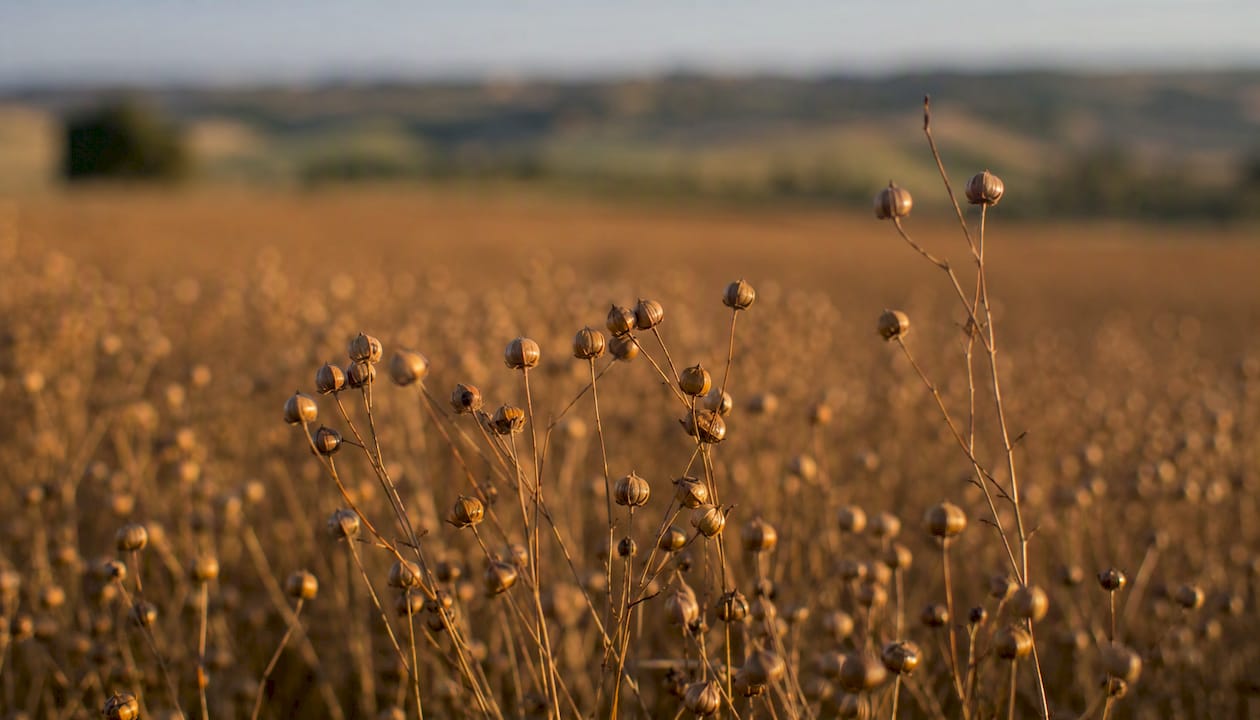
Linen’s properties are set long before the fabric reaches a buyer. Flax is a bast fiber plant, meaning the usable fiber runs along the stalk’s outer layer. Each step in extraction and processing either preserves or degrades that fiber’s length and integrity.
The sequence runs like this:
- Flax growing: Soil quality, climate, and harvest timing affect stalk length and fiber fineness.
- Retting: The stalks are soaked or laid in fields to loosen the fiber from the woody core. Dew retting (slow, field-based) typically produces finer, more consistent fiber than water retting, while chemical retting is faster but harsher on fiber length.
- Scutching and decortication: Mechanical beating removes the woody core. Aggressive scutching shortens fibers.
- Combing (hacking) and long-staple selection: This step separates long, premium “line” fibers from shorter “tow” fibers. Long-staple selection here is the single biggest determinant of yarn strength and smoothness, as documented in plant fiber processing research from The Met.
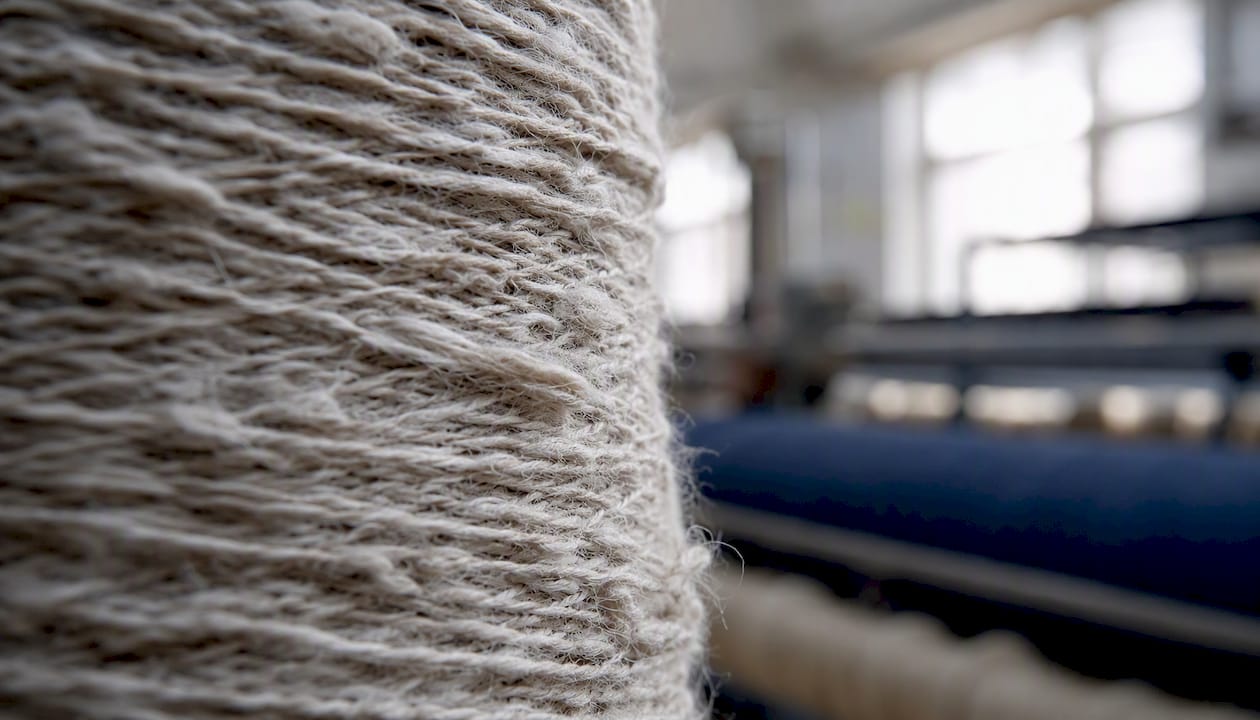
- Spinning: Long-staple fibers are wet-spun for finer, stronger yarns. Short-staple tow fibers are dry-spun and produce coarser, weaker yarn.
- Weaving: Picks-per-inch (PPI) and thread density are set at this stage.
- Finishing: Pre-washing, enzyme washing, or chemical softening determines initial hand and long-term durability.
Pro Tip: When requesting samples from a supplier, ask specifically: “What retting method was used, what is the staple length, and was the fabric enzyme-washed or chemically softened?” A supplier who cannot answer those three questions is unlikely to have consistent quality control.
Key factors in linen quality, explained factor by factor
Understanding what separates a durable, comfortable linen from a weak, short-lived one comes down to evaluating each quality dimension on its own terms.
Fiber length and origin
Long-staple flax fibers, typically sourced from Western European growing regions, produce yarns that are stronger, smoother, and more resistant to pilling than short-staple alternatives. The difference shows up quickly under repeated washing. Buyer sourcing guidance consistently ties European-origin flax to better tactile qualities and longer lifespan, largely because of climate conditions and established retting traditions in those regions.
Weave density and picks-per-inch
Picks-per-inch measures how many horizontal weft threads cross the vertical warp threads per inch of fabric. Higher PPI generally means a denser, more durable weave with better opacity. Plain weave is the most common linen construction; twill and herringbone weaves add texture and drape but may sacrifice some breathability. For bedding and table linens, a balanced plain weave with consistent PPI is usually the most reliable choice.
Weight (GSM) and use-case matching
GSM (grams per square meter) is the most objective single number for comparing linen fabrics. Lighter weights in the 100–150 gsm range suit apparel and warm-weather bedding. Mid-weight fabrics in the 150–200 gsm range work well for standard bedding and table linens. Heavier constructions above 200 gsm are appropriate for upholstery, drapery, and high-traffic hospitality applications, where choosing reliable commercial kitchen equipment can similarly impact overall operational durability. Technical durability analysis confirms that GSM directly correlates with abrasion resistance and structural integrity over time.
Hand, texture, and the softening process
High-quality linen often starts slightly crisp. With repeated washing, the fiber surface undergoes fibrillation, a natural process where microfibrils on the fiber surface soften and separate, producing the characteristic supple hand that well-aged linen is known for. Chemical softening can replicate this feel immediately, but it masks the underlying fiber quality and tends to wash out within a few cycles. If a linen feels unusually soft straight off the shelf, run the crumple test and the smell test before assuming the softness will last.
Slubs: character versus defect
Slubs are thicker, irregular sections in the yarn, a natural result of flax’s uneven fiber structure. A moderate number of slubs is normal and even desirable in authentic linen, contributing to its visual texture and character. Excessive, irregular slubs concentrated in one area of the fabric, however, often indicate short-staple tow fiber or inconsistent spinning, both of which reduce tensile strength at those points. The Met’s perspective on linen’s material properties notes that slubs and natural irregularities are part of linen’s authentic character, but the distribution matters.
Strength and abrasion resistance
Linen’s tensile strength is one of its most commercially relevant properties. Lab comparisons show that linen retains tensile strength better than cotton under repeated wet/dry cycling and abrasion, which is why it remains a preferred choice for long-lived items in hospitality and home use. Seam integrity under tension is a practical proxy: pull a seam gently and check for thread slippage or puckering. Either signals weak yarn or inadequate stitch density.
Breathability and moisture-wicking
Flax fibers have a hollow core structure that allows air and moisture to move through the fabric efficiently. This is not a marketing claim but a structural property of the fiber itself. The practical result is that linen bedding and apparel tend to feel cooler and drier against the skin than equivalent cotton weights, particularly in warm or humid conditions. For hospitality buyers, this translates directly to guest comfort ratings in warm-season properties.
Finishes and dyes
Enzyme washing is the preferred finishing method for quality linen. It softens the fabric by breaking down surface fibers gently, without compromising the yarn’s core strength. Stone washing achieves a similar effect mechanically. Chemical softeners and silicone coatings produce immediate softness but reduce the fabric’s moisture-wicking capacity and accelerate fiber breakdown under industrial washing. Reactive dyes penetrate the fiber and hold color through repeated washing; surface-applied pigment dyes fade faster and can stiffen the hand.
Thread/ply and yarn construction
Single-ply yarns are lighter and finer but more prone to pilling and seam failure under stress. Plied yarns, where two or more single yarns are twisted together, add strength and reduce pilling at the cost of some weight and drape. For hospitality applications where industrial washing is routine, plied yarn construction is worth specifying.
Shrinkage expectations
Pre-washed or pre-shrunk linen will shrink minimally after purchase, typically less than 3–5% with proper care. Fabric that has not been pre-treated can shrink noticeably in the first wash. Care labels that specify cold or warm wash and line or low-heat tumble dry are a reasonable indicator that the manufacturer has accounted for shrinkage behavior.
Pro Tip: For any hospitality procurement, request the supplier’s shrinkage test data alongside the GSM spec. A fabric that shrinks 8–10% in the first industrial wash cycle will cause fit and presentation problems at scale.
How to check linen quality in person or from a swatch
Practical evaluation does not require lab equipment. These checks work with a swatch, a sample length, or a finished product in a showroom.
-
Crumple test. Squeeze a corner firmly for five seconds, then release. Linen should wrinkle. If the fabric springs back with almost no creasing, a heavy finish is present. If it wrinkles but the creases are sharp and the fabric recovers its body quickly, the weave is dense and the fiber is strong.
-
Light transmission test. Hold the fabric up to a lamp or window. A quality plain-weave linen shows an even, consistent grid. Thin spots, irregular gaps, or a cloudy, uneven appearance indicate inconsistent yarn weight or weave density.
-
Hand and weight test. Drape the fabric over your palm. Quality linen has body and a slight coolness to the touch. Fabric that feels limp or unusually light for its stated GSM may have been over-processed or may be a blend.
-
Selvedge and seam inspection. Examine the finished edges. Tight, even selvedges with no loose threads indicate controlled production. On finished products, check stitch density at seams and corners. Bartacks at stress points are a sign of quality construction.
-
Stretch and pull test. Linen has very low elasticity. Pull the fabric gently on the bias (diagonal). Minimal give is normal. Significant stretch or a spongy recovery suggests synthetic blending or weak yarn construction.
-
Smell test. Fresh, quality linen has a faint, clean, slightly grassy scent. A sharp chemical or plasticky smell indicates silicone coating or heavy chemical softening agents.
-
Swatch and spec sheet request. For any significant purchase, request a swatch alongside a spec sheet that states GSM, PPI, fiber origin, staple length, and finishing method. Suppliers who provide this information routinely are operating at a professional level.
-
Avoid judging by immediate softness or color vibrancy alone. Both can be achieved with surface treatments that degrade quickly. The structural checks above are more reliable indicators of long-term performance.
Why country of origin matters more than the label suggests
Origin is a meaningful quality signal, but only when it comes with specifics. Flax grown in France, Belgium, and the Netherlands benefits from a cool, humid Atlantic climate that produces long, fine stalks and supports traditional dew retting. Buyer sourcing guides consistently identify these regions as producing higher-grade flax because of both climate and established processing traditions.
That said, origin alone is not a guarantee. Here is what to look for beyond the label:
- Retting method specified: Dew retting is slower and gentler than water or chemical retting. Ask which method was used.
- Mill name or region: A supplier willing to name the mill is more traceable than one citing only a country.
- Harvest method: Mechanical harvesting is standard; hand-pulling preserves root fiber length but is rare and expensive.
- Test reports: Request a fiber length or tensile strength report from an independent lab if the purchase is large enough to justify it.
When origin is marketing rather than substance, the signs are consistent: vague statements like “European linen” with no country, no mill, and no retting information. A legitimate premium-origin claim should be traceable at least to the country and ideally to the growing region and processing facility.
Questions worth asking any supplier:
- In which country and region was the flax grown?
- What retting method was used, and by which facility?
- Can you provide a mill audit report or fiber test certificate?
- Is the origin claim supported by a GOTS or OEKO-TEX certificate?
How quality linen ages and what proper care looks like
Linen improves with use, within limits. The natural softening process, fibrillation, occurs as micro-fibrils on the fiber surface gradually separate with washing and friction. This produces the characteristic drape and hand of well-aged linen. Fiber degradation, by contrast, shows up as thinning at stress points, seam failure, and a loss of body in the weave. The two processes are easy to distinguish: softening is uniform across the fabric; degradation is localized and progressive.
Practical care rules that protect fiber integrity:
- Wash at 40°C (104°F) or below for most linen; higher temperatures accelerate fiber breakdown.
- Use a mild, pH-neutral detergent. Enzyme-based detergents are safe and effective.
- Tumble dry on low heat or line dry. High heat causes irreversible shrinkage and weakens fiber bonds.
- Remove from the dryer or line while slightly damp and reshape by hand. This reduces wrinkle set and maintains drape.
- Avoid chlorine bleach, which degrades flax fibers rapidly.
For hospitality buyers, CDC laundering guidance for bedding and linens sets a practical floor for infection control and textile integrity. Commercial laundering operates at higher temperatures and with stronger detergents than household cycles, which is why industrial-wash test results from suppliers are a more reliable quality signal than retail care labels alone.
Pre-washed linen shrinks minimally after the first wash. Untreated fabric can lose a noticeable amount in the first cycle. For hospitality procurement, this matters for fitted sheet dimensions and tablecloth sizing. Always confirm whether the fabric has been pre-shrunk before specifying dimensions.
Longevity signals to track over time: seam integrity after 20 or more wash cycles, minimal pilling on flat surfaces, and consistent color retention. For hospitality buyers calculating cost-per-use, a linen that holds its structure through 150 or more industrial wash cycles at a higher unit price will typically outperform a cheaper alternative that degrades at 60 cycles. Long-lasting textile examples from hospitality operations illustrate how this calculus plays out in practice.
Pro Tip: Before committing to a bulk hospitality order, request a sample wash test: run the supplier’s fabric through 20 industrial wash cycles and measure GSM, seam integrity, and dimensional change. This single test eliminates most sourcing surprises.
Which certifications actually mean something for linen
Certifications vary widely in what they verify. Two carry real weight for linen buyers.
OEKO-TEX Standard 100 tests the finished fabric for harmful chemical residues, including heavy metals, formaldehyde, and pesticides. It does not verify fiber origin or organic farming practices, but it does confirm that the fabric as sold is safe for skin contact. For hospitality buyers, this is a minimum threshold for guest-facing textiles.
GOTS (Global Organic Textile Standard) covers the full supply chain from fiber to finished product, including organic fiber sourcing, social criteria for workers, and documented finishing chemistry. A GOTS certificate is harder to obtain and more meaningful as a supply-chain transparency signal.
UNEP’s textile circularity findings make clear that lifecycle thinking, including water management, chemical use in finishing, and end-of-life fiber recovery, is increasingly relevant to procurement decisions, particularly for large hospitality operators with sustainability commitments.
Supply-chain facts that support credible sustainability claims:
- Traceable fiber origin with documented retting method
- Water reuse or closed-loop wastewater treatment at the finishing facility
- Documented finishing chemistry (no azo dyes, no formaldehyde-based wrinkle treatments)
- Third-party audit reports available on request
Questions to ask suppliers:
- Can you provide the OEKO-TEX or GOTS certificate PDF with a current validity date?
- Does your finishing facility have documented wastewater treatment?
- Are your dyes reactive or pigment-based?
- What is your policy on chemical softeners in finishing?
Red flags that suggest greenwashing or low-quality sourcing:
- No certification offered, combined with a strong chemical smell on the fabric
- Vague origin statements (“natural fiber,” “eco-friendly”) with no certificate
- Aggressively low price for a product labeled 100% linen with no provenance information
- Inability to name the mill or provide any audit documentation
For buyers interested in sustainable textile manufacturing practices, traceability and documented finishing chemistry are the two most operationally useful signals.
How price signals quality and when a low price is a warning
Price in linen reflects the cost of doing things properly: growing long-staple flax in the right climate, retting it slowly, wet-spinning fine yarns, and finishing with enzyme washing rather than chemical shortcuts. Each of those steps adds cost, and each adds durability.
The main price drivers are:
- Fiber origin and staple length: Long-staple European flax costs more than short-staple alternatives from other regions.
- GSM: Higher-weight fabrics use more fiber per square meter.
- Finishing method: Enzyme washing and reactive dyeing cost more than chemical softening and pigment dyeing.
- Certification: GOTS and OEKO-TEX certification adds audit and compliance costs.
- Custom or low-volume runs: Small production runs carry higher per-unit costs regardless of fiber quality.
For retail apparel, a higher price typically pays for certified processing and pre-shrinking. For bedding, it pays for durability and consistent GSM. For hospitality bulk purchasing, the premium pays for industrial-wash durability, certified finishing, and dimensional consistency across large quantities.
Price red flags worth noting:
- A price significantly below market for “100% linen” with no origin, no GSM, and no certification
- Missing care labels or fiber content labels (required by the FTC Textile Fiber Products Identification Act for US market products)
- No sample or swatch available before bulk commitment
- Inability to provide test data when asked
Calculating cost-per-use is more useful than comparing unit prices. For hospitality buyers managing large linen inventories, this math matters. Maximizing hotel textile durability while controlling total cost of ownership is a discipline that starts at the sourcing stage, not after the fabric arrives. Pilot orders of 10–20 pieces with a documented wash-cycle test are a reliable way to validate supplier claims before committing to volume.
A perspective from professional textile procurement
Sourcing linen at scale for hospitality operations is a different discipline from retail buying. The checklist above covers the right criteria, but the weighting shifts when you are specifying fabric for 200 hotel rooms rather than a single bedroom.
At that scale, GSM consistency across a production run matters as much as the average GSM figure. A supplier who delivers 185 gsm on the sample and 160 gsm on the bulk order has failed the specification, even if both fabrics feel acceptable individually. Mill audit reports and production batch testing are the tools that catch this before delivery.
Provenance and certified finishes matter more in hospitality than in retail because commercial laundering is harsher than any household cycle. A fabric that performs well through 20 household washes may begin to fail at 40 industrial cycles. The only way to know is to test it under conditions that replicate actual use. Certification from OEKO-TEX or GOTS gives a baseline assurance on chemical safety and supply-chain traceability, but it does not substitute for wash-cycle performance data.
The buyers who consistently get the best long-term value from linen procurement are the ones who treat the sample stage as a real test, not a formality. They run wash cycles, measure shrinkage, pull seams, and compare post-wash GSM against the spec. That discipline is what separates a reliable linen program from one that generates constant replacement orders.
Gjergjihtextil supplies certified, industrial-wash-tested linens to hospitality operators and can provide sample sets with documented wash-cycle performance data for buyers who want to verify before committing to volume.
Gjergjihtextil: certified linen sourcing for hospitality operations
Hospitality buyers who apply the checklist above quickly find that most retail and generic wholesale suppliers cannot answer the sourcing questions that matter: retting method, staple length, finishing chemistry, industrial-wash cycle data. Gjergjihtextil is built specifically for buyers who need those answers.

With over 30 years supplying hotels, resorts, and restaurants across the region, including properties operated under Marriott, Meliá, and Sheraton brands, Gjergjihtextil sources and distributes hospitality-grade linens with documented GSM specs, OEKO-TEX certification options, and pre-tested industrial-wash performance. The supply chain runs from import and production through to delivery, which means consistent quality across large orders rather than sample-to-bulk variation. For restaurant operators, the restaurant textile range covers tablecloths, napkins, and runners specified for heavy commercial use. Contact Gjergjihtextil directly to request certified samples with wash-cycle test data before committing to a bulk order.
Sources
These sources provide technical and regulatory depth for buyers who want to verify claims independently:
- CDC — Laundry and Bedding (infection control)
- The Met — Plant Fiber Diagram (PDF)
- SELVANE — How to identify quality linen: a practical buyer’s guide
- Moda Material — How durable is linen for bedding and clothing?
- UNEP — Sustainability and circularity in the textile value chain