

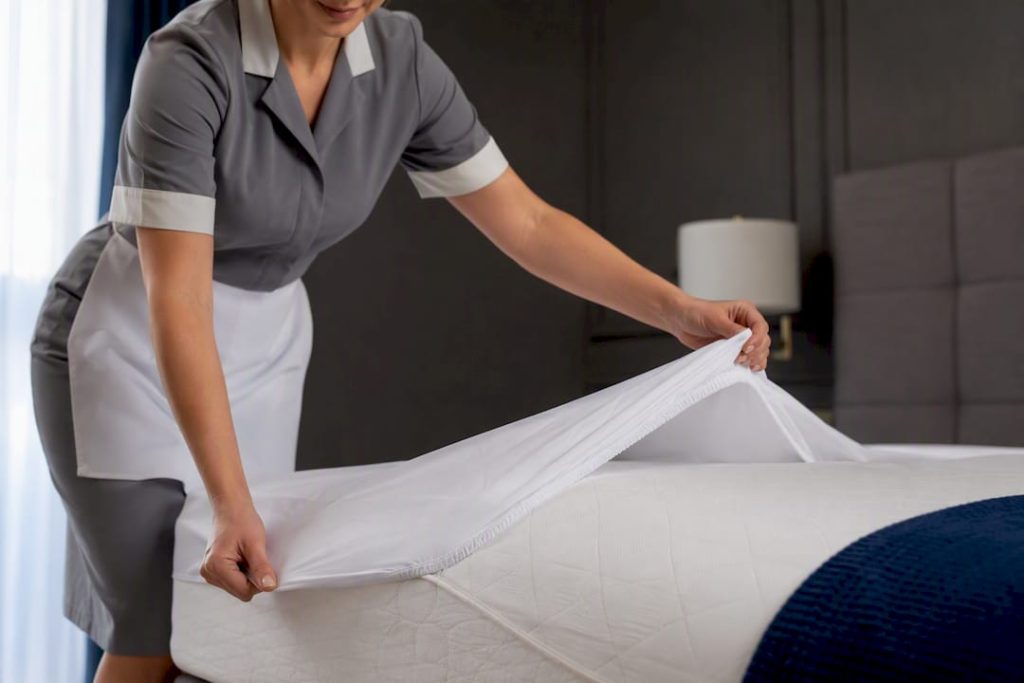
The fastest fix for ngushtimi i çarçafëve, or the shrinking-and-slipping fit problem on your fitted sheets, is a combination of sheet straps or a proper deep tuck, plus a check on pocket depth versus mattress height. If the sheet still won’t stay put, drop your dryer heat and add an extra spin cycle before drying. When elastic has gone slack for good, replacement with a hotel-grade sheet built for repeated industrial washing, the kind Gjergji H Tekstil specifies for hospitality clients, is the only fix that lasts.
TL;DR:
- Using full-perimeter elastic and deep-pocket sizing significantly prolongs the fit and reduces slipping issues, especially when combined with correct mattress measurements.
- Heavy laundering, high dryer heat, and repeated stretching accelerate elastic wear and fabric shrinkage, making low-heat washes and extra spin cycles essential for longevity.
- Temporary fixes like straps, corner anchors, or deep tucks provide short-term solutions but are ineffective long-term if elastic has lost its elasticity or pockets are too shallow.
- Choosing sheets made from microfiber, bamboo, or polyester blends minimizes shrinkage and maintains fit better than pure cotton, especially when designed for industrial washing.
- For scale operations, specifying full elastic, correct pocket depth, and fabric durability in procurement saves money by avoiding frequent sheet replacements caused by slip and elastic failure.
Table of Contents
- What Causes Ngushtimi i Çarçafëve and Loose-Fitting Sheets?
- Quick Fixes: Straps, Anchors, and Household Hacks That Work Now
- How Does Laundering Affect Sheet Fit and Elastic Life?
- Which Fabrics and Constructions Resist Shrinking and Stay Snug?
- How to Secure a Fitted Sheet Like a Hotel Housekeeper
- What Hospitality Best Practices Solve This at Scale?
- The Real Fix Isn’t a Strap. It’s Buying the Right Sheet Once.
- A Straightforward Option for Durable, Shrink-Resistant Hotel Sheets
- Sources
What Causes Ngushtimi i Çarçafëve and Loose-Fitting Sheets?
Sheets slip for one of three reasons: the pocket is too shallow for the mattress, the elastic has worn out, or the laundering routine is quietly cooking the fibers and the stretch out of the fabric. Pocket depth mismatch and degraded elastic are the two most common culprits, and either one alone is enough to send a fitted sheet creeping toward the middle of the bed by morning.
A mattress topper or a thick protector adds height that many buyers never account for when they order sheets. That extra inch or two is exactly where elastic starts fighting a losing battle. Elastic also degrades on its own schedule, independent of fit. Heat, detergent residue, and repeated stretching all shorten its working life, which is why a sheet that fit perfectly a year ago can slip constantly today with no change in the mattress at all.
Quick Fixes: Straps, Anchors, and Household Hacks That Work Now
Before you touch the washer settings or shop for new sheets, try the fixes that solve most slipping problems in under ten minutes.
- Sheet straps or suspenders: elastic bands with metal clips that grab each corner of the sheet underneath the mattress. Criss-crossing them in an X pattern under the bed works best on deep mattresses or for anyone who tosses and turns; corner-only straps are enough if just one or two corners keep popping loose.
- Non-slip rug pads or corner anchors: a strip of grippy pad tucked between the mattress and the fitted sheet corner adds friction without any hardware.
- Velcro under-corner method: stick one side of a Velcro strip to the sheet corner and the other to the box spring or mattress edge. Skip safety pins on delicate cotton or sateen. The needle holes weaken the weave and can start a run that spreads with every wash.
- Deep tuck as a stopgap: pulling extra fabric under the mattress buys you a few nights, but it is not a fix if the pocket is genuinely too shallow.
These fixes buy time. They do not solve a pocket that is two inches too shallow or elastic that has lost its snap permanently, and treating a stopgap as a permanent solution just means you re-fight the same battle every laundry day.
Pro Tip: Test any strap or clip fix by grabbing the sheet corner and pulling hard, diagonally, the same way a sleeper’s foot would. If it gives more than half an inch, tighten it or move to a different method.
How Does Laundering Affect Sheet Fit and Elastic Life?
Heat is the enemy of both cotton and elastic, and most sheet fit problems that “come out of nowhere” actually started in the dryer. High heat over repeated cycles shrinks cotton fibers permanently and breaks down the polymer bonds in elastic thread, which is why a sheet that once hugged the corners tight starts riding up after a few months of hot drying.
- Wash cool to warm, never hot, unless the label specifically calls for it. Hot water accelerates both shrinkage and elastic fatigue.
- Run an extra spin cycle before drying. This step alone removes up to 30% more water, which cuts the time sheets spend exposed to dryer heat and directly protects the elastic.
- Dry on low heat, or skip the dryer entirely when weather allows. Daylight and airflow dry sheets just as effectively without cooking the fibers.
- Wash sheets separately from towels. Towels retain water differently and need longer drying times, so mixing loads means either your sheets over-dry or your towels come out damp.
- Time your wash for the morning. Starting a load early gives you the full day’s light and air circulation for drying, which is faster and gentler than any dryer setting.
The 30% Factor: An extra spin cycle before drying removes close to a third more water than a standard cycle, according to drying guidance from UBT News. That’s the difference between one dryer cycle and two, and two cycles of heat exposure will wear out elastic roughly twice as fast.
If you need to speed things along without a dryer at all, roll the damp sheet in a dry towel and press firmly to pull out extra moisture before hanging it. It works faster than most people expect.
Which Fabrics and Constructions Resist Shrinking and Stay Snug?
Not all sheets age the same way, and the fabric you buy determines how much of this problem you’ll deal with in the first place.
- Microfiber, bamboo, and polycotton blends dry faster and shrink noticeably less than untreated cotton, since synthetic and blended fibers hold their dimensions through repeated washing far better than pure natural fiber does.
- 100% cotton and sateen finishes feel great on day one but shrink more aggressively over the first several washes, and sateen’s looser weave tends to strain at the seams under repeated stretching.
- Full-perimeter elastic beats corner-only elastic for durability. A sheet with elastic running the entire hem holds tension evenly instead of concentrating stress at four points.
- Deep-pocket sizing, ideally specified at least two inches deeper than the actual mattress height including topper, is the single biggest factor in whether a sheet stays put through a full night.
For hospitality buyers, this matters at a different scale, where choosing music for hotels to enhance guest experience can be as crucial as selecting durable, well-fitting linens. A sheet that slips on one guest bed is a minor annoyance; a sheet that slips across forty rooms after every industrial wash cycle is a housekeeping labor cost and a replacement-budget problem. Once elastic loses its snap for good, seams start straining under the extra pull, or a sheet keeps slipping despite a correctly measured pocket, it’s time to replace it rather than keep fighting it with straps.
How to Secure a Fitted Sheet Like a Hotel Housekeeper
Professional housekeeping teams don’t rely on luck. They follow a sequence, and it works just as well on a home mattress as it does across a full hotel floor.
- Measure mattress height first, including any topper or protector, and match it against the sheet’s stated pocket depth before you even put it on the bed.
- Start at the center of one long side, not a corner, and pull the sheet taut before moving to the diagonal opposite corner.
- Work the remaining two corners, pulling each toward its opposite side rather than straight down, which distributes tension evenly across the elastic.
- Form a hospital corner if using a flat sheet layer, tucking the fabric into a tight triangular fold against the mattress edge. Hotels often use oversized flat sheets finished this way precisely because it holds tighter than a simple tuck.
- Attach straps in an X pattern under the mattress if you’re using suspenders, then pull each corner hard on the diagonal as a final check. If any corner gives, adjust the strap tension before calling it done.
Pro Tip: Make the corner-pull test part of a weekly routine, not just a one-time setup. Elastic loosens gradually, and catching it early with a quick tug saves you from waking up to a bunched sheet at 3 a.m.
Once a sheet fails that pull test even after correct fitting and fresh straps, that’s your signal the elastic is done, not the technique.
What Hospitality Best Practices Solve This at Scale?
Housekeeping teams managing dozens or hundreds of beds can’t afford to troubleshoot slipping sheets room by room. The fix is procedural: separate sheet loads from towel loads every time, favor polycotton or bamboo blends that dry faster and hold shrinkage to a minimum, and specify full-perimeter elastic on every purchase order rather than accepting whatever a supplier defaults to.

Gjergji H Tekstil has spent over 30 years supplying textiles built to survive industrial wash cycles rather than a gentle home machine, and that distinction matters more than most procurement teams realize until they’ve replaced a batch of sheets twice in one season. Tender documents should spell out pocket depth, fabric blend percentage, and industrial-wash resilience as line items, not assumptions. A hotel laundry program built around separated loads and controlled heat extends linen life measurably compared to mixed, high-heat cycles.
The Real Fix Isn’t a Strap. It’s Buying the Right Sheet Once.
Most advice on this topic treats slipping sheets as a laundry problem or a strap problem, and that’s backwards. The fabric and construction decision made at purchase determines whether you’ll be fighting this fight every month or not at all. A $12 pack of straps is a fine patch on a sheet that’s the wrong pocket depth, but it’s a permanent tax on a bad initial purchase.

The overrated fix, in our view, is the safety-pin-and-hope approach that circulates in a lot of home advice. It works until it doesn’t, and it damages delicate fabric in the process. The underrated fix is measuring your mattress height, including the topper, before you buy anything. Almost nobody does this, and it’s the single variable that predicts slipping better than any laundry habit.
If you’re managing linens at scale, the priority order is clear: specify full-perimeter elastic and correct pocket depth first, control your laundering heat second, and treat straps as a stopgap, never a strategy.
— Xpert
A Straightforward Option for Durable, Shrink-Resistant Hotel Sheets
If straps and laundry tweaks only get you so far, the underlying fix is buying sheets built to hold their fit through hundreds of industrial wash cycles, not just a few home laundry loads. Gjergji H Tekstil runs wholesale import, in-house production, and custom specification for hotel linens designed around exactly this problem: full-perimeter elastic, deep-pocket sizing, and fabric blends that survive commercial laundry heat without losing their snap.

What sets this apart for a hospitality buyer is full supply-chain control. Rather than guessing at a catalog spec sheet, you can request pocket depth, elastic type, and fabric blend as part of the order itself, and get fabric tested against real industrial-wash conditions rather than a manufacturer’s best-case claim. That’s a meaningfully different starting point than picking sheets off a general wholesale list and hoping the elastic holds through August.
If your procurement cycle is coming up, or you’re tired of replacing sheets that slip after three months of daily turnover, the hotel textile selection guide walks through exactly what to specify before you sign the next order.
Sources
- Sekretet e tharjes së shpejtë të çarçafëve — pa tharëse! – UBT News
- How to Keep Bed Sheets from Slipping: 7 Simple Fixes – Bedsure
- How to Keep Fitted Sheets Tight: 4 Proven Methods – EcoCraftyLiving
- How to keep sheet on a bed – Purple