

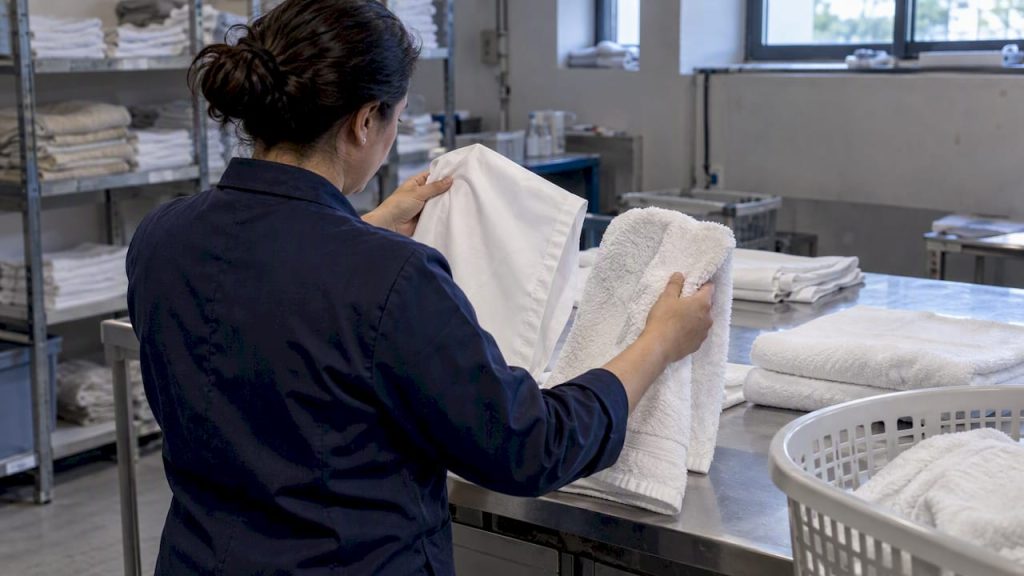
Choose textiles by operational spec first: match material and construction to each area’s wash regime and expected turnover, not to price alone. Suppliers who control their own supply chain from import to production, with decades of hospitality experience, cut reorder risk before it starts. A short pilot wash test, typically 3 to 5 cycles with industrial chemistry, tells you more than any brochure. Before placing a bulk order, write a one-page spec sheet and request that pilot test.
TL;DR:
- Selecting textiles based on operational wash regimes and expected turnover reduces replacement and maintenance costs by aligning material durability with actual usage conditions.
- Conducting pilot wash tests with industrial chemistry before bulk orders ensures textiles meet durability standards specific to each laundering environment.
- Long-staple cotton yarns with reinforced construction offer better longevity and guest comfort than high thread counts or lower-quality fibers.
- Supplier control over the entire supply chain minimizes procurement risks by providing traceability and faster response to quality issues.
- For spa textiles, antimicrobial treatments are supplementary; proper wash temperature, chemistry, and cycle count are the primary defenses against hygiene concerns.
Table of Contents
- Define operational specs before you buy
- Bed linens and bedding: construction over thread count
- Towels, robes, and spa linens: GSM, pile, and what it costs to dry them
- Curtains and decorative textiles for spa and guest areas
- How to structure a clear specification and procurement order
- Why supplier supply-chain control matters for procurement risk
- Comfort and guest experience factors that specs alone miss
- Cost-benefit analysis: longevity versus replacement frequency
- Hygiene and antimicrobial treatments for spa textiles
- Sustainability considerations in textile selection
- Matching quality tiers to your property standard
- How we support spa and hotel textile procurement
- FAQ
- Selected resources for procurement follow-up
- A procurement lesson worth remembering
Define operational specs before you buy
Every area of a hotel or spa puts different stress on textiles, and the wash regime tells you more than the marketing copy ever will. A spa towel washed daily at high heat behaves nothing like a decorative curtain laundered twice a year, so procurement needs to map each zone to its own set of requirements before asking for quotes.
Start by listing your zones: guest rooms, spa treatment rooms, pool and wellness areas, restaurant and banquet spaces. Each has a different turnover rate and a different tolerance for wear. A 30-room boutique property and a 300-room resort apply the same logic but at different volumes, which changes safety stock and lead-time negotiations.
Once you know the zone, specify the laundry parameters you expect the supplier to design for:
- Usage area and daily turnover: how many times per day the item changes (spa towels often turn over multiple times daily, bed linens typically once).
- Maximum wash temperature and chemistry: industrial detergents and high-temperature cycles degrade fibers faster than domestic laundering.
- Tumble drying tolerance: whether the item is rated for industrial dryers or air-dry only.
- Target lifetime in wash cycles: an acceptance threshold the supplier agrees to in writing.
A copyable checklist for your spec sheet should include fabric type, GSM or thread count, wash temperature limit, expected cycle life, and a sign-off column for pilot test results.
Bed linens and bedding: construction over thread count
Thread count gets most of the attention, but yarn quality and construction decide how a sheet performs after two hundred industrial washes. Long-staple cotton, where fibers run longer and fewer loose ends work free during washing, resists pilling and tearing far better than short-staple cotton woven at the same density. A blend with polyester can extend wrinkle resistance and cut ironing time, which matters for high-turnover properties, but a pure long-staple cotton sheet usually wins on guest-perceived comfort.
Weave matters as much as fiber. Percale, a tight plain weave, feels crisp and holds up well under repeated hot washes, which makes it a practical choice for high-volume hotel laundering. Sateen has a smoother, slightly glossier feel that guests often associate with luxury, but its looser weave can be more prone to snagging in industrial equipment.
When you write the order, include:
- Pre-shrink treatment so dimensions stay stable after the first commercial wash.
- Colorfastness standard the fabric must meet under repeated hot-water cycles.
- Size tolerance in centimeters, since a mismatch across a bulk order creates fitting problems at the bed.
- Labeling and packaging requirements so your laundry staff can sort by grade without guesswork.
Towels, robes, and spa linens: GSM, pile, and what it costs to dry them
Grams per square meter, or GSM, is the single number that tells you the most about a towel before it ever touches a guest. Higher GSM towels (500 and above) feel plush and signal luxury, but they also hold more water, which means longer drying times and higher energy use in industrial dryers. In high-turnover spa areas, a mid-range GSM towel with strong yarn quality can actually serve guests better than a heavier one, because lower GSM paired with good yarn keeps energy costs down without sacrificing feel.

Yarn construction affects longevity more than most buyers expect. Ring-spun yarn, twisted tighter during production, produces a softer, more durable towel than open-end yarn, which is cheaper but sheds fiber and thins out faster under repeated industrial washing.
Edge finishing is where many towels actually fail first, not in the pile. Specify:
- Reinforced hems or double-stitched edges to resist fraying at the point of heaviest stress.
- Embroidery thread chemistry for any logo work, since cheap thread can bleed or shrink unevenly and pull the surrounding fabric.
- GSM and pile height matched to the area: lighter for high-turnover spa use, heavier for suite-level guest rooms.
Pro Tip: Run a pilot batch through 3 to 5 industrial wash cycles before signing a bulk order, and inspect hems and pile loss after each cycle.
Curtains and decorative textiles for spa and guest areas
Curtains and soft furnishings serve a function first and a look second, so define that function before choosing fabric. Blackout curtains for guest rooms, decorative sheers for lobbies, and thermal panels for colder climates each call for a different weight and weave, and conflating them leads to curtains that look right but underperform.
Fire safety is not optional in shared hospitality spaces. Request fire-retardant treatment certificates for any curtain or decorative textile used in common areas, and verify the certificate number with the issuing body rather than taking a supplier’s word for it.
For spa-area soft furnishings exposed to humidity and frequent cleaning, maintenance-friendly design beats pure aesthetics:
- Removable, washable liners so the decorative outer panel stays cleaner longer.
- Washable fabric panels rather than dry-clean-only materials in high-moisture zones.
- A clear trade-off note on the order: heavier decorative fabric looks richer but costs more to maintain; lighter washable fabric costs less to clean but may need replacing sooner.
How to structure a clear specification and procurement order
A vague purchase order is where most costly textile mistakes start. Build your spec sheet around a short set of fields, and require written sign-off before the bulk run ships.
- Fabric and construction: fiber type, weave, GSM, yarn spin (ring-spun or open-end).
- Color code and colorfastness standard: use a recognized code system so reorders match exactly.
- Finishing details: pre-shrink treatment, hem reinforcement, embroidery thread chemistry.
- Packing and labeling: carton counts, care labels, and grade markings for laundry sorting.
- Wash-test acceptance criteria: cycle count, inspection points, and who signs off, typically the operations manager alongside the laundry vendor.
- Lead time and safety stock clauses: contractual language covering replenishment timing and minimum stock buffers.
- Documentation to request: certificate numbers for any safety or chemical standard, plus the sample wash-test report before the full order ships.
Keeping these fields on one sheet, rather than scattered across emails, is what prevents a reorder six months later for the wrong GSM or the wrong hem.
Why supplier supply-chain control matters for procurement risk
Suppliers who control import, design, and production under one roof remove a layer of risk that pure resellers cannot. When a supplier sources directly and manufactures in-house, procurement teams gain traceability back to the factory floor, which shortens the path to fixing a problem batch. Operating with integrated import, design, and in-house production for hospitality clients shortens lead times when a reorder needs to move fast.
Before committing to volume, ask any supplier for sample wash-test reports and references from comparable properties. Structure your first order as a pilot: small volume, full spec sheet, and a defined wash-test cycle before the main contract.
A supplier who can trace a batch from raw fiber to finished hem is a supplier who can fix a problem before it reaches your laundry room.
Comfort and guest experience factors that specs alone miss
Specifications get you durability, but guests judge a hotel by how a sheet or towel feels against skin, and that perception drives reviews and repeat bookings more than most managers credit. Softness comes from fiber length and finishing, not from thread count numbers printed on packaging, and a well-finished mid-weight percale sheet often outperforms a loosely woven high-thread-count sheet in actual guest comfort.
Texture consistency across a property matters too. Guests notice when one room’s towels feel plush and another’s feel thin, usually because a reorder used a different yarn batch or GSM than the original order. This is why locking fabric and GSM specs into a written order, rather than reordering “similar” stock, protects the guest experience across your entire inventory.
Weight and drape affect comfort in curtains and bedding alike. A duvet cover that is too stiff feels institutional, while one that is too soft can wrinkle and look unkempt after a single night. Spa robes deserve particular attention here: a robe that is heavy enough to feel substantial but breathable enough not to trap heat strikes the balance most treatment guests expect.
None of this shows up on a spec sheet as a single number, which is exactly why a physical sample review, not just a technical data sheet, belongs in your procurement process before a bulk order ships.
Cost-benefit analysis: longevity versus replacement frequency
The lowest unit price rarely produces the lowest total cost. A towel or sheet that fails after 80 industrial wash cycles costs more over two years than a slightly pricier item rated for 200 cycles, once you factor in replacement labor, shipping, and the guest-facing inconsistency of mismatched stock.
Run the comparison in terms of cost per wash cycle rather than cost per unit. Divide the purchase price by the expected number of wash cycles before replacement, and you get a number that actually reflects what the item costs you over its working life. A fabric with strong yarn quality and reinforced construction typically wins this calculation even when its sticker price is higher.

Replacement frequency also affects operational disruption. Every reorder cycle means procurement time, potential lead-time delays, and the risk of a slightly different batch disrupting visual consistency across rooms. Fewer, better-specified orders reduce that friction. Lifecycle cost calculations that account for wash-cycle life, not just purchase price, give procurement a defensible number to bring to budget conversations.
Hygiene and antimicrobial treatments for spa textiles
Spa environments put textiles through more frequent contact with moisture, skin, and shared equipment than a typical guest room, which raises the bar on hygiene specification. Antimicrobial treatments applied during finishing can slow the buildup of odor-causing bacteria between washes, though procurement should treat this as a supplementary measure rather than a substitute for correct wash temperature and chemistry.
When specifying antimicrobial-treated textiles, ask the supplier what the treatment targets and how it holds up across repeated industrial washing, since some finishes lose effectiveness after a set number of cycles. Request documentation on the treatment rather than accepting a general claim of “hygienic” fabric.
Wash regime still does the heavy lifting in spa hygiene. Correct temperature, correct chemistry, and correct cycle length matter more than any single textile treatment, and your spec sheet should confirm the fabric is rated to tolerate the temperatures your laundry actually runs. A treatment is a complement to a sound wash regime, not a replacement for one.
Sustainability considerations in textile selection
Sustainability claims are easy to print on a hangtag and harder to verify, so procurement benefits from knowing exactly what a given certification covers. OEKO-TEX Standard 100 certifies that a fabric has been tested for harmful substances at levels safe for skin contact, but it is not, by itself, a full sustainability credential covering water use, labor practices, or carbon footprint. Verify any OEKO-TEX claim by checking the certificate number on the official OEKO-TEX portal rather than taking a hangtag at face value.
Beyond certification, durability itself is a sustainability lever that procurement often overlooks. A textile rated for 200 wash cycles instead of 80 reduces the volume of fabric waste generated per year of service, independent of how the fiber was grown or sourced. Asking suppliers about fiber origin and production process is reasonable, but weighing that against actual wash-cycle life gives a more complete picture than a single eco-label.
Matching quality tiers to your property standard
Textile suppliers generally organize their range into economy, professional, and premium tiers, and matching the right tier to your property standard avoids both overspending and underdelivering. Economy-tier textiles suit budget properties or back-of-house uniforms where wash frequency is moderate and guest contact is limited. Professional tier, built with stronger yarn and reinforced construction, fits the bulk of three- and four-star hotel operations where daily industrial washing is the norm.
Premium tier earns its place in five-star and resort-level spa environments, where guest expectations on softness and feel are highest and the property can absorb a higher per-unit cost in exchange for longer service life and stronger guest perception. The mistake we see most often is applying a single tier across an entire property rather than matching tier to zone: economy-grade towels in a back office supply closet make sense, while that same grade in a spa treatment room undermines the experience guests are paying for.
How we support spa and hotel textile procurement
We supply hotel and spa textiles built to the operational specs this guide walks through, drawing on decades of production and import experience across the hospitality sector.

- Tekstile për Hotel & AirBnB: bed linens, towels, and bedding specified to your wash regime and turnover.
- Spa dhe Wellness: spa-specific textiles built for high-frequency industrial laundering.
- Custom production and advisory: tailored specs, design input, and supply continuity for multi-property operators.
If you have a spec sheet ready, we can review it and arrange a pilot wash test before you commit to volume. Request a quote through our hotel textiles page to start the conversation.
FAQ
What GSM is best for hotel towels and spa linens?
Mid-range GSM balances guest-perceived plushness with reasonable drying time and energy use in industrial dryers. Spa areas with high turnover often do better with lower GSM paired with strong yarn quality, while suite-level guest rooms can support heavier towels.
How many wash cycles should hotel linens survive?
Expected cycle life depends on fabric grade and construction, so procurement should set a written acceptance threshold with the supplier rather than relying on a general industry figure. A pilot test of 3 to 5 industrial wash cycles before a bulk order reveals how a specific batch holds up under your actual laundry chemistry.
Is OEKO-TEX certification enough for sustainable hotel textiles?
OEKO-TEX Standard 100 certifies that a fabric has been tested for harmful substances at safe levels, but it does not cover water use, labor conditions, or full lifecycle impact on its own. Procurement teams should verify the certificate number on the official OEKO-TEX portal and treat it as one input alongside durability and sourcing questions.
Does Gjergji H Tekstil offer custom spa and hotel textile production?
Yes, we offer custom production and advisory services alongside our standard hotel, spa, and wellness textile lines, drawing on in-house manufacturing and decades of hospitality supply experience. Reach out through our service overview page to discuss a spec sheet or pilot order.
What is the difference between percale and sateen for hotel bedding?
Percale uses a tight plain weave that feels crisp and holds up well under repeated hot industrial washing, making it a practical choice for high-turnover properties. Sateen has a smoother, glossier feel often associated with luxury, but its looser weave can be more prone to snagging in commercial laundry equipment.
Selected resources for procurement follow-up
For deeper specification work, review our towel quality checklist and wash-test guidance before finalizing an order. Properties researching distribution alongside supply decisions may also find value in hospitality listing resources for broader market context.
A procurement lesson worth remembering
Early in reviewing hotel orders, we have seen properties specify towels purely by thread count or brand reputation, only to find the batch thinning out after a few months of industrial washing. A small pilot order with a defined wash-test cycle would have caught the yarn quality issue before the full shipment landed. Our practical takeaway: never skip the pilot test, even when the supplier’s sample feels right in the showroom.
— Xpert