

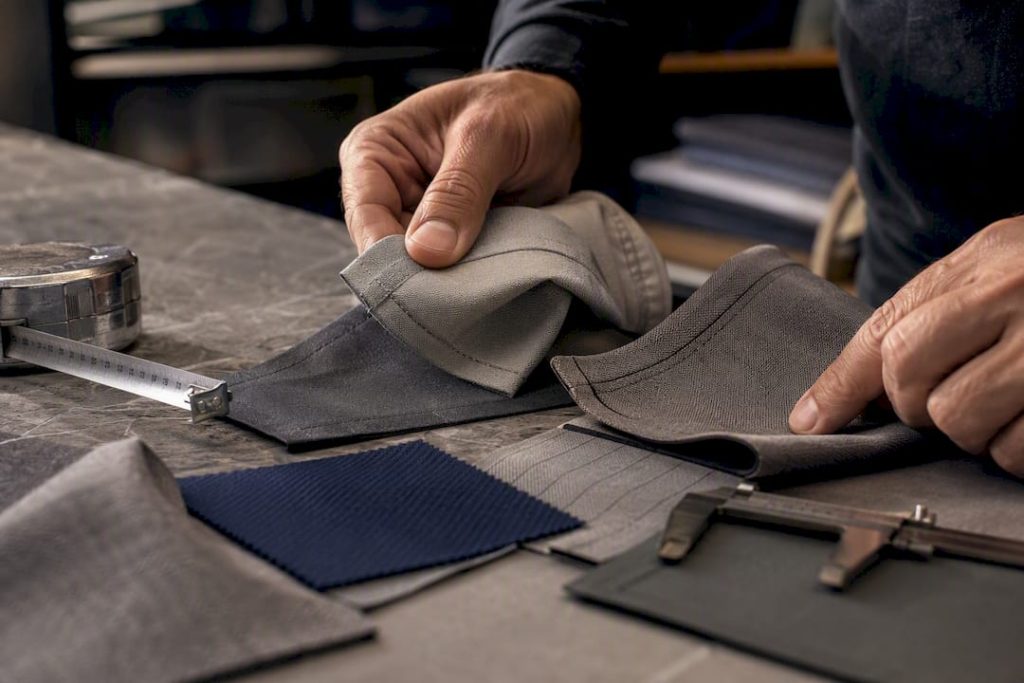
A full restaurant textile set in Albania generally varies in price across budget, mid-range, and premium tiers, depending on fabric and custom features such as embroidery, though every quote depends on fabric and order size. The single move that saves you money and headaches: request an itemized quote with fabric samples and a wash test from a local supplier before committing to a bulk order.
TL;DR:
- Ordering in larger quantities significantly reduces per-piece costs, with discounts of up to 25% available for bulk purchases.
- Heavier fabric weights with higher GSM offer better durability and longer lifespan, especially for busy restaurants with frequent industrial washing.
- Always request fabric swatches, finished samples, and wash-test reports before committing to a bulk order to prevent costly mistakes.
- Domestic Albanian production typically takes two to four weeks, but imported or customized orders can require four to eight weeks for delivery.
- An itemized quote separating material, customization, finishing, and delivery helps compare suppliers accurately and identify hidden costs.
Table of Contents
- What’s Included in a Restaurant Textile Set
- How Much Do Restaurant Textile Sets Cost in Albania?
- What Drives the Price, and How Do You Lower It?
- What to Request Before You Order: Samples, Specs, and Tests
- Checklist for Comparing Supplier Quotes
- Lead Times, Delivery, and Laundry Considerations
- What Restaurant Owners Get Wrong About Textile Procurement
- How Gjergji H Tekstil Helps You Source Restaurant Textiles
- Sources and Further Reading
- FAQ
What’s Included in a Restaurant Textile Set
Before you can judge whether a quote is fair, you need to know what “a set” actually contains, because suppliers in Albania don’t all define it the same way. A per-table set almost always means a tablecloth and matching napkins, with a runner added as an optional accent piece for higher-end venues. Event kitting scales this up across dozens or hundreds of covers at once, while staff uniform bundles are priced and ordered as a completely separate line item.
Fabric choice drives both the look and the lifetime cost of each piece:
- Cotton offers a soft, classic feel but wrinkles faster and needs more frequent ironing.
- Polycotton blends resist wrinkling and hold up better under repeated industrial washing, which is why they dominate the mid-market segment.
- Linen blends signal a premium dining experience but come with a higher price tag and stricter laundering requirements.
If your restaurant sends linens through an industrial laundry several times a week, ask specifically about heavier-weight or pretreated fabrics. A lighter cotton might look elegant on day one, but it will show fraying and color loss within months under commercial wash cycles. Heavier GSM (grams per square meter) fabric costs more upfront but survives far more wash cycles before it needs replacing, which matters more for a busy dinner service than a quiet café. For a deeper look at how different table configurations pair with different textile choices, see this practical guide to restaurant table setups.
How Much Do Restaurant Textile Sets Cost in Albania?
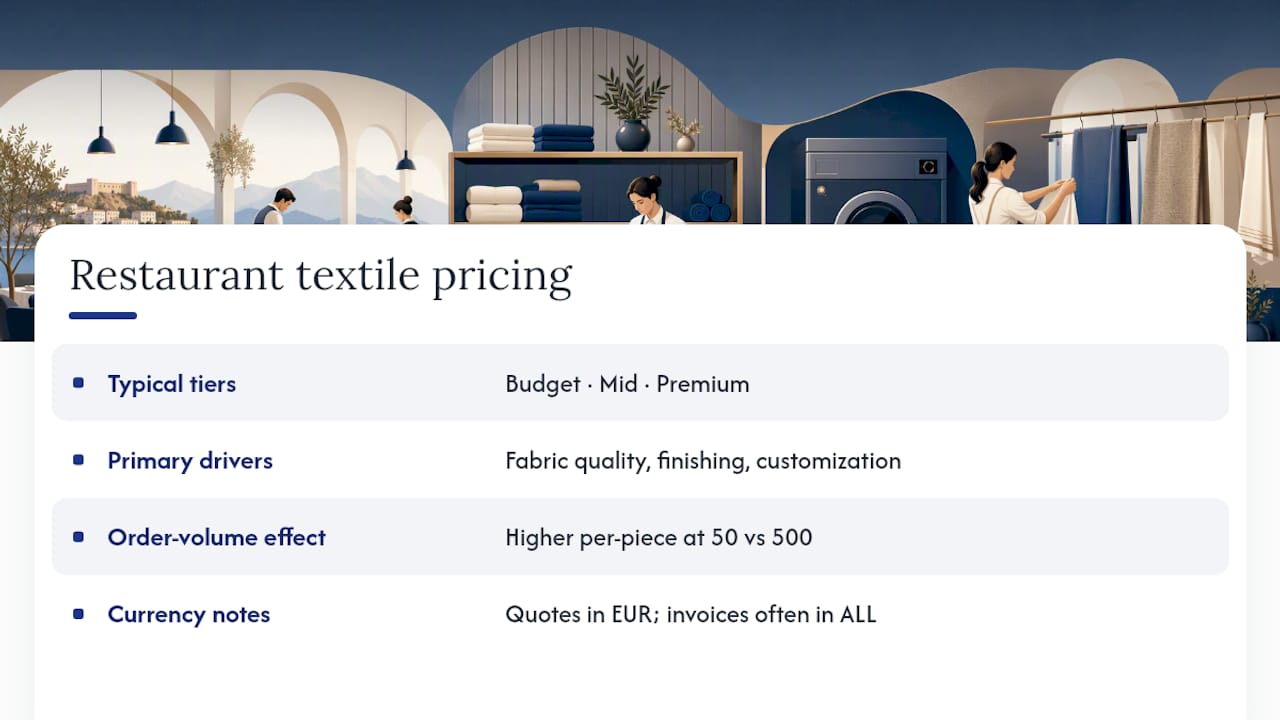
Pricing in Albania typically divides into three general tiers—budget, mid, and premium—with costs varying based on fabric quality, finishing, and customization. Exact per-piece pricing depends on supplier and order specifics.
The real lever is order volume, not just fabric. A restaurant ordering 50 covers pays a meaningfully higher per-piece rate than one ordering 500, since suppliers pass on the savings from bulk fabric imports and batch production. This is exactly why bulk textile imports translate into better price-to-quality ratios for restaurant groups and chains ordering across multiple locations.
On currency: most quotes reference EUR for fabric and import costs, but local invoices in Albania are commonly issued in ALL (Albanian lek), so confirm which currency your final invoice will use before signing.
What Drives the Price, and How Do You Lower It?
Five factors determine what you actually pay per piece, and understanding them lets you negotiate instead of just accepting the first number you’re given.
- Fabric quality and GSM — heavier, denser weaves cost more per meter but resist wear far longer.
- Finishing details — hemming style, piping, and rounded corners each add small increments to labor cost.
- Printing or embroidery — custom logos increase unit price, especially at low volumes where setup costs aren’t spread across many pieces.
- Special coatings — stain-resistant or flame-retardant treatments add cost but reduce replacement frequency.
- Order volume (MOQ) — most Albanian suppliers offer meaningful discounts once you cross a minimum order threshold, sometimes 15% to 25% lower per-piece pricing at higher volumes.
The tradeoff that catches new restaurant owners off guard: the cheapest fabric on the quote sheet is rarely the cheapest option over two years. A thin cotton tablecloth that needs replacing every four months can cost more in total than a heavier blend that lasts fourteen. This exact math is broken down in this guide to cost-efficient textile sourcing for hotels, and the logic applies just as directly to restaurants.
Pro Tip: Ask your supplier for a “cost per wash cycle” estimate, not just a unit price. A €25 tablecloth that survives 200 industrial washes beats a €15 one that survives 60.
What to Request Before You Order: Samples, Specs, and Tests
Skipping this step is the single most common mistake restaurant owners make, and it’s the one that costs the most to fix after the fact. Before you sign off on any bulk order, insist on three things: fabric swatches you can physically handle, a finished sample piece, and a wash test report from an industrial laundry cycle.
- Request swatches in every fabric weight the supplier offers, not just the one they recommend first.
- Ask for a finished sample napkin or tablecloth, not just a fabric square, since drape and stitching only show up in a completed piece.
- Get the wash test in writing, covering shrinkage percentage and colorfastness after multiple cycles.
- Confirm how the supplier handles repeat orders: will lot two match the color and weight of lot one, exactly?
Local suppliers, including Gjergji H Tekstil, generally support customization requests like this because they control the process from import through production, rather than reselling someone else’s finished stock.
A single industrial-wash test on a finished sample can reveal shrinkage and color transfer problems that would otherwise show up only after a full bulk order has already shipped, and by then the replacement cost is yours to absorb.
Checklist for Comparing Supplier Quotes
Two quotes that look similar on paper can hide very different terms underneath. Run every bid through the same short list of questions:
- What is the minimum order quantity, and does pricing step down at higher volumes?
- What is the sample policy, and is a wash-test report included or billed separately?
- What are the terms for rejections, returns, or color mismatches on repeat orders?
- Are wash instructions and expected lifespan documented in writing?
- Does the supplier offer any warranty or replacement policy for early wear?
Ask for two or three hospitality references you can actually call, not just a client logo list. A supplier who has supplied international hotel brands has already been tested at a scale most single restaurants never reach, which is a useful signal of production consistency.
Lead Times, Delivery, and Laundry Considerations
Domestic production in Albania generally moves faster than orders requiring imported fabric or heavy customization, so build your timeline around whichever applies to you.
- Standard domestic runs: roughly two to four weeks from confirmed order to delivery.
- Imported fabric or complex embroidery: expect four to eight weeks depending on origin and design complexity.
- Multi-site restaurant groups should ask about warehousing or staged delivery to avoid one location sitting on excess stock while another runs short.
Heavier fabric weights hold up better across repeated industrial wash cycles, which directly reduces how often you’re back at the ordering table. For upholstery and soft furnishings that also see heavy use, the cleaning protocols outlined by Dublin’s commercial upholstery cleaning specialists offer a useful parallel on how professional-grade cleaning extends textile life.
Pro Tip: If you operate more than one location, ask your supplier about staged delivery scheduling. It costs little to arrange and prevents one restaurant from running out of clean tablecloths mid-week.
What Restaurant Owners Get Wrong About Textile Procurement
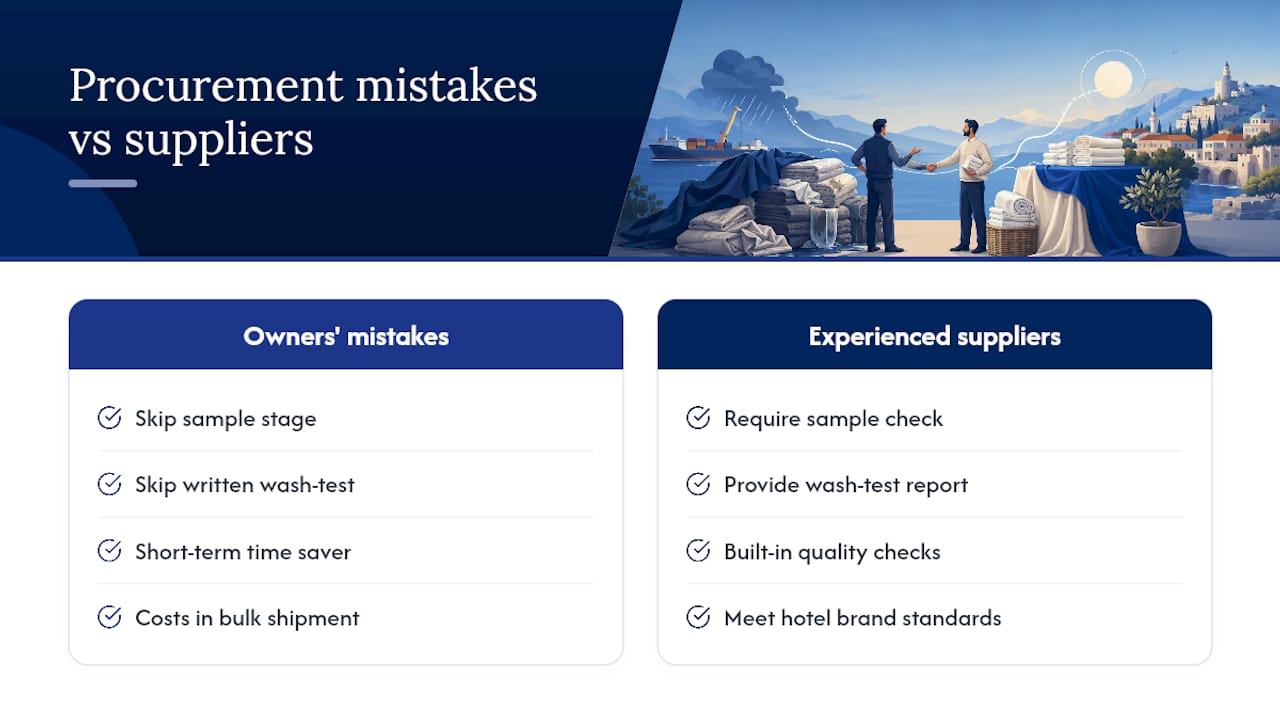
The two mistakes that show up most often: skipping the sample stage because a quote looks good on paper, and never asking for a written wash-test result. Both feel like time savers in the moment and both tend to cost far more later, once a full bulk shipment arrives with the wrong hand-feel or a shrinkage problem nobody caught early.
Suppliers with decades of hospitality experience, including those who have serviced international hotel brand standards, tend to build these checks into their process by default rather than waiting for a client to ask.
— Xpert
How Gjergji H Tekstil Helps You Source Restaurant Textiles
Some local suppliers control their own import, design, and production process, and can offer fabric samples and wash-test data before you commit to a single order, something a reseller working from someone else’s warehouse stock usually can’t match.
The company’s restaurant textile line covers tablecloths, napkins, and runners across the budget, mid, and premium tiers described above, with custom embroidery and printing available for restaurants that want a distinct visual identity. If your kitchen also needs staff wear, the uniform program runs through the same production process, so colors and fabric quality stay consistent across your entire floor and kitchen team.
To get started, request an itemized quote that separates material, customization, finishing, and delivery costs, along with a fabric sample and wash-test report. Reach out through the restaurant textile page to start that conversation and get a sample in hand before your next bulk order.
Sources and Further Reading
- Hotel textile selection tips, on swatch and wash-test procedures
- Involveus, for local Albanian business and procurement context
- Step-by-step textile procurement guide, for itemized quoting practices
FAQ
How Much Does a Restaurant Textile Set Cost in Albania?
Pricing in Albania typically divides into three general tiers—budget, mid, and premium—with costs varying based on fabric quality, finishing, and customization. Exact per-piece pricing depends on supplier and order specifics. Exact pricing depends heavily on fabric choice, finishing, and order volume, so an itemized quote from a supplier like Gjergji H Tekstil gives you the most accurate number for your specific order.
What Should Be Included in a Supplier Quote?
A complete quote separates material cost, customization such as embroidery or printing, finishing details, and delivery or VAT charges into distinct line items. This itemized structure lets you compare two supplier bids on equal terms instead of guessing what’s bundled into a single flat number.
Why Is a Wash Test Necessary Before a Bulk Order?
A wash test on a finished sample reveals shrinkage percentage and colorfastness after industrial laundering, catching problems before they show up across an entire shipment. Skipping this step is one of the most common and costly mistakes restaurant owners make when sourcing textiles in bulk.
How Long Does Delivery Take for Restaurant Textiles in Albania?
Domestic production typically takes two to four weeks, while orders involving imported fabric or heavy customization can take four to eight weeks. Multi-site restaurant groups should discuss staged delivery scheduling with their supplier to avoid uneven stock across locations.
Does Gjergji H Tekstil Offer Custom Restaurant Textile Sets?
Yes. Gjergji H Tekstil offers custom production, including embroidery and printing, across its restaurant textile line, with pricing available on request through a personalized quote.