

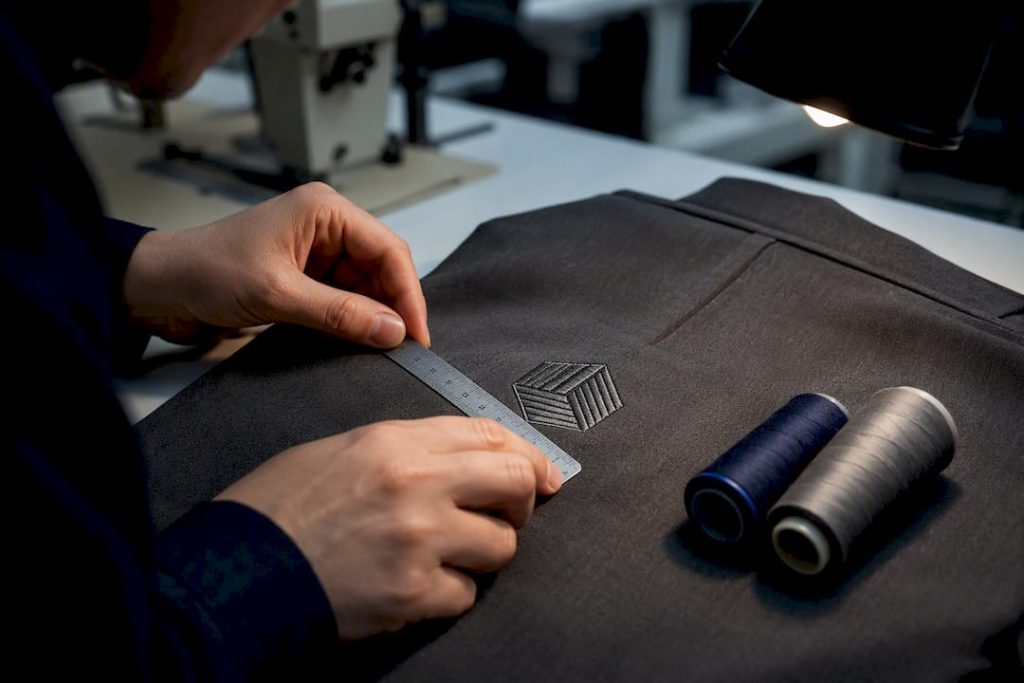
A textile-ready hotel logo is simple, vector-based, and specified for embroidery or a woven micro-tab, not printed as an afterthought. Qendisje logo hotel or hotel logo embroidery works best when you hand suppliers vector artwork, a single-color reversible version, and clear placement dimensions before anyone threads a needle. Production teams have seen the same mistake sink otherwise good branding: art built for a website screen, forced onto a towel corner where it blurs into a smudge.
TL;DR:
- Use a single-color, reversible design tested at small scale before starting embroidery to ensure clarity at 3 to 5 cm sizes.
- Place uniform logos 3 to 5 cm wide on the left chest, positioned 8 to 10 cm below the shoulder seam, and keep towel tabs between 20 to 40 mm.
- Always provide vector artwork in .AI, .EPS, or PDF files along with Pantone or thread color references for accurate digitizing and stitching.
- Confirm placement consistency and proper stitch quality with a sample strike-off before full production to avoid costly mistakes.
- Woven labels and jacquard trims offer better durability and finer detail for linens, especially on smooth or slippery fabrics, compared to embroidery.
Table of Contents
- What Design Choices Make a Logo Textile-Ready?
- How Big Should a Hotel Logo Be on Uniforms and Linens?
- What Production Specs Should You Demand From a Supplier?
- How Do You Write a Supplier Brief for a Textile Logo?
- Why Textile-Ready Branding Actually Saves Hotels Money
- Turning Your Logo Into Production-Ready Textiles
- Sources
- FAQ
What Design Choices Make a Logo Textile-Ready?
Embroidery machines and woven jacquard looms cannot render what a screen can. Fine gradients disappear, thin serifs clog with thread, and small text becomes an unreadable blob once it drops below a few centimeters. That is why hospitality branding specialists consistently push hotels toward simpler marks, since simplicity and versatility keep a logo recognizable when it shrinks for embroidery or a micro-tag.
A logo intended for textiles needs at least two variants: a full-color version for signage and stationery, and a single-color reversible version for embroidery on dark or light fabric. Test both at the smallest size they will actually appear, which for most hotels means a 3 to 5 cm chest emblem or an even smaller towel tab. If the initials blur or the icon collapses into a dot at that scale, the design needs simplifying before it goes anywhere near a digitizer.
Typography matters more than most managers expect. Sans-serif logotypes generally survive the embroidery process better than serifs, since thin strokes and fine flourishes are exactly what stitch density struggles to reproduce cleanly. A bold symbol paired with a clean wordmark tends to outperform an intricate crest, even when the crest looks more “luxury” on a business card.
Multi-property hotels also need to think about brand architecture early. Hotel groups running a restaurant, spa, or event space under one roof benefit from a structured relationship between the parent logo and any sub-brands, so guests recognize the connection without every department looking identical.
- Build a single-color, reversible version before commissioning any embroidery.
- Test the logo at real production size, not on a laptop screen.
- Favor sans-serif or simplified logotypes for anything under 5 cm.
- Reserve full detail and gradients for print and digital use only.
Pro Tip: Print your logo at its smallest planned textile size on regular paper and view it from three feet away. If it reads clearly there, it will likely survive the embroidery needle.
How Big Should a Hotel Logo Be on Uniforms and Linens?
Placement and size decisions belong in your purchase order, not left to a supplier’s guess. A consistent brand identity across uniforms, linens, and signage is what actually drives guest recognition, and consistency starts with a written spec sheet.
For staff uniforms, a left-chest logo running 3 to 5 cm at its widest point is the industry standard, positioned roughly 8 to 10 cm below the shoulder seam depending on the garment’s cut. Polo shirts, chef coats, and blazers all sit slightly differently, so confirm placement on the actual garment sample rather than a flat mockup.

For towels, robes, and bathmats, most hotels use a discreet micro-tab rather than a full chest-size emblem. Wholesale embroidery tabs for hotels typically run 20 to 40 mm wide, stitched onto a hem or pocket edge where it stays visible without dominating a guest-facing surface. That small footprint also keeps the artwork simple by necessity, since fine detail simply will not survive a tag that size.
Large formats, like lobby banners or reception signage, run on entirely different rules. Keep a separate vector file with color and contrast values suited to large-scale printing rather than trying to stretch the embroidery version.
- Uniform chest logo: 3 to 5 cm, positioned consistently across all garment types.
- Towel or robe tab: 20 to 40 mm, placed on a hem or pocket edge.
- Woven labels outperform embroidery on low-friction surfaces like silky robes or thin linens.
- Avoid fine detail or small text on any embroidered mark under 4 cm.
Woven labels and jacquard trims deserve a mention of their own. They resist abrasion better than embroidery on smooth or slippery fabrics, and they hold fine detail that embroidery cannot manage at small sizes, which makes them a reasonable choice for premium linens even though they cost more per unit.
What Production Specs Should You Demand From a Supplier?
Procurement teams lose weeks to preventable back-and-forth because nobody specified the file format upfront. Always deliver vector artwork, never a raster JPEG or PNG, since a supplier working from a low-resolution screenshot cannot generate a clean stitch map no matter how skilled the digitizer is.
- File format. Provide .AI, .EPS, or vector-based PDF files. Raster images force guesswork on edges and curves, which shows up as jagged stitching.
- Digitizing and stitch density. Ask for a stitch map before production starts, with minimum letter height specified and stitch density kept moderate. Over-dense stitching causes fabric puckering and stiff, uncomfortable patches on uniforms.
- Thread and backing. Specify high-tensile polyester thread for colorfastness and bleach resistance, paired with a backing or stabilizer rated for repeated commercial laundering. Industrial embroidery programs rely on high-tensile polyester and precise digitizing specifically because hotel textiles go through far more wash cycles than retail garments.
- Sample approval. Require a strike-off, a fabric-matched lab dip for color, and a first-batch inspection before authorizing full production.
Placement tolerance matters more than most managers assume. Luxury uniform programs treat a placement or size variation of more than a few millimeters as a quality failure, and that same discipline applies whether you run a boutique property or a resort chain. A logo that drifts half a centimeter left on one batch of shirts looks sloppy the moment two staff members stand side by side.
Pro Tip: Never send a supplier a JPEG pulled from your own website. Always provide the original vector file plus a Pantone-to-thread cross reference and, where possible, a physical fabric swatch for the strike-off.
How Do You Write a Supplier Brief for a Textile Logo?
A tight, written brief eliminates most of the sample rejections that stall a launch. Build the purchase order around the same items a good digitizer needs to work efficiently, and you will cut approval time from weeks to days.
- Attach vector artwork in .AI, .EPS, or PDF format, with a Pantone or thread color reference included.
- State exact placement dimensions in centimeters, referencing the specific garment or textile item.
- Include a physical substrate sample, so the supplier can test thread tension and stitch density on the real fabric.
- Name the wash standard you expect, since hotel laundry cycles run far hotter and more frequent than residential washing.
- Confirm the approval method, whether that is a strike-off photo, a physical sample, or both.
- Set a delivery timeline and a replacement policy for damaged or mismatched units.
Two decisions shape cost and turnaround more than anything else: sew-on tab versus integrated embroidery, and single-color versus multi-color thread. Multi-color designs cost more per unit and take longer to digitize correctly, so reserve them for uniforms rather than high-volume linens.
- Check placement tolerance against the brief on the first delivered batch.
- Confirm color match against the approved lab dip, not against a screen.
- Inspect stitch integrity for loose threads or puckering.
- Verify backing finish feels smooth against skin, especially on robes and staff shirts.
Why Textile-Ready Branding Actually Saves Hotels Money
Most hotels treat logo embroidery as a cosmetic line item, then get surprised when a batch of uniforms comes back with drifting placement or thread that bleeds after a dozen washes. That is a supply-chain failure, not a design failure. Consistency across uniforms, linens, and signage only holds up when the supplier controls import, digitizing, and production under one roof, which is exactly why Gjergji H Tekstil’s 30-plus years of supply-chain control and international hotel client experience translate into fewer replacement orders, not just a marketing line. Approve the strike-off before the full run, and the cost savings compound fast.
— Xpert
Turning Your Logo Into Production-Ready Textiles
A practical supplier can handle custom production, embroidery, woven-label work, and the sample approval process, enabling a logo to go from vector file to finished uniform without coordination issues among multiple vendors.
New hotel openings, a uniform refresh, an urgent replacement order after a laundry mishap, or simply the need for a proper strike-off before committing to a full batch, these are the moments to bring in a partner who controls the whole process rather than one link in it. That kind of end-to-end control also shows up in how hospitality brands manage guest-facing service standards, where consistency behind the scenes translates directly into what guests notice.
If you manage linens and want the logo work bundled with the rest of your textile order, start with Tekstile për Hotel & AirBnB. If uniforms are the priority, request a sample strike-off through Uniforma Pune and get a physical sample in hand before you commit to a full production run.
Sources
- Hotel branding tips | EHL Insights
- Hotel logos: 10 must-know ideas, tips, and examples | Cvent Blog
- Inside hotel branding: strategy from a leading agency | Phase 3
FAQ
What File Format Should I Send for Logo Embroidery?
Send vector files in .AI, .EPS, or PDF format, never a JPEG or PNG. Raster files lack the clean edges a digitizer needs to build an accurate stitch map, which often leads to jagged letters or puckered fabric.
How Big Should a Hotel Logo Be on a Towel or Robe?
Most hotels use a discreet micro-tab rather than a full emblem, typically 20 to 40 mm wide, stitched onto a hem or pocket edge. That size keeps the mark visible without cluttering a guest-facing surface.
What Is a Strike-Off and Why Does It Matter?
A strike-off is a physical embroidery sample the supplier produces before running the full batch, letting you check color, placement, and stitch quality on the actual fabric. Skipping this step is the most common reason hotels end up with a full production run that has to be scrapped.
Does Gjergji H Tekstil Handle Both Embroidery and Woven Labels?
Yes, custom production covers embroidery, woven labels, and patches, handled through the same supply chain that sources the fabric itself. Pricing depends on quantity, thread colors, and garment type, so it is available on request through Uniforma Pune.
Why Do Embroidered Logos Sometimes Fade Faster Than Expected?
Fading usually traces back to low-quality thread or an incompatible backing that breaks down under repeated commercial washing. Specifying high-tensile polyester thread and a wash-rated stabilizer upfront prevents most of this, since hotel laundry cycles run hotter and more often than home washing.