

TL;DR:
- Hotels often overlook textile management, leading to annual linen losses of up to 30% and significant cost impacts. Partnering with a strategic textile provider utilizing RFID technology and sustainable practices can reduce shrinkage, extend linen lifespan, and improve operational efficiency. Choosing a supplier with clear specifications, technological capability, and long-term reliability optimizes costs and enhances guest experience.
Most hotel managers track room revenue, F&B margins, and occupancy rates with precision. Textile management rarely gets the same attention. That is a costly oversight. Understanding why hotels need textile partners goes beyond purchasing decisions. It touches laundry operations, staff accountability, guest experience, and long-term budget control. Hotels typically lose 20–30% of linen inventory annually, which can translate to replacement costs of $18,750 to $75,000 or more per property each year. A strategic textile partner does not just supply product. It closes the operational gap between what you buy and what actually reaches your guests.
Table of Contents
- Key takeaways
- The real cost of managing textiles alone
- How textile partners reduce losses and improve operations
- In-house vs. partnered textile management
- Sustainability and the case for circular textile programs
- How to select and work with the right textile partner
- My perspective on what most hotels get wrong
- How Gjergjihtextil supports hotel operations at scale
- FAQ
Key takeaways
| Point | Details |
|---|---|
| Linen loss is a major cost driver | Annual linen loss of 20–30% costs hotels tens of thousands of dollars in replacements each year. |
| RFID tracking transforms accountability | Technology-enabled partners reduce shrinkage by up to 50% and cut manual counting time by 90%. |
| Partner expertise extends linen life | Commercial-grade textiles selected for industrial laundering can last far longer than retail-grade alternatives. |
| In-house vs. partnered management differs sharply | Partnered supply offers better cost control, data visibility, and sustainability alignment than most in-house setups. |
| Choosing the right partner requires clear criteria | Quality standards, technology capability, and contract clarity separate reliable partners from transactional suppliers. |
The real cost of managing textiles alone
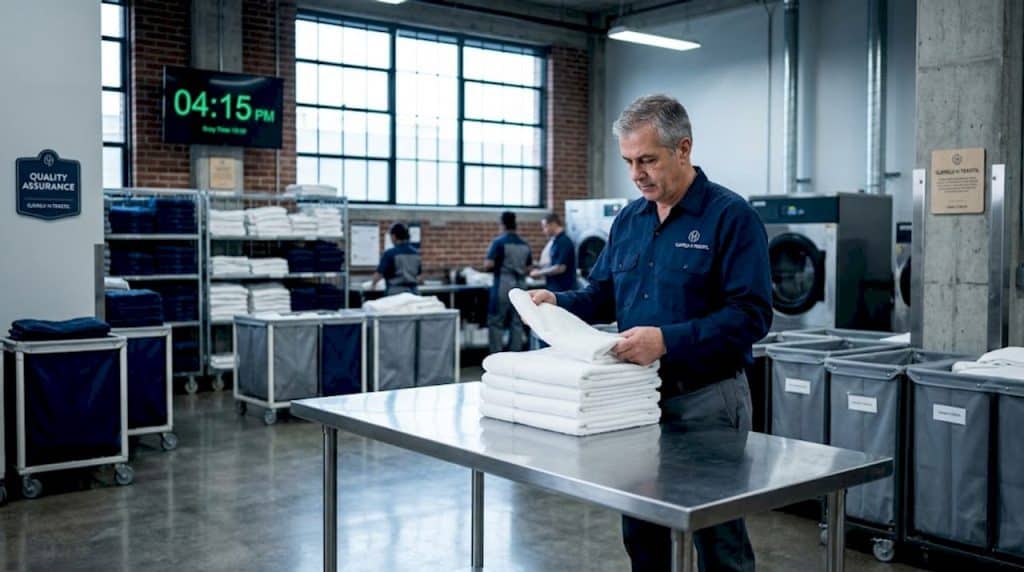
Hotel textile management is harder than it looks from the outside. The volume of linen cycling through a 150-room property daily, the number of staff handling it, and the conditions it faces in industrial washers all create a system where losses accumulate fast and quietly.
Linen loss stems from four main causes: theft, improper washing, staining, and misplacement. None of these is dramatic on its own. Together, they represent the single greatest controllable cost driver in laundry operations. The problem is that most hotels only notice the damage when they place a large reorder, not when individual pieces disappear.
The financial picture becomes clearer when you break it down:
- Replacement costs for a 150-room hotel range from $18,750 to $75,000 per year depending on linen quality and loss rate.
- Laundry budget impact is significant, with linen replacement consuming roughly 25% of total laundry budgets at many properties.
- Labor, chemicals, and utilities add layers of cost that compound when linen volumes are inflated by poor tracking.
- Equipment downtime increases when overprocessed or damaged linen clogs machines or requires reprocessing cycles.
Hotels operating without structured oversight often adopt a reactive posture: reorder when stock looks low, replace when damage is visible, hope the numbers work out. That approach does not hold up at scale. Tracking linen movements manually is time-consuming and error-prone. Without accountability across receiving, laundry, housekeeping, and checkout, loss points multiply at every handoff.
How textile partners reduce losses and improve operations
This is where understanding the importance of textile partners becomes concrete. A properly integrated textile partner does not just deliver product to your loading dock. It contributes systems, specifications, and expertise that change how your property manages textile assets from day one.
The most significant operational shift comes through technology. RFID linen management systems reduce manual counting time by 90% and cut stocktaking time from five hours to roughly one hour. For a housekeeping supervisor who currently spends Monday mornings manually counting pillowcases, that is not a minor improvement. It is a full shift of productive time returned to guest-facing work.
Beyond speed, RFID reduces linen shrinkage by up to 50% by creating location-level accountability. You stop guessing where pieces went and start seeing exactly which departments, floors, or shifts correlate with the highest loss rates. That data lets you address root causes rather than just absorbing the cost.
The benefits of a strong hotel linen partnership extend further:
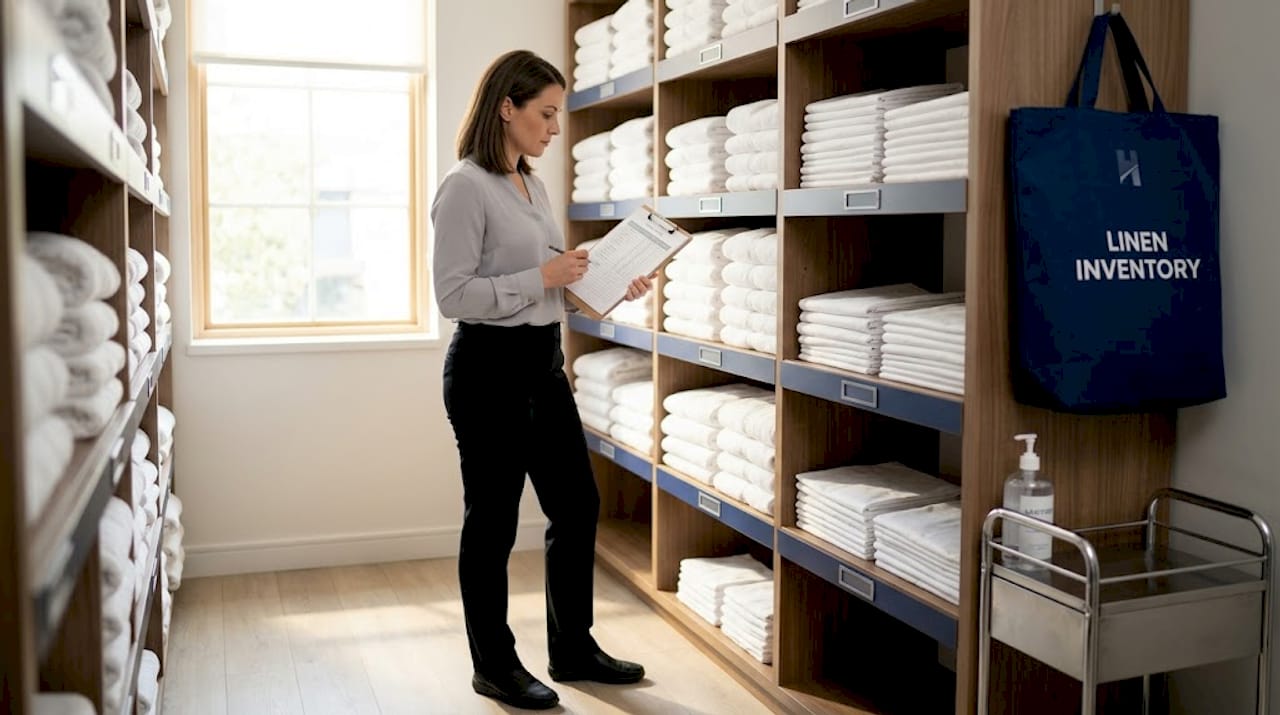
- Inventory optimization prevents both over-ordering and stockouts by giving managers real-time visibility into circulation and reserves.
- Extended linen lifespan results from commercial-grade textile selection. Properly specified textiles matched to industrial laundering can last 390 to 400 wash cycles versus 70 to 100 for retail-grade alternatives.
- Reduced emergency purchasing follows naturally from better visibility, eliminating the premium costs of rushed reorders.
- Consistent quality standards are maintained because a partner who understands hospitality specifies materials that hold up under high-frequency use, not just materials that photograph well on a product sheet.
Pro Tip: Before finalizing any textile partner agreement, request a linen lifecycle audit. A credible supplier will assess your current stock condition, estimate realistic wash-cycle performance, and recommend specifications based on your actual laundering setup, not a generic catalog standard.
For a deeper look at optimizing your hotel’s textile supply chain, the operational frameworks that distinguish high-performing properties from average ones become clear quickly.
In-house vs. partnered textile management
Hotel managers evaluating why hotels choose textile vendors often frame the question as a cost comparison. The real comparison is broader than price per unit.
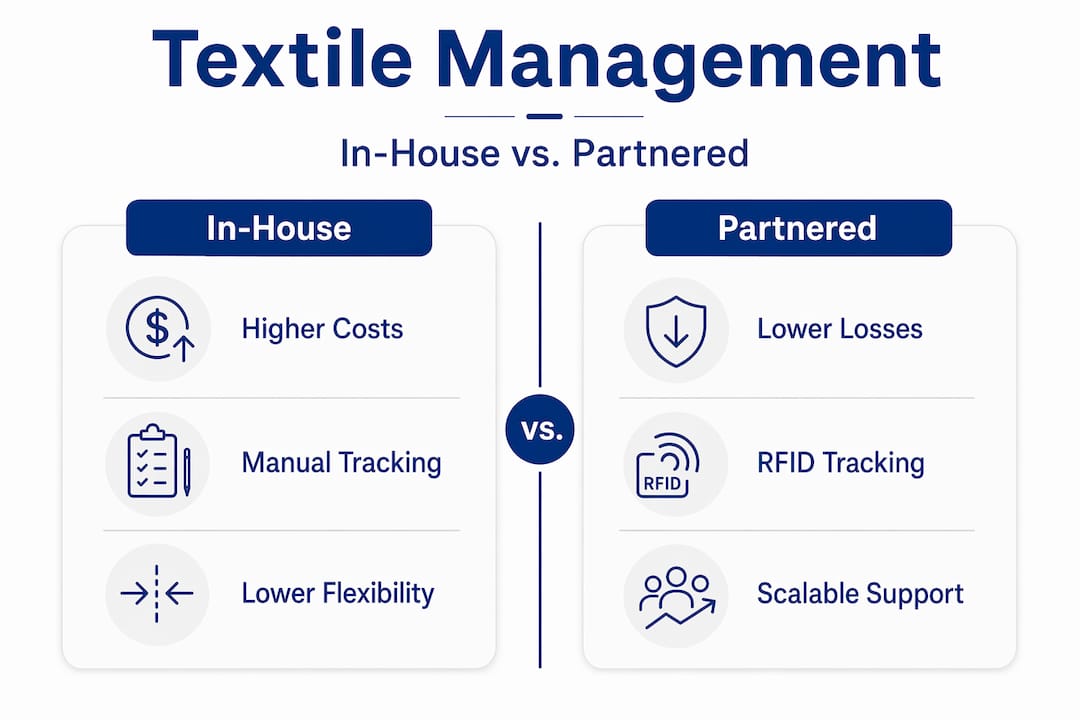
| Factor | In-house management | Partnered supply |
|---|---|---|
| Upfront cost control | Higher direct purchasing cost | Volume pricing reduces per-unit cost |
| Inventory visibility | Manual tracking, prone to gaps | RFID and digital systems provide real-time data |
| Textile specification expertise | Limited unless dedicated staff hired | Embedded in partner’s service offering |
| Flexibility for peak seasons | Requires buffer stock owned outright | Partner can adjust supply volumes as needed |
| Sustainability compliance | Difficult to manage alone | Partner-led recycling and sourcing programs |
| Staff training and accountability | Internal responsibility | Partner contributes training resources and data |
The case for why hotels invest in event textiles through partners rather than managing it internally becomes particularly strong when you factor in technology integration. Partners who operate at scale bring data visibility tools, specification advisory, and volume leverage that no single property can replicate independently.
Operational flexibility is another real differentiator. A resort running a summer peak season followed by a quiet winter cannot justify owning full buffer inventory for both periods. A textile supplier for hotels can calibrate supply levels to match operational cycles without the property carrying excess capital on its balance sheet.
Sustainability adds a dimension that is increasingly difficult to ignore. Hotels operating under evolving environmental frameworks need partners who understand textile reuse and recycling programs that reduce waste and help properties meet sustainability commitments without building that capability from scratch internally.
Sustainability and the case for circular textile programs
Environmental responsibility in hospitality has moved from a marketing angle to an operational requirement. Regulations around extended producer responsibility are shifting how textile supply chains function, and hotels that rely on transactional purchasing are exposed to compliance gaps that partners help close.
A textile supplier with an active circular program does three things your in-house operation likely cannot:
- Recycles and repurposes end-of-life linen rather than sending it to landfill, reducing the environmental footprint of every replacement cycle.
- Sources from suppliers with verified production standards, giving you traceability across the supply chain that regulators and sustainability-focused guests increasingly expect.
- Documents disposal and replacement cycles in ways that satisfy audit requirements without adding administrative burden to your team.
The brand image value is real, but the operational value is more immediate. Properties that manage textiles through partners with circular programs spend less on reactive disposal, face fewer compliance surprises, and carry stronger credentials in sustainability reporting.
Pro Tip: When evaluating a textile partner’s sustainability claims, ask for documentation of their end-of-life textile volumes and disposal methods from the past 12 months. Credible partners track this data. Those who cannot produce it are likely treating sustainability as a marketing claim rather than an operational practice.
How to select and work with the right textile partner
Once you accept the importance of textile partners for your property, the selection process requires the same rigor you apply to any major operational relationship. Here is a practical framework for getting it right.
-
Define your specifications before you meet suppliers. Know your wash cycle frequency, linen categories, quality tier requirements, and volume by season. Suppliers can only match your needs accurately if you articulate them clearly from the start.
-
Assess technological capability directly. Ask whether the supplier supports RFID tagging, provides inventory reporting dashboards, or integrates with your property management system. Technology compatibility determines whether the partnership delivers data-driven value or just product delivery.
-
Evaluate reliability through references, not sales materials. Speak to hotels of similar size and type who have worked with the supplier for at least two years. Ask specifically about response times during shortages, handling of defective product, and accuracy of deliveries.
-
Establish contract clarity on specifications and approval workflows. Structured purchasing workflows prevent the approval delays, specification drift, and maverick purchasing that inflate costs quietly over time. Get specifications in writing and build review checkpoints into the contract.
-
Plan for continuous improvement, not just initial setup. Real-time linen management data enables ongoing adjustments to inventory levels, staff training, and cost controls. Set quarterly review meetings with your partner to act on what the data reveals.
For a structured approach to textile procurement in hospitality, the criteria above translate into concrete evaluation frameworks that save time and prevent costly supplier mismatches.
Leading properties reduce laundry costs by 25–35% through the combination of visibility, training, and process improvements that the right partner enables. That is not a speculative outcome. It is the documented result of systematic management replacing reactive purchasing.
My perspective on what most hotels get wrong
I have seen hotels invest carefully in room design, F&B presentation, and front desk training, then treat textile procurement as a commodity purchasing decision. That gap consistently costs more than the savings from buying on price alone.
What I’ve learned from working across the hospitality supply chain is that the real value of a textile partner is not the product. It’s the accountability structure. The moment you introduce RFID tracking, systematic reporting, and a partner who has financial skin in product performance, your operation starts behaving differently. Staff handle linen more carefully. Managers investigate loss rather than absorbing it. Housekeeping supervisors stop rounding up counts.
In my experience, the properties that resist partnering usually cite control as the reason. They want to own the relationship with their textiles fully. What they are actually doing is owning all the risk and all the inefficiency. The hotels I have seen extract the most value from partnerships are the ones who treat the supplier as an operational extension of their team, share data openly, and hold quarterly performance reviews. Those relationships compound over time in ways that transactional purchasing never does.
My honest advice: stop comparing per-unit costs between suppliers and start comparing total operational outcomes. The right textile selection guidance changes what you buy and how it performs under real hotel conditions. That matters more than the price on the invoice.
— Xpert
How Gjergjihtextil supports hotel operations at scale

Gjergjihtextil has been supplying hospitality businesses for over 30 years, building supply chain infrastructure that hotels across the region rely on for consistent quality and cost control. Their hotel textile solutions cover bed linens, towels, duvets, pillows, curtains, and event textiles, all specified for industrial laundering durability and guest comfort standards. With direct import relationships across Italy, China, India, and Pakistan, Gjergjihtextil operates with the volume leverage to offer competitive per-unit pricing without sacrificing quality. Their team works with hotel managers to align specifications with operational realities, whether you are outfitting a 30-room boutique or a large resort property. If you want to move from reactive textile purchasing to a structured partnership that controls cost, quality, and supply reliability, Gjergjihtextil is the place to start.
FAQ
Why do hotels need textile partners instead of buying direct?
A textile partner provides specifications expertise, volume pricing, and technology integration that direct purchasing cannot replicate at property level. Hotels working with partners consistently reduce linen replacement costs and gain data visibility that improves accountability across housekeeping and laundry operations.
How much can a hotel save by partnering with a textile supplier?
Leading hotel properties reduce laundry costs by 25–35% through technology-enabled partnerships that reduce linen loss, improve inventory accuracy, and eliminate unnecessary purchasing. The savings compound over time as data-driven management replaces reactive reordering.
What is RFID linen tracking and why does it matter?
RFID linen tracking uses electronic tags on each textile item to monitor its location and movement through the laundry cycle. RFID reduces manual counting time by 90% and shrinkage by up to 50%, making it one of the most impactful technologies available to hotel textile management.
How long should hotel-grade linens last compared to retail options?
Commercial-grade textiles matched to industrial laundering standards can withstand 390 to 400 wash cycles, compared to 70 to 100 cycles for retail-grade alternatives. Proper specification from an experienced textile partner is the primary factor that determines whether you reach that lifespan or replace linen prematurely.
What should hotel managers look for when choosing a textile supplier?
Prioritize suppliers who offer RFID or digital inventory tracking, provide verifiable references from comparable properties, and commit to written specifications with structured contract terms. Partners with circular sustainability programs add additional long-term value through compliance support and waste reduction.