

TL;DR:
- Textile flexibility allows fabrics to bend and conform without losing structure, improving operational efficiency in hospitality. Prioritizing flexibility alongside durability enhances guest comfort, extends fabric lifespan, and reduces replacement costs. Effective selection involves assessing weave structure, fiber content, and post-wash performance to ensure textiles meet real-world hospitality stresses.
When hospitality managers evaluate new textiles, most conversations circle around thread count, color fastness, or price per unit. Flexibility rarely comes up. Yet the ability of a fabric to bend, drape, and adapt under real-world operating conditions shapes everything from how smoothly a housekeeper makes a bed to how naturally a guest settles into a chair. Overlook flexibility and you create friction at every touchpoint. Prioritize it alongside durability and design, and your textiles start working harder for your operation every single day.
Table of Contents
- What is textile flexibility and why does it matter?
- Key benefits of textile flexibility in hospitality settings
- Comparing textile types: Flexibility versus other priorities
- Implementing flexibility-focused textile selection: Practical steps
- Why hospitality’s textile trends may be missing the mark
- How Gjergji H Tekstil makes flexible textile solutions work for you
- Frequently asked questions
Key Takeaways
| Point | Details |
|---|---|
| Flexibility Defined | Textile flexibility means fabrics can adapt, bend, and endure daily demands without losing performance. |
| Guest Impact | Flexible textiles improve comfort, making beds and seats more enjoyable for guests. |
| Operational Benefits | Easier handling and resilience reduce staff workload and fabric turnover. |
| Best Weave Choices | Twill weaves offer superior flexibility and strength for hospitality use. |
| Procurement Advantage | Prioritizing flexibility yields long-term savings and enhanced guest experiences. |
What is textile flexibility and why does it matter?
Textile flexibility is the capacity of a fabric to bend and conform to different shapes, surfaces, and uses without losing its structural integrity. It is not the same as softness, which describes surface feel, and it is not the same as elasticity, which refers to a fabric’s ability to stretch and return to its original dimensions. Flexibility is about how willingly a material moves and adapts without cracking, puckering, or distorting under repeated stress.
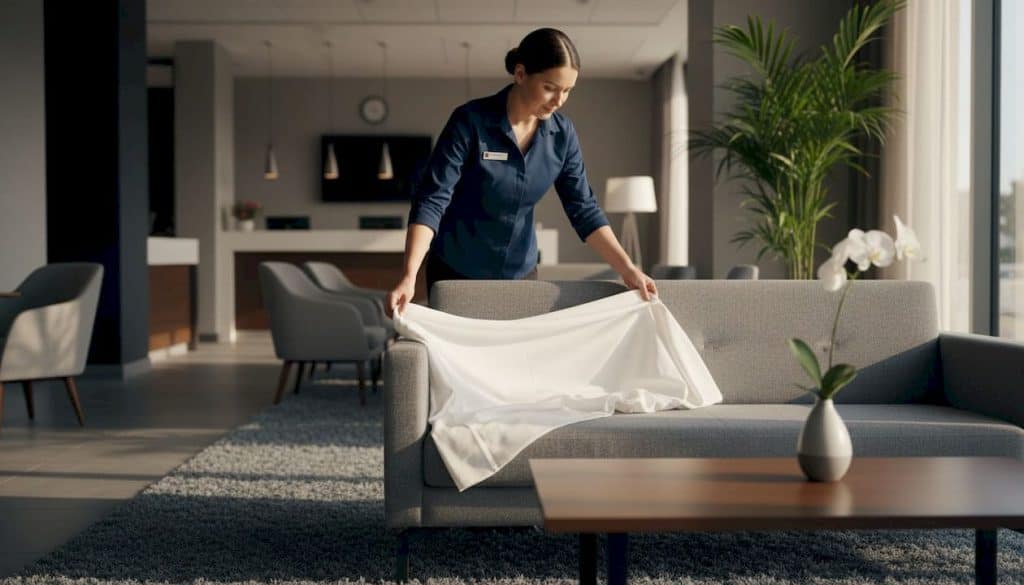
In a hospitality environment, this distinction carries real operational weight. Consider what happens during a standard morning shift in a 60-room hotel. Housekeeping staff pull, tuck, fold, and smooth bed linens dozens of times. A fabric with poor flexibility resists every tuck, creates uneven creases, and slows the entire workflow. A flexible linen, by contrast, drapes naturally over mattress corners, tucks without bunching, and holds its shape once made. The speed difference per room may seem small, but across a full property and an entire season, it adds up to meaningful labor savings.
The same logic applies in restaurants. Tablecloths that flex properly lay flat on irregular surfaces without pinning or pulling. Napkins with adequate flexibility fold into clean presentations with minimal effort. Curtains and drapes that move freely improve the guest’s perception of the space without constant staff adjustment.
Here are real-world scenarios where flexible textiles make a direct operational difference:
- Bed linens that conform to pillow-top mattresses without excess wrinkling
- Upholstery fabric on dining chairs that adapts to guest movement without straining seams
- Curtains that open and close smoothly on track systems without stiffening after washing
- Cleaning cloths that reach into corners and contoured surfaces more effectively
- Uniform fabrics that move with staff without restricting posture or creating visible stress points
“Twill weaves in upholstery provide more flexibility than plain weaves while maintaining strength, ideal for high-traffic hospitality like hotels and restaurants.” This finding positions weave structure, not just fiber content, as a key driver of flexibility.
Understanding the impact of textiles on guest experience starts exactly here, with the functional performance of every piece of fabric your guests and staff interact with daily.
Pro Tip: Don’t confuse flexibility with flimsiness. A well-constructed twill or blended fabric can be highly flexible and still resist abrasion, hold color through industrial washing cycles, and maintain dimensional stability across thousands of uses.
Key benefits of textile flexibility in hospitality settings
Once you recognize what flexibility means in practical terms, the business case for prioritizing it becomes clear. The benefits are not abstract. They show up in your maintenance logs, your replacement budgets, and your guest review scores.
Here are five concrete benefits that hotels and restaurants gain from flexibility-focused textile selection:
-
Faster housekeeping and service workflows. Flexible fabrics cooperate with staff rather than working against them. Bed making, table setting, and uniform adjustments all take less time and physical effort when the material moves naturally.
-
Enhanced guest comfort. Upholstery that flexes with body movement reduces pressure points and improves seated comfort. Bedding that conforms to the guest’s position rather than resisting it creates a noticeably better rest experience.
-
Longer service life for upholstery and linens. Stiff fabrics accumulate stress at fold lines, seams, and corners. Over repeated use and washing cycles, this stress breaks down fiber bonds and accelerates wear. Flexible fabrics distribute stress more evenly, which delays degradation significantly.
-
Reduced replacement frequency and procurement costs. Textiles that survive more washing cycles and extended daily use before showing wear require less frequent reordering. For a hotel with 80 rooms, even a modest extension in linen service life translates directly into thousands of dollars saved annually.
-
Greater multi-purpose usability. Flexible textiles tend to adapt across different configurations and uses. A tablecloth that drapes cleanly on a rectangular table can often be repurposed for a round event table. This cross-application versatility reduces the number of distinct SKUs a procurement team must manage and stock.
The structural choice behind this performance is significant. Research confirms that twill weaves outperform plain weaves in flexibility without sacrificing the strength required in high-traffic hospitality environments. This matters because many buyers default to plain weaves based on familiarity or lower initial cost, not realizing the operational trade-offs they are making.
When evaluating hotel fabrics for lasting comfort, flexibility should sit alongside durability and washability as a primary criterion, not an afterthought. Practical textile selection tips consistently point to weave structure as a lever that procurement teams underutilize.
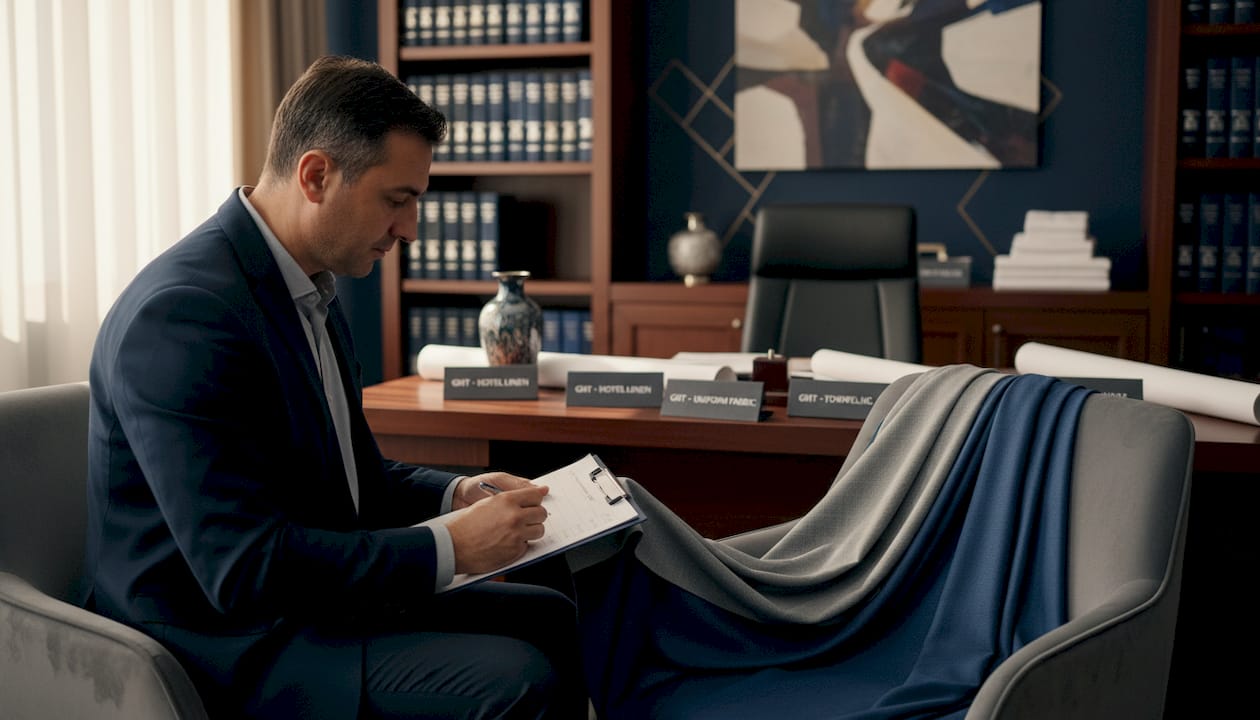
Pro Tip: When requesting samples from suppliers, ask specifically for flexibility ratings or conduct a simple manual drape test. Lay the fabric over a curved surface and observe how naturally it conforms. If it bridges gaps or resists the curve, it will create the same problems on a mattress corner or chair seat.
Comparing textile types: Flexibility versus other priorities
Procurement decisions involve trade-offs. Flexibility is one variable among several, and understanding how it interacts with durability, appearance, and cost helps you make smarter choices for each application within your property.
| Textile type | Flexibility | Durability | Estimated service life | Guest comfort rating |
|---|---|---|---|---|
| Twill weave (cotton or blend) | High | High | 3 to 5 years with industrial washing | Excellent |
| Plain weave (cotton) | Moderate | Moderate | 1.5 to 3 years | Good |
| Synthetic blend (polyester mix) | Variable | High | 3 to 4 years | Moderate |
| Jacquard weave | Low to moderate | High | 3 to 5 years | Good (visual, less tactile) |
| Satin weave | Low | Low to moderate | 1 to 2 years | Excellent (tactile) |
The table reveals a pattern that experienced procurement managers recognize quickly. Twill weave consistently delivers across all four dimensions. It offers the highest flexibility without compromising durability, and its service life under industrial washing conditions makes it the economically rational choice for high-volume environments.
According to published textile research, twill’s diagonal construction distributes mechanical stress more evenly across the fabric surface than plain weaves, which is why it resists tearing at stress points such as seams and corners. This is not a minor advantage in a hotel laundry operation processing hundreds of pieces daily.
When selecting textiles for hospitality, reading specification sheets accurately is an underrated skill. Here is what to look for when flexibility is a priority:
- Weave structure: Twill, herringbone, or diagonal constructions generally indicate better flexibility than plain or basket weaves.
- Thread density: Overly dense weaves reduce flexibility. Look for a balanced count that allows the fabric to move without sacrificing cover.
- Fiber blend ratio: A mix of cotton with a small percentage of polyester or elastane often delivers flexibility alongside strength.
- Finishing treatment: Some finishing processes stiffen fabric to improve appearance but reduce flexibility. Always request a post-wash sample, not just an unwashed swatch.
- Martindale abrasion rating: While this measures durability rather than flexibility directly, fabrics with high Martindale scores in flexible constructions are your best investment.
Staying current with hospitality textile trends helps you identify when newer fiber technologies or finishing processes open up better flexibility-to-durability combinations than what was available even two or three years ago.
Implementing flexibility-focused textile selection: Practical steps
Understanding the theory is useful. Embedding it into your actual procurement process is what produces results. Here is a practical workflow for applying flexibility criteria across your textile purchasing decisions.
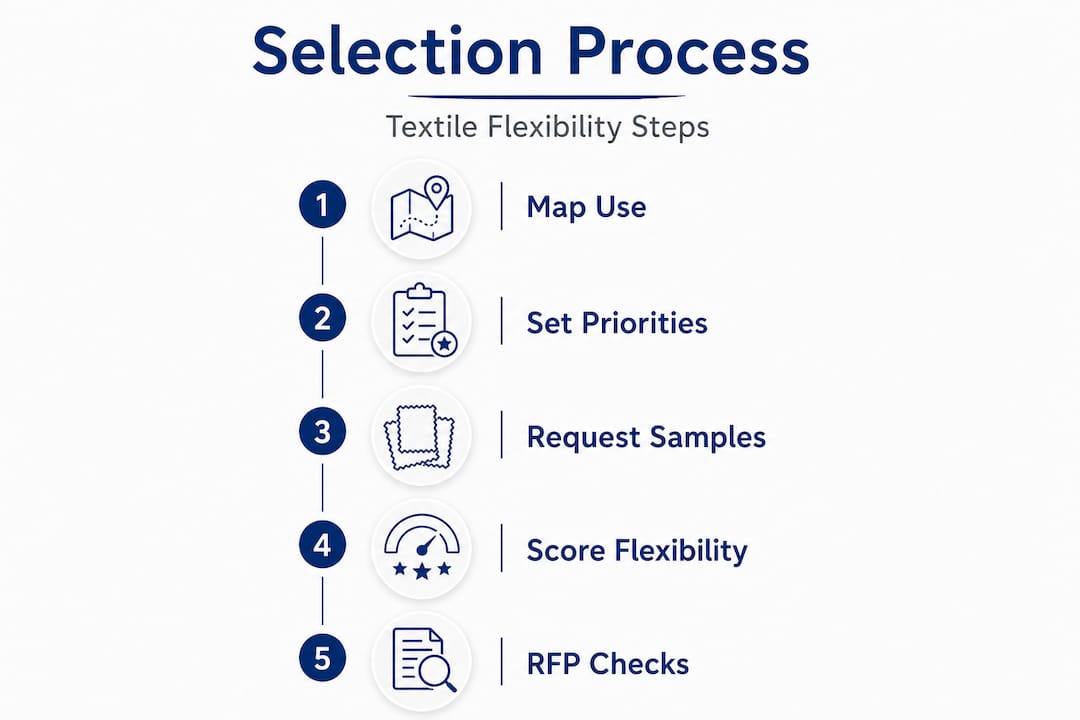
Step 1: Map your textile applications. List every textile category in your property, from bedding and towels to upholstery, drapes, uniforms, and table linens. Group them by the type of stress they experience: mechanical stress from repeated folding, thermal stress from industrial washing, or abrasion stress from constant contact.
Step 2: Define flexibility requirements by category. Not every application needs the same level of flexibility. Bedding requires high drape flexibility. Upholstery needs flex resistance under body weight and movement. Uniforms need freedom of motion without distorting shape. Set a minimum standard for each group before reviewing suppliers.
Step 3: Request flexibility-specific samples. Ask your supplier for samples from the same production batch you would receive in bulk. Test each sample manually: drape it, fold it repeatedly, and subject it to at least five machine wash cycles before reassessing. Note any stiffening, puckering, or dimensional change.
Step 4: Run a structured comparison against your performance criteria. Use a table like the one below to score each sample objectively.
| Application | Minimum flexibility score | Minimum durability rating | Target wash cycles | Priority fiber |
|---|---|---|---|---|
| Bed linens | High | High | 200+ | Cotton or cotton-poly blend |
| Upholstery | High | Very high | N/A (spot clean) | Twill weave blend |
| Table linens | Moderate to high | Moderate | 150+ | Cotton or linen blend |
| Drapes | High | Moderate | 50+ | Polyester blend |
| Staff uniforms | High | High | 100+ | Stretch-cotton or poly blend |
Step 5: Embed flexibility checks into your RFPs. Add a specific line item in your request for proposals that asks suppliers to declare the weave structure, fiber composition, and post-wash flexibility performance of each product. This signals to suppliers that you are an informed buyer and filters out low-quality submissions before sampling begins.
As textile quality research confirms, weave structure directly affects how a fabric performs under the repetitive stress conditions that define hospitality operations. Your textile quality testing process should reflect this by including post-wash drape assessment as a standard step, not an optional one.
Why hospitality’s textile trends may be missing the mark
The industry spends considerable energy chasing visual appeal in textiles. A new color palette, a fashionable texture, a branded pattern. These choices are not wrong, but they often crowd out a more consequential question: how will this fabric perform after the 300th wash cycle?
We have seen properties invest in premium decorative fabrics that photograph beautifully but stiffen dramatically after industrial laundering. Within one season, the upholstery that looked elegant in the mood board has cracked at the seams and the drapes hang with visible rigidity. The replacement cost, combined with the guest experience impact in the interim, far exceeded any savings the initial design choice promised.
The uncomfortable truth is that many procurement decisions are driven by what is visible in a showroom under ideal lighting, not by what happens in a laundry room at 60 degrees Celsius, repeated daily. Flexibility is not glamorous to discuss. But it is what keeps service running smoothly when a property is at full occupancy and there is no margin for equipment failures or textile breakdowns.
Conversely, properties that have adopted flexibility as a core procurement criterion consistently report longer textile service lives, smoother staff workflows, and measurably better guest feedback on room and dining comfort. The research supports this: twill constructions maintain flexibility under the exact conditions that destroy plain weaves, which means the upfront cost difference pays back quickly through reduced replacement frequency.
The hospitality industry should stop treating textile flexibility as a secondary consideration that gets resolved at the spec sheet level after design choices are locked in. It should be a primary filter, applied before aesthetics, not after. Properties that understand the guest impact of flexible textiles make better long-term procurement decisions and build a stronger operational foundation than those chasing seasonal trends.
How Gjergji H Tekstil makes flexible textile solutions work for you
Knowing which textiles to prioritize is only half the equation. Finding a supplier who can consistently deliver them at volume, with verified quality standards, is where most procurement teams hit a wall.
Gjergji H Tekstil has been supplying hotels and restaurants across Albania and the Balkans for over 30 years, sourcing from established markets in Italy, India, and Pakistan and maintaining direct quality control at every stage. The company’s catalog includes wholesale hotel textiles and restaurant textiles specifically selected and tested for high-traffic, high-frequency hospitality environments. Every product recommendation is backed by operational experience with clients ranging from boutique properties to internationally branded hotels. If you are ready to build a textile procurement strategy around performance rather than appearance, our team offers structured consultation and expert textile selection tips tailored to your property’s specific needs.
Frequently asked questions
What is the difference between textile flexibility and elasticity?
Flexibility is the ability of a fabric to bend and conform to different shapes without breaking down, while elasticity is the capacity to stretch under tension and return to its original form. Both matter in hospitality, but they serve different functional roles.
Which weave offers the best flexibility for hotel upholstery?
Twill weaves provide superior flexibility and strength for high-traffic environments, making them the most reliable choice for hotel seating and upholstered surfaces that experience constant use.
How does flexible fabric improve guest satisfaction?
Flexible fabrics adapt naturally to guests’ body movement and posture, making seating and bedding feel more comfortable without requiring constant adjustment, which translates directly into more positive guest perceptions.
Can flexible textiles reduce replacement costs for hotels?
Yes. Because flexible textiles distribute mechanical stress more evenly during use and washing, they resist early wear and tearing better than rigid alternatives, extending service life and reducing procurement frequency over a full operating season.