

TL;DR:
- Durable hotel fabrics should meet specific abrasion, pilling, and colorfastness standards for different spaces.
- Performance fabrics like Crypton and Sunbrella offer higher rub counts and better resistance for high-traffic areas.
- Fabric selection must consider usage, maintenance, and environmental factors to ensure long-term hotel operation sustainability.
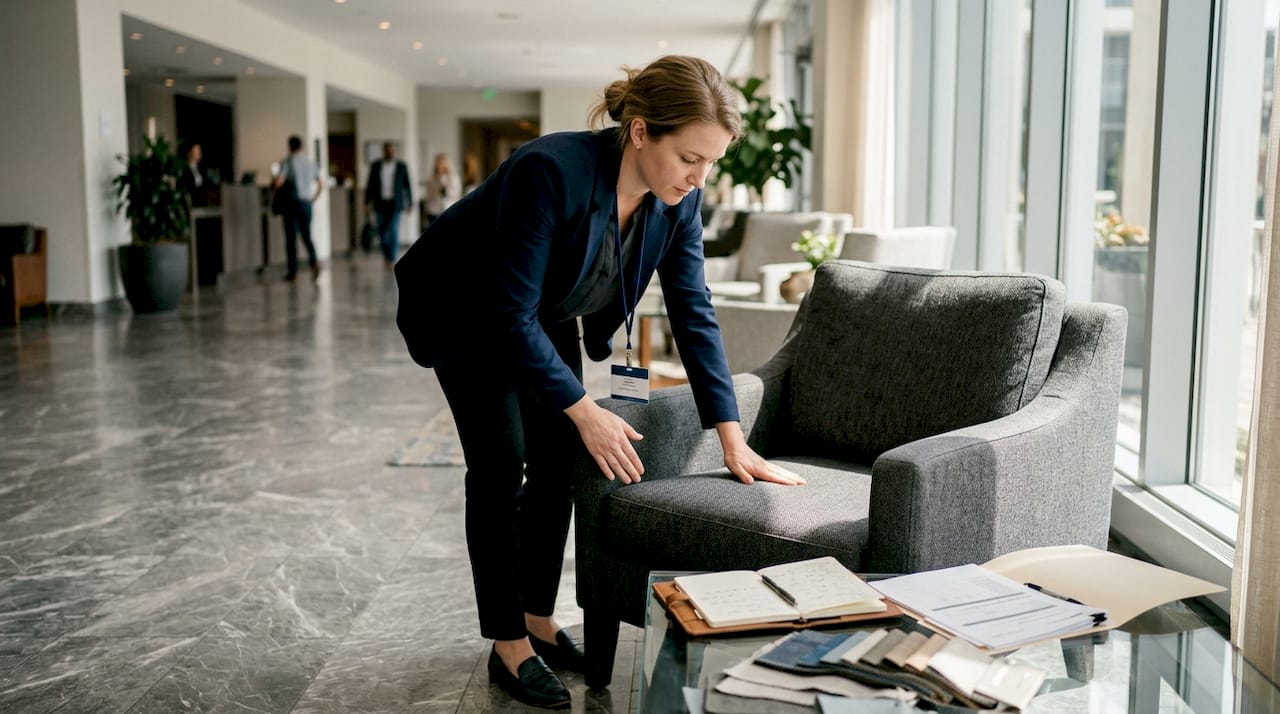
Fabric failure is one of the most quietly expensive problems in hotel operations. A lobby sofa that pills after six months, curtains that fade by summer, or bed linens that thin out after fifty wash cycles all translate directly into replacement costs, guest complaints, and compromised brand perception. Yet many procurement managers still select fabrics based on price per meter or visual appeal alone, without a clear framework for evaluating long-term performance. This article breaks down the essential durability traits of hotel-grade textiles, explains the key testing standards you should demand from suppliers, and walks you through a practical decision process for every space in your property.
Table of Contents
- Understanding durability standards: Martindale and Wyzenbeek explained
- Top performance traits of durable hotel fabrics
- Comparing popular durable fabrics for hotels
- Choosing the right fabric for your hotel’s needs
- The durability myth: What most guides miss about hotel fabrics
- Upgrade your hotel with proven-durable fabrics
- Frequently asked questions
Key Takeaways
| Point | Details |
|---|---|
| Understand abrasion tests | Martindale and Wyzenbeek are key for rating commercial fabric durability. |
| Prioritize performance traits | High rub count, stain resistance, and colorfastness drive longevity in hotels. |
| Compare options carefully | Cotton blends, polyesters, and performance fabrics each suit different uses and budgets. |
| Think beyond test scores | Real durability also depends on cleaning routines and how the fabric is actually used in your space. |
Understanding durability standards: Martindale and Wyzenbeek explained
When evaluating commercial fabrics, two abrasion tests dominate the industry: Martindale and Wyzenbeek. Both measure how well a fabric resists surface wear, but they use different methods and produce results that are not directly comparable. Understanding both is essential before you sign any supply contract.
The Martindale test, developed in the UK, uses a circular rubbing motion that simulates multidirectional wear. This closely mirrors how upholstery actually wears in real use, where friction comes from multiple angles. The Wyzenbeek test, more common in North America, uses a back-and-forth linear motion. Each full back-and-forth movement counts as one “double rub.” For hotel and commercial use, 30,000 to 100,000+ cycles or double rubs are the recommended minimum depending on traffic intensity.
Here is a quick reference for minimum rub counts by hotel zone:
| Hotel zone | Martindale (cycles) | Wyzenbeek (double rubs) |
|---|---|---|
| Guest room seating | 30,000 | 30,000 |
| Lobby and corridor | 50,000+ | 50,000+ |
| Restaurant and bar | 75,000+ | 75,000+ |
| High-traffic public areas | 100,000+ | 100,000+ |
A critical point many buyers miss: rub counts are not interchangeable between the two standards. A fabric rated at 50,000 Martindale cycles is not equivalent to 50,000 Wyzenbeek double rubs. Always confirm which test was used when comparing supplier datasheets.
Beyond abrasion, you should also request test results for:
- Pilling resistance: Measured on a scale of 1 to 5, where 5 means no pilling. Anything below 3 is a liability in a hotel setting.
- Colorfastness to washing: Critical for linens and any fabric laundered on-site.
- Colorfastness to light: Essential for window-facing upholstery and outdoor textiles.
Pro Tip: Always ask suppliers for a full test profile, not just the rub count. A fabric with 80,000 Martindale cycles but poor colorfastness will look worn long before it physically breaks down.
Top performance traits of durable hotel fabrics
With the testing standards established, let’s identify the concrete traits that translate into practical durability for your hotel operations. Test numbers matter, but so does understanding what those numbers represent in day-to-day use.
Abrasion resistance is the foundation. Fabrics used in high-traffic zones need high rub counts, but the fiber composition behind those numbers matters too. Tightly woven fabrics with higher thread counts tend to resist surface breakdown longer than loosely woven alternatives at the same rub count.
Stain and moisture resistance is equally important in hospitality. Fabrics treated with barrier finishes or made from inherently stain-resistant fibers reduce cleaning time, lower chemical costs, and extend the life of the textile. Performance fabrics such as Crypton, Sunbrella, and Revolution offer 50,000 to 150,000 double rubs alongside built-in stain and UV resistance, making them a strong choice for high-traffic upholstery.
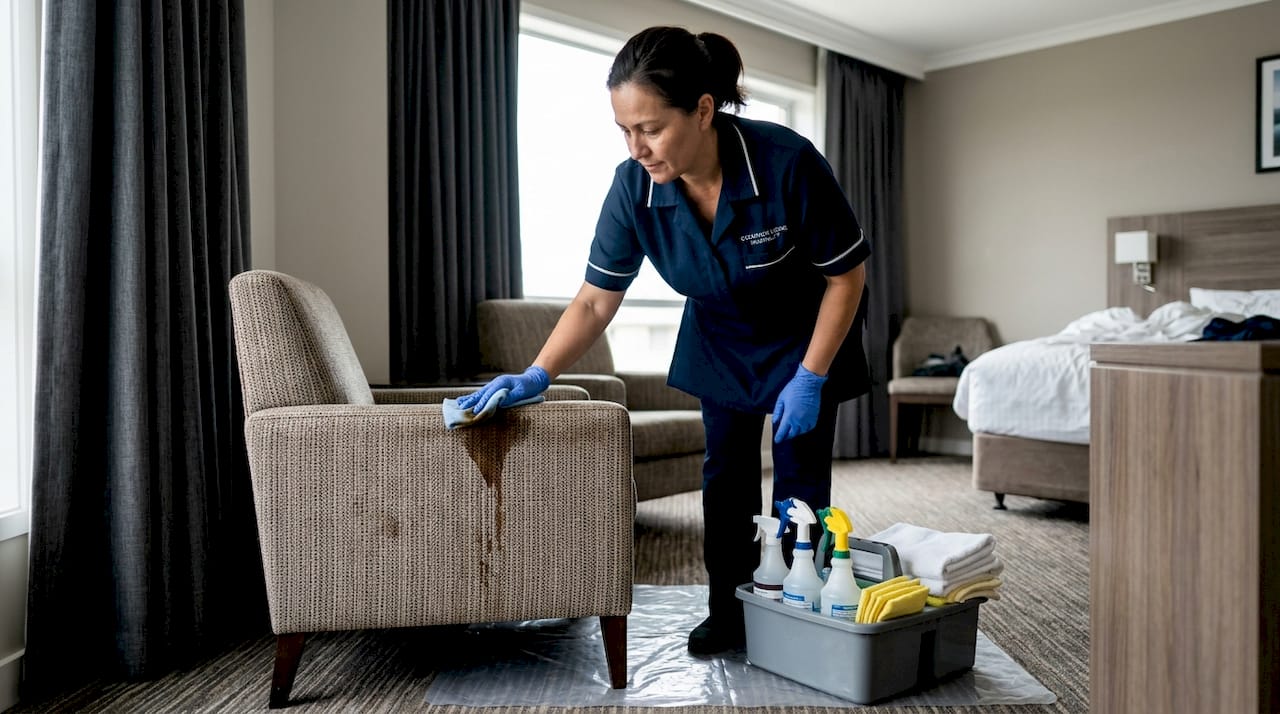
Colorfastness is a trait that directly affects guest perception. A faded headboard panel or a discolored curtain signals neglect, even when the fabric is structurally intact. For hotel curtains and upholstery, look for a minimum light fastness rating of 5 to 6 on the ISO scale.
Pilling resistance is often underestimated. Pilling occurs when short fibers work their way to the surface and tangle into small balls. It is most common in blended fabrics under repeated friction. For wholesale hotel sheets and pillowcases, a pilling resistance rating of 4 or higher is the practical standard.
UV protection matters for any fabric exposed to direct sunlight, including poolside furniture, terrace seating, and south-facing guest rooms. Solution-dyed fibers, where color is embedded during fiber production rather than applied afterward, offer superior UV resistance compared to piece-dyed or yarn-dyed alternatives.
A real-world benchmark worth noting: lobby sofas upholstered with fabrics rated at 75,000 or more cycles consistently show service lives roughly twice as long as those with fabrics rated below 30,000 cycles, even when both are maintained on the same cleaning schedule.
Pro Tip: When sourcing for outdoor or sun-exposed areas, prioritize solution-dyed acrylic or performance-grade fabrics over standard polyester. The color stability difference becomes visible within a single season in high-sun climates.
Comparing popular durable fabrics for hotels
Now that you know the must-have traits, how do the most common hotel fabrics compare? Here is a clear breakdown of the leading options and where each performs best.
| Fabric type | Rub count range | Stain resistance | UV resistance | Best use |
|---|---|---|---|---|
| Cotton blends | 15,000 to 40,000 | Moderate | Low | Guest rooms, dining linens |
| Polyester | 30,000 to 80,000 | Good | Moderate | Guestroom upholstery, curtains |
| Solution-dyed acrylic | 50,000 to 100,000 | Very good | Excellent | Outdoor, poolside, terraces |
| Performance fabrics (Crypton, Sunbrella) | 50,000 to 150,000 | Excellent | Excellent | Lobbies, restaurants, high-traffic zones |
Cotton blends remain popular for bed linens and dining textiles because of their softness and breathability. Their limitation is durability under heavy mechanical washing and direct friction. They work well in controlled environments but are not the right choice for lobby seating or outdoor use.
Polyester and polyester blends offer a strong middle ground. They are cost-effective, widely available, and perform reliably in hotel upholstery and curtain applications. Their main tradeoff is a slightly lower tactile quality compared to natural fibers, which some guests notice in premium settings.
Solution-dyed acrylics are the clear leader for outdoor and sun-exposed zones. Because the color is locked into the fiber at the manufacturing stage, UV exposure causes minimal fading. They also resist mold and mildew, which matters in coastal and humid climates common across the Balkans.
“Performance fabrics like Crypton, Sunbrella, and Revolution offer superior rub counts and resist stains, making them the most operationally reliable choice for high-traffic hotel environments.”
Performance fabrics carry the highest upfront cost but often deliver the lowest total cost of ownership when you factor in replacement frequency and maintenance labor. For lobbies, restaurant seating, and spa areas, the investment is justified.
Choosing the right fabric for your hotel’s needs
After exploring your options, let’s walk step-by-step through selecting the best material for each hotel zone. The goal is to match durability specifications to actual usage patterns, not simply to buy the highest rub count available.
-
Map your traffic zones. Categorize each space: low traffic (private guest rooms), medium traffic (corridors, standard dining), and high traffic (lobby, bar, poolside). This determines your minimum rub count threshold before you look at anything else.
-
Factor in your cleaning protocol. Fabrics laundered daily or multiple times per week need higher colorfastness and pilling resistance ratings than those cleaned weekly. Balancing performance test results with your actual maintenance schedule prevents over-specifying in low-use areas and under-specifying where it counts.
-
Calculate lifetime cost, not unit cost. A fabric at twice the price that lasts three times as long is the better procurement decision. Build a simple cost-per-year model: divide purchase price by expected service life in years, then add estimated maintenance cost.
-
Match fiber type to environment. For restaurant and dining spaces, polyester blends offer the right balance of stain resistance and cost. For restaurant textile needs, look for fabrics with a minimum 50,000 rub count and a barrier finish. For poolside and outdoor areas, solution-dyed acrylics are the practical standard.
-
Prioritize comfort where guests feel it most. Guest rooms and spa areas are where tactile quality directly affects reviews. In these spaces, a cotton-polyester blend that feels softer can outperform a technically superior but harsher performance fabric in terms of guest satisfaction scores.
Pro Tip: Request physical samples and run them through your own laundry cycle at least five times before committing to a large order. Lab test numbers confirm potential; your own wash test confirms real-world behavior under your specific conditions.
The durability myth: What most guides miss about hotel fabrics
Here is a perspective shaped by working alongside hotel procurement teams across the region for over three decades. Most durability guides stop at rub counts and fiber specs. That is useful, but it misses the bigger operational picture.
The fabrics that fail earliest in real hotel environments are rarely the ones with the lowest rub counts. They are the ones chosen without considering the full context of how they will be used and maintained. A 100,000-cycle performance fabric cleaned with the wrong chemical will degrade faster than a 40,000-cycle polyester blend maintained correctly.
Daily housekeeping practices, the aggressiveness of industrial washing machines, the pH of cleaning agents, and even the local water hardness all affect fabric lifespan in ways that no lab test captures. The most persistent durability problems we see come from a mismatch between what the spec sheet promises and what the actual operating environment demands.
The practical takeaway: treat durability as a system, not a single number. Rub counts are your entry filter, but your maintenance protocol, supplier support, and replacement cycle planning are what determine whether your textile investment actually holds up.
Upgrade your hotel with proven-durable fabrics
To help you translate durability traits into real-world solutions, here is how you can access proven hotel fabrics tailored to your property’s needs.
At Gjergji H Tekstil, we supply the full range of hotel textiles from guest room linens to restaurant table settings and outdoor upholstery fabrics, all sourced and tested to commercial-grade standards. Our team has supplied properties including Marriott, Meliá, and Sheraton, which means we understand what performance looks like at scale. Whether you need durable sheets for hotels or upholstery fabrics for high-traffic public spaces, our hotel textile specialists can help you match the right specification to your actual operational needs. Contact us to request samples or discuss a tailored supply solution for your property.
Frequently asked questions
What is the minimum rub count for hotel fabrics?
For heavy-use hotel applications, a minimum of 30,000 to 100,000 cycles (Martindale) or double rubs (Wyzenbeek) is recommended, with higher thresholds for lobbies and public areas.
Which fabrics last the longest in hotels?
Performance fabrics like Crypton and Sunbrella typically offer the highest durability, with 50,000 to 150,000 double rubs and built-in resistance to stains and UV exposure.
Are Martindale and Wyzenbeek tests the same?
No. Martindale uses a multidirectional circular motion while Wyzenbeek uses a linear back-and-forth method, and results are not directly interchangeable between the two standards.
How can I tell if hotel fabric is both durable and comfortable?
Request physical samples and review full test profiles. True durability means balancing performance specs with guest comfort, maintenance requirements, and the specific demands of each hotel space.