

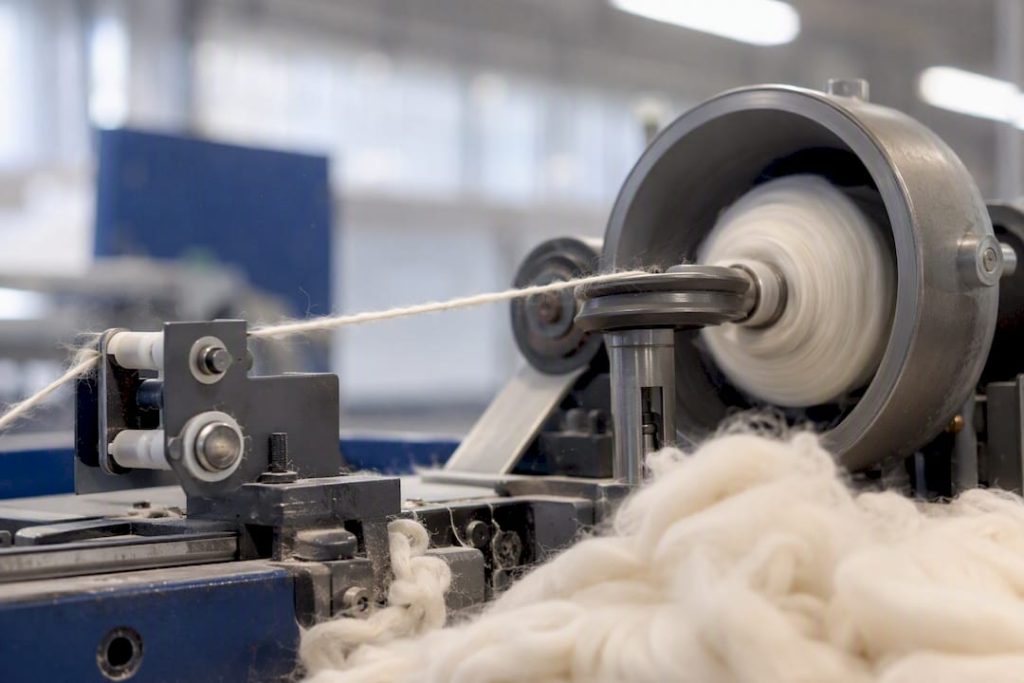
Ring-spun yarn gives you a softer hand, higher tensile strength, and cleaner print surfaces. It’s the right call for guest-facing linens, branded apparel, and anything that gets touched, printed, or scrutinized. Open-end (rotor) yarn spins faster and costs less, which makes it the practical choice for bulk utilitarian goods where softness and print clarity matter less than the price per pound.
The nuance sits in the application. A boutique hotel’s pillowcases and a laundry’s shop rags aren’t buying the same yarn for the same reasons, and they shouldn’t.
- Choose ring-spun for T-shirts, hotel bedding, towels facing guests, and anything printed or embroidered.
- Choose open-end for heavy-duty workwear, industrial rags, denim, and high-volume basics where cost per unit drives the decision.
Quick fact: Ring-spun fabrics show measurably higher breaking loads and better pilling resistance than open-end fabrics of the same count, according to ScienceDirect’s technical overview of yarn structure.
At Gjergji H Tekstil, three decades of supplying hotels, restaurants, and event venues across the region have made this trade-off familiar. The yarn choice you make on day one shows up in your linen budget two years later.
Key Takeaways
Ring-spun yarn wins on softness, strength, and print quality, while open-end wins on speed and cost, so the right choice depends entirely on whether the item is guest-facing or utilitarian.
| Point | Details |
|---|---|
| Match yarn to end use | Ring-spun for guest-facing linens and printed apparel; open-end for workwear and bulk basics. |
| Strength gap is measurable | Ring-spun yarn typically shows higher breaking strength at the same count. |
| Print quality favors ring-spun | Lower hairiness means cleaner dot definition and sharper logo printing. |
| Cost savings come from speed | Open-end’s rotor process skips roving and runs at far higher rotational speeds. |
| Gjergjihtextil manages both | Gjergjihtextil sources and specifies ring-spun and open-end yarn separately by application across hospitality programs. |
Table of Contents
- Ring Spun Vs Open End: How Each Yarn Is Actually Made
- Comparing Softness, Strength, Pilling, and Print Quality
- How Yarn Choice Shows Up in Finished Fabric Performance
- Where the Real Cost Savings and Trade-Offs Come From
- How to Choose the Right Yarn for Your Program
- What 30 Years of Hospitality Supply Teaches About Yarn Selection
- Why the Cheapest Yarn Rarely Wins the Long Game
- Get Yarn Specification Right the First Time
- Sources
Ring Spun Vs Open End: How Each Yarn Is Actually Made
The performance gap between these two yarns starts on the spinning frame, not in the marketing copy. Understanding the mechanics tells you why one costs more and lasts longer.
Ring spinning works in three stages:
- Carded or combed fiber gets drafted into a thin strand called roving.
- The roving feeds through a traveler that rides a metal ring, twisting the fibers together under constant tension.
- That tension pulls fibers into a tight, parallel alignment as the yarn winds onto a bobbin, continuously and slowly.
The traveler and ring system caps rotation speed, which is precisely what forces the fibers into that tight, aligned bundle. Slow and controlled produces strong and smooth.
Open-end (rotor) spinning skips a step entirely. Loose fiber feeds directly into a spinning rotor, which uses centrifugal force to twist the yarn without ever passing through a roving stage. That omission is the whole story, according to Cotton Incorporated’s technical introduction to open-end spinning. Rotors spin at rotational speeds far beyond what a ring-and-traveler system can sustain, which is exactly why open-end production runs so much faster. But the fibers never get pulled into the same tight parallel arrangement. They pack in more randomly, leaving a fuzzier, less uniform strand.
There’s a hard ceiling here too: open-end spinning is limited to coarser yarn counts. Try to spin it fine, and the yarn’s structural integrity falls apart. Ring spinning has no such ceiling, which is why it still dominates fine-count, high-end apparel.
Pro Tip: Ask any mill quoting you open-end yarn what count range they’re actually running. If they hedge on anything below Ne 20, that’s a red flag for softness-critical programs.
Comparing Softness, Strength, Pilling, and Print Quality
Buyers rarely need a spinning-physics lecture. They need to know what changes when the yarn changes. Here’s where the two methods actually diverge.
- Hand and softness: Ring-spun’s tight fiber alignment produces a smoother, more compact strand that feels noticeably softer against skin. Open-end yarn’s looser structure feels coarser and grittier, even at identical fiber content.
- Tensile strength: Procurement comparisons consistently show ring-spun yarn running higher in breaking strength than open-end yarn of the same count. Academic testing backs this up. A Marmara University comparison of ring and open-end rotor spun yarns found ring yarns consistently posting lower irregularity and higher breaking strength across tested blends.
- Pilling and abrasion: Ring-spun fabric resists pilling better in most cases, though the Marmara study notes open-end can hold its own on certain blended counts. It’s not an absolute rule, but ring-spun is the safer default for anything facing repeated wash cycles.
- Hairiness: Open-end yarn’s looser twist leaves more fiber ends protruding from the surface. That’s a comfort issue and a print issue at once.
Quick fact: Ring-spun cotton reduces hairiness and improves print registration, especially with compact spinning variants, according to Cotton Gins’ manufacturing guide. Fewer stray fibers means ink or dye sits on a cleaner surface instead of bleeding along loose fuzz.
For anyone weighing ring spun vs open end on a spec sheet, tensile strength and pilling resistance are the two numbers worth asking your mill to document.
How Yarn Choice Shows Up in Finished Fabric Performance
Yarn attributes are abstract until they hit a hotel’s industrial laundry three times a week. That’s where the differences stop being theoretical.
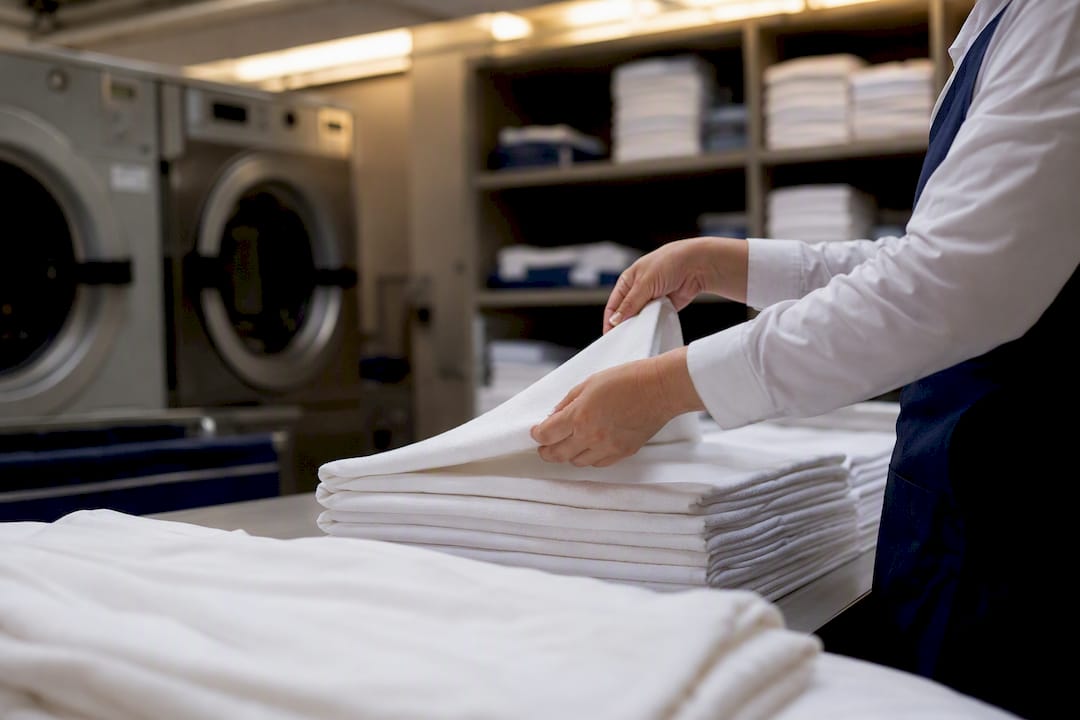
Print clarity depends directly on surface smoothness. Ink or dye adheres to a compact, low-hairiness ring-spun surface with sharper dot definition. Open-end’s fuzzier surface scatters ink along protruding fibers, softening edges and dulling logo detail. If your program includes branded apparel, embroidered robes, or printed event linens, that difference is visible to the naked eye within the first wash.
Wash life tells a similar story. Ring-spun textiles, thanks to their higher breaking strength and pilling resistance, tend to hold their surface and shape through more industrial laundry cycles before visible wear sets in. Open-end goods typically show surface pilling and fiber breakdown sooner, particularly under the high heat and mechanical agitation of commercial laundering.
- Request pilling ratings (ASTM or ISO test method) from your mill before ordering, not after a batch fails.
- Ask for a sample run through your actual laundry’s wash and dry cycle, not a lab simulation alone.
- Confirm staple length; longer staple cotton amplifies ring-spun’s strength advantage further.
The marginal cost premium for ring-spun is often recouped through fewer replacement cycles, which is exactly why hospitality programs weighing yarn types should treat this as a life-cycle calculation, not a per-unit one. Our guide on maximizing hotel textile durability breaks down how wash-cycle math changes the total cost.
Where the Real Cost Savings and Trade-Offs Come From
Open-end’s speed advantage isn’t marketing spin. Rotor spinning skips the roving stage entirely and runs at rotational speeds ring frames can’t match, which translates directly into higher output per machine hour and lower labor cost per pound of yarn produced.
That speed shows up in three places: less handling between carding and spinning, lower energy cost per unit of output, and fewer skilled operators needed per shift. Ring spinning, by contrast, requires close monitoring of “ends down,” the industry term for yarn breaks during spinning. Mills track ends-down rates closely because keeping that number low takes skill and good autopiecing equipment. That labor and equipment cost gets baked into the final yarn price.
- Open-end yarn typically runs cheaper per pound at the mill gate.
- Ring-spun yarn typically costs more upfront but returns that premium through longer service life on guest-facing items.
- Lead times on open-end orders tend to be shorter given faster throughput per spinning line.
Pro Tip: Don’t compare yarn quotes on price per pound alone. Ask for expected wash cycles to failure and divide the total price by that number. A cheaper yarn that fails in 60 washes instead of 120 isn’t actually cheaper.
How to Choose the Right Yarn for Your Program
Match the yarn to the job, not the other way around. A few rules cut through most of the decision fatigue.
- Premium apparel and guest-facing linens: default to ring-spun, ideally combed ring-spun for the smoothest surface and best print registration.
- Hotel bedding, bath towels, and robes: ring-spun almost always wins here given how directly softness and wash life affect guest experience.
- Workwear, industrial rags, and heavy denim: open-end is usually the smarter buy since abrasion resistance from bulk fiber matters more than surface softness.
- High-volume, budget-driven basics: open-end again, provided the item isn’t printed or worn against skin for extended periods.
Before signing off on any bulk order, request the following from your mill or supplier:
- Written confirmation of spinning method and staple length used
- Breaking strength test results for the specific count you’re ordering
- A pilling rating from a standardized test, not a verbal assurance
- A physical wash sample run through your actual laundry cycle
Under magnification, ring-spun yarn shows a visibly smoother, more uniform surface than open-end. That’s a quick sanity check any buyer can request before committing to a full production run. For a deeper walkthrough of what to specify, see our breakdown on textile fabric testing for hotels and restaurants, and for premium bath textiles where yarn finish is especially visible, products like the HUUM OVO towel collection illustrate how much surface quality matters at the point of guest contact.
What 30 Years of Hospitality Supply Teaches About Yarn Selection
A hotel that swaps to a cheaper open-end towel to save 15 percent upfront often ends up replacing that towel twice as often. The math only works if you track total cost past the invoice date.
That’s the lesson operational experience keeps confirming. Gjergji H Tekstil sources and tests both yarn types for different parts of a hospitality program, matching fiber choice to how hard an item gets used and how visible it is to guests.
- Guest-facing linens (sheets, pillowcases, bath towels) get specified in ring-spun or combed ring-spun as a baseline, not an upgrade.
- Back-of-house and utility textiles lean open-end where cost efficiency matters more than hand feel.
- Every bulk order gets checked against staple length and spinning method documentation before it ships.
Buyers exploring custom textile solutions for hotels benefit most when yarn selection happens at the design stage, not as an afterthought once fabric samples are already in hand.
Why the Cheapest Yarn Rarely Wins the Long Game
The conventional advice on ring spun vs open end tends to stop at “ring-spun is better, open-end is cheaper,” and leaves buyers to sort out the rest themselves. That framing undersells how much the decision depends on wash frequency and guest contact, not just budget.
What gets overlooked most is that open-end isn’t a lesser yarn. It’s the correct engineering choice for a huge share of textile applications, workwear and industrial goods especially, where its bulk and abrasion resistance actually outperform ring-spun’s finer structure. The mistake isn’t choosing open-end. It’s choosing it for a hotel pillowcase because the invoice looked smaller.
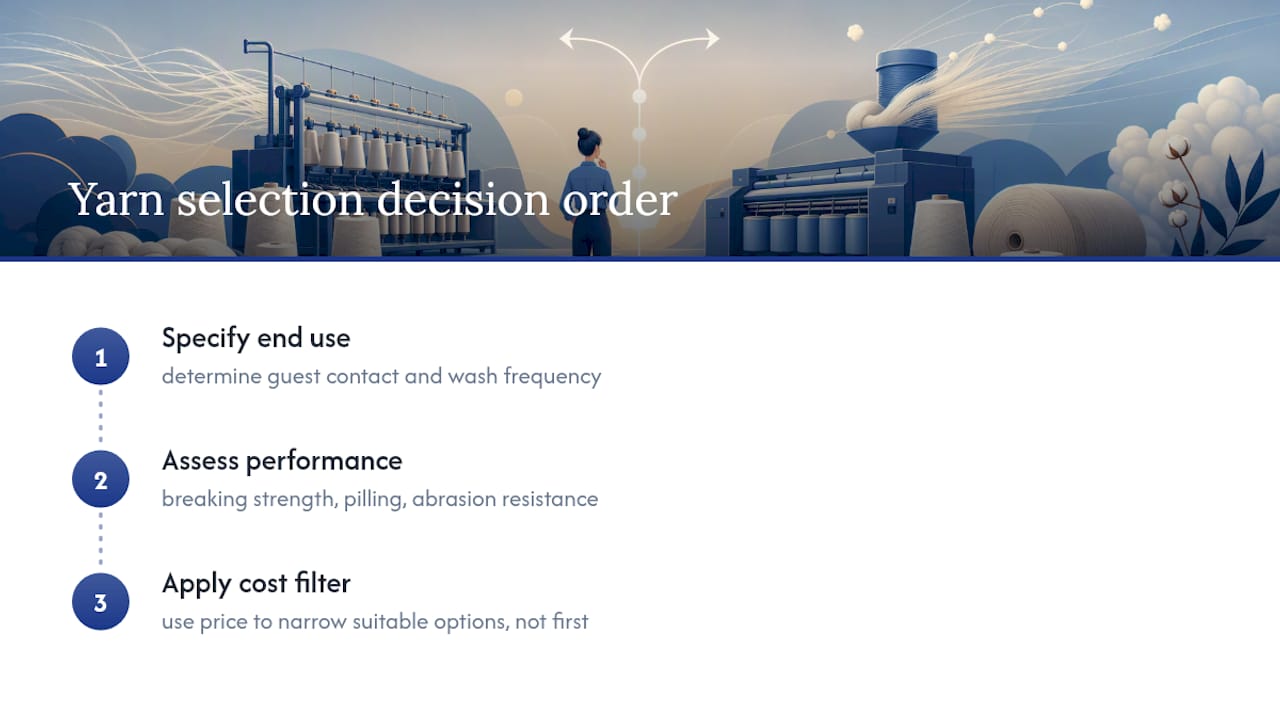
If you take one thing from the research, take this: specify by end use and wash frequency first, then let cost narrow the field, not the other way around. A program built on invoice price alone tends to rediscover, expensively, why breaking strength and pilling resistance were worth asking about in the first place.
— Xpert
Get Yarn Specification Right the First Time
Getting the ring-spun versus open-end call right on paper is one thing. Getting a mill to actually deliver what you specified, order after order, is where most buyers lose control of quality. Gjergji H Tekstil closes that gap by controlling the supply chain end to end, from import sourcing to in-house production to final delivery, so the yarn you approve in a sample is the yarn that shows up in your next thousand-unit order.

That consistency matters most for hospitality buyers juggling multiple properties or seasonal event contracts, where a single inconsistent linen batch can throw off guest experience across an entire property. Whether you’re specifying ring-spun bedding for a boutique hotel or open-end workwear for back-of-house staff, our team can help you build a spec that holds up order after order. Start with our hotel textile selection guide to map out what your program actually needs, then reach out for a quote built around your real usage numbers.