

TL;DR:
- Textile fabric testing verifies durability and performance to prevent costly fabric failures in hospitality.
- Mechanical tests like tensile, tear, and abrasion assess fabric resilience under real-use conditions.
- Relying solely on lab reports is insufficient; real-world testing and pilot laundering ensure fabric longevity.
Many hospitality managers assume that any linen labeled “durable” will perform equally across demanding hotel and restaurant environments. That assumption is costly. Subtle differences in fiber composition, weave structure, and finishing treatments create enormous variation in how fabrics hold up under industrial laundering, daily use, and high guest turnover. Without systematic fabric testing, procurement decisions rely on supplier claims rather than verified performance data. This guide explains what textile fabric testing actually involves, breaks down the most important test methods, shows how to interpret results, and gives you a practical framework for making smarter sourcing decisions that protect both your budget and your guest experience.
Table of Contents
- What is textile fabric testing?
- Mechanical and physical testing methods explained
- Evaluating durability: Hospitality benchmarks and material choices
- Interpreting test results and common pitfalls
- Best practices for selecting tested textiles in hospitality
- Why test reports alone aren’t enough: Our take
- Source high-quality tested textiles for your hospitality business
- Frequently asked questions
Key Takeaways
| Point | Details |
|---|---|
| Testing ensures durability | Proper fabric testing helps hotels and restaurants minimize replacements and secure long-term guest satisfaction. |
| Standards matter | Rely on ISO, ASTM, or JIS standards to select textiles proven to perform in demanding hospitality environments. |
| Material choice impacts results | Blends and polyesters often outlast naturals like cotton in abrasion and real-world hospitality use. |
| Don’t ignore real-world factors | Interpret lab results alongside local laundering practices and guest needs for best outcomes. |
What is textile fabric testing?
Now that you understand why testing matters for hospitality, let’s define exactly what textile fabric testing involves.
Textile fabric testing is the systematic evaluation of fabric properties to ensure quality, durability, and suitability for end-use. In hospitality, this means verifying that a fabric can survive hundreds of wash cycles, resist tearing under daily stress, maintain color after repeated laundering, and still feel comfortable to guests. It is not a single test but a structured process covering multiple performance dimensions.
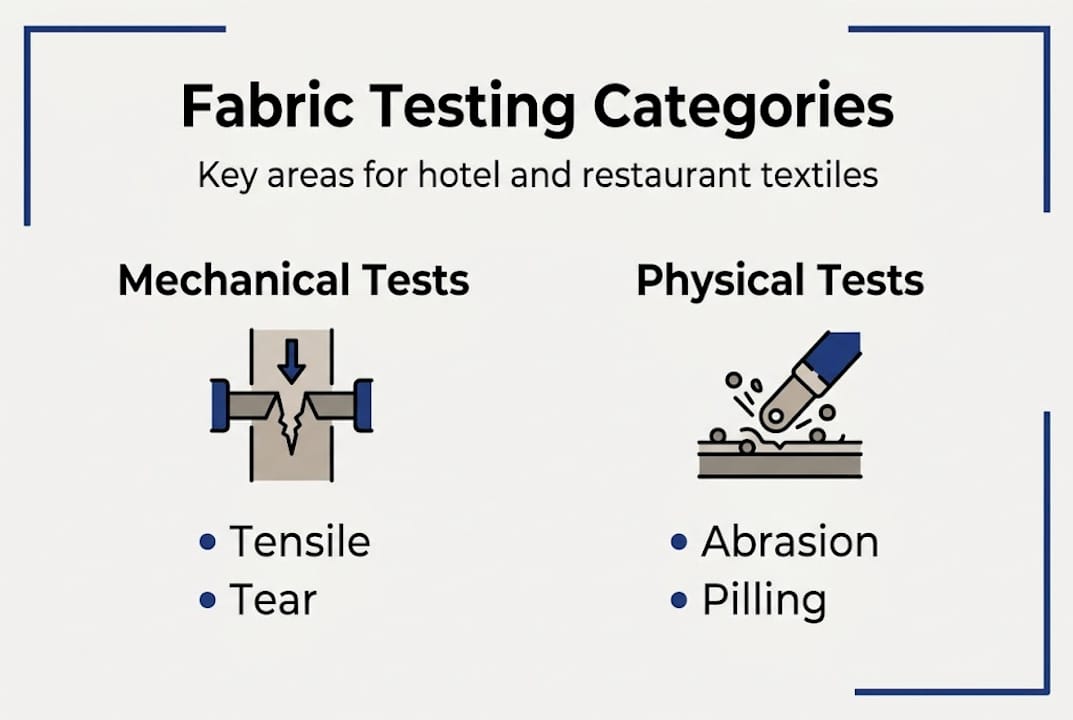
The properties assessed fall into three main categories. Mechanical properties measure how a fabric responds to physical force, including tensile strength, tear resistance, and abrasion resistance. Physical properties cover measurable characteristics like GSM (grams per square meter, the weight of the fabric), dimensional stability, and thread count. Appearance properties evaluate colorfastness, pilling resistance, and surface finish after repeated use.
For hotels and restaurants, the stakes are practical. A tablecloth that pills after twenty washes looks unprofessional. A bed sheet that tears at the seam after fifty laundry cycles drives up replacement costs. Choosing durable hotel fabrics means understanding which properties matter most for your specific use case.
Key fabric properties commonly assessed in hospitality textile testing include:
- Tensile and tear strength (resistance to pulling and ripping forces)
- Abrasion resistance (how well the surface withstands friction over time)
- Pilling resistance (tendency to form small fiber balls on the surface)
- Colorfastness (color retention after washing, rubbing, and light exposure)
- GSM and dimensional stability (weight consistency and resistance to shrinkage)
- Seam strength (integrity of stitched joints under stress)
Unseen quality factors drive long-term guest satisfaction and ROI. A fabric that looks identical to a cheaper alternative on day one may cost three times more to maintain over a two-year period.
Understanding these categories gives you a shared language with suppliers and testing labs, which immediately improves the quality of your procurement conversations.
Mechanical and physical testing methods explained
Understanding the basics, let’s explore the different testing methods you might encounter and their practical impact.
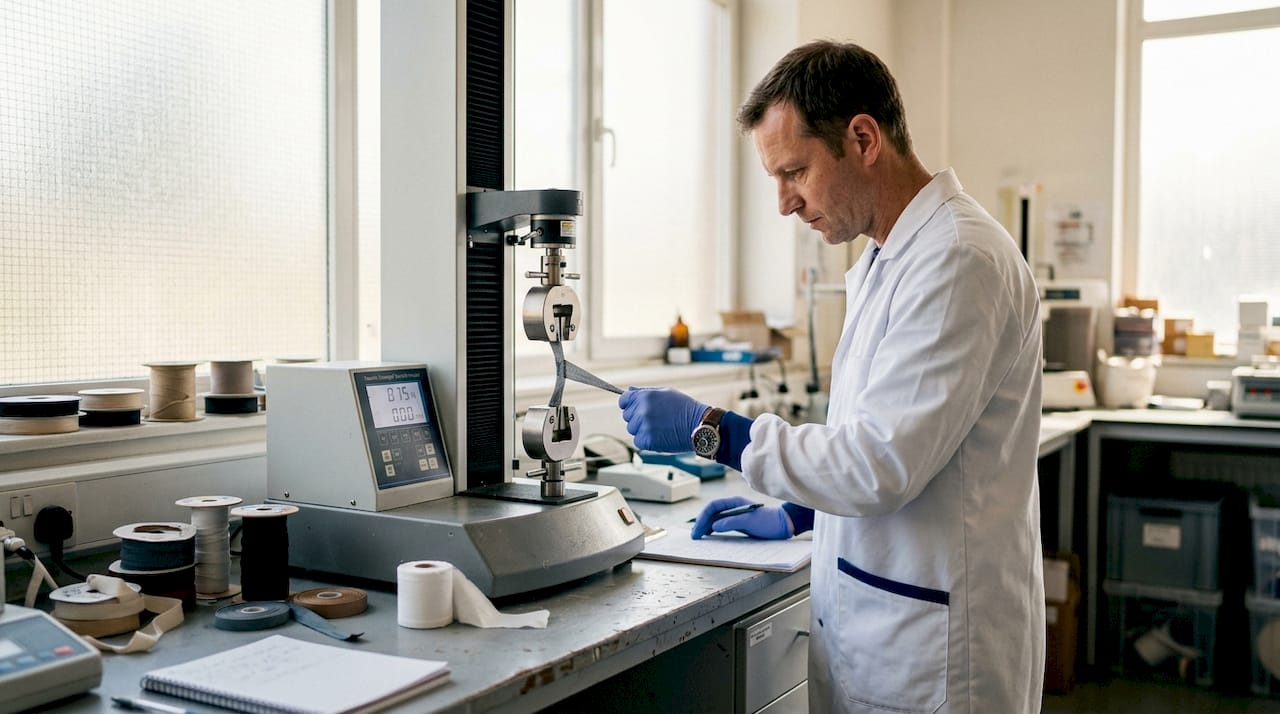
Key mechanical methodologies include tensile testing (ASTM D5035 or ISO 13934-1), tear testing, bursting strength, and abrasion resistance. Each method targets a different failure mode that fabrics experience in real hospitality environments.
Tensile testing measures how much force a fabric can withstand before breaking. It is especially relevant for bed linens and tablecloths that experience repeated stretching. Tear testing comes in three variants: Elmendorf (pendulum-based, fast), tongue (single-rip), and trapezoid (angled cut). Bursting strength tests apply pressure from all directions simultaneously, making them ideal for knitted fabrics or circular-woven materials like towels. Abrasion resistance is measured by two dominant methods: Martindale (circular motion, widely used in Europe) and Wyzenbeek (back-and-forth motion, common in North America).
Here is how the main mechanical tests compare for hospitality use:
| Test type | Standard used | Best application in hospitality | Key limitation |
|---|---|---|---|
| Tensile strength | ASTM D5035 / ISO 13934-1 | Bed linens, tablecloths | Not ideal for high-stretch knits |
| Tear resistance (Elmendorf) | ASTM D1424 / ISO 13937-1 | Woven curtains, napkins | Less accurate for heavy fabrics |
| Bursting strength | ISO 13938 / ASTM D3786 | Towels, terry cloth | Does not simulate directional stress |
| Martindale abrasion | ISO 12947 | Upholstery, uniform fabrics | Slower test cycle |
| Wyzenbeek abrasion | ASTM D4157 | Seating covers, heavy drapes | Less common in European labs |
| Pilling resistance | ISO 12945 / ASTM D3512 | Bed linens, restaurant napkins | Subjective visual grading |
A typical mechanical testing process follows these steps:
- Sample preparation: Cut fabric specimens to the exact dimensions required by the relevant standard.
- Conditioning: Expose samples to controlled conditions (20°C and 65% relative humidity for a minimum of 24 hours) to stabilize moisture content.
- Testing: Run each specimen through the designated test apparatus at the prescribed speed and load settings.
- Data recording: Capture force, cycle count, or visual grade depending on the test type.
- Analysis and reporting: Compare results against industry benchmarks or your own specified minimums.
Pro Tip: Always condition your fabric samples at 20°C and 65% relative humidity before testing. Moisture content directly affects tensile and tear results, and skipping this step can produce readings that are off by 10 to 15 percent, leading to poor procurement decisions.
For hotels managing a textile maintenance workflow, understanding these test types helps you specify exactly what you need from suppliers rather than accepting generic quality claims. A solid hospitality textile procurement guide will always reference these standards by name.
Evaluating durability: Hospitality benchmarks and material choices
With these testing methods in mind, it’s vital to understand how results translate into real performance and smarter sourcing for your business.
Raw test numbers only become useful when you compare them against established hospitality benchmarks. For upholstery in high-traffic areas, Martindale benchmarks of 20,000 to 40,000 or more cycles are standard for hotel environments, and linen fabrics last 30 to 50 percent longer than comparable cotton in high-use settings. That gap in longevity has a direct impact on your replacement budget.
Material choice is where many procurement decisions either succeed or fail. Here is how common hospitality materials compare across key durability dimensions:
| Material | Martindale cycles (approx.) | Pilling tendency | Typical lifespan (heavy use) | Best use case |
|---|---|---|---|---|
| 100% Cotton | 15,000 to 20,000 | Moderate | 12 to 18 months | Bed linens, towels |
| Linen | 25,000 to 35,000 | Low | 18 to 30 months | Tablecloths, napkins |
| Polyester | 30,000 to 50,000+ | Low to moderate | 24 to 36 months | Upholstery, uniforms |
| Cotton/Poly blend | 20,000 to 30,000 | Low | 18 to 24 months | Bed linens, restaurant covers |
Linen outlasts cotton by up to 50% in high-use hospitality settings, making it a strong candidate for restaurants and dining rooms where tablecloths cycle through multiple services per day.
For wholesale hotel textiles, understanding these benchmarks lets you set minimum performance specifications in your supplier contracts rather than simply ordering by thread count or price per unit.
The top three procurement factors directly influenced by durability metrics are:
- Replacement frequency: Higher cycle counts mean fewer replacements per year, directly reducing operational costs.
- Guest perception: Fabrics that maintain their appearance longer preserve the visual and tactile quality guests associate with your brand.
- Laundry cost per use: More durable fabrics spread laundering costs across more cycles, improving your cost-per-use ratio.
When evaluating lasting comfort textiles, always request test certificates that specify the exact standard used, not just a cycle count without context.
Interpreting test results and common pitfalls
Choosing the best materials is only part of the equation; reading and applying test data correctly is where many hospitality teams stumble.
Lab reports use terminology that can be confusing without a baseline understanding. GSM indicates fabric weight and density. Tolerances show the acceptable variation range around a target value. Cycle counts represent how many abrasion repetitions a fabric survived. Pilling grades run from 1 (severe pilling) to 5 (no pilling). Knowing these terms lets you compare reports from different suppliers on equal footing.
Here is a practical process for reading a fabric test report:
- Identify the standard used (ISO, ASTM, or JIS) and confirm it matches your specification.
- Check the conditioning protocol to verify samples were tested at the correct temperature and humidity.
- Review each result against your minimum performance threshold, not just the supplier’s stated benchmark.
- Note any results marked as borderline or outside tolerance, even if the overall report passes.
- Cross-reference abrasion results with tear and seam strength data for a complete durability picture.
Common pitfalls include ignoring edge cases, comparing results from incompatible test methods (Martindale versus Wyzenbeek are not directly equivalent), and failing to account for real-world laundering. Edge cases matter: fabrics with more than 11% elongation are not suitable for standard tensile methods, wet and dry abrasion results differ significantly, and sample preparation errors can invalidate an entire test run.
Pro Tip: Never rely on abrasion test results alone. Always combine them with tear resistance and seam strength data. A fabric can pass a Martindale test at 25,000 cycles but fail at the seam after thirty washes, which is the actual failure point in most hotel linens.
Lab results represent controlled conditions. Real hospitality environments introduce variables that no test chamber fully replicates: varying water hardness, aggressive detergents, high-temperature drying, and the mechanical stress of industrial folding equipment.
For guidance on GSM tolerances for hotel sheets, reviewing supplier specifications alongside test data gives you a far more accurate picture of what you are actually buying. The fundamentals of fabric testing confirm that combining multiple test types is always more reliable than relying on a single metric.
Best practices for selecting tested textiles in hospitality
The final step is putting knowledge into action when buying for your hospitality business. Here is how leading buyers succeed.
Successful hospitality textile procurement follows a structured process. Conditioning samples at 20°C and 65% relative humidity, combining abrasion with tear and seam tests, and accounting for hotel-specific laundry cycles are all non-negotiable steps for accurate evaluation.
Follow these steps when procuring textiles for your hotel or restaurant:
- Define your performance requirements before approaching suppliers: minimum cycle counts, GSM range, colorfastness grade, and acceptable pilling threshold.
- Request test certificates that reference specific ISO or ASTM standards, not generic quality claims.
- Vet your suppliers by asking for third-party lab reports, not just in-house testing data.
- Run a pilot laundering program with sample quantities before committing to full orders. Wash samples at your actual laundry temperature and chemical protocol.
- Review certifications for compliance with EU or regional standards relevant to the Balkans market, including OEKO-TEX or ISO 9001 for production quality.
Key red flags to watch for during procurement:
- Test reports that do not specify the standard or conditioning protocol used
- Cycle counts provided without stating the test method (Martindale and Wyzenbeek are not interchangeable)
- Suppliers who cannot provide third-party lab documentation
- Fabrics with no seam strength data despite being sold for made-up items like sheets or tablecloths
- Pricing that seems too low relative to the claimed performance specifications
Once you have verified test data, use it as a negotiation tool. Specify minimum performance thresholds directly in your purchase contracts. This protects you if a supplier substitutes materials between orders, which is a real risk in high-volume procurement. Understanding textile visual impact alongside durability data gives you a complete picture for both operational and brand decisions. For properties with specific needs, custom textile solutions allow you to specify both performance and aesthetic requirements from the start.
Why test reports alone aren’t enough: Our take
After working with hospitality clients across Albania and the broader Balkans region for over three decades, we have seen a consistent pattern: operators who rely exclusively on lab reports are often surprised when fabrics underperform in the field. The data is accurate. The real-world environment simply introduces variables that no test chamber fully captures.
Albanian hotels face specific stressors that standard ISO or ASTM protocols do not account for: water hardness that varies significantly by region, local detergent formulations, and industrial laundry equipment that applies mechanical stress differently than lab apparatus. A fabric that scores well under controlled conditions can degrade noticeably faster under these real conditions.
Our recommendation is to treat test data as a starting point, not a guarantee. Pair every procurement decision with a structured pilot program. Run your candidate fabrics through your actual laundry protocol for at least thirty cycles before committing to volume orders. Combine that with guest feedback and a review of your real-world textile maintenance records. The combination of quantified test results and field performance data is what separates informed procurement from guesswork.
Source high-quality tested textiles for your hospitality business
Ready to upgrade your textile procurement approach? Here are the next steps.
Gjergji H Tekstil has supplied tested, hotel-grade textiles to properties including Meliá, Marriott, and Sheraton since 1994, building a supply chain that prioritizes verified performance over marketing claims. Every product in our range is selected with durability benchmarks, laundering cycles, and real hospitality demands in mind.

If you are evaluating suppliers for your hotel or restaurant, explore our full range of hotel textile solutions or review our textile procurement guide for a structured framework. Properties with specific requirements can also review our custom textile options to find solutions tailored to your operational standards.
Frequently asked questions
How does textile fabric testing benefit hotels and restaurants?
Textile fabric testing ensures fabrics meet durability and safety standards, reducing replacement costs and maintaining high guest satisfaction. It converts supplier claims into verifiable performance data you can use in procurement contracts.
What is the Martindale test, and what numbers should hotels look for?
The Martindale test measures abrasion resistance by simulating circular friction on a fabric surface. Hotels should target 20,000 to 40,000+ cycles for heavy-use upholstery and seating areas.
Are international standards like ISO and ASTM required for textile testing in Albania?
Hospitality buyers in Albania and nearby regions should prioritize ISO or ASTM tested fabrics, as these standards provide a consistent, internationally recognized basis for quality assurance and supplier accountability.
How do laundering and maintenance affect fabric durability despite solid test results?
Frequent hotel laundering and cleaning chemicals can reduce fabric lifespan well below lab-predicted levels. Ongoing evaluation through pilot programs and maintenance records is essential, not just initial test certification.
Recommended
- Wholesale textiles for hotels, price/quality – Gjergji H Tekstil
- Optimize textile maintenance workflow for Albanian hotels
- Textile procurement in hospitality: A manager’s guide
- Key traits of durable hotel fabrics for lasting comfort
- Top Fabrics for Vintage Shirts: Collector Value Explained – Vintage Metal Store