

TL;DR:
- Custom textiles enhance brand identity, durability, and guest comfort, leading to higher satisfaction.
- They offer long-term cost savings by reducing replacement frequency and streamlining operations.
- Investing in tailored textiles significantly impacts guest reviews, loyalty, and overall property differentiation.
Most hotel managers focus on room design, service training, and amenity upgrades when trying to improve guest satisfaction. Textiles rarely make the top of the priority list. Yet textile visual impact plays a direct role in how guests rate their stay, influencing everything from perceived cleanliness to emotional comfort. The assumption that standard, off-the-shelf linens are “good enough” for upscale operations is one of the most common and costly misconceptions in hospitality procurement. This article breaks down why custom textiles are a strategic investment, not an optional upgrade, and what that means for your bottom line and guest loyalty.
Table of Contents
- What makes custom textiles essential in hospitality
- Comparing custom vs standard textiles: What’s the difference?
- Financial and operational advantages of investing in custom textiles
- How custom textiles directly enhance guest satisfaction
- Our expert perspective on custom textile investment
- Take the next step: Sourcing custom textile solutions
- Frequently asked questions
Key Takeaways
| Point | Details |
|---|---|
| Drives guest satisfaction | Custom textiles make spaces more appealing and comfortable, growing positive reviews. |
| Strengthens hotel branding | Tailored designs reinforce your hotel’s distinct identity and market position. |
| Saves operational costs | Investing in quality textiles cuts maintenance expenses and replacement frequency. |
| Supports efficient workflows | Custom textiles simplify inventory and streamline maintenance processes. |
| Competitive edge in Balkans | Hotels with custom textile solutions consistently outperform peers on guest loyalty. |
What makes custom textiles essential in hospitality
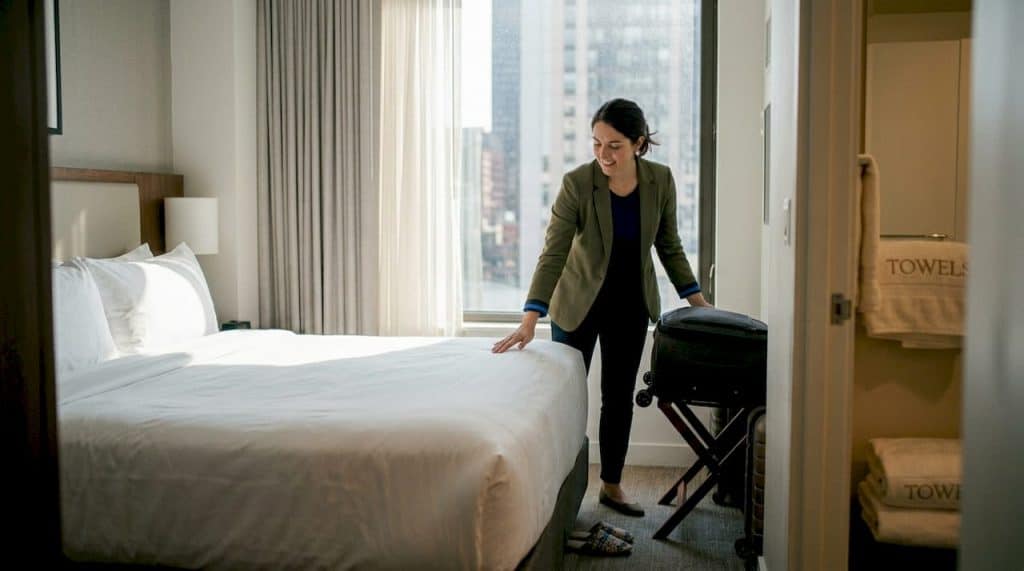
Guests form impressions fast. Within the first few minutes of entering a room, they touch the bedding, notice the towels, and absorb the visual tone of the space. These sensory signals communicate quality before a single staff interaction takes place. Hotels that elevate brand identity through carefully selected textiles consistently outperform competitors on guest satisfaction metrics.
Custom textiles do something standard options simply cannot: they align every touchpoint with your brand’s identity. The thread count, weave pattern, color palette, and embroidery on a pillowcase or bathrobe are not decorative choices. They are operational decisions that shape how guests perceive value.
Here is what custom textiles specifically deliver in a hospitality setting:
- Brand consistency across all guest-facing areas, from rooms to restaurants to event spaces
- Improved tactile comfort, which directly influences sleep quality and guest wellbeing
- Visual differentiation that makes your property memorable and shareable on social media
- Durability under repeated industrial washing cycles, reducing replacement frequency
- Alignment with your property’s positioning, whether luxury, boutique, or resort-style
A property that invests in expert textile selection treats textiles as part of its service architecture, not just its interior design. That shift in thinking changes procurement decisions, maintenance planning, and ultimately, guest outcomes.
Statistic to note: Properties that prioritize textile quality report measurably higher scores in cleanliness and comfort categories on major review platforms, two of the top three factors guests cite when rating their stay.
For Balkans hotels and resorts competing in an increasingly quality-conscious market, this is not a marginal advantage. It is a core differentiator.
Comparing custom vs standard textiles: What’s the difference?
The gap between custom and standard textiles is wider than most procurement managers expect. Standard textiles are produced for volume and price efficiency. They are designed to meet a baseline, not to exceed it. Custom textiles are built around specific operational requirements, brand standards, and guest experience goals.
Here is a direct comparison across key operational dimensions:
| Dimension | Standard textiles | Custom textiles |
|---|---|---|
| Durability | Average 80-120 wash cycles | 200+ wash cycles with proper spec |
| Branding | Generic, no differentiation | Embroidered logos, custom colors |
| Fit and sizing | Fixed standard dimensions | Tailored to your specific bed/table sizes |
| Fabric composition | Pre-set blends | Chosen for climate, use case, and comfort |
| Long-term cost | Higher due to frequent replacement | Lower over 3-5 year horizon |
| Guest perception | Neutral or forgettable | Positive and brand-reinforcing |
High quality custom textiles reduce maintenance costs while supporting hotel branding in ways that standard options never can. The durability gap alone justifies the investment for any property running more than 30 rooms.
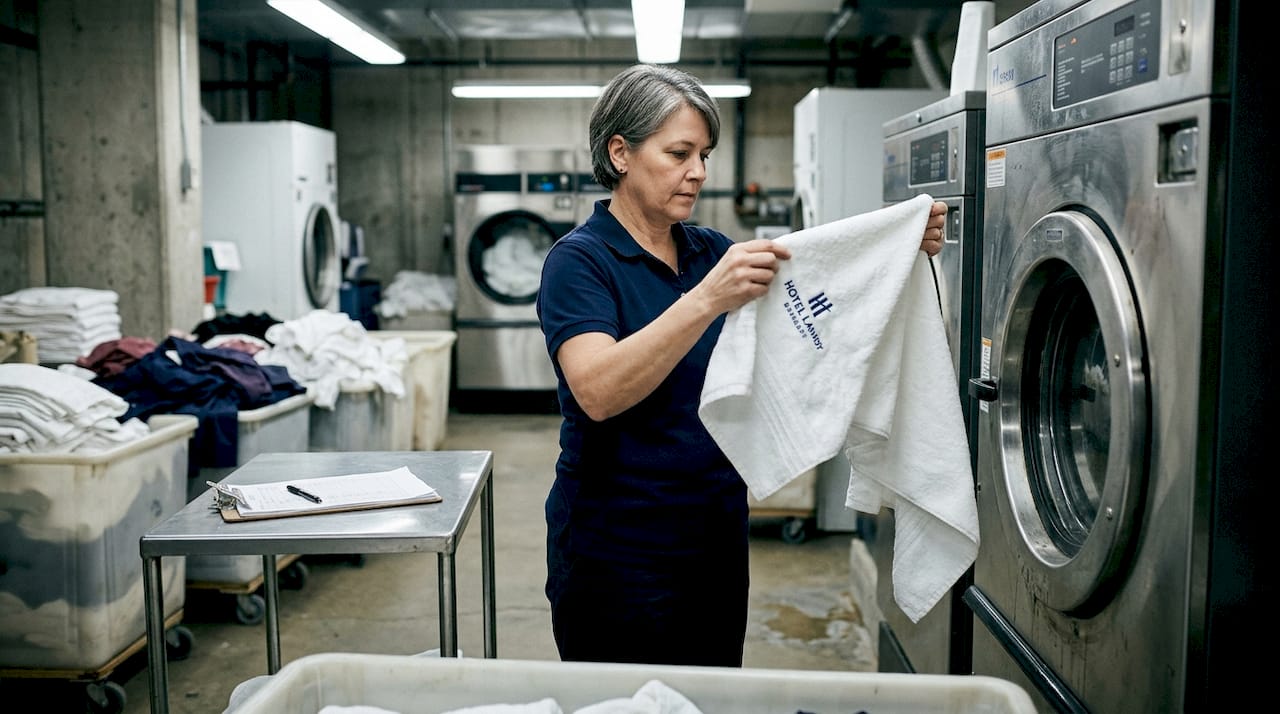
Beyond durability, the operational flexibility of custom textiles matters. When you specify fabric weight, weave density, and finish, you control how linens behave after 50 wash cycles, not just after the first. Standard textiles often lose their appearance and structural integrity far sooner, leading to visible wear that guests notice and mention in reviews.
Custom options also allow you to address specific regional needs. Properties in coastal Balkans destinations, for example, can specify moisture-wicking and salt-resistant finishes for poolside and beach towels. These are details that hotel textile pricing and procurement decisions should account for from the start.
The bottom line: standard textiles create a neutral experience at best. Custom textiles create a branded, durable, and operationally efficient experience that pays back over time.
Financial and operational advantages of investing in custom textiles
The financial case for custom textiles is straightforward when you look at the full cost picture, not just the purchase price. Many procurement teams make the mistake of comparing unit costs without accounting for replacement frequency, labor time, and guest satisfaction impact.
Here is how the numbers typically break down over a 3-year period for a mid-size hotel:
| Cost category | Standard textiles | Custom textiles |
|---|---|---|
| Initial unit cost | Lower | Higher by 15-30% |
| Replacement cycles (3 years) | 2-3 replacements | 1 replacement or none |
| Total cost over 3 years | Higher | Lower by 20-40% |
| Staff time for sorting/replacing | High | Low |
| Guest complaint rate | Higher | Lower |
Custom textiles provide long-term value and measurable cost savings when evaluated across the full procurement lifecycle. The initial premium is recovered within the first replacement cycle.
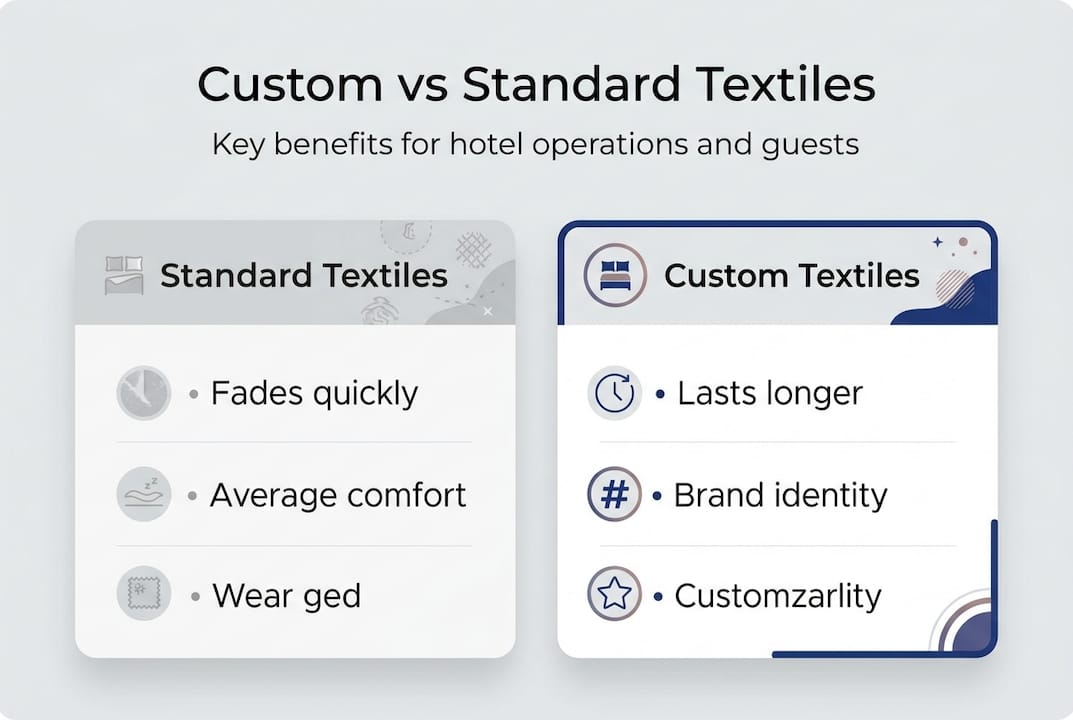
Operationally, custom textiles also simplify workflow. When all linens are produced to consistent specifications, housekeeping teams spend less time sorting, identifying damaged items, and managing mismatched inventory. A streamlined textile maintenance workflow directly reduces labor costs and improves turnaround times between guest stays.
Here are the top operational benefits in order of impact:
- Fewer replacement orders reduce procurement workload and supplier coordination time
- Standardized inventory simplifies laundry operations and reduces sorting errors
- Consistent appearance across all rooms maintains brand standards without additional oversight
- Predictable wear patterns allow for planned replacement rather than emergency purchasing
- Reduced guest complaints lower the cost of service recovery and reputation management
Pro Tip: When budgeting for custom textiles, calculate your current annual replacement spend and multiply by three. That figure often exceeds the cost of a full custom textile package, making the investment case self-evident.
For large properties managing multiple room categories, streamlined textile distribution across departments is an added operational gain that compounds over time.
How custom textiles directly enhance guest satisfaction
Guest satisfaction is not abstract. It is built from specific sensory and emotional experiences that happen in the first hours of a stay. The quality of a bed linen, the softness of a towel, and the visual coherence of a room all contribute to how guests feel and what they write in their reviews.
Custom textiles improve guest experience across three distinct dimensions:
- Tactile comfort: Higher thread counts, softer finishes, and appropriate fabric weights create a physical sense of quality that guests associate with care and attention to detail
- Visual appeal: Coordinated colors, clean lines, and branded elements create a cohesive environment that feels intentional and premium
- Emotional connection: When guests feel that every detail has been considered, they develop a stronger attachment to the property and are more likely to return
Unique custom textiles increase guest comfort and reinforce branding in ways that generic options cannot replicate. This is especially relevant in restaurant and dining areas, where tablecloths and napkins contribute directly to the perceived quality of the meal experience.
Consider a resort in the Balkans that upgrades its poolside towels from standard white cotton to custom-woven towels with a branded stripe and a heavier gram weight. Guests notice the difference immediately. They feel the quality. They photograph it. They mention it in reviews. That single procurement decision generates organic marketing value that no advertising budget can fully replicate.
“The textiles in a hotel room are the first thing a guest touches and the last thing they remember. Getting them right is not a luxury. It is a standard.”
Building emotional connections through textile quality testing and careful specification is how forward-thinking properties turn first-time visitors into loyal guests. Repeat bookings and referrals follow naturally when the physical experience of a stay consistently exceeds expectations.
Our expert perspective on custom textile investment
After more than 30 years supplying hotels across Albania and the broader Balkans region, including properties under the Meliá, Marriott, and Sheraton brands, we have seen a clear pattern. The hotels that treat textiles as a strategic asset consistently outperform those that treat them as a commodity.
The conventional view is that textiles are a back-of-house concern, something to manage cheaply and replace when worn. That view is wrong. Textiles are a front-line guest experience tool. They communicate your brand’s values before your staff says a word.
What separates high-performing properties is not just the quality of their textiles. It is the ownership they take over the specification process. When a manager decides on fabric composition, weight, and finish rather than accepting whatever a generic supplier ships, they gain control over a critical guest experience variable.
Custom textile investments support hotel brand integrity and long-term guest loyalty in ways that are measurable and repeatable. The textile visual impact of a well-specified room is not subtle. It is the difference between a guest who says “it was fine” and one who says “I am coming back.”
Invest with intention. Specify with precision. The returns are operational, financial, and reputational.
Take the next step: Sourcing custom textile solutions
If this article has clarified the value of custom textiles for your property, the next step is finding a supplier with the scale, experience, and flexibility to deliver on that standard.
Gjergji H Tekstil has been supplying wholesale hotel textiles to hospitality businesses across Albania and the Balkans since 1994. From bed linens and towels to custom-branded uniforms and event textiles, every product is built to hotel-grade durability standards. You can explore Balkans hotel textile solutions tailored to your property type and scale, or connect directly with our team for expert textile selection tips and a consultation on your specific procurement needs. Quality at scale, built for hospitality.
Frequently asked questions
How do custom textiles impact guest reviews?
Custom textiles create distinctive interiors and tactile comfort that guests notice and mention in reviews. Textile visual impact directly correlates with higher scores in cleanliness and comfort categories on major booking platforms.
What financial benefits do custom textiles offer over standard options?
Custom textiles reduce replacement cycles and streamline laundry workflows, delivering lower total costs over a 3 to 5 year period. Long-term value and cost savings are well documented across mid to large hotel operations.
Which hotel spaces benefit most from custom textile investments?
Guest rooms, lobbies, restaurants, and event spaces all gain from tailored textiles. Unique fabrics support brand identity and elevate the sensory experience in each of these areas.
How should managers evaluate custom textile providers?
Managers should assess providers based on durability testing, fabric specifications, production consistency, and operational track record. Testing and quality control are the most reliable indicators of a supplier’s long-term reliability.