

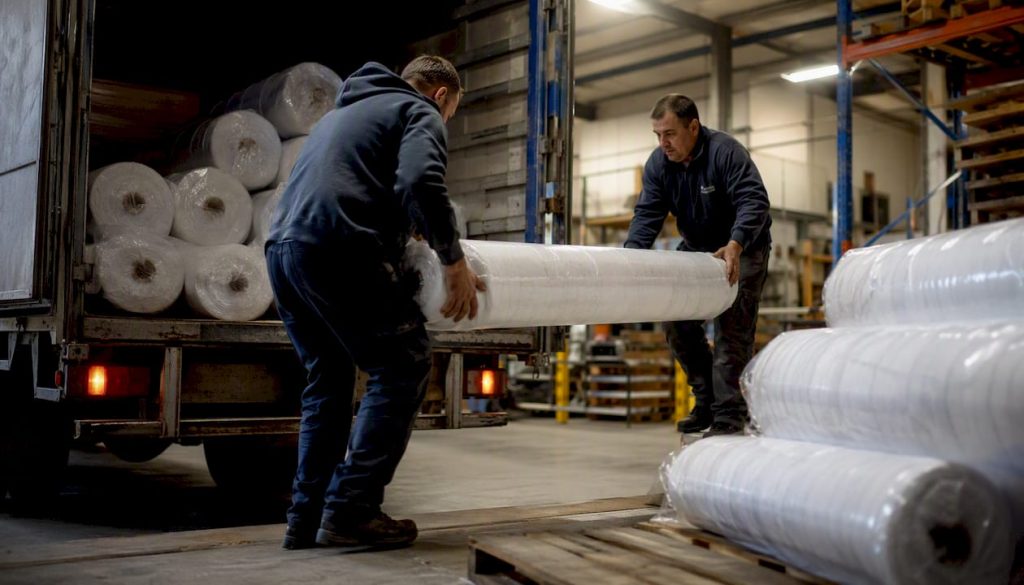
Importing textiles directly from mills and manufacturers delivers the clearest path to lower landed cost, tighter specification control, and faster corrective action for B2B procurement teams. For hospitality buyers managing linens, towels, uniforms, and table textiles at scale, the advantages of direct textile import translate into measurable margin improvement and more predictable supply.
The core advantages at a glance:
- Lower per-unit cost: Removing trading company markups, which commonly run 15%–30%, directly improves your landed cost.
- Specification control: You communicate requirements to the production team, not through an intermediary who may interpret or dilute them.
- Quality visibility: Direct access to lot-level QA data and pre-shipment inspection reports reduces dispute cycles.
- Customization: OEM/ODM workflows, custom weaves, and private-label finishing are accessible only through a direct mill relationship.
- Lead-time negotiation: You set production windows, not an agent’s consolidated schedule.
- Payment and terms leverage: Direct relationships open the door to staged payments, open accounts, and volume-based terms.
- Innovation co-development: Mill technicians can collaborate on performance specifications — durability, stain resistance, fire retardancy — that trading companies rarely facilitate.
If your annual textile spend justifies the internal effort, direct sourcing is worth a structured pilot.
Key Takeaways
Direct textile import delivers its strongest returns when buyers combine volume discipline, clear specifications, and a structured supplier relationship — not when they treat it as a one-time cost-reduction move.
| Point | Details |
|---|---|
| Cost savings are real but bounded | Eliminating trading company markups of 15%–30% is the largest single lever; savings of 10%–30% are commonly reported for qualified buyers. |
| Specification control is the durable advantage | Direct communication with mill technicians prevents specification drift and shortens corrective action from weeks to days. |
| Landed cost includes more than unit price | Duties, freight, inspection, financing, and broker fees must all be modeled before comparing direct-import cost to distributor pricing. |
| Cash flow requires active management | Mill payment structures tie up capital for 60–90 days; letters of credit and supply-chain financing reduce that exposure. |
| Gjergjihtextil offers a turnkey path | Its integrated import-to-distribution model gives hospitality buyers direct-import economics without the internal overhead of managing a mill relationship. |
Table of Contents
- What are the concrete advantages of direct textile import?
- Logistics and compliance essentials for U.S. textile imports
- How to calculate landed cost for direct textile imports
- What are the main risks of direct importing, and how do you manage them?
- When does direct textile import make business sense for your operation?
- How Gjergji H Tekstil’s integrated model delivers direct-import outcomes
- How direct textile import affects your cash flow and financing options
- How to build and maintain strong supplier relationships in direct importing
- The operational reality most buyers underestimate
- Gjergjihtextil brings direct-import economics to hospitality buyers
- Authoritative resources for teams implementing direct importing
- Sources
What are the concrete advantages of direct textile import?
Mill-direct sourcing typically reduces per-unit cost by 10%–30% for qualified buyers, depending on order size and product complexity. That range reflects the elimination of intermediary markups, not a negotiating trick. When a trading company or agent sits between you and the mill, their margin is built into your price. Remove them, and that margin becomes yours.
Cost is the most visible benefit, but specification control often matters more to hospitality procurement teams. When you source through an agent, your tech pack passes through at least one translation layer before it reaches the sample room. Thread count tolerances, weave construction, shrinkage limits, and finishing standards can all shift subtly. Direct communication with mill technicians closes that loop. Direct sourcing shifts operational control to the buyer, which means faster corrective action when a sample misses the mark.
Quality control is where direct sourcing pays for itself. When a hotel receives a shipment of towels that fail industrial wash cycles after 30 uses instead of 150, the cost is not just the replacement order — it is the guest complaint, the housekeeping disruption, and the emergency reorder at full price. Direct access to pre-shipment inspection data and lot-level traceability prevents that scenario.
Customization access is the third pillar. Factory-direct relationships enable OEM and ODM workflows that trading companies rarely support at the same depth. A hotel group that wants its logo woven into bathrobes, or a restaurant chain specifying a proprietary tablecloth weight and color, needs a direct mill relationship to execute that reliably.
Pro Tip: When evaluating a new mill, request a full production sample at your exact specification — not a stock sample — before committing to a bulk order. The gap between a stock sample and your spec is where most quality disputes originate.
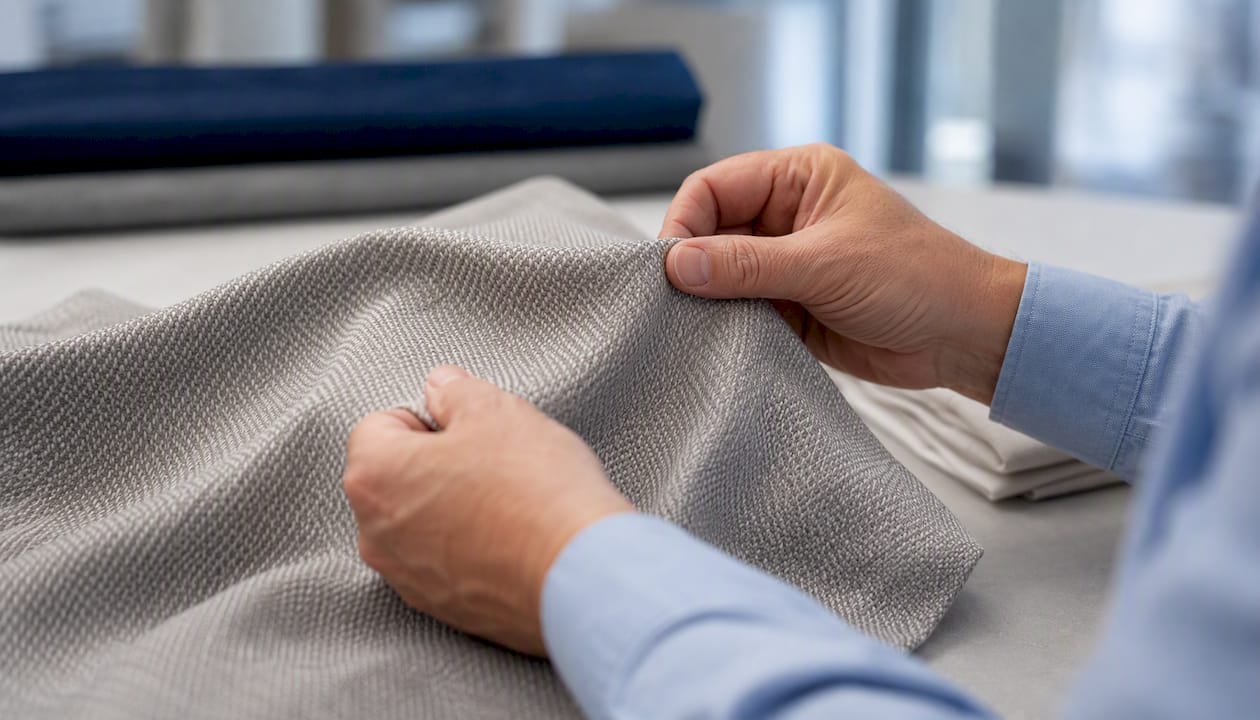
Inventory and forecast accuracy also improve with direct sourcing. When you control the production schedule, you can align manufacturing windows to your replenishment cycle rather than waiting for an agent’s consolidated shipment. For a hotel group managing 200+ rooms, that alignment reduces safety-stock requirements and frees working capital.
Logistics and compliance essentials for U.S. textile imports
Executing a direct import shipment requires more internal coordination than buying through a domestic distributor, but the process is manageable with the right partners and documentation. Trade guides for textile importers outline the core steps: choose your shipping mode, assemble your documents, classify your goods, and engage a licensed customs broker before the shipment moves.
Shipping mode: sea vs. air
Ocean freight is the standard mode for bulk textile shipments. Transit times from major Asian origins to U.S. ports typically run 18–35 days depending on origin and routing. Air freight cuts that to 3–7 days but costs roughly 4–6 times more per kilogram. For hospitality buyers, air freight makes sense for urgent replenishment of a specific SKU or for samples; full production runs almost always move by sea.
Core import documents
Every direct textile shipment into the U.S. requires a specific document set. The mill or exporter provides most of them; the buyer is responsible for confirming accuracy before the shipment departs.
| Document | Who provides it | Purpose |
|---|---|---|
| Commercial invoice | Supplier/mill | Declares value, quantity, and description for customs |
| Packing list | Supplier/mill | Details carton count, weights, and dimensions |
| Bill of lading or AWB | Freight carrier | Title document and shipment contract |
| Certificate of origin | Supplier or chamber of commerce | Determines duty rate and trade agreement eligibility |
| Fiber content label | Supplier (per FTC rules) | Required for all textile products sold in the U.S. |
| OEKO-TEX® or equivalent | Testing lab | Optional but increasingly required by hospitality buyers |
Incoterms and buyer responsibility
For a first direct relationship, FOB (Free on Board) is the most common starting point. The mill delivers goods to the named port; you take responsibility from that point and arrange ocean freight, insurance, and U.S. customs clearance. DDP (Delivered Duty Paid) shifts all logistics to the supplier, which reduces your administrative burden but removes cost visibility. Most experienced buyers prefer FOB or CIF (Cost, Insurance, and Freight) because it keeps freight and duty costs transparent and negotiable.
Pro Tip: Confirm your HTS (Harmonized Tariff Schedule) classification with a licensed customs broker before the first shipment. Textile classifications are detailed and duty-sensitive; a misclassification can trigger unexpected costs or a customs hold at arrival.
Import handoff checklist
- Receive advance shipping notice from the supplier with container or AWB number.
- Confirm document set is complete and accurate before vessel departure.
- Engage your customs broker with the commercial invoice and packing list.
- Monitor transit and file entry with CBP (U.S. Customs and Border Protection) before arrival.
- Arrange inland delivery from port to your warehouse.
- Conduct arrival inspection against the original tech pack and packing list.
- Issue a warehouse receipt and update inventory records.
How to calculate landed cost for direct textile imports
Landed cost is the total cost of a textile unit at your warehouse door. Unit price from the mill is only one component. Procurement teams that optimize on unit price alone routinely underestimate the true cost of a direct import program.
Landed-cost components
| Cost component | Typical range | Buyer’s lever |
|---|---|---|
| Mill unit price (FOB) | Baseline | Volume, MOQ, payment terms |
| Ocean freight (per unit) | Varies by origin and container fill | Consolidation, full-container loads |
| Marine insurance | a small percentage of cargo value | Carrier selection |
| Import duties (HTS-dependent) | Varies by product and origin | HTS classification, trade agreements |
| Customs broker fees | Fixed per shipment | Broker selection, shipment frequency |
| Inland freight (destination) | Varies by distance | Warehouse location, carrier contracts |
| Inspection fees | Per inspection engagement | Pre-shipment vs. arrival inspection |
| Financing cost | Depends on payment terms and inventory turn | Payment terms, inventory velocity |
The single largest cost-saving lever in most direct import programs is eliminating the trading company markup. As noted, agents and trading companies commonly add 15%–30% to the mill price. On a $50,000 annual towel program, that markup represents $7,500–$15,000 in recoverable margin.
Greige and stock-fabric strategies offer a secondary lever. Buying unfinished greige fabric and finishing it locally, or maintaining a stock-fabric library at the mill, decouples your high-volume raw-material purchase from small finishing runs. This lowers per-yard cost and shortens replenishment timing for standard SKUs.
Cash flow is the cost component buyers most often underestimate. Mills typically require 30%–50% deposit at order confirmation, with the balance due before shipment. That means capital is tied up for the full production and transit period, which can run 60–90 days from deposit to warehouse receipt. Buyers should model this timing against their operating cash cycle and explore trade finance instruments such as letters of credit or supply-chain financing programs where available.
What are the main risks of direct importing, and how do you manage them?
Direct importing transfers operational responsibility to your team. That is the tradeoff for the cost and control advantages. The risks are real but manageable with the right processes.
Quality and specification risk is the most common failure point. Mitigate it with a clear tech pack (fiber content, construction, weight, finish, color standard, and wash performance requirements), pre-production samples at your exact specification, and a third-party pre-shipment inspection before the container is sealed.
MOQ and inventory risk arises when mill minimums exceed your near-term demand. Strategies include negotiating stock-fabric programs where the mill holds greige inventory for your account, staggering shipments across multiple delivery windows, or partnering with a distributor who can absorb excess stock.
Lead-time and supply disruption risk requires buffer stock for your highest-velocity SKUs and contractual SLAs with the mill covering production start dates and shipment windows. Identify at least one alternative source for critical categories before you need it.
Payment and fraud risk is real in new supplier relationships. Use vetted banking channels, staged payments tied to production milestones, and documentary controls such as letters of credit for first orders. Verify the supplier’s business registration and banking details independently before any wire transfer.
Regulatory and compliance risk covers fiber content labeling accuracy (required by the FTC for all U.S. textile sales), restricted substance compliance (REACH, CPSC requirements), and any certifications your end customers require. Confirm these in writing with the mill before production begins.
Pro Tip: For your first direct order with a new mill, keep the SKU count narrow — two or three products — and use it as a qualification run. Evaluate documentation accuracy, sample-to-production consistency, and shipment timing before scaling the relationship.
Pre-order mitigation checklist
- Obtain and approve a production sample at your exact specification.
- Confirm HTS classification and applicable duty rate with your customs broker.
- Verify the supplier’s certifications and business registration.
- Agree on payment milestones tied to production and inspection events.
- Engage a third-party inspection agency for pre-shipment inspection.
- Confirm fiber content labeling meets FTC requirements.
- Establish a buffer stock plan for your top three SKUs.
When does direct textile import make business sense for your operation?
Direct sourcing is not the right model for every buyer. It works best when the buyer pairs volume discipline with the right factory, and when the internal team can manage supplier relationships, specification control, and import administration. The procurement guide from Maple Sourcing frames it clearly: direct sourcing shifts work onto the buyer organization, and that tradeoff is manageable with checklists, external partners, and pilot orders.
Self-assessment checklist:
- Annual textile spend exceeds $50,000 (the threshold where direct-import economics typically justify the administrative overhead).
- You have stable, repeatable SKUs with defined specifications.
- Your team can manage supplier communication, sampling, and QA documentation.
- Cash flow can absorb 60–90 day inventory cycles.
- You need customization, private-label production, or performance specifications a distributor cannot provide.
Questions to ask potential mill suppliers:
- What are your MOQs by product category?
- What is your standard sample lead time, and do you charge for production samples?
- What payment terms do you offer for new accounts, and how do they change at volume?
- What quality certifications do you hold (ISO, OEKO-TEX®, GOTS)?
- Can you provide references from buyers in my product category?
Large hotel groups, regional hospitality distributors, and private-label suppliers benefit most from direct importing. Smaller operators — a single boutique hotel or a restaurant with limited textile turnover — are often better served by a distributor who has already absorbed the import complexity and can supply in smaller quantities at competitive prices.
Pro Tip: Use a hospitality textile procurement checklist to map your current supplier relationships and identify which categories have the volume and specification stability to support a direct-import pilot.
How Gjergji H Tekstil’s integrated model delivers direct-import outcomes
The operational case for direct textile import is clearest when you examine a vertically integrated importer that has already built the infrastructure. Gjergji H Tekstil, founded in 1994 and operating for over 30 years, runs an end-to-end model: direct import from Italy, China, India, and Pakistan; in-house manufacturing and finishing; and distribution to hospitality clients across the region.
The advantage of a vertically integrated importer is that the buyer captures direct-import economics without absorbing direct-import complexity. Consolidated shipments, pre-shipment inspection, hospitality-ready finishing, and volume-based pricing are already built into the operating model — the hotel or restaurant procurement team does not need to build those capabilities internally.
The client portfolio validates the quality standard. Gjergji H Tekstil has supplied Meliá, Marriott, and Sheraton properties — brands with defined textile specifications and no tolerance for supply inconsistency. Meeting those standards over multiple seasons is an operational credential that trading companies cannot replicate.
For hospitality buyers, the practical benefits translate directly:
- Faster issue resolution: When a towel batch fails wash-cycle durability, the integrated importer can trace the lot, identify the production variable, and correct it in the next run. A trading company typically cannot.
- Predictable replenishment: Consolidated import schedules and warehouse stock mean a hotel group can plan linen par levels without emergency reorders.
- Turnkey finishing: Hotel-ready hemming, embroidery, and labeling are handled before delivery, reducing receiving and preparation time at the property.
Pro Tip: When evaluating a textile supplier for a hospitality program, ask specifically about sourcing strategy and its impact on hospitality performance. The answer reveals whether the supplier understands your operational requirements or is simply selling product.
How direct textile import affects your cash flow and financing options
Direct importing front-loads cash outflow. A typical mill payment structure requires a 30%–50% deposit at order placement, with the remaining balance due before the shipment is released. Add 18–35 days of ocean transit and customs clearance time, and your capital is committed for 60–90 days before the goods are available for use or resale.
For hospitality operators, this timing creates a working-capital gap that needs to be planned, not discovered. The practical options:
Negotiate extended payment terms with the mill once you have established a payment history. Moving from 50% deposit / 50% before shipment to 30% deposit / 70% net-30 after arrival materially improves your cash position.
Use a letter of credit (LC) for large first orders. An LC gives the mill payment certainty while giving you documentary control — the bank releases funds only when the mill presents compliant shipping documents. It adds bank fees but reduces fraud and documentation risk.
Explore supply-chain financing through your bank or a trade finance provider. These programs allow you to extend payment terms to the mill while the financier pays the mill on your behalf at shipment. The cost is typically lower than a revolving credit line.
Align inventory turns with your textile replacement cycle. A hotel that replaces towels every 18 months does not need to carry 24 months of stock. Tighter inventory planning reduces the capital tied up in the program and improves the return on the direct-import investment.
How to build and maintain strong supplier relationships in direct importing
A direct mill relationship is an asset that compounds over time. The first order is a qualification run; the fifth order is where the real economics appear. Mills allocate production capacity, prioritize sampling, and extend better terms to buyers who demonstrate volume consistency and professional procurement practices.
Start with transparency. Share your annual volume forecast, your SKU roadmap, and your quality standards in writing at the outset. Mills that understand your business plan their capacity around you. Those that receive unpredictable, one-off orders treat you accordingly.
Visit the mill when volume justifies it. An on-site visit to the production floor, sample room, and QA lab reveals operational capability that no audit report fully captures. It also signals commitment, which changes how the mill allocates attention to your account.
Communicate problems directly and early. When a shipment has a quality issue, raise it with the mill’s QA team immediately, with photographic documentation and lot references. Mills that receive professional, documented feedback can act on it. Those that receive vague complaints cannot.

Build a relationship with the mill’s technical team, not just the sales contact. The technician who manages your yarn specifications or finishing parameters is the person who prevents the next quality issue. Technical co-development — collaborating on performance specifications for durability, stain resistance, or fire retardancy — is accessible only through that technical relationship, and it is something trading companies rarely facilitate.
Review the relationship annually. Assess on-time delivery rate, sample accuracy, documentation quality, and responsiveness. Share the results with the mill. Suppliers who receive structured feedback improve; those who do not receive it cannot.
The operational reality most buyers underestimate
The conventional framing of direct textile import focuses on cost savings, and the numbers are real. But the more durable advantage is control — specifically, the ability to define, verify, and correct your product specification without depending on an intermediary to carry that message accurately.
Procurement teams that treat direct sourcing as a one-off cost-reduction tactic typically capture the first-order savings and then lose them to quality disputes, emergency reorders, and specification drift over subsequent seasons. The teams that sustain the advantage treat it as an operating model: they align procurement, supplier management, and materials planning around a defined supplier base, and they invest in the technical relationships that make corrective action fast.
The practical nuance worth stating plainly: intermediaries are not always the wrong answer. A trading company or distributor earns its margin when it provides genuine value — market access you cannot replicate, language and regulatory expertise in a new origin country, or volume aggregation that gets you to a mill’s MOQ. The question is whether that value exceeds the markup. For high-volume, repeatable hospitality textile programs with stable specifications, it usually does not. For a first-time buyer entering an unfamiliar origin market, it sometimes does.
Gjergjihtextil brings direct-import economics to hospitality buyers
Hospitality procurement teams that want direct-import cost and control without building an import operation from scratch have a practical option. Gjergjihtextil operates as a fully integrated importer, manufacturer, and distributor for hotel, restaurant, and event textile programs — covering linens, towels, bedding, table textiles, uniforms, and custom solutions.

The model is built around volume. By importing large quantities annually from Italy, China, India, and Pakistan, Gjergjihtextil negotiates at a scale most individual hotel groups cannot reach, then passes that pricing to clients through wholesale contracts. Pre-shipment inspection, hospitality-ready finishing, and consolidated delivery are included in the operating model, not billed as extras. Clients such as Meliá, Marriott, and Sheraton have relied on this infrastructure for consistent, specification-accurate supply across multiple seasons.
For hotel and restaurant procurement teams ready to move beyond reactive purchasing, the starting point is a sourcing review. Visit the wholesale hotel textiles page to review the assortment and request a quote, or contact the team directly to discuss your annual program and volume requirements.
Authoritative resources for teams implementing direct importing
These references cover the specific operational areas where procurement teams most often need additional depth.
- Maple Sourcing direct sourcing guide — explains the operating model shift that direct sourcing requires and the internal capabilities buyers need to build.
- Weaverine mill-direct terminology — defines mill-direct sourcing, explains typical cost-savings ranges, and clarifies MOQ tradeoffs for buyers new to the model.
- Shanghai Garment wholesale fabric sourcing guide — covers greige buying, stock-fabric libraries, and markup elimination strategies for reducing per-yard cost.
- ZEVA Denim direct mill sourcing guide — explains when mill-direct works best and what technical collaboration with a mill actually looks like in practice.
- Gjergjihtextil hotel textile selection tips — practical guidance on matching textile specifications to hospitality performance requirements, useful for building your tech pack before approaching a mill.
Sources
- Mill-Direct – Textile Terminology | Weaverine
- What Is Direct Sourcing in Procurement? Complete Guide – Maple Sourcing Ltd.
- How to Source High-Quality Fabrics at Wholesale Prices? – Shanghai Garment
- Direct Mill Sourcing in Denim: When It Saves You Money—and Why It Works Best with the Right Factory – ZEVA DENIM