

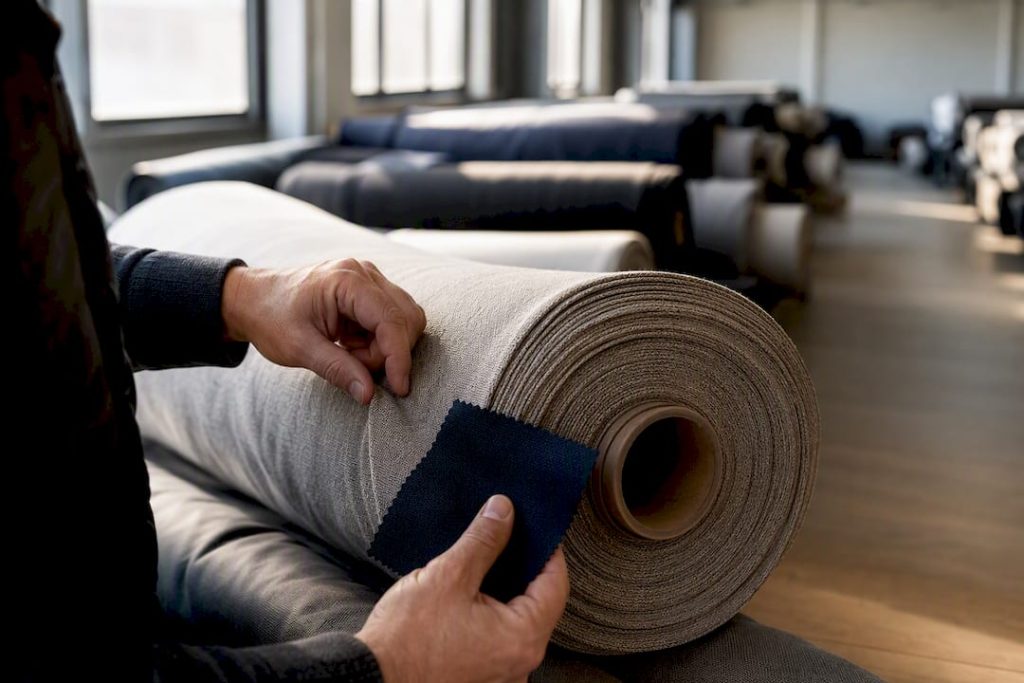
Hotel uniform pricing in Albania varies by quality tier, ranging from lower-cost entry-level pieces to higher-priced tailored uniforms for front-of-house or spa staff. The immediate move for any hotel manager or procurement officer: request quotes and physical samples from an integrated local supplier before committing to a bulk order.
TL;DR:
- Prices for hotel uniforms in Albania vary significantly depending on role, fabric quality, and degree of customization, with tailored front desk pieces costing more.
- Selecting a supplier requires asking about wash-test policies, minimum order quantities, lead times, and defect handling to address potential quality issues early.
- Fabric choice impacts longevity, maintenance costs, and staff comfort; heavier GSM fabrics last longer but cost more upfront and may reduce replacement frequency.
- Bulk purchases from integrated local suppliers offer more predictable quality and pricing stability compared to custom tailors or overseas importers.
- Standardizing uniforms across roles and thoroughly testing samples can reduce SKU complexity, lowering costs without compromising guest experience.
Table of Contents
- Kosto Uniformash Hoteli Shqipëri: What Drives the Price Per Role
- Where Should Albanian Hotels Source Uniforms?
- How Fabric Choice Changes Price, Comfort, and Laundry Life
- Building a Repeatable Uniform Procurement Process
- Why an Integrated Local Partner Reduces Real Procurement Risk
- What a Standardized Uniform Order Actually Teaches You
- Ready to Request a Quote or Sample?
- Sources
Kosto Uniformash Hoteli Shqipëri: What Drives the Price Per Role
Uniform pricing in Albania is not one number. It shifts by department, fabric, and how much customization a hotel wants stitched into the garment. Front desk staff need polished, structured clothing that survives eight-hour shifts under lobby lighting. Kitchen staff need heat resistance and stain tolerance. Those two needs alone put entirely different price tags on what looks, on paper, like “one uniform.”
Here is a realistic breakdown by role and tier:
- Front desk: Prices vary by quality, from entry-level blazers and shirts to tailored, brand-matched sets with lining and structured shoulders.
- Housekeeping: Basic tunics and pants come at lower prices, with higher-cost options made of reinforced, easy-care polyester blends designed for frequent industrial washing.
- Kitchen: Standard chef jackets are available at a lower price range, with flame-retardant or heavyweight cotton versions costing more, featuring reinforced stitching at stress points.
- Waitstaff: €14 to €25 for aprons and basic shirts; €30 to €50 for tailored vests and fitted shirts in performance fabric.
- Spa: Simple tunics are available at moderate prices, while premium linen-blend robes and uniforms designed for guest-facing comfort command higher prices.
Several factors push a quote toward the higher end. Fabric weight and weave matter more than most buyers expect. Custom colors that require a dedicated dye run add cost because the supplier cannot pull from stock inventory. Logo embroidery typically adds a modest additional cost per garment depending on stitch count and placement; woven name tags add some extra fee. Specialized finishes such as stain-release coatings or anti-wrinkle treatments can increase per-unit cost by a notable percentage.
Pro Tip: A €15 uniform that needs replacing every eight months often costs more over two years than a €30 uniform that survives industrial washing for three seasons. Ask every supplier for expected garment lifespan under commercial laundering before comparing sticker prices. Market analysis of Albania’s hotel uniform sector shows pricing and demand splitting clearly along these same role-based lines through 2031, which is exactly why a one-size quote from a supplier should raise a flag.
Where Should Albanian Hotels Source Uniforms?
Albanian hotels generally choose from three sourcing routes, and each carries a different cost and risk profile.
- Local custom tailors. Small workshops and independent tailors offer flexibility for very small orders or one-off role-specific pieces, such as waitstaff aprons from retail-style suppliers. Turnaround can be fast for tiny batches, but pricing per unit is usually higher and consistency across a 40-piece order is harder to guarantee.
- Integrated local suppliers. Companies that control import, design, production, and distribution under one roof, including Gjergji H Tekstil, typically deliver the best price-to-quality balance for hotels with 30 or more rooms, resort properties, or regional chains. Volume-backed import pricing and in-house production keep unit costs predictable across large, recurring orders.
- Direct importers. Buying container-scale volume from overseas factories can lower unit price further, but lead times stretch to months and sample correction cycles become expensive when quality issues surface after the order lands.
Albania also has domestic manufacturers producing uniforms locally, and supplier directories confirm several options exist beyond the three broad categories above, including facilities like Demilitex that run their own local production lines.
Before signing with any supplier type, ask four questions directly: What is the sample and wash-test policy? What is the minimum order quantity? What is the actual lead time from deposit to delivery? What happens contractually if a batch arrives with defects? A supplier who hesitates on any of these four is telling you something about how they will handle a problem order later.
How Fabric Choice Changes Price, Comfort, and Laundry Life
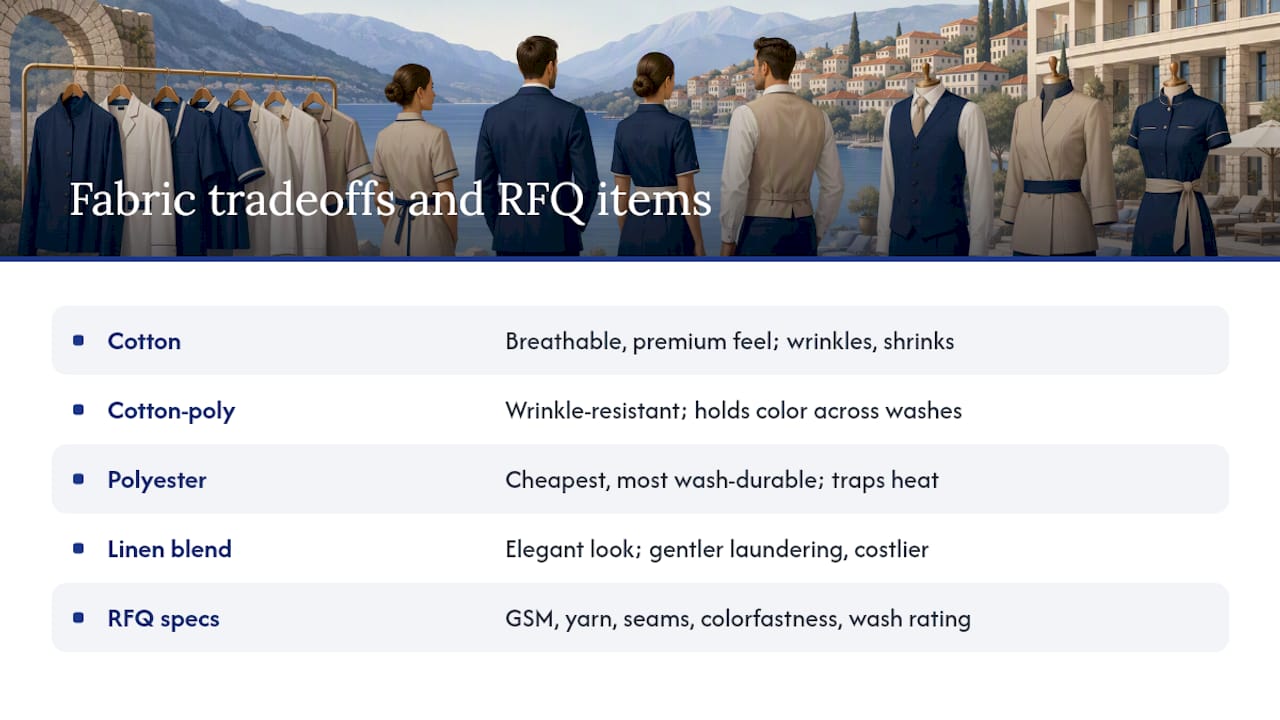
The fabric line item on a quote is where most procurement mistakes happen. Cotton breathes well and feels premium against skin, which matters for spa and front desk roles, but it wrinkles fast and shrinks under repeated industrial washing unless pre-treated. Cotton-poly blends resist wrinkling and hold color better across hundreds of wash cycles, making them the default for housekeeping and kitchen uniforms. Pure polyester is the cheapest option and the most wash-durable, but it traps heat, a real problem for kitchen staff standing near ovens for a full shift. Linen blends look elegant for spa and hostess uniforms but demand gentler laundering and cost more to maintain.
A workable RFQ should specify fabric GSM (grams per square meter), yarn type, seam reinforcement at stress points, colorfastness rating, and industrial-wash cycle rating, since these details determine both comfort and how many wash cycles a garment survives before fading or fraying. Heavier GSM fabric costs more upfront but often cuts replacement frequency by half, which changes the real annual cost per staff member far more than the invoice price suggests.
Building a Repeatable Uniform Procurement Process
A workable budget starts with a simple formula: unit cost multiplied by quantity, plus customization fees, plus shipping, divided by expected useful life in months. That number, not the sticker price, is what belongs in an annual budget line.
From there, a structured RFQ and pilot process keeps costs predictable:
- Draft the RFQ with exact sizes, fit tolerances, fabric specs, MOQ expectations, lead time requirements, and a written defect policy.
- Request samples from at least two supplier types before committing to any volume order.
- Run wash tests on samples through 15 to 20 commercial laundering cycles and check for shrinkage, color loss, and seam integrity.
- Gather staff feedback on fit and comfort during a short pilot period, since staff who dislike a uniform will find ways to avoid wearing it correctly.
- Negotiate on volume, not just price. Bundling multiple departments into one contract, committing to a longer-term agreement, or staging deliveries across a quarter instead of one lump shipment all give suppliers room to lower per-unit pricing. Detailed procurement cycle guidance for Albanian hospitality buyers breaks this staging approach down further for multi-property operators.
Why an Integrated Local Partner Reduces Real Procurement Risk
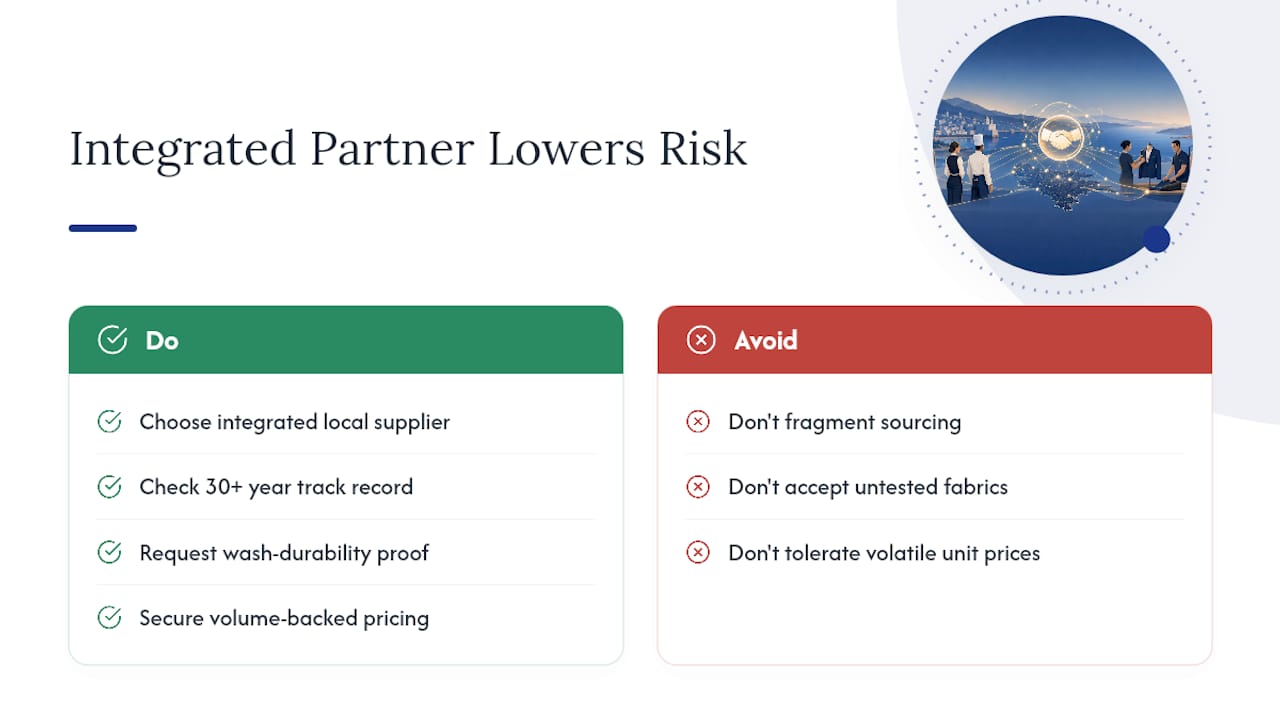
Suppliers who control import, design, production, and distribution under one operation tend to deliver more predictable quality and faster sample turnaround than fragmented sourcing across multiple vendors. A major supplier has operated in the Albanian textile and hospitality supply chain for over 30 years, supplying properties tied to international brands.
That track record matters for a practical reason: a supplier who has already solved wash-durability and fit problems for large hotel groups is less likely to hand a mid-size Albanian property an untested fabric. Volume-backed import pricing, built from decades of purchasing relationships, also tends to translate into steadier per-unit pricing across repeat orders rather than the price swings smaller vendors often pass along.
What a Standardized Uniform Order Actually Teaches You
Standardizing one core uniform style across housekeeping and laundry staff, instead of ordering separate cuts for every sub-role, cut SKU complexity dramatically for one property Xpert worked alongside. The mistakes to avoid: skipping wash testing before bulk ordering, chasing the lowest quote without checking lead time, and ignoring staff comfort feedback until after delivery. The cost-saving move that never hurts guest experience: standardize back-of-house uniforms fully, and spend the saved budget on better fabric for the roles guests actually see.
— Xpert
Ready to Request a Quote or Sample?
Some suppliers work as a single point of contact for custom uniforms, bulk pricing, and fabric advisory, which means a hotel manager negotiates one contract instead of chasing three separate vendors for design, production, and delivery timelines.
That matters most when a property needs to outfit five departments on one budget and one deadline. Instead of comparing tailor quotes against import lead times against a separate embroidery vendor, a hotel can pull sizing, fabric specification, and delivery staging into one conversation with a supplier that runs multiple functions in-house. Review hotel textile selection tips for guidance on matching fabric choices to your property’s brand standard, then request a sample batch before committing to a full department order.
Sources
- Albania Hotel Uniforms Market (2025-2031) | Trends, Outlook & Forecast
- Hotel Uniforms Manufacturers in Albania, Unisex Hotel Uniforms Suppliers Exporters Albania
- Demilitex