

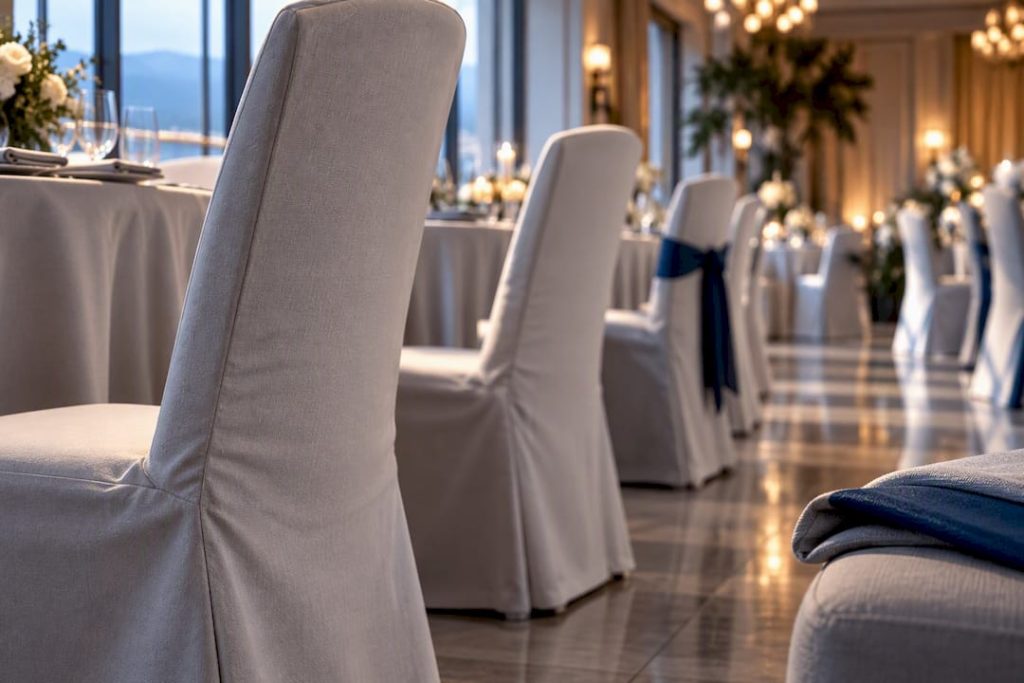
For a one-off wedding or a single corporate gala, stretch spandex covers give you the fastest setup and the lowest per-piece cost. If you rent out a hall or run repeat events every month, a heavier polyester blend with strong abrasion resistance pays for itself in fewer replacements. Before you order anything, measure your actual chairs, request a physical sample, and add spare units to your count.
TL;DR:
- For regular reuse, heavy polyester blends with high Martindale ratings are more cost-effective than thin spandex covers, which wear out faster with frequent laundering.
- Accurately measuring chairs and testing a sample cover on the worst-case model prevent mismatched fits and sagging during events.
- Always request the fabric’s GSM and abrasion rating in writing, as identical-looking covers can behave very differently after multiple washes.
- Buffer your order by 5 to 10 percent of your chair count to account for damages, last-minute guests, and laundering needs.
- Confirm supplier terms for defective or incorrect items before purchase, and document delivery with photos and counts to avoid disputes.
Table of Contents
- Mbulesa Karrigesh Evente: Which Material Fits Your Event?
- How Do You Measure Chairs for a Proper Cover Fit?
- How Many Chair Covers Should You Order, and What Do They Cost?
- Washing, Storing, and Protecting Your Chair Cover Investment
- How a Supply-Chain Partner Reduces Your Ordering Risk
- What Happens If a Chair Cover Arrives Damaged or the Wrong Size?
- Matching Chair Cover Style to Your Event Theme
- A Buyer’s Perspective: The Checklist That Actually Prevents Problems
- Order Samples and Bulk Chair Covers from Gjergjihtextil
- Sources
- FAQ
Mbulesa Karrigesh Evente: Which Material Fits Your Event?
Not every chair cover is built for the same job, and the fabric you pick decides whether you’re happy with the result three events from now or shopping for replacements after the first wash. In the Albanian market, “mbulesa karrigesh evente” almost always refers to one of three fabric families, and each one trades off differently between price, fit, and durability.
Spandex and lycra stretch covers are the default choice for one-time events. They pull tight over almost any armless banquet or folding chair, go on in seconds, and cost less per piece than woven alternatives. A typical composition is 95% polyester plus 5% spandex, which is exactly the blend used in mass-market stretch spandex covers sold in bulk packs of 200. They’re machine washable and need minimal ironing, which matters if you’re doing the laundry yourself between bookings.
Polyester and satin blends look more formal and hold their shape better over a long reception, but quality varies a lot by weight. Grams per square meter (GSM) is the number to ask about: A spandex or lycra blend with a higher grams per square meter (GSM) value is commonly marketed as a “better quality” grade because the heavier fabric hides chair frames and seams better than lighter covers. Heavier fabric also survives more wash cycles before it starts to look tired.
Sashes, bows, and organza overlays are where pricing gets confusing. Some sellers bundle a satin bow into the lot price; plenty of others sell the cover and the accessory separately, so never assume a decorative extra is included unless it’s written in the listing.
If you’re running a venue or planning to reuse the same covers monthly, thin spandex is the wrong tool. Repeated commercial laundering breaks down cheap elastic fast, and frequent friction against chair frames wears thin fabric faster than it wears a heavier weave. Furniture sourcing specialists recommend microfiber or polyester blends rated at Martindale 50,000 or higher for anything that sees repeated commercial use, since that abrasion rating is a direct predictor of how many wash and wear cycles the fabric survives before it needs replacing.
- Spandex/lycra: cheapest, fastest to install, best for single events
- 210+ GSM polyester/satin blends: better opacity and structure, mid-range price
- Martindale ≥ 50,000 microfiber/polyester: built for repeated commercial washing and handling
- Sashes and overlays: confirm inclusion in writing before you count on them
Pro Tip: Ask any supplier for the fabric’s GSM and, if they have it, a Martindale rub count. Two covers can look identical in a photo and behave completely differently after ten wash cycles.
How Do You Measure Chairs for a Proper Cover Fit?
A cover that looks universal in a product photo can still gap at the arms or bunch at the legs if your chairs don’t match the shape it was cut for. Measuring takes fifteen minutes and saves you from a room full of loose, sagging fabric on event day.
Record these five dimensions on at least three chairs from your actual stock, not a display model at a showroom:
- Seat width, measured across the front edge of the seat cushion.
- Seat depth, from the front edge of the seat to the backrest.
- Back height, from the seat to the top of the backrest.
- Armrest clearance, if your chairs have arms. Standard “universal” stretch covers are cut for armless chairs and will not stretch cleanly over most armrests.
- Leg spacing and shape, since crossed or angled banquet legs behave differently than straight stacking-chair legs under a floor-length cover.
Marketplace listings often describe covers as “universal fit,” but that label usually means a size range designed for standard banquet or folding chairs, not a guarantee for every model. A cover cut for a rounded-back banquet chair will not sit right on a squared-back conference chair, no matter how stretchy the fabric is. Measuring first, then checking those numbers against the seller’s stated size range, is the only reliable way to avoid a mismatch.
Once you have your numbers, run a fit test before committing to a full order.
- Order one sample cover in your chosen material.
- Fit it on your worst-case chair, meaning the one with arms, unusual legs, or an oversized frame.
- Check for gaps at the seat corners, pulling at the seams, and whether the fabric reaches the floor evenly on all sides.
- Wash the sample once using your normal laundering method before judging the final look.
Pro Tip: Photograph the sample fitted on your chair from the front, back, and side. If you order from a different batch later, you’ll have a reference to confirm the new stock matches.
How Many Chair Covers Should You Order, and What Do They Cost?
Start with your exact seat count, then add a buffer for damage, last-minute guest additions, and pieces held back for laundering rotation between bookings.
Local pricing gives you a useful reference point. A Kavajë marketplace listing offers 200 chair covers with satin bows for 750 LEK as a lot, which sits at the low end of the local market and illustrates how bulk lots are typically priced and sold. That same listing offers delivery with inspection on receipt, a common arrangement on Albanian marketplaces where buyers pay only after confirming the goods match the description.
Before you pay a deposit or confirm an order, get separate line-item pricing for each of the following:
- Base cover price per piece
- Sash or bow price, if not already bundled
- Cost of a single sample unit
- Delivery or courier charges
- Any applicable taxes
Custom colors or fitted styles usually carry a minimum order quantity and a longer lead time than off-the-shelf white or ivory stock, so confirm both numbers in writing before you commit to a date. Listings that quote a low per-piece price frequently leave out delivery and accessory costs, so treat any headline price as a starting point for negotiation, not the final total.
Washing, Storing, and Protecting Your Chair Cover Investment
How you clean and store covers between events decides whether they still look sharp at booking number twenty or start looking tired by booking number five.
Spandex and lycra blends generally tolerate a standard machine wash on a cool or warm cycle and need little to no ironing, which is one reason they’re popular with small operators doing their own laundry. Heavier polyester and satin blends often do better with a professional laundry service that controls water temperature and uses detergents suited to synthetic fibers, since high heat can warp finish and shine on satin fabric.
Stains need immediate attention, not scrubbing. Never rub a dry stain, since that pushes it deeper into the weave; blot fresh spills right away and pre-treat before the cover goes into a wash load with anything else.
Storage mistakes cause more damage than actual event use. Pack covers only after they’re completely air dried, since folding damp fabric into bins invites mildew and a musty smell that no amount of febreze will fix later.
- Wash spandex on cool or warm; skip high heat
- Use a professional laundry for satin and heavier polyester blends
- Blot and pre-treat stains immediately; never rub a dry stain
- Air dry fully before folding and storing
- Rotate stock so no single batch takes all the wear
Pro Tip: Keep a simple rotation log. Numbering your cover sets and tracking which set went to which event tells you which batch is aging fastest, long before it becomes visibly worn.
How a Supply-Chain Partner Reduces Your Ordering Risk
Buying event textiles blind, from a photo and a price, is how buyers end up with mismatched fabric or a shipment that doesn’t match the sample they approved. A longstanding supplier in Albania’s hospitality textile market, including linens for major hotel brands, this experience shapes how it handles event orders too.
The practical value for an event buyer sits in three places. First, a real sample policy: you can request a physical cover before committing to a full run, so you’re judging actual fabric weight and stitching, not a listing photo. Second, custom production for buyers who need a specific color, size, or trim that off-the-shelf stock doesn’t cover. Third, advisory support on which material actually suits your usage pattern, drawing on decades of supplying textiles that survive industrial laundering cycles.
When you’re evaluating any supplier, including Gjergjihtextil, ask for the same three documents: a fabric specification sheet listing GSM and composition, an abrasion or Martindale rating if the fabric is marketed for repeat use, and a note on how the sample held up after one wash. Suppliers with genuine manufacturing experience answer these questions without hesitation, because specification sheets are a normal part of how they already sell to hotels and restaurants.
What Happens If a Chair Cover Arrives Damaged or the Wrong Size?
Check your return terms before you pay, not after a box of mismatched covers shows up two days before your event. Local marketplace culture, including listings like the Kavajë lot mentioned earlier, generally accepts payment on inspection at delivery, which gives you a built-in chance to reject a shipment on the spot if the fabric, color, or count doesn’t match what you ordered.
Confirm three things with any seller or manufacturer before committing: whether defective pieces can be swapped after delivery, whether ill-fitting covers qualify for exchange if you followed the seller’s stated size guide, and how many days you have to report a problem. Custom or made-to-order pieces are typically harder to return than off-the-shelf stock, since a supplier can’t easily resell a color or size cut specifically for your event.
Document everything at the moment of delivery. Photograph the covers still in their packaging, count the pieces against your invoice, and check a handful for stitching defects or color variation between units before the delivery driver leaves. A written note or photo timestamped at delivery is far more useful in a dispute than a phone call a week later.

If you ordered through a supplier offering advisory and custom production services, raise fit issues immediately rather than trying to force a wrong-size cover to work through creative styling. A supplier with in-house production, rather than a pure reseller, generally has more flexibility to correct a sizing error on your next batch.
Matching Chair Cover Style to Your Event Theme
The cover color and trim you choose should work with your linens and centerpieces, not compete against them. A common mistake is picking a chair cover in isolation, then discovering it clashes with the tablecloth or the venue’s existing color scheme once everything is in the room together.
For formal weddings and galas, ivory or white spandex or satin covers with a single accent sash keep the room looking cohesive without overwhelming the florals or table settings. Corporate events generally do better with solid, neutral covers in navy, gray, or black, since branding elements like table runners or signage carry the visual identity instead. For smaller, budget-conscious celebrations, a plain stretch cover in one color paired with a low-cost sash delivers most of the visual impact of a full decorative setup at a fraction of the cost of layered overlays.
Texture matters as much as color. A matte spandex cover paired with a glossy satin sash creates contrast that reads as intentional styling rather than a mismatched grab-bag. Pairing two glossy fabrics, or two heavily textured ones, tends to look flat under event lighting.
Before finalizing an order, request a swatch or sample against your actual tablecloth and centerpiece colors under the lighting you’ll actually use, since venue lighting shifts how a color reads compared to daylight or a phone screen.

A Buyer’s Perspective: The Checklist That Actually Prevents Problems
Most cover complaints trace back to four avoidable mistakes: skipping measurements, skipping the sample fit test, under-ordering spares, and ignoring long-term cleaning costs when comparing prices. None of these require expertise to fix, just discipline before you click “order.”
Copy this list before your next purchase: measure your actual chairs, request and test a physical sample, confirm GSM and composition in writing, order 5 to 10% spare units, and lock down delivery and inspection terms before paying.
— Xpert
Order Samples and Bulk Chair Covers from Gjergjihtextil
This supplier offers physical samples against your own chairs and linens before bulk shipment, with experience in production for international hotel brands. That combination of sample-first ordering and in-house manufacturing means fewer surprises when the full shipment arrives.

When you request a sample, send your chair measurements, the quantity you need, and your event date so the lead time can be planned around your deadline rather than discovered too late. Custom colors and fitted sizes take longer to produce than stock covers, so the earlier you confirm specs, the more flexibility you have on trims and finishes. Visit the event textile solutions page to request a sample or ask for a quote on custom sizing, and get your specification sheet and delivery timeline confirmed in writing before you commit to a full order.
Sources
The Kavajë marketplace listing for 200 covers with satin bows illustrates real local pricing and delivery terms. The VEVOR stretch spandex product page shows standard composition and packaging for universal-fit covers.
- Which is the easy-care fabric for chairs? | ASKT
FAQ
Do I Need to Order Spare Chair Covers?
Larger operators running repeat events often keep a bigger spare margin since laundering rotation adds extra wear.
How Much Does a Sample Chair Cover Cost?
Sample pricing depends on the material and supplier, so it’s worth asking upfront before requesting one. Gjergjihtextil can provide current sample terms directly through its event textile page.
Can Chair Covers Fit Chairs With Armrests?
Standard “universal fit” stretch covers are cut for armless banquet or folding chairs and generally do not stretch properly over armrests. If your chairs have arms, measure armrest clearance and confirm with the supplier before ordering, or ask about a fitted style designed for that chair shape.
What Fabric Lasts Longest for Repeated Events?
Polyester or microfiber blends rated at Martindale 50,000 or higher hold up best under repeated washing and handling. Thin spandex covers are fine for a single event but wear out faster under commercial laundering cycles.
How Long Does Delivery Take for Bulk Orders?
Lead times vary by supplier and whether you’re ordering stock colors or custom production. Stock items typically ship faster than custom-color or fitted orders, so confirm your event date with the supplier as early as possible to lock in production time.