


TL;DR:
- Effective textile wear assessment combines lab-standard tests with onsite inspections to ensure fabric durability. Relying on multiple test results, including abrasion, colorfastness, and dimensional stability, prevents costly fabric failures in hospitality environments. Building clear, standardized specifications and verifying supplier test documentation fosters long-term procurement success.
Textile wear assessment is the systematic process of measuring abrasion resistance, tensile strength, pilling, colorfastness, and dimensional stability to determine whether a fabric will hold up under the demands of hotel and restaurant use. Knowing how to assess textile wear is not optional for procurement specialists. It is the difference between linens that last 200 wash cycles and ones that degrade after 50. In hospitality, fabric failure translates directly into guest complaints, replacement costs, and brand damage. This guide covers the primary lab tests, how to interpret their results, practical onsite evaluation methods, and the most common mistakes that cost operators money.
What are the primary tests used to assess textile wear?
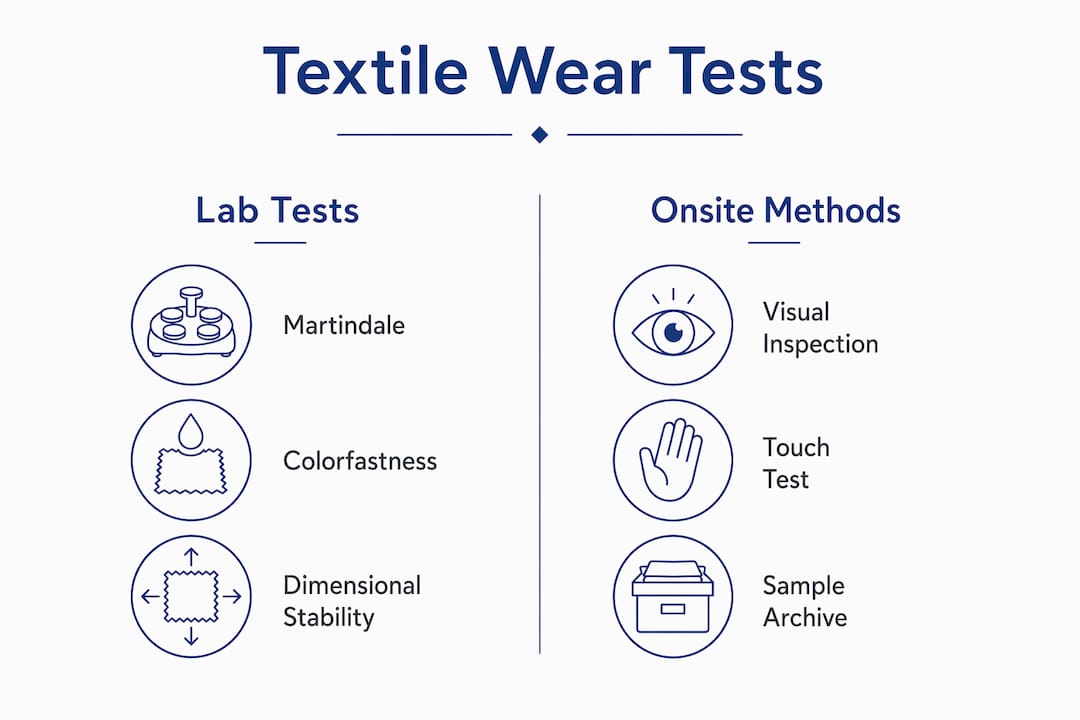
The Martindale abrasion test is the most widely used method for evaluating fabric durability in hospitality procurement. ISO 12947 is the global standard governing this test, and it covers four distinct parts: apparatus calibration, specimen breakdown, mass loss measurement, and surface change evaluation. The Martindale method assesses wear through three indicators simultaneously: physical breakdown of the specimen, mass loss after rubbing, and appearance changes including pilling and discoloration. Relying on only one of these indicators produces incomplete results.
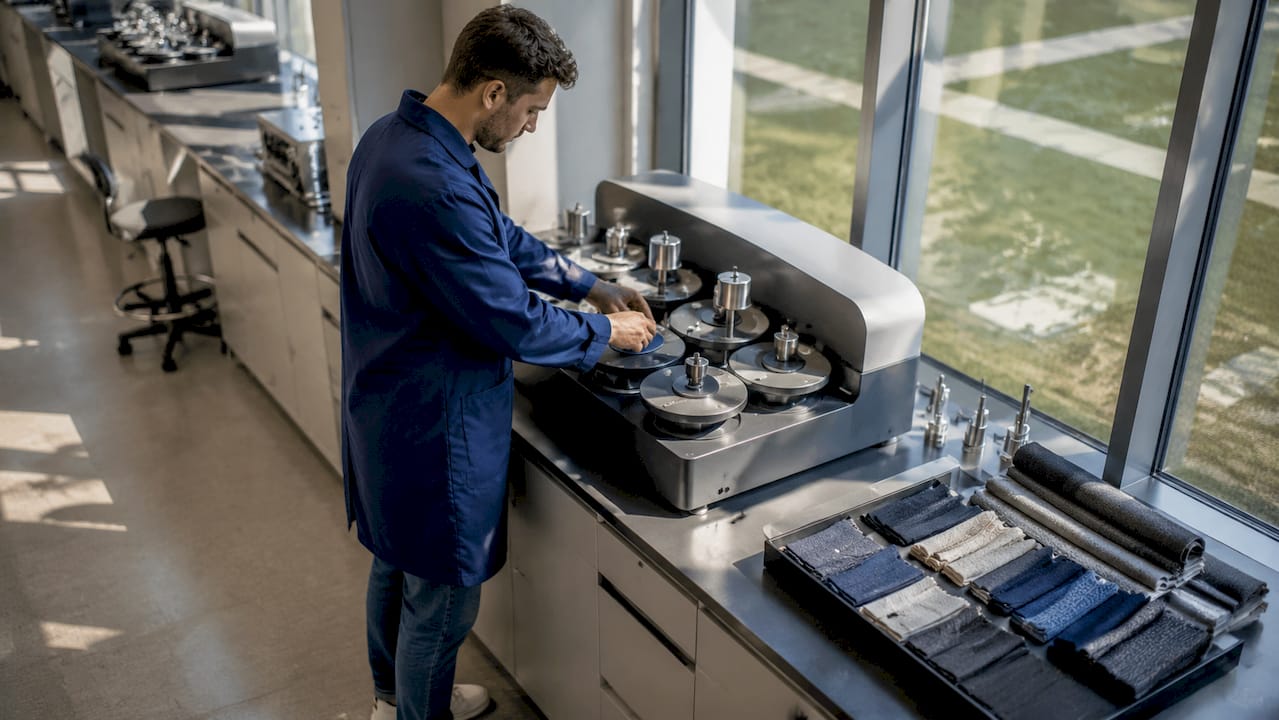
Beyond abrasion, tensile strength and tear strength tests tell you how much force a fabric can withstand before it splits or tears. These tests matter most for upholstery, curtains, and tablecloths that experience repeated pulling and stretching. Pilling resistance testing evaluates how quickly a fabric surface forms fiber balls under friction. Pilling is not just cosmetic. It signals fiber breakdown and signals to guests that a property is not maintaining its standards.
Colorfastness testing covers three critical scenarios for hospitality textiles:
- Wash fastness (AATCC 61 and ISO 105-C06): measures color retention after repeated laundering
- Crocking fastness (ISO 105-X12): measures color transfer to other surfaces under friction
- Light fastness: measures resistance to fading from sunlight exposure, critical for curtains and outdoor textiles
Each colorfastness result is rated on a grey scale from 1 to 5. A rating of 4 or 5 is acceptable for hospitality use. Anything below 3 signals a fabric that will fade or bleed within a normal service cycle.
Dimensional stability testing measures how much a fabric shrinks after washing. This is particularly relevant for fitted items like bed skirts, chair covers, and napkins where fit directly affects presentation.
Pro Tip: Request colorfastness test reports from your supplier before placing a bulk order. A fabric that looks vibrant in the showroom but scores a 2 on crocking fastness will transfer color onto guest clothing and furniture within weeks.
How to interpret textile wear test results for hospitality applications
Understanding raw test numbers is where most procurement decisions go wrong. A cycle count from a Martindale test means nothing without context. Industry-standard thresholds require at least 20,000 cycles for heavy-use textiles, 15,000 cycles for everyday wear, and 10,000 cycles for inner layers or light-use applications. For hotel bed linens and restaurant tablecloths that go through industrial washing daily, the 20,000-cycle threshold is the minimum you should specify in your procurement contracts.
Here is how to read results across the key test categories:
- Abrasion cycle count: Confirm the result meets the threshold for your specific use case. A 15,000-cycle result is acceptable for a guest room curtain but insufficient for a restaurant chair seat.
- Mass loss percentage: A high mass loss at a low cycle count indicates rapid fiber degradation. This predicts early thinning and transparency in linens.
- Pilling severity rating: Rated on a 1–5 scale. A rating of 3 or below means visible pilling will appear within normal service life. Specify a minimum rating of 4 for any guest-facing textile.
- Colorfastness grey scale rating: Ratings of 4–5 are acceptable. Ratings of 1–2 indicate the fabric will visibly degrade in color within the first season of use.
- Shrinkage percentage: Acceptable limits are under 3% for woven fabrics and under 5% for knitted fabrics. Exceeding these limits means fitted items will no longer fit after the first few washes.
A common mistake is treating a single strong result as a pass. A fabric that scores 25,000 cycles on abrasion but has a colorfastness rating of 2 will still fail in service. Multidimensional evaluation combining cycle counts, mass reduction, and visual ratings is the only reliable approach.
| Test | Minimum Acceptable Result | Hospitality Use Case |
|---|---|---|
| Martindale abrasion | 20,000 cycles (heavy use) | Upholstery, tablecloths, bed linens |
| Pilling resistance | Rating 4/5 | All guest-facing surfaces |
| Colorfastness (wash) | Grey scale 4/5 | Linens, napkins, uniforms |
| Shrinkage (woven) | Under 3% | Fitted linens, chair covers |
| Shrinkage (knitted) | Under 5% | Terry towels, robes |
Pro Tip: Build a simple test result scorecard for each textile category you procure. If a fabric fails on two or more indicators, reject it regardless of price or supplier relationship.
What practical methods can hospitality managers use onsite?
Lab testing is the gold standard, but you cannot send every incoming shipment to a laboratory. Onsite assessment methods give you a reliable first filter before committing to a full lab evaluation.
Visual inspection is your first tool. Examine fabric samples under direct light at a 45-degree angle to detect surface pilling, fuzzing, and uneven weave density. Hold the fabric up to a light source to check for thin spots or inconsistent thread counts. Discoloration patches and uneven dye distribution are visible at this stage and indicate poor production quality.
The touch test provides additional data. Run your palm firmly across the fabric surface several times. If fibers transfer to your hand or the surface feels rough after five passes, the fabric has low abrasion resistance. Stretch the fabric gently in both directions and release it. A fabric that does not return to its original shape has poor dimensional recovery, which predicts poor fit after washing.
For procurement decisions, use a structured checklist approach:
- Check for consistent weave density across the full sample width
- Verify seam integrity by pulling seam lines firmly with both hands
- Test colorfastness by rubbing a damp white cloth against the fabric surface for 10 strokes
- Inspect hem and edge finishing for fraying or loose threads
- Compare the sample against your specification sheet for weight (grams per square meter) and thread count
When onsite checks raise concerns, send samples to an accredited textile testing laboratory. Labs certified under ISO 17025 provide results that are legally defensible and directly comparable across suppliers. For hospitality textile procurement, building a standing relationship with a testing lab reduces turnaround time and gives you leverage in supplier negotiations.
How to avoid common pitfalls in assessing fabric wear and tear
The most expensive mistake in fabric wear assessment is relying on a single metric. Evaluating abrasion resistance by one indicator alone leads to misleading conclusions and poor procurement decisions. A fabric can pass a cycle count threshold while showing severe mass loss or surface degradation that makes it unsuitable for guest use.
A second major error is mixing Martindale and Wyzenbeek test results. These two abrasion tests use fundamentally different mechanics, and their results are not interchangeable. If one supplier provides Martindale results and another provides Wyzenbeek results, you cannot compare them directly. Standardize on one method across all your supplier contracts.
“Durability is largely defined by fabric construction and mill processing. Consumer misuse is rarely the root cause of early wear.” — CottonWorks
This matters because it shifts accountability to the supplier and the specification, not the laundry team. When a textile fails early, the cause is almost always a specification gap, not operational error.
Three additional pitfalls to avoid:
- Skipping seam strength testing: Seam strength and slippage often fail before fabric surface wear in hospitality textiles. ASTM D1683 tests should be mandatory in your supplier specifications, especially for upholstery and fitted linens.
- Ignoring sample conditioning: Standard conditioning at specified temperature and humidity before testing is required for consistent results. Results from unconditioned samples are unreliable and not comparable across labs.
- Using price as a proxy for durability: Retail price does not reliably indicate durability. Independent lab results are the only credible basis for procurement decisions. A high-priced fabric from a well-known brand can fail at 12,000 Martindale cycles while a mid-range option from a verified supplier passes at 25,000.
Comparing textile wear testing standards for hospitality procurement
Hospitality buyers frequently encounter both ISO and ASTM standards in supplier documentation. Understanding what each covers helps you write better specifications and ask better questions.
| Standard | Method | What It Measures | Hospitality Relevance |
|---|---|---|---|
| ISO 12947 | Martindale | Abrasion resistance (breakdown, mass loss, appearance) | Bed linens, upholstery, tablecloths |
| ASTM D4966 | Martindale (US variant) | Abrasion resistance cycles to breakdown | Upholstery, curtains |
| ASTM D1683 | Seam slippage | Seam strength under load | Fitted linens, uniforms, chair covers |
| AATCC 61 / ISO 105-C06 | Wash fastness | Color retention after laundering | All washable hospitality textiles |
| ISO 105-X12 | Crocking | Color transfer under friction | Tablecloths, napkins, upholstery |
ISO 12947 is the preferred standard for European and international procurement because it covers the full evaluation framework in four parts. ASTM methods are common in North American supplier documentation. When sourcing from suppliers in Italy, India, or Pakistan, as Gjergjihtextil does, ISO standards are the default reference point. Specify the exact standard and part number in your purchase contracts to prevent ambiguity. A contract that simply states “abrasion tested” without specifying ISO 12947 or ASTM D4966 gives a supplier room to use any method, making results incomparable.
For selecting durable hospitality textiles, requiring suppliers to provide test certificates referencing specific standard numbers is the single most effective procurement control you can implement.
Key takeaways
Effective textile wear assessment requires combining lab-standard tests with onsite inspection and consistent evaluation criteria across all suppliers.
| Point | Details |
|---|---|
| Use multidimensional testing | Combine abrasion cycle counts, mass loss, pilling ratings, and colorfastness for accurate assessment. |
| Apply correct thresholds | Specify 20,000 Martindale cycles minimum for heavy-use hospitality textiles. |
| Standardize your test method | Do not mix Martindale and Wyzenbeek results; choose one standard and apply it consistently. |
| Test seam strength separately | Mandate ASTM D1683 seam slippage tests for fitted linens and upholstery. |
| Price does not predict durability | Base procurement decisions on independent lab results, not brand reputation or cost. |
What 30 years of textile failures taught me about fabric assessment
Most procurement managers I have worked with focus almost entirely on abrasion cycle counts. They see a 20,000-cycle result and consider the evaluation complete. That approach misses the most common failure modes in real hospitality environments.
The failures I have seen most often are not surface abrasion failures. They are seam failures on fitted bed linens after 30 washes, color transfer from tablecloths onto guest clothing, and napkins that shrink unevenly after the first industrial wash cycle. None of these failures show up in a single Martindale test result. They show up when you test seam strength, crocking fastness, and dimensional stability together.
The other lesson is about supplier relationships. A supplier who resists providing full test documentation across all four evaluation dimensions is telling you something important. Suppliers who have confidence in their product share data readily. Those who deflect with vague quality claims or price justifications are the ones whose textiles end up in your replacement budget six months ahead of schedule.
My honest recommendation: build a one-page test specification sheet for each textile category you buy. List the exact standard, the minimum acceptable result, and the test method. Send it to every supplier before requesting samples. The suppliers who respond with matching documentation are the ones worth doing business with long term.
— Xpert
How Gjergjihtextil supports your textile quality standards
Gjergjihtextil has supplied quality-tested hospitality textiles to properties including Meliá, Marriott, and Sheraton for over 30 years. Every product in the Gjergjihtextil catalog is sourced with durability specifications aligned to the Martindale, colorfastness, and dimensional stability standards covered in this article.

Whether you manage a 30-room boutique hotel or a high-volume restaurant group, Gjergjihtextil provides wholesale hotel textiles with documented quality standards and flexible procurement options. For restaurant operators, the restaurant textile wholesale range covers tablecloths, napkins, and runners built for heavy daily use. Contact the Gjergjihtextil team to request test documentation, fabric samples, or a procurement consultation tailored to your property’s specific durability requirements.
FAQ
What is the minimum martindale cycle count for hotel linens?
Heavy-use hospitality textiles require at least 20,000 Martindale cycles. Everyday-use items require a minimum of 15,000 cycles.
How does shrinkage affect hospitality textiles?
Shrinkage above 3% in woven fabrics causes fitted items like bed skirts and chair covers to lose their shape after washing. Knitted fabrics should stay under 5% shrinkage to maintain fit and appearance.
Can i assess fabric durability without a lab test?
Onsite visual and touch tests provide a useful first filter, but they cannot replace lab testing for procurement decisions. Send samples to an ISO 17025-certified lab when test data from a supplier is unavailable or unclear.
Are martindale and wyzenbeek results interchangeable?
No. Martindale and Wyzenbeek use different mechanics and produce results that cannot be directly compared. Standardize on one method across all supplier contracts.
Does a higher price mean better fabric durability?
Price is not a reliable durability indicator. Independent lab results are the only credible basis for evaluating fabric lifespan. Always request test certificates before finalizing a purchase.