

TL;DR:
- Effective textile returns management requires assigning a dedicated coordinator, implementing a three-bin triage system, and applying written grading criteria to ensure inventory accuracy and staff accountability. Maintaining strict hygiene protocols with unidirectional flow, leak-proof bags, and PPE minimizes infection risks and contamination. Proper sorting and routing of damaged textiles promote sustainability, maximize value recovery, and achieve high landfill diversion rates.
Textile returns management in hospitality is defined as the structured process of receiving, inspecting, grading, and routing linens, towels, and other fabric goods back into usable inventory or appropriate disposal channels. Hotels that lack a formal system for dealing with fabric returns face inventory inaccuracies, hygiene risks, and direct margin erosion. The industry-standard term for this discipline is returns management, and it applies to hospitality just as rigorously as it does to e-commerce fulfillment. This guide gives hotel managers and procurement officers a practical framework covering prerequisites, step-by-step processing, hygiene protocols, and sustainability-focused disposition, drawing on best practices from BBJ La Tavola, ShipMonk, and EcoEnclose.
How to handle textile returns: prerequisites and setup
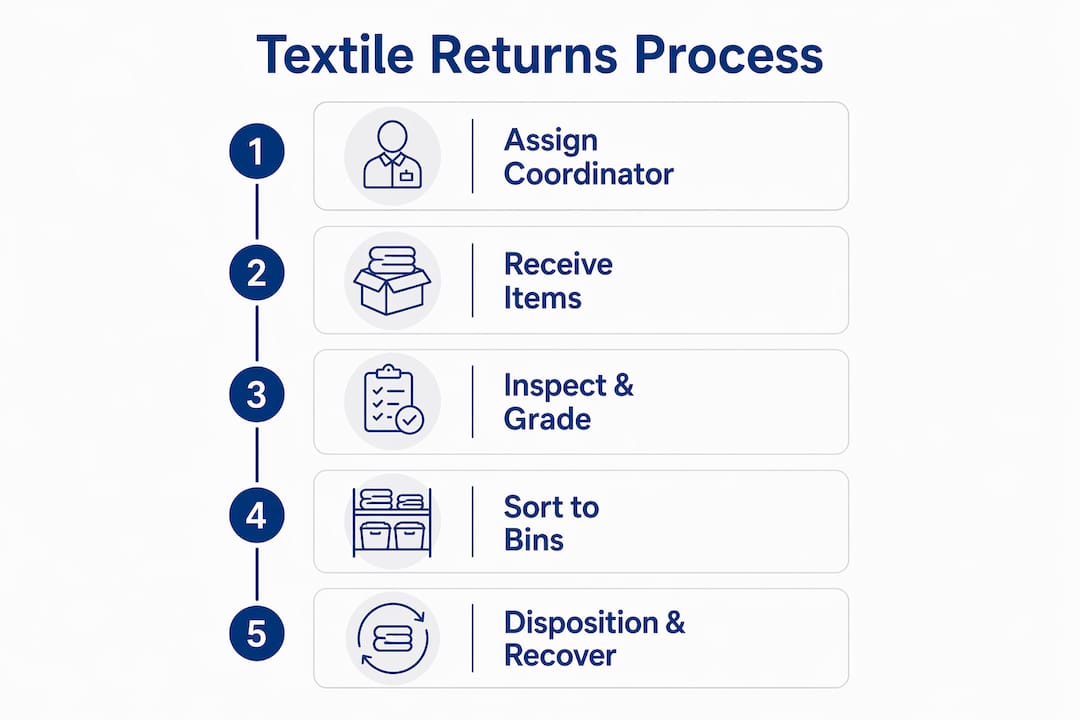
Before a single item enters your returns workflow, three foundational elements must be in place: assigned personnel, a physical triage station, and written grading criteria. Skipping any one of these turns returns processing into a reactive scramble that costs time and inventory accuracy.
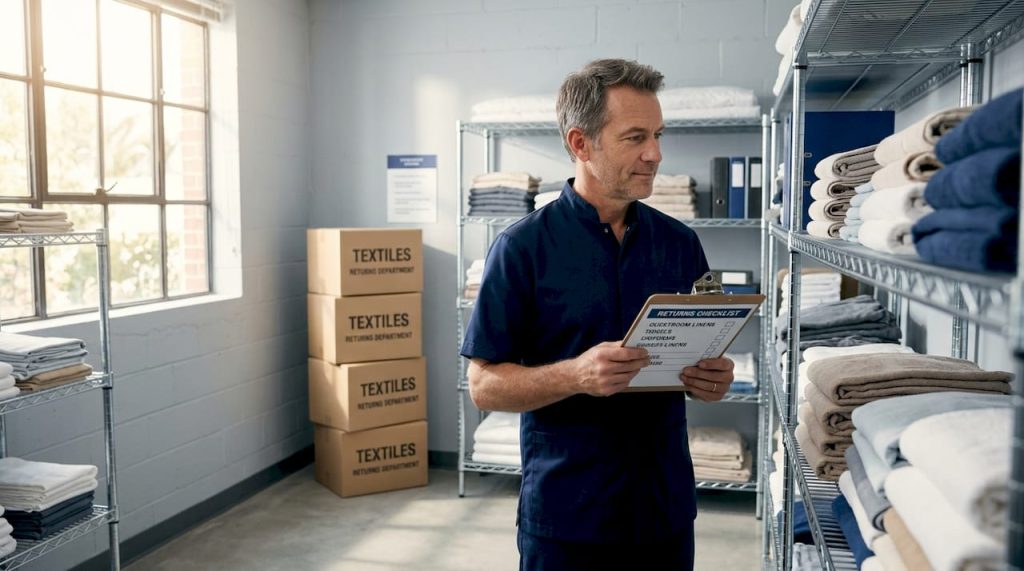
Personnel assignment is the first requirement. BBJ La Tavola instructs clients to designate a linen lead immediately after an event or checkout cycle. This person coordinates gathering, counting, and packing, and keeps orders separate with labels intact. In a hotel context, this role translates to a returns coordinator on each housekeeping shift, someone accountable for logging every item that comes back off the floor.
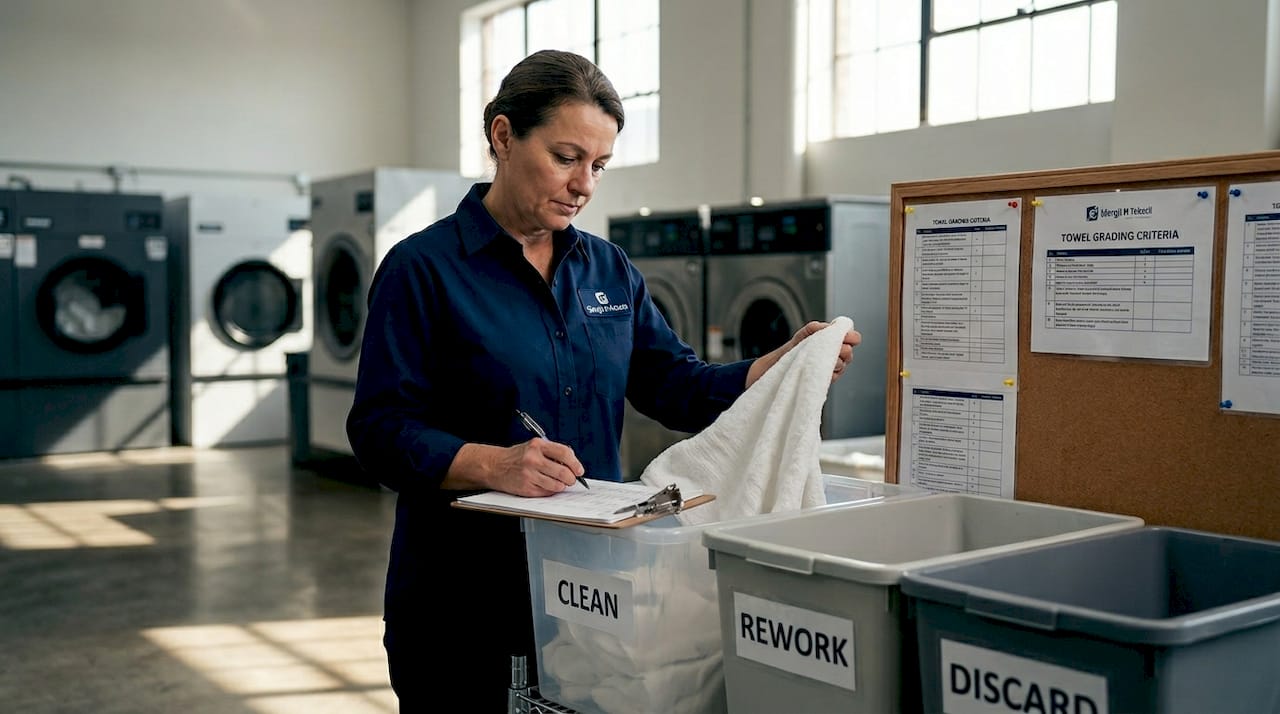
Physical setup is equally non-negotiable. Your triage station needs three clearly labeled bins or carts:
- Restockable: Items that are clean, undamaged, and ready for immediate reuse.
- Needs rework: Items requiring laundering, minor repair, or stain treatment before restock.
- Damaged or dispose: Items beyond repair, flagged for donation, recycling, or disposal.
This three-bin system, recommended by returns management specialists for 24-hour processing, prevents items from sitting in an undifferentiated pile where they become invisible to your inventory system.
Written grading criteria complete the setup. ShipMonk’s 2026 guidance makes clear that inspection cannot be consistent without brand-specific written instructions covering condition thresholds, packaging requirements, and cleanliness standards. For hotels, this means a one-page reference document at the triage station that every staff member uses, regardless of shift.
| Setup element | Minimum requirement |
|---|---|
| Personnel | Named returns coordinator per shift |
| Triage station | Three labeled bins: restockable, rework, dispose |
| Grading document | Written criteria covering condition, cleanliness, and packaging |
| Hygiene zone | Physical separation of soiled and clean intake areas |
| Packing materials | Leak-proof bags, labels, and duffel or collection bags on hand |
Pro Tip: Laminate your grading criteria sheet and attach it directly to the triage station. Staff turnover is high in hospitality, and a visible reference eliminates subjective drift between inspectors.
Step-by-step process for processing textile returns
The following sequence covers the full cycle from arrival to restocking or final disposition. Each step is time-sensitive because processing delays reduce available inventory and erode profit margins directly.
-
Receive and log immediately. When textiles arrive at the returns station, log each item by category and quantity before anything else. Use a simple paper log or a property management system add-on. The goal is a timestamp and item count that feeds your inventory record in real time.
-
Sort into triage bins. Place each item into the appropriate bin based on your written grading criteria. Do not allow items to sit unsorted. The restockable bin should be your fastest-moving category, and anything in it should move to clean storage within the same shift.
-
Inspect and grade. Examine each item for staining, fabric damage, pilling, or odor. Apply your written grading rules consistently. Inconsistent grading creates phantom inventory, meaning items appear available in your system but are actually unusable, which leads directly to guest complaints when a room is made up with substandard linens.
-
Route rework items to laundry. Items in the rework bin go to your laundry service with a clear tag indicating the issue. Coordinate with your laundry team to prioritize high-turnover items like bath towels and pillow cases. Set a maximum turnaround time of 24 hours for standard rework.
-
Restock clean items. Restockable items move to clean storage immediately after inspection. Organize by category and size so housekeeping can pull inventory without searching. This step directly restores sellable room nights.
-
Process damaged items. Items in the dispose bin require a final decision: donation, textile recycling, or landfill. Document each item removed from active inventory so your stock counts remain accurate. Coordinate with your supplier or a take-back program for end-of-life routing.
Pro Tip: Set a hard rule that no returned textile sits unprocessed for more than two hours after arrival. Treat the triage station like a receiving dock, not a storage area. Items that linger there create inventory blind spots that compound over days.
The textile maintenance workflow you build around this sequence determines how quickly your property recovers usable inventory after high-occupancy periods. Hotels with 80 or more rooms can lose the equivalent of a full linen par level to unprocessed returns within a single weekend if no triage system exists.
What hygiene and safety protocols apply during returns handling
Hygiene management during textile returns is not a housekeeping detail. It is an infection control requirement, and it must be treated with the same discipline as food safety or medical laundry protocols.
The core principle is unidirectional flow. Soiled textiles move in one direction only, from intake to laundry, and never cross paths with clean inventory. Long-term-care laundry system guides establish this as the foundational rule for any high-volume textile operation, and it applies directly to hotel environments.
Specific requirements include:
- Leak-proof, labeled bags: All soiled textiles must be bagged in clearly marked containers before transport. Open carts of soiled linen moving through guest corridors are a hygiene and reputational risk.
- PPE for handling staff: Gloves are the minimum. Staff handling heavily soiled items, particularly those from medical tourism properties or extended-stay rooms, should use aprons and eye protection.
- No shaking of soiled linens: Shaking releases particulate matter and potential pathogens into the air. Fold soiled items directly into bags at the point of collection.
- Separate carts for clean and soiled: Never use the same cart for outgoing clean linens and incoming soiled returns, even if the cart appears clean between uses.
“Hygiene safety in textile handling must be managed like infection control workflows, not as a secondary operational concern.” (Automatic Laundry)
Staff training on these protocols must be documented and repeated at onboarding and quarterly refreshers. Improper handling of soiled textiles creates infection risks, odors, and regulatory exposure, all of which carry costs that far exceed the time investment in proper training.
How to sort, grade, and disposition textiles for sustainability and value recovery
Grading returned textiles is not just an operational step. It is a value recovery decision that determines whether your property recovers resale value, achieves sustainability targets, or absorbs a write-off.
The four standard disposition categories used across the industry are:
- Sellable or restockable: Full condition, meets all grading criteria, returns to active inventory.
- Needs rework: Repairable or launderable, routes to processing before restock.
- Damaged: Below repair threshold, routes to donation or recycling.
- Dispose: Beyond any recovery pathway, routes to landfill as a last resort.
EcoEnclose’s 2025 research shows that sorting returned textiles before routing them to resale, donation, or recycling achieves landfill diversion rates of up to 90%. The critical finding is that unsorted offloading to nonprofits results in high rejection rates, meaning the donation pathway fails and items end up in landfill anyway. Sorting before routing is what makes sustainability outcomes real rather than aspirational.
| Condition | Disposition route | Value outcome |
|---|---|---|
| Clean, undamaged | Restock to active inventory | Full value recovery |
| Stained or minor wear | Laundry or repair, then restock | Partial value recovery |
| Significant damage | Donation or textile recycling program | Sustainability credit, zero cost |
| Beyond recovery | Landfill as last resort | Write-off, document for stock accuracy |
Pro Tip: Partner with a textile recycling program or take-back scheme before you need one. Establishing the relationship in advance means damaged items have a clear route out of your property without accumulating in storage.
Written grading rules prevent what ShipMonk calls inspection drift, the gradual divergence in how different staff members apply condition standards. When one inspector grades a lightly pilled towel as restockable and another grades it as damaged, your inventory data becomes unreliable. Objective, written thresholds with photographic examples eliminate this problem. Procurement officers who want to reduce return issues at the source should also evaluate textile specifications at the purchasing stage, since higher-grade fabrics produce fewer borderline grading decisions.
Key takeaways
Effective textile returns management requires a triage system, written grading rules, and strict hygiene separation to protect inventory accuracy, staff safety, and guest satisfaction simultaneously.
| Point | Details |
|---|---|
| Assign a returns coordinator | Designate a named linen lead per shift to ensure accountability and consistent processing. |
| Use a three-bin triage system | Sort returns into restockable, rework, and dispose categories immediately upon arrival. |
| Apply written grading criteria | Document condition thresholds to prevent inspection drift and phantom inventory. |
| Enforce hygiene separation | Maintain unidirectional flow and leak-proof bagging for all soiled textiles. |
| Sort before routing for sustainability | Pre-sort damaged items before donation or recycling to achieve up to 90% landfill diversion. |
Why returns handling is an operations and information problem
Most hotel managers treat textile returns as a housekeeping task. That framing is the root cause of most returns-related problems. Returns handling is an operations and information problem, and it requires the same discipline you apply to procurement or front-desk scheduling.
The information side is where most properties fail first. Without written grading criteria and a logging step at intake, your inventory system reflects what you ordered, not what you actually have available. I have seen properties with 200 rooms discover they were operating on 60% of their stated linen par because unprocessed returns had been accumulating in laundry carts for days. The housekeeping team knew the linens were somewhere. The system did not.
The operations side fails when accountability is diffuse. When everyone is responsible for returns, no one is. Assigning a named coordinator per shift, as BBJ La Tavola’s linen lead model demonstrates, creates a single point of accountability that transforms returns from a background task into a managed workflow.
Hygiene protocols deserve more attention than most properties give them. The risk is not theoretical. A hotel that handles soiled textiles without PPE, proper bagging, and zone separation is creating conditions for cross-contamination that affect both staff and guests. The cost of a single hygiene incident, in remediation, reputation, and potential regulatory action, exceeds the cost of a full year of proper protocol training.
The long-term payoff of combining operational discipline with sustainability-focused disposition is also underappreciated. Properties that sort before routing damaged textiles to recycling or donation programs reduce landfill costs, build supplier relationships, and create a measurable sustainability record that matters to an increasing share of guests and corporate travel buyers.
— Xpert
Source your hotel textiles from a supplier who understands returns
The quality of your textile returns process starts with the quality of what you purchase. Linens and towels built to hospitality-grade durability standards produce fewer borderline grading decisions, last more wash cycles, and generate less waste over their operational life.

Gjergjihtextil has supplied hotel-grade textiles to properties including Meliá, Marriott, and Sheraton for over 30 years, with full supply chain control from import to distribution. Their wholesale hotel textiles catalog covers bed linens, towels, duvets, and pillows designed specifically for industrial washing cycles and consistent grading outcomes. Procurement officers working to reduce returns volume and simplify disposition decisions will find that starting with the right textile specification is the most effective upstream intervention available.
FAQ
What is a linen lead in hotel textile returns?
A linen lead is a designated staff member responsible for coordinating the gathering, counting, and packing of returned textiles after a checkout cycle or event. BBJ La Tavola’s returns model uses this role to maintain order separation and label integrity.
How quickly should returned textiles be processed?
Returned textiles should be sorted and logged within two hours of arrival and fully processed within 24 hours. Processing delays reduce available inventory and erode profit margins directly, according to hospitality inventory management research.
What grading categories should hotels use for returned linens?
The four standard categories are restockable, needs rework, damaged for donation or recycling, and dispose. Written criteria with condition thresholds for each category prevent inconsistent grading across staff and shifts.
How do you prevent cross-contamination when handling soiled textiles?
Maintain strict physical separation between soiled and clean zones, use leak-proof labeled bags for all soiled items, avoid shaking linens, and require PPE for handling staff. Unidirectional flow from soiled intake to laundry is the foundational hygiene rule.
What is the best way to dispose of damaged hotel textiles sustainably?
Sort damaged textiles by condition before routing them to donation or recycling programs. Pre-sorting before offloading to nonprofits prevents rejection and achieves landfill diversion rates of up to 90%, according to EcoEnclose’s take-back program research.