

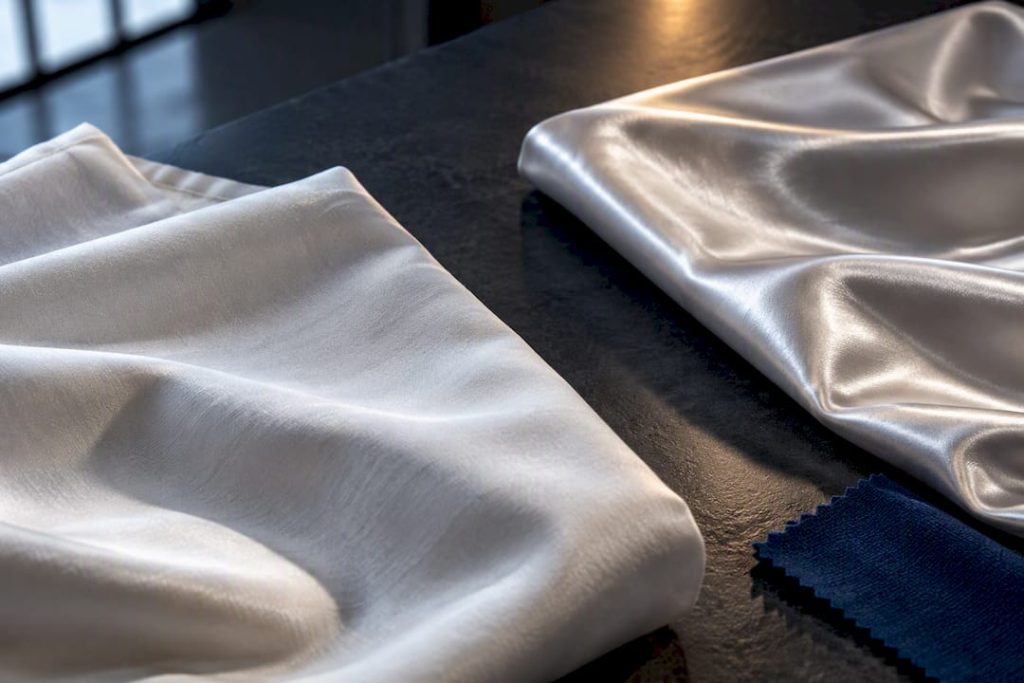
Sateen and satin are weaves, not fibers, and that single fact should guide every purchase decision. A cotton sateen sheet feels soft with a gentle sheen and sleeps warmer, while satin usually points to a silklike filament fiber with a glossier, slicker surface. The fiber-content label, not the name on the package, tells you how the sheet will actually breathe and wear.
TL;DR:
- Sateen and satin describe weaving techniques, not fiber content, making fiber labels essential to determine breathability, feel, and durability.
- Satin, often made with filament fibers like silk or polyester, produces a slick, reflective surface, while sateen uses spun cotton yarns for a softer, matte glow.
- Cotton sateen tends to retain more warmth and is more prone to snagging, requiring gentle laundering to prevent pilling and damage.
- Silk satin offers better breathability and may provide skin benefits, but care instructions differ from synthetic satins, which can pill faster.
- For durability and frequent laundering, hotel-grade linens use specific fibers and finishing treatments that can be suitable for home use as well.
Table of Contents
- Construction vs composition: what ‘sateen’ and ‘satin’ actually mean
- Feel, appearance and sleep performance: sheen, smoothness, and warmth
- Durability, snagging and care: laundering and longevity expectations
- Skin, allergies and health: what the evidence says about silklike bedding
- How to choose: a practical checklist to use when shopping
- Hospitality-grade perspective: what suppliers and hotels look for
- Author viewpoint: final trade-offs and quick recommendations
- How Gjergji H Tekstil can help buyers who need hospitality-grade or custom sateen/satin finishes
- Sources
- FAQ
Construction vs composition: what ‘sateen’ and ‘satin’ actually mean
Sateen and satin describe how yarns are woven, not what they are made of. Satin is traditionally a warp-faced weave, where the lengthwise yarns dominate the surface, while sateen is weft-faced, meaning the crosswise yarns create the visible float. Both rely on longer “floats,” sections where a yarn passes over several others before tucking under, and that float length is what produces the shine and smooth hand associated with each fabric.
The bigger variable is the yarn itself. Traditional satin construction was built for continuous filament fibers, such as silk, polyester, or nylon, which produce a glassy, reflective surface. Sateen has historically used spun staple yarns, short fibers twisted together, most often cotton, which softens the shine into more of a subtle glow. According to textile guidance from the University of Kentucky Extension, these weave names describe construction and can be applied to different fibers, so neither term guarantees what the sheet is made from.
That distinction matters at checkout, because the same weave name can hide very different performance:
- A “satin” sheet could be polyester, nylon, or silk, each with its own feel, breathability, and price point.
- A “sateen” sheet is commonly cotton, but blends and synthetics also use the weave.
- The only reliable way to know what you are buying is the fiber-content label, not the marketing name.
Feel, appearance and sleep performance: sheen, smoothness, and warmth
Float length and yarn type together decide how a sheet looks and feels against skin. Longer floats and filament yarns create a glassy, almost liquid surface, which is why silk or polyester satin often feels slippery and cool to the touch at first contact. Cotton sateen, with its shorter staple fibers, produces a softer, more matte luster and a hand that feels dense rather than slick.
A pilot clinical trial found measurable eczema improvement with silklike bedding after several weeks, one signal that fiber choice affects skin comfort as much as weave does (PubMed). That result speaks mainly to fiber, but it reinforces why the feel of a sheet cannot be separated from what it is made of.
Breathability follows a similar split. Cotton sateen tends to retain more warmth than plain-weave cotton because the tighter float structure limits airflow, which makes it a reasonable pick for cooler bedrooms but a poor one for hot sleepers. Synthetic satin, particularly polyester, traps heat further and can feel warm through the night, while silk satin breathes better than most synthetics and suits people who want sheen without overheating. Shoppers chasing a glossy, hotel-style look while sleeping cool generally do better with silk than with polyester satin, a priority well aligned with hotel guest experience tips for a better stay.

Durability, snagging and care: laundering and longevity expectations
The same floats that create sheen also create risk. Because sateen and satin both expose longer stretches of yarn on the surface, they snag more easily than tighter weaves like percale, and a snag can pull a thread loose or leave a visible pick. Care guidance from the University of Kentucky Extension notes that these longer floats increase snag risk, and that following label instructions helps protect the fabric over time.
A few habits protect the investment:
- Keep zippers, rough jewelry, and pet claws away from the sheet surface.
- Wash in cool or warm water rather than hot, and skip harsh detergents or bleach.
- Line dry or use low heat, since high dryer heat degrades both natural and synthetic finishes over repeated cycles.
Silk satin generally needs gentler, cooler washing than synthetic satin, which tolerates more frequent machine washing but can pill faster under abrasive cycles.
Pro Tip: Turn sateen and satin sheets inside out before washing to reduce surface friction and slow down pilling.
Skin, allergies and health: what the evidence says about silklike bedding
A small clinical trial found that silklike bedding produced modest improvements in atopic dermatitis severity and itch over eight weeks, though the study’s authors note the results need confirmation in larger trials before drawing firm conclusions. The finding points to fiber, not weave, as the more likely factor behind any skin benefit, since a rough or poorly finished synthetic “satin” could behave very differently from true silk.
If you have sensitive skin or eczema, patch-test a new sheet before committing to a full set, check for finishing chemicals on the label, and follow the manufacturer’s laundering instructions closely rather than assuming any silklike fabric will help.

How to choose: a practical checklist to use when shopping
Buying decisions get easier once you know what to look for on the tag and in the listing description.
- Read the fiber-content label first. Weave names like sateen or satin describe texture, not material, so confirm whether you are getting cotton, polyester, silk, or a blend.
- Check thread count in context. A high number means little without knowing the fiber and yarn quality behind it, so weigh thread count alongside fiber type rather than on its own.
- Look for finishing terms. Words like mercerized or mercerization signal a treatment that adds luster and strength to cotton sateen, which can improve durability.
- Match the fabric to your sleep needs. Choose cotton sateen for warmth and a soft glow, silk satin for cool sheen, and synthetic satin only when budget matters more than breathability.
- Confirm the return policy and washing tolerance. Ask whether the sheets can be machine washed on a normal cycle, and check the return window in case the feel or sheen does not match expectations once you have slept on them.
Three direct questions to ask a seller before buying: what is the exact fiber content, is the weave finished or treated, and what does the care label recommend for washing and drying.
Hospitality-grade perspective: what suppliers and hotels look for
Hotels buy sheets differently than individual shoppers, mainly because linens face industrial laundry cycles hundreds of times a year. A well-established supplier of hotel linens evaluates fabric on criteria that translate well to home shopping: consistent fiber specs batch to batch, finishing that resists pilling after repeated washing, and blends chosen to reduce wrinkling under heavy use. A hotel fabric specification guide built for hospitality buyers covers many of the same tag-reading habits consumers can apply at home. The lesson for shoppers: a sheet built to survive industrial laundering is usually built to survive yours too.
Author viewpoint: final trade-offs and quick recommendations
My rule is simple: check the fiber label before the weave name, then let weave settle the feel. Pick cotton sateen for warmth and everyday softness, silk satin for cool luxury, and synthetic satin only on a tight budget. If you run hot at night, look at percale instead of either.
— Xpert
How Gjergji H Tekstil can help buyers who need hospitality-grade or custom sateen/satin finishes
Choosing between sateen and satin gets easier when the sheets themselves are built for repeated washing without losing their feel. Gjergji H Tekstil supplies hotel-grade linens and produces custom textile orders, drawing on more than 30 years of sourcing and manufacturing experience across its own supply chain.

For property owners or bulk buyers who want bedding that holds up under frequent laundering, the Tekstile për Hotel & AirBnB line covers hotel and short-term rental needs, and the Prodhim tekstilesh production service can advise on fiber blends and finishing suited to your laundering schedule. Reach out through either page to discuss quantities, fabric options, and lead times for your property.
Sources
- Clothing and Textiles (University of Kentucky Extension)
- Use of a silklike bedding fabric in patients with atopic dermatitis (PubMed)
FAQ
Do luxury hotels use sateen or percale?
Both appear in hospitality settings, and the choice usually depends on climate and guest expectations rather than one being universally better. Percale suits properties prioritizing a crisp, cool feel and easy industrial laundering, while sateen appeals where a softer, glossier finish fits the brand experience.
What are the disadvantages of sateen sheets?
Sateen’s longer floats make it more prone to snagging than tighter weaves like percale, and it can trap more heat, which makes it less suited to hot sleepers. It also tends to need gentler washing to avoid pilling over time, based on care guidance from the University of Kentucky Extension.
Which is better for the skin, sateen or satin?
Neither weave name determines skin comfort on its own, since fiber content matters more than construction. A small clinical trial found modest eczema improvement with silklike bedding, suggesting silk or silklike fibers may help some sensitive skin types more than the weave itself does.
Is sateen 100% cotton?
Not necessarily. Sateen is a weave, and while it is commonly made with cotton, it can also be produced with rayon, polyester, or blended fibers, so checking the fiber-content label is the only way to confirm what a specific sheet contains.