


TL;DR:
- Textile delivery reliability measures the consistent and timely supply of linens, towels, and uniforms to hospitality operations. Improving OTIF tracking, supplier diversification, and digital monitoring helps reduce late deliveries and associated costs. Recognizing delivery performance as a key quality indicator helps hotels maintain guest satisfaction and operational efficiency.
Textile delivery reliability is defined as the consistent, on-time, and complete supply of linens, towels, tablecloths, and uniforms to hospitality operations without gaps that disrupt service. The industry standard for measuring this is the On-Time-In-Full (OTIF) metric, which tracks whether shipments arrive complete and on schedule. OTIF delivery rates in textile supply chains slipped to 71.3% as of Q2 2026, a 9.2 percentage point year-on-year decline. That number means nearly three in ten textile shipments are arriving late or incomplete, a direct threat to any hotel or restaurant running on tight linen inventories. For hospitality managers, the role of textile delivery reliability is not a logistics detail. It is a core operational requirement that shapes guest comfort, staff efficiency, and cost control every single day.
How does textile delivery reliability affect guest experience and operations?
Unreliable textile delivery creates problems that guests notice immediately. A hotel room missing a fresh duvet cover or a restaurant table set with mismatched napkins signals poor management, regardless of the reason behind it. Guests do not see supply chain disruptions. They see the result.
The guest-facing consequences of delivery failures include:
- Missing or insufficient bed linens, forcing housekeeping to delay room turnovers and push check-in times
- Inconsistent towel quality or quantity, which directly lowers perceived room value
- Tablecloths and napkins in short supply, requiring restaurants to reduce covers or use inferior replacements
- Uniform shortages, which affect staff presentation and brand consistency
The back-of-house consequences are equally damaging. Emergency laundering due to late textile delivery accelerates inventory degradation and spikes laundry utility costs. Running linen through wash cycles faster than planned shortens fabric life, increases chemical use, and raises energy bills. That is a hidden cost most managers do not calculate until it shows up in the monthly utility statement.
Operational strain compounds quickly. Housekeeping teams spend time on workarounds instead of standard tasks. Purchasing managers place emergency orders at premium prices. Expedited shipping costs have increased for 53% of businesses, often costing 4–5 times more than standard shipping. That premium eats directly into margins that were already thin.
Pro Tip: Track your linen cycle separately from your general inventory. Log every emergency wash cycle and every expedited order. After 90 days, you will have a clear picture of what delivery unreliability actually costs your property.
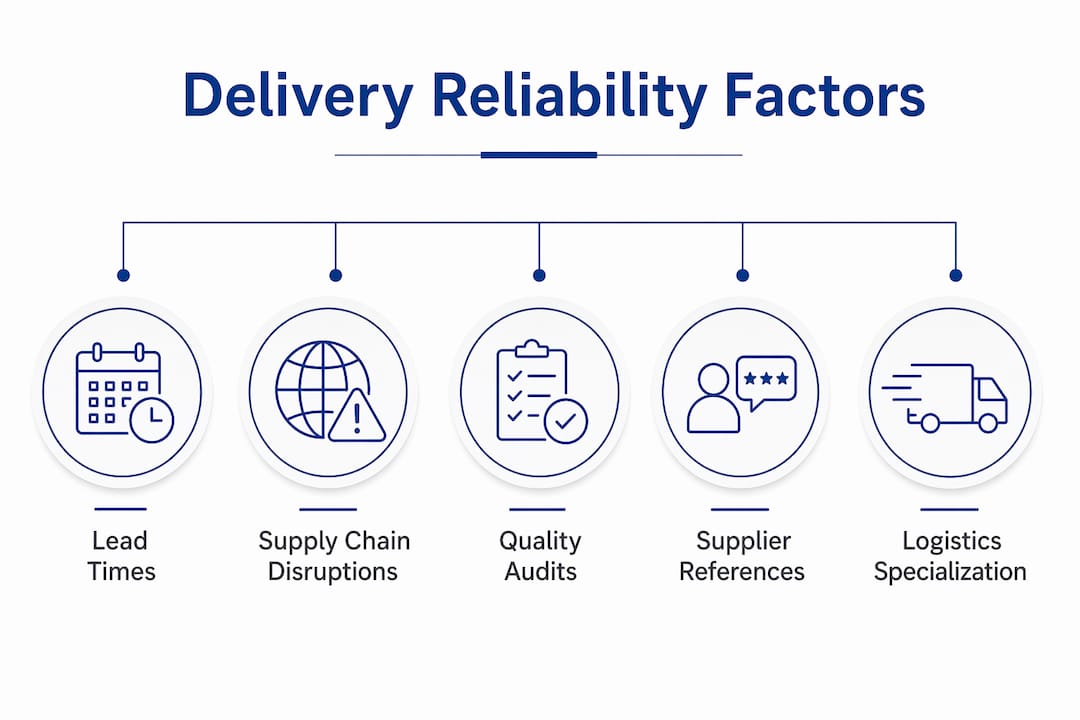
What key factors influence textile delivery reliability?
Several structural factors make textile supply chains harder to manage than most hospitality managers expect. Understanding them helps you ask the right questions before signing a supplier contract.
Lead times and replenishment windows
Conventional textile production cycles run 12–20 weeks from order to delivery. Hospitality operations, by contrast, often need replenishment within 2–4 weeks to respond to seasonal demand or unexpected linen loss. That gap between production reality and operational need is where most delivery failures originate.

External disruptions and logistics volatility
54% of firms reported major supply chain disruptions in early 2026. Transit times on key maritime routes have increased by 7–10 days due to geopolitical disruptions as of april 2026. Customs clearance delays, port congestion, and raw material shortages all compound the problem. A supplier who quotes a firm delivery date without accounting for these variables is quoting optimistically, not accurately.
The quality audit gap
One of the most counterintuitive findings in textile logistics: suppliers with 92% quality audit scores still show 31% OTIF variance. A high quality score measures product standards, not delivery performance. These are two separate capabilities, and confusing them is a costly mistake.
The table below contrasts traditional quality measurement with dynamic reliability measurement:
| Measurement type | What it tracks | What it misses |
|---|---|---|
| Quality audit score | Product defect rate, fabric standards | Delivery timing, order completeness |
| OTIF metric | On-time and complete delivery rate | Product quality at point of receipt |
| Dynamic reliability tracking | Milestone adherence, lead time variance | Static product inspection results |
Hospitality managers who rely only on quality audits to vet suppliers are measuring the wrong variable. Delivery reliability requires its own tracking framework.
How can managers evaluate suppliers based on delivery reliability?
Selecting a textile supplier based on price and product samples alone is a common mistake. The importance of textile delivery as a competitive signal means that lead time reliability now functions as a proxy for overall supplier management quality. Here is a practical evaluation framework:
- Request OTIF performance data. Ask suppliers for their delivery completion rate over the past 12 months. Any supplier unwilling to share this data is signaling a problem.
- Assess milestone tracking capability. High-performing suppliers provide granular milestone tracking and maintain direct control over subcontractors. Ask how they monitor production stages and who they notify when a milestone slips.
- Evaluate communication transparency. Suppliers who proactively flag delays before they become crises are operating at a higher maturity level than those who wait for you to follow up. Digitized supply chain communication using ERPs and shared dashboards shows a statistically significant correlation with supplier trust (p=0.027).
- Check contingency protocols. Ask what happens when a shipment is delayed. Does the supplier have a backup production unit? Do they offer partial fulfillment to keep your operations running?
- Verify subcontractor control. Many textile suppliers outsource production stages. Suppliers who cannot name their subcontractors or describe how they monitor them carry hidden reliability risk.
For a deeper look at how to structure your sourcing process, the B2B sourcing guide for hospitality from Gjergjihtextil covers quality and reliability criteria specific to hotel and restaurant procurement.
Pro Tip: Ask every supplier candidate for two references from hospitality clients with similar order volumes. Then ask those references specifically about how the supplier handled a late delivery, not just whether deliveries were generally on time.
Using ERP systems and real-time dashboards to track shipment milestones gives hospitality managers visibility that email updates simply cannot provide. Digital integration between your property management system and your supplier’s logistics platform is no longer a luxury. It is the baseline for managing textile supply chains reliably in 2026.
What best practices improve textile delivery reliability?
The most effective approach to improving textile delivery reliability combines supplier diversification, proactive communication, and logistics specialization. No single tactic works in isolation.
Distributed fulfillment and regional sourcing
Distributed fulfillment using multiple regional suppliers reduces the risk of logistics bottlenecks and protects operations during disruptions. A hotel that sources all linens from a single overseas supplier has one point of failure. A hotel that splits orders between a regional distributor and a primary supplier can absorb a delay without shutting down housekeeping.
Prioritizing reliability over lowest cost
Choosing the cheapest supplier consistently produces the highest total cost. Delayed textile shipments cause inventory markdowns averaging 25%–35%, and 47% of apparel firms report inbound shipment delays as a primary operational impact. When you add emergency shipping premiums, accelerated linen wear, and staff overtime, the “cheaper” supplier often costs significantly more than a reliable one.
Logistics specialization
Textile logistics specialists offer express routing that can reduce transit time from 35–49 days to 5–10 days. That capability matters when a seasonal surge or an unexpected event depletes your linen stock faster than planned. Working with a logistics provider who understands hospitality textile cycles, not just general freight, gives you access to faster recovery options.
The table below compares traditional and modern approaches to delivery reliability management:
| Approach | Traditional | Modern |
|---|---|---|
| Supplier selection | Price and product quality | OTIF performance and milestone tracking |
| Communication | Email updates on request | Shared dashboards and ERP integration |
| Risk management | Single supplier, large buffer stock | Distributed fulfillment, regional sourcing |
| Delay response | Emergency orders after the fact | Contingency protocols activated proactively |
| Cost focus | Lowest unit price | Total cost including delay and emergency premiums |
Reactive supplier management, where your team is constantly firefighting late orders, signals an immature supply chain. Suppliers who rely on reactive management are statistically more likely to deliver late and inconsistently. The goal is to build a supply chain that keeps your service running on schedule, not one that requires constant intervention to stay functional.
For managers looking to connect sourcing strategy with operational outcomes, the guide on why textile sourcing matters for hospitality performance covers this connection in practical terms.
Key Takeaways
Textile delivery reliability is the single most controllable factor separating hospitality operations that run smoothly from those that absorb constant, preventable costs.
| Point | Details |
|---|---|
| OTIF is the right metric | Track On-Time-In-Full rates, not just quality audit scores, when evaluating suppliers. |
| Quality audits do not predict reliability | Suppliers with 92% quality scores still show 31% OTIF variance. |
| Delays carry compounding costs | Emergency shipping costs 4–5 times more than standard, and late deliveries accelerate linen wear. |
| Distributed fulfillment reduces risk | Splitting orders across regional suppliers eliminates single points of failure. |
| Digital integration is now baseline | ERP-connected supplier dashboards significantly improve transparency and delivery trust. |
The real cost of treating delivery as a secondary concern
After working closely with hospitality operators across different property sizes, one pattern stands out clearly. Managers who treat textile delivery as a procurement afterthought consistently underestimate how much it costs them. They negotiate hard on price per unit, then spend that saving and more on emergency orders, overtime laundry runs, and guest recovery gestures when rooms are not ready on time.
The shift I find most telling is how delivery reliability has become a quality signal in itself. When a supplier delivers complete, on-time, every cycle, it tells you something about how that business is run. It tells you they control their production, manage their subcontractors, and plan for disruption. When a supplier is chronically late, no quality certificate changes that underlying reality.
For hospitality managers, the practical advice is straightforward. Build OTIF tracking into every supplier review. Set a minimum acceptable rate and hold suppliers to it. Use digital tools to get visibility before problems escalate. And diversify your sourcing so that one delayed shipment does not shut down your housekeeping floor.
Delivery reliability in hospitality has shifted from a support function to a direct driver of guest loyalty and brand reputation. The managers who recognize that earliest will have a structural advantage over those still treating it as a back-office concern.
— Xpert
How Gjergjihtextil supports reliable textile supply for hospitality
Gjergjihtextil has operated as a textile supply partner for hotels and restaurants since 1994, building its model around supply chain control rather than simple product sales. The company imports, manufactures, and distributes textiles for the full HoReCa segment, with clients including Meliá, Marriott, and Sheraton as validation of its delivery standards.

For managers who need consistent linen supply without the operational risk of unreliable sourcing, Gjergjihtextil offers wholesale hotel textiles with delivery reliability built into the supply chain from import through distribution. Restaurant operators can review the full range of restaurant textile options designed for heavy use and consistent presentation. Both ranges are backed by over 30 years of hospitality-specific supply chain experience in the Albanian and regional market.
FAQ
What is textile delivery reliability in hospitality?
Textile delivery reliability is the consistent, on-time, and complete supply of linens, towels, and table textiles to hotel and restaurant operations. The standard industry metric for measuring it is the On-Time-In-Full (OTIF) rate.
Why does delivery reliability matter more than product quality alone?
Suppliers with 92% quality audit scores still show 31% OTIF variance, meaning high product quality does not guarantee on-time delivery. Both metrics must be tracked separately to protect operations.
How much do textile delivery delays cost hospitality businesses?
Delayed shipments cause inventory markdowns of 25%–35%, and emergency shipping costs 4–5 times more than standard freight. These costs accumulate quickly across a single season.
What is the OTIF rate for textile supply chains in 2026?
OTIF delivery rates in textile supply chains dropped to 71.3% as of Q2 2026, a 9.2 percentage point decline from the prior year.
How can managers reduce the risk of textile delivery disruptions?
Distributed fulfillment across multiple regional suppliers eliminates single points of failure. Combining this with digital shipment tracking and clear contingency protocols from suppliers provides the strongest protection against disruptions.