

TL;DR:
- Reliable textile distribution is crucial for consistent guest experience and operational efficiency.
- Understanding and managing the entire supply chain from manufacturer to hotel prevents shortages.
- Choosing suppliers with transparent logistics and strong certifications ensures long-term cost savings and quality.
Most hotel managers in Albania spend significant time choosing the right thread count or towel weight, and very little time thinking about how those textiles actually arrive on schedule. That gap in thinking is where operational problems begin. A beautifully sourced linen means nothing if it sits in a customs warehouse during your peak summer season. This guide addresses the full picture: what textile distribution actually involves, how the supply chain flows from manufacturer to hotel room, what to look for in a supplier, and how smarter distribution decisions translate directly into better guest experiences and lower operational costs.
Table of Contents
- What is textile distribution and why does it matter?
- The textile distribution chain from manufacturer to hotel
- Choosing the right textile suppliers for Albanian hotels
- Optimizing textile management for guest satisfaction and efficiency
- The hospitality reality: Why most hotels underestimate textile distribution
- Partner with reliable textile experts for lasting success
- Frequently asked questions
Key Takeaways
| Point | Details |
|---|---|
| Distribution drives reliability | Efficient textile distribution ensures your hotel always meets guest needs with quality linens. |
| Supplier choice matters | Choosing EU-certified and locally responsive suppliers reduces costs and operational risk. |
| Optimize for TCO | Evaluating total cost of ownership prevents budgeting surprises and supports long-term savings. |
| Par levels prevent shortages | Maintaining the right stock levels keeps hospitality operations running smoothly during high occupancy. |
| Collaborate for success | Work closely with distributors who understand hospitality needs for lasting guest satisfaction. |
What is textile distribution and why does it matter?
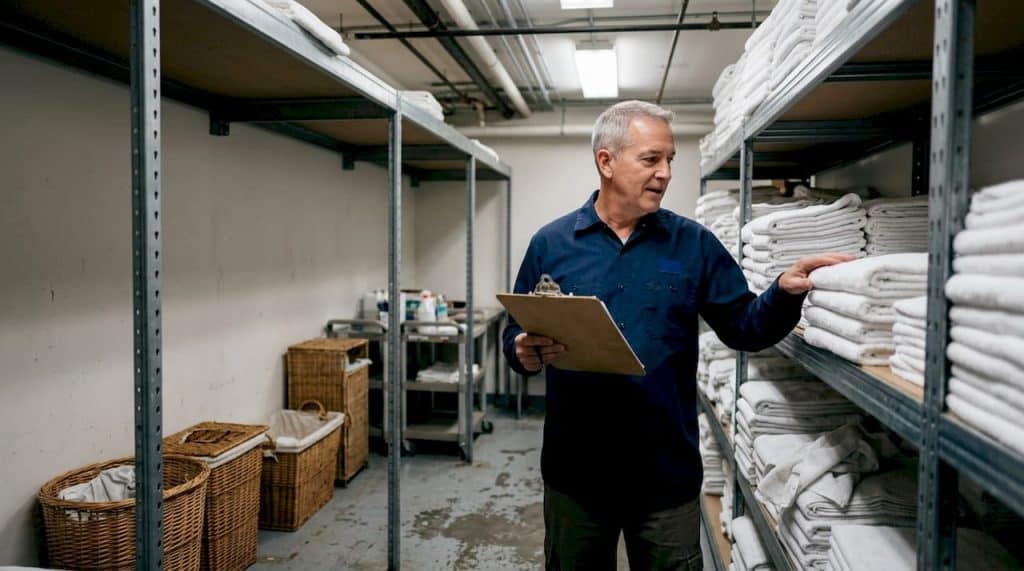
Textile distribution is the end-to-end process of moving linens, towels, bedding, uniforms, and other hospitality fabrics from their point of manufacture to the hotel or resort that uses them. It sounds straightforward, but the reality involves multiple stages, multiple actors, and multiple points where things can go wrong. Understanding this process is not a logistics exercise. It is a guest experience exercise.
The typical flow includes warehousing at the source, container consolidation, international or regional shipping, customs clearance, and last-mile delivery to your property. Each stage has its own timeline and its own risk profile. A delay at customs can cascade into a linen shortage that affects room turnovers across your entire property for days. Textile distribution involves warehousing, consolidation, shipping, customs, and last-mile delivery for overall reliability.
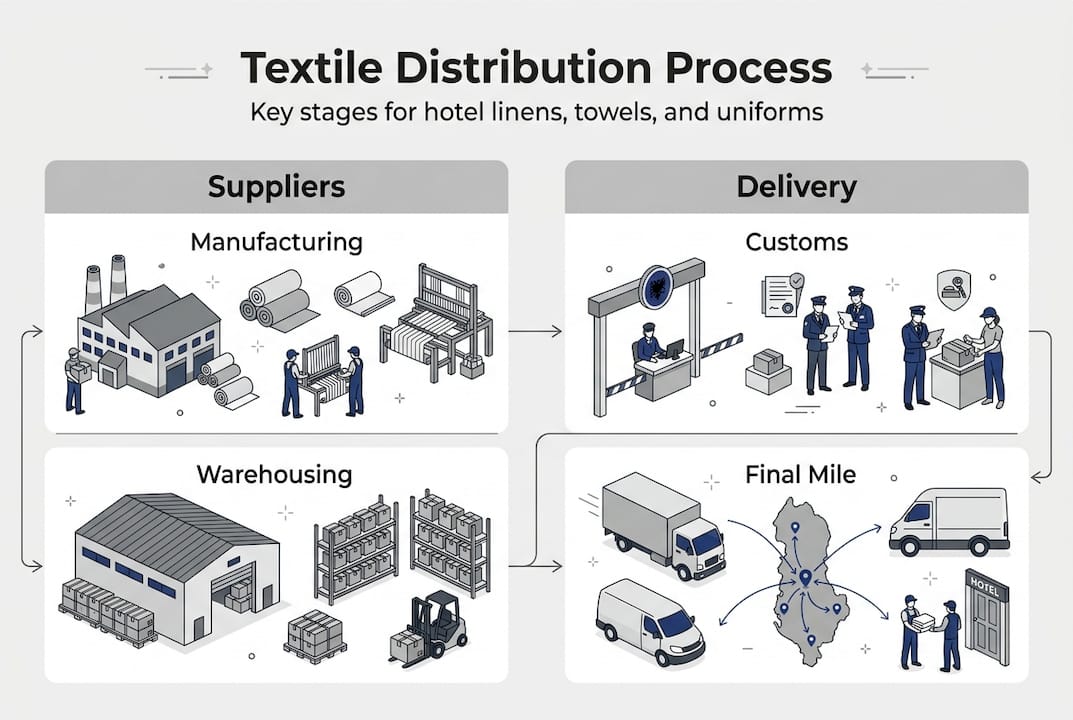
For Albanian hotels and resorts, the stakes are higher than they appear. Albania’s tourism sector has grown rapidly, which means guest expectations have risen alongside occupancy rates. A guest staying at a four-star property in Saranda or Vlora today expects the same linen quality and freshness they experienced in Croatia or Montenegro. Distribution failures make that standard impossible to maintain, regardless of product quality.
Here are the most common bottlenecks that affect hotel operations:
- Customs delays due to incomplete documentation or regulatory changes
- Seasonal shipping backlogs that push delivery timelines well past what was promised
- Inadequate warehousing causing damage, mold, or contamination before delivery
- Poor last-mile logistics that leave bulk shipments at regional depots, not your door
- Single-source dependency that leaves hotels with no fallback when a supplier fails
“Distribution is not the final step in textile supply. It is the factor that determines whether everything upstream was worth investing in.”
Reliable distribution workflows in hospitality reduce emergency procurement, eliminate rush-order premiums, and keep service standards consistent throughout the season. Understanding the textile production process is equally valuable because it helps you identify where quality and timing risks originate before they reach the distribution stage.
The textile distribution chain from manufacturer to hotel
Now that the importance is clear, let’s break down the actual flow and key players involved. Each stage in the chain adds time and cost. Knowing who does what helps you ask better questions when evaluating suppliers.
| Stage | Actor | Key responsibility |
|---|---|---|
| Manufacturing | Factory (Italy, China, India, Pakistan) | Produces to spec, manages quality control |
| Export & consolidation | Freight forwarder | Packs containers, handles export documentation |
| International shipping | Carrier | Ocean or road freight to destination port/border |
| Customs clearance | Customs broker | Handles Albanian import duties and regulations |
| Local warehousing | Wholesale distributor | Receives, stores, and manages inventory |
| Last-mile delivery | Distributor or logistics partner | Delivers to the hotel on schedule |
For Albanian hotels sourcing from Italy, the EU logistics network is well-established and relatively fast. Road freight from northern Italy to Albania typically takes three to five days, which makes Italian-sourced textiles a practical choice for urgent replenishment. Shipments from Asia require four to eight weeks by sea, which demands longer planning horizons and larger par stock levels.
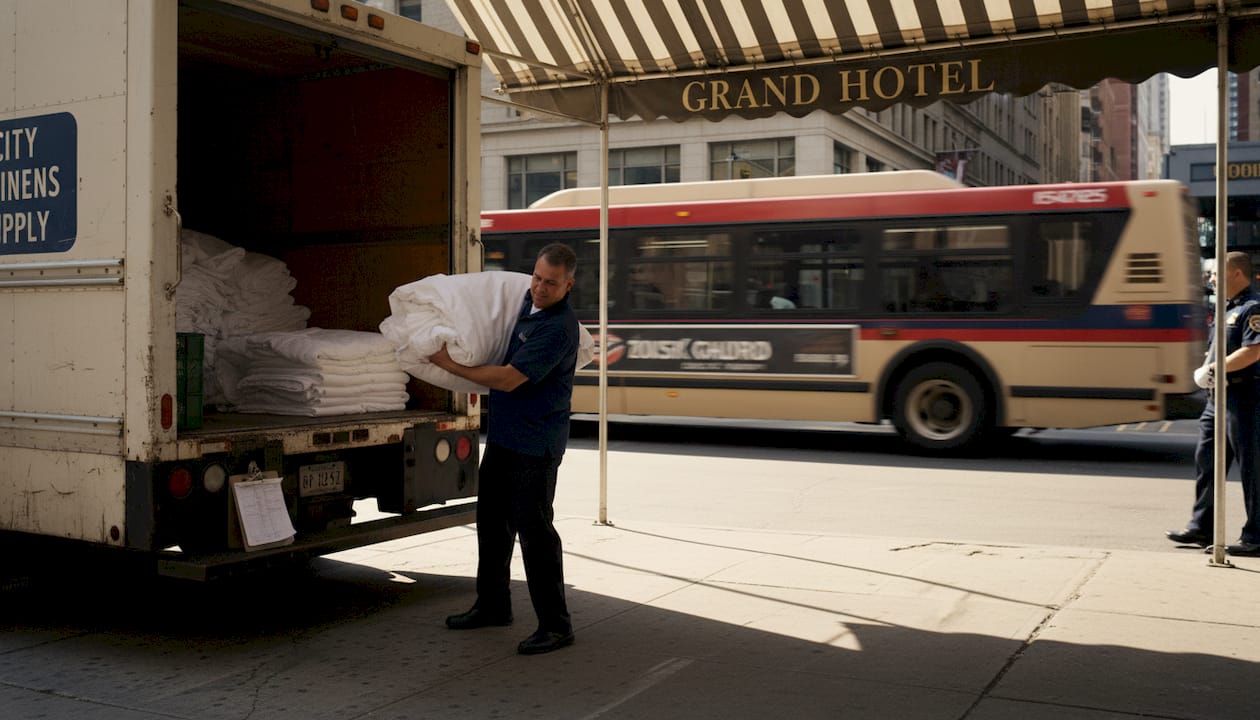
Distribution includes container consolidation, customs handling, and last-mile delivery as core elements of on-time reliability. A missed step at any stage pushes the problem downstream to your housekeeping team.
Here is a practical sequence to follow when reviewing your current supply chain:
- Identify every actor currently involved in your textile supply, from source country to delivery bay.
- Map where delays have occurred historically and in which season.
- Ask your supplier for documented contingency plans for customs holds and shipping disruptions.
- Confirm whether last-mile delivery is handled directly or subcontracted to a third party.
- Establish written service level agreements (SLAs) that define lead times and penalties for delays.
Pro Tip: Work with distributors who can clearly explain their customs brokerage process and name their last-mile logistics partners. Vague answers at this stage usually mean vague performance later. Reviewing textile procurement for managers in detail can help you build a structured evaluation framework before signing any supply contract.
Choosing the right textile suppliers for Albanian hotels
Equipped with a clear view of the supply chain, the next challenge is selecting the supplier that fits your operational reality. Many managers default to comparing unit prices. That is a mistake. Unit price tells you the cost of one item. It tells you nothing about the total cost of running your linen program over an entire season.
Total cost of ownership (TCO) is the right framework. It includes the purchase price, shipping and customs costs, storage costs, replacement frequency (driven by durability), laundry costs per wash cycle, and the cost of shortages when supply fails. A towel that costs 15% less per unit but wears out 40% faster is not a saving. It is a liability.
When comparing international suppliers, such as Italian manufacturers, with local Albanian distributors, consider the following factors:
| Factor | International (e.g., Italian) | Local Albanian supplier |
|---|---|---|
| Lead time | 3 to 8 weeks depending on origin | Days to one week |
| Customization | Often limited for small orders | High flexibility |
| Certifications | OEKO-TEX, ISO, EU Ecolabel common | Varies by supplier |
| Price per unit | Higher for premium products | Competitive for volume |
| Logistics control | Depends on exporter relationship | Direct and manageable |
Certifications matter more than many managers realize. Certified hospitality textiles are important for meeting international brand standards and satisfying environmentally conscious guests. Look specifically for:
- OEKO-TEX Standard 100: Verifies that textiles contain no harmful chemicals
- ISO 9001: Confirms quality management standards in manufacturing
- EU Ecolabel: Signals environmentally responsible production
- GOTS (Global Organic Textile Standard): Relevant for properties with sustainability positioning
For hotel textile suppliers in Albania, the key differentiator is often not price or certification alone. It is the combination of product quality, logistics reliability, and the supplier’s ability to give you honest forecasting and restocking schedules. Selecting textiles for hotels should always involve reviewing the full service model, not just the product catalog. Albanian hotels should prioritize suppliers with EU logistics and relevant certifications while focusing on TCO and par stocking as core evaluation criteria.
Pro Tip: When evaluating any supplier, ask them to walk you through your par level calculation. Par levels represent the number of complete sets of linen needed to keep operations running without interruption, typically three to four sets per occupied room. A supplier who cannot discuss par levels fluently does not understand hotel operations.
Optimizing textile management for guest satisfaction and efficiency
These strategies culminate in better guest experiences that elevate your hotel’s reputation. Distribution failures rarely appear in management reports as distribution failures. They appear as guest complaints about musty towels, housekeeping delays, or inconsistent room presentation. The root cause is almost always a supply chain problem that was preventable.
“When textile flow is uninterrupted and predictable, housekeeping teams perform better, room turnover is faster, and guests consistently rate cleanliness higher.”
TCO and par stocking are central to optimizing guest comfort and operational efficiency. Here is a practical four-step action plan for Albanian hotel managers:
- Conduct a full TCO audit. Calculate the true annual cost of your current linen program, including hidden costs like rush shipments, early replacements, and laundry damage rates.
- Set accurate par levels. Calculate how many sets of each textile category you need to sustain operations through your peak season without emergency orders.
- Formalize supplier communication. Establish a monthly review cadence with your supplier to discuss lead times, upcoming demand, and any product changes. This prevents surprises.
- Train housekeeping on textile handling. Improper washing temperatures, overloaded machines, or incorrect drying methods destroy linens faster than normal use. Training reduces your replacement rate significantly.
Common pitfalls that cost Albanian hotels money every season include running out of towels mid-week and paying premium rates for emergency local purchases, ordering too infrequently and receiving bulk shipments that overload storage capacity, and accepting damaged goods without formal claims processes in place. Each of these problems has a straightforward operational fix, but only if you are paying attention to reduce textile costs systematically rather than reactively.
The hospitality reality: Why most hotels underestimate textile distribution
Here is a view that few hotels share publicly but that experienced operators understand deeply. Most procurement conversations in Albanian hospitality focus on product quality and unit cost. Those are legitimate concerns. But the managers who consistently outperform their peers on operational efficiency and guest satisfaction scores tend to obsess over something different: the reliability and transparency of their distribution chain.
When a supplier can tell you exactly where your order is, when it will clear customs, and what the backup plan is if it does not, that supplier is giving you something more valuable than a competitive price. They are giving you operational certainty. That certainty lets your housekeeping manager plan staffing properly. It lets your finance team forecast linen costs accurately. It lets your front desk manager make room commitment decisions with confidence.
The hotels that make distribution visible and manageable do not just save money. They earn better reviews, retain better staff, and build stronger reputations. Forge partnerships with suppliers who openly share their full logistics chain and contingency plans. That transparency is a reliable signal of long-term custom textile solutions in the Balkans delivered at scale.
Partner with reliable textile experts for lasting success
If you are ready to move from understanding to action, the next step is finding a partner who has already solved the distribution challenges you are facing. Gjergji H Tekstil has operated as a fully integrated textile supply chain partner for Albanian hospitality since 1994, supplying properties affiliated with Meliá, Marriott, and Sheraton with hotel-grade linens, towels, and bedding.

The company manages the full chain from import to delivery, which means you deal with one point of contact rather than coordinating between a foreign manufacturer, a freight forwarder, and a local logistics provider. Whether you want to streamline your textile distribution or explore bulk textile imports tailored to your property’s volume and standards, their team provides practical guidance backed by three decades of real-world experience. Visit the textile wholesale for hotels section to review product ranges and request a consultation.
Frequently asked questions
What are the main steps in hotel textile distribution?
Key steps include warehousing, container consolidation, customs clearance, and last-mile delivery to the hotel, each of which must function reliably to prevent supply gaps that disrupt daily operations.
How do Albanian hotels benefit from EU-certified textile suppliers?
EU-certified suppliers ensure consistent product quality, faster replenishment cycles, and compliance with the international standards that guests of branded and upscale properties expect.
What is TCO and why is it important in textile sourcing?
TCO, or total cost of ownership, captures every direct and indirect cost involved in running a linen program, and focusing on TCO rather than unit price alone gives hotel managers a far more accurate picture of supplier value.
How can hotels avoid textile shortages during peak season?
Maintain accurate par levels for each textile category, work only with distributors who have documented restocking schedules, and prioritize par stocking as a non-negotiable requirement in any supplier agreement.