

TL;DR:
- True textile leadership relies on supply chain reliability, technical performance, and consistent quality.
- Balkan hotels benefit most from Tier 2 integrated suppliers with regional partnerships.
- Key leadership factors include supply resilience, innovation, and sustainability compliance.
Many hotel and restaurant owners across Albania, Kosovo, Montenegro, and North Macedonia assume that textile market leadership is simply about the biggest brand name or the lowest price per unit. That assumption is costly. True leadership in the textile supply chain is built on supply chain reliability, technical performance, and the ability to deliver consistent quality at scale. For Balkan hospitality businesses operating in a demanding and increasingly competitive environment, understanding what leadership actually means can be the difference between smooth daily operations and costly disruptions. This guide will help you recognize genuine textile leadership, evaluate supplier tiers, and apply that knowledge to improve guest experiences and operational efficiency.
Table of Contents
- What does textile market leadership mean?
- Examining global and Balkan textile leadership tiers
- Core drivers: What actually sets leaders apart
- Applying textile leadership for better guest experiences and efficiency
- A fresh perspective: Rethinking leadership for Balkan hospitality
- How our expertise can support your textile decisions
- Frequently asked questions
Key Takeaways
| Point | Details |
|---|---|
| Market leadership is nuanced | It’s defined by supply chain reliability, innovation, and proven hospitality outcomes, not just market size. |
| Tier selection matters | Hotels and restaurants in the Balkans can best serve their needs by combining regional and global textile leaders. |
| Sustainability and certification | Environmental compliance like the EU Digital Passport is now a core element of textile market leadership. |
| Application is key | Smart procurement and balanced sourcing drive both guest satisfaction and operational efficiency. |
What does textile market leadership mean?
Now that you know why a simple brand name or bargain price is not enough, let’s look at what actually sets leaders apart in the textile industry.
Textile market leadership refers to dominance in market share, revenue, innovation, and supply chain reliability. For hotel and restaurant owners, this definition has real operational weight. A supplier that leads on price alone but cannot deliver consistent product quality across 500 wash cycles is not a leader. A brand with prestige but no regional distribution network creates procurement headaches you simply do not need.
Leadership in textiles rests on several interconnected pillars:
- Vertical integration: Control over raw materials, production, and distribution reduces delays and quality inconsistencies.
- Technical performance: Fabrics engineered for durability, stain resistance, and wash resilience directly affect how long your investment lasts.
- Supply chain reliability: A leader delivers on time, at the right volume, regardless of global disruptions.
- Sustainability credentials: Certifications and recycled content are increasingly required by hotel brand standards and regulatory bodies.
For Balkan hospitality businesses, these pillars translate into measurable outcomes. Better textile visual impact improves guest perception at the moment of check-in. Reliable supply chains mean your housekeeping team is never short of clean, presentable linens during peak season.
The global textile market is substantial and growing. Hospitality textiles in particular represent a high-stakes segment because errors are visible to guests and directly affect online reviews. Leaders in this space are not defined by catalog size. They are defined by how well they serve client operations over time.
| Leadership factor | Why it matters for hospitality |
|---|---|
| Vertical integration | Fewer delays, consistent quality |
| Technical durability | Lower replacement frequency |
| Supply chain reliability | Predictable inventory for peak seasons |
| Sustainability compliance | Meets hotel brand and regulatory requirements |
Understanding why hotels invest in custom textiles is a natural extension of this. When a supplier controls design, production, and delivery, customization becomes a practical option rather than a luxury. That is what genuine leadership enables.
Finally, consider that bulk textile imports and quality are not opposing forces. A true market leader negotiates volume to maintain quality standards, not to cut corners. That nuance matters enormously when you are sourcing for 50 rooms or 200 covers.
Examining global and Balkan textile leadership tiers
With clear leadership criteria established, let’s break down how these leaders differ and why your hotel’s needs might align best with a specific textile tier.
The hospitality textile supply market is generally organized into three distinct tiers. Understanding these tiers helps you match your procurement strategy to your actual operational needs rather than chasing prestige or the lowest invoice total.
Tier 1: Luxury and global brands. Suppliers like Frette represent the top end of the market. These brands offer exceptional craftsmanship and carry significant prestige. However, they come with pricing structures and minimum order requirements that are rarely practical for the majority of Balkan hotels and restaurants. Their value lies in brand signal, not operational volume.
Tier 2: Integrated cost-quality suppliers. This tier, which includes operators like CODE TEXTILES and Jiangsu Sunshine, balances production scale with quality control. Hospitality linen holds over 40% share of the broader hotel textile segment, and Tier 2 suppliers capture most of that volume. They offer strong technical performance, flexible customization, and supply chain resilience without the premium pricing of Tier 1.
Tier 3: Regional and local suppliers. These operators serve specific markets with faster delivery and lower logistical complexity. Quality can vary, but proximity and flexibility are genuine advantages.
For most hotels and restaurants in Albania, Kosovo, Montenegro, and North Macedonia, Tier 2 integrated suppliers provide the most practical combination of quality, reliability, and cost efficiency. Tier 1 is often over-specified; Tier 3 alone carries supply chain risk.
Balkan hospitality businesses face specific regional conditions that shape which tier makes sense. Nearshoring, meaning sourcing from closer production centers rather than distant Asian factories, is increasingly attractive as shipping timelines and costs fluctuate. Guest expectations in the region are rising alongside tourism growth, which means custom textile solutions for Balkan hotels are no longer a differentiator; they are becoming a baseline expectation.
| Tier | Best for | Key advantage | Key limitation |
|---|---|---|---|
| Tier 1 luxury | Ultra-premium properties | Prestige, craftsmanship | High cost, low flexibility |
| Tier 2 integrated | Most Balkan hotels | Quality, scale, customization | Requires volume commitment |
| Tier 3 regional | Small operators, fast restock | Speed, local relationships | Inconsistent quality |
Effectively streamlining Balkan textile workflows often means working within Tier 2 while building a secondary relationship with a regional Tier 3 partner for emergency restocking. That blend gives you both quality assurance and operational flexibility.
Core drivers: What actually sets leaders apart
Understanding your options among supplier tiers is crucial, but what truly puts a textile leader ahead? Let’s unpack the operational drivers that matter in your day-to-day business.
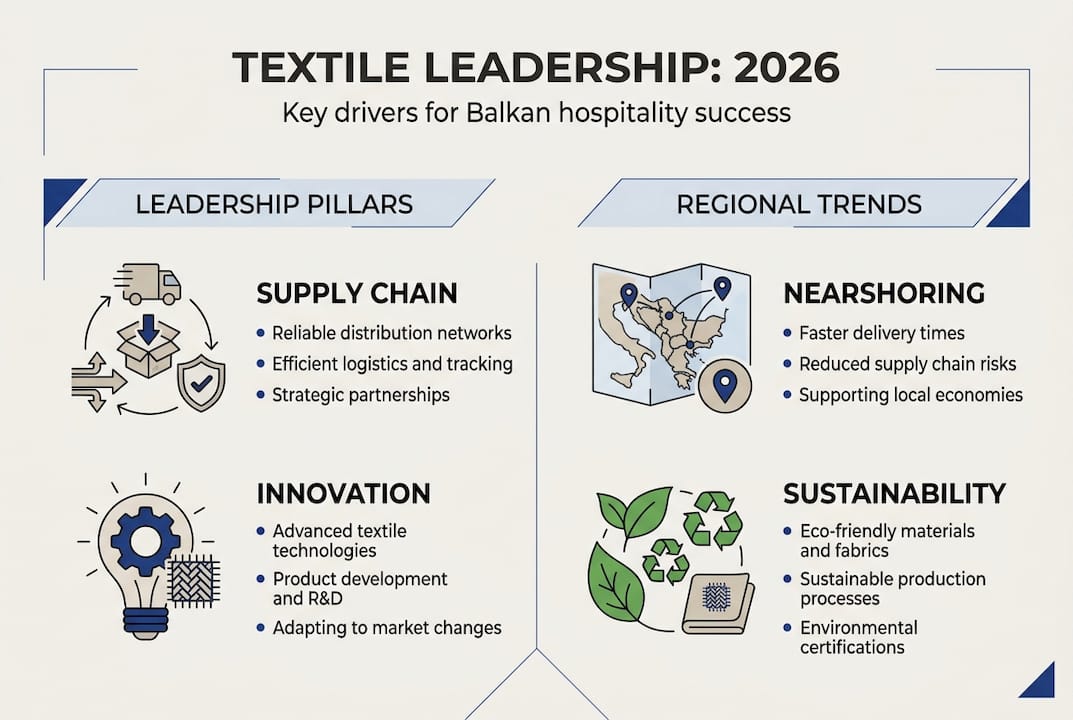
Three factors consistently separate genuine textile leaders from suppliers that simply sell product. Each has a direct impact on your costs, your staff’s efficiency, and your guests’ experience.
1. Supply chain resilience. The ability to deliver consistently, regardless of external disruption, is the most underrated leadership factor. Technical textiles are growing at a CAGR of 6.15%, and nearshoring is gaining traction precisely because Balkan operators have experienced the cost of delays from distant suppliers. A leader with diversified sourcing can absorb disruptions that would halt a single-source competitor.
2. Technical innovation. Stain-resistant finishes, reinforced weave structures for high wash-cycle durability, and antimicrobial treatments are no longer niche features. They are operational tools. A tablecloth that holds its presentation through 200 service covers costs less per use than a cheaper alternative replaced after 80. When evaluating expert textile selection tips, technical specifications deserve more weight than initial price per unit.
3. Sustainability compliance. The EU Digital Passport for textiles and increasing requirements around recycled content are reshaping procurement decisions. Sustainability mandates add a measurable 0.6% CAGR impact to the market, which means these requirements are already influencing your costs and your guests’ expectations. Hotels that supply international chains must increasingly demonstrate compliance up their supply chain.
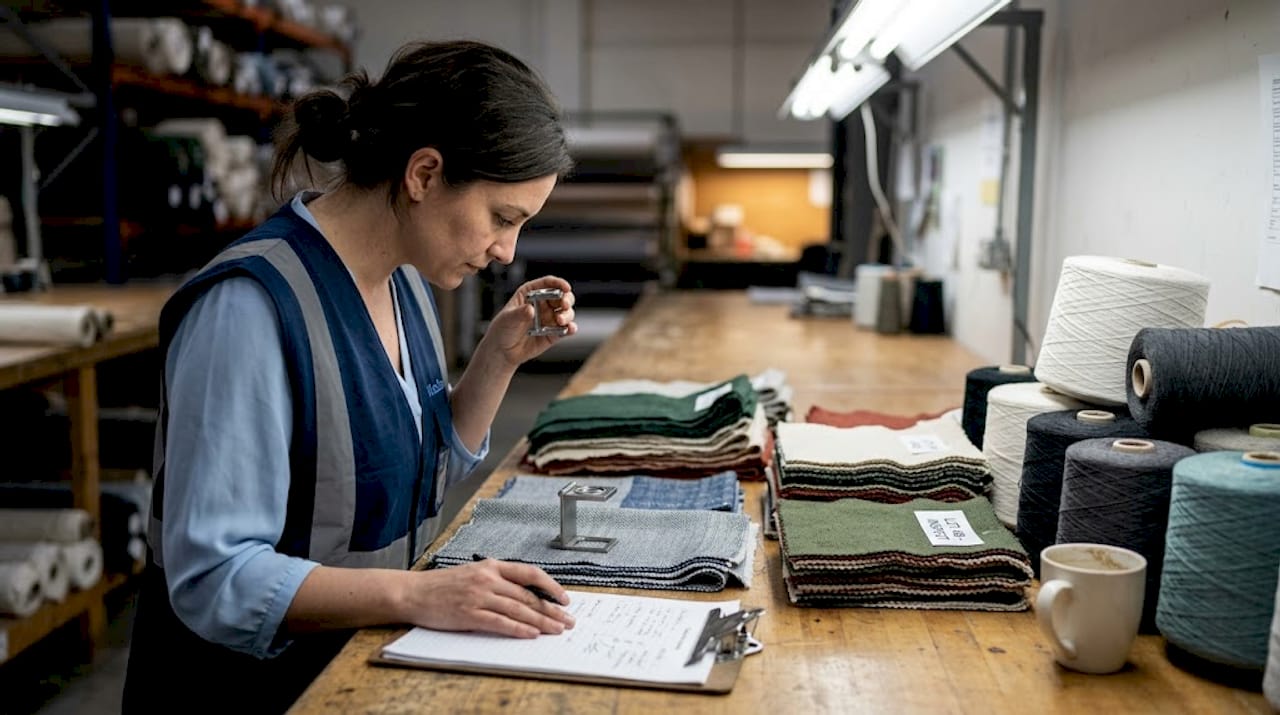
Pro Tip: When assessing a new textile supplier, request wash-test certifications alongside their sustainability documentation. A supplier that can provide both is operating at a leadership level. One that offers neither is likely a volume reseller with no production control.
For practical guidance on wholesale hotel textiles, prioritize suppliers who can demonstrate wash-cycle performance data, not just thread count marketing. Those numbers tell you what your housekeeping team will actually experience six months into the contract.
Applying textile leadership for better guest experiences and efficiency
Now that we’ve identified the operational hallmarks of textile leadership, let’s make it practical for your hospitality business.
Translating leadership theory into procurement decisions requires a structured approach. For Balkan hotels and restaurants, the most effective path combines a primary Tier 2 integrated supplier with selective regional sourcing. Hotels should match their tier to operational need, with Tier 2 integrated suppliers being the practical choice for most West Balkan properties, supplemented by local partners for agility.
Here is a practical supplier evaluation checklist:
- Certifications: Can the supplier provide Oeko-Tex, ISO, or EU Digital Passport documentation?
- Wash-cycle data: Do they test and publish durability performance under industrial laundry conditions?
- Customization capacity: Can they produce branded or custom designs without significantly longer lead times?
- Track record: Have they supplied 4-star or 5-star properties with verifiable references?
- Regional presence: Do they have distribution infrastructure within or near the Western Balkans?
- Volume flexibility: Can they scale orders up or down based on your seasonal occupancy?
Pro Tip: Avoid suppliers who cannot clearly explain their sourcing origins. Transparency about material sources is a reliable indicator of overall quality control. If they cannot tell you where the cotton comes from, they likely cannot guarantee consistent weave quality either.
Common pitfalls in the Balkans include over-relying on a single local supplier for all categories, which creates vulnerability when that supplier has production or inventory issues. Another frequent mistake is prioritizing the lowest unit price without calculating the true cost per wash cycle. A towel that disintegrates after 80 industrial washes at a low unit price is more expensive than a durable alternative that lasts 250 cycles.
Following clear procurement steps for Albanian hotels and using a structured hospitality textile procurement guide helps you avoid these costly assumptions. Pairing that with proper fabric testing for hotels ensures your procurement decisions hold up in real operational conditions.
A fresh perspective: Rethinking leadership for Balkan hospitality
Conventional advice in hospitality procurement often points toward the biggest global brands as the benchmark. That logic works in markets with deep infrastructure and predictable logistics. In the Balkans, it frequently does not.
What actually drives success for hotels and restaurants in this region is adaptive leadership: the ability to source intelligently across tiers, build relationships with suppliers who understand regional constraints, and apply sustainability requirements pragmatically rather than as marketing checkboxes.
The operators we see thriving are not chasing Tier 1 prestige. They are building resilient supply chains with Tier 2 reliability at the core and using regional partners for operational agility. They also treat sustainability documentation as a genuine procurement filter, not a formality.
Our strongest advice: start with your specific operational context. How many wash cycles does your laundry run per week? What is your peak season inventory risk? Those questions lead to better supplier decisions than any global ranking. Use textile distribution workflow insights to map your real needs before committing to any supply relationship.
How our expertise can support your textile decisions
At Gjergji H Tekstil, we have been operating as a fully integrated textile supply partner for hospitality businesses across Albania and the broader region since 1994. That means we understand both the operational pressures you face and the supply chain dynamics that affect your procurement outcomes.

Our wholesale textiles for hotels are sourced from vetted international markets and produced to hospitality-grade specifications. We combine the reliability of Tier 2 integrated sourcing with regional presence that ensures responsive delivery. Whether you need expert guidance on textile selection for a new property or want to audit your current supplier setup, we bring decades of practical experience to that conversation. Strong textile visual impact for hospitality starts with the right supply partnership.
Frequently asked questions
How can I verify if a textile supplier is a true market leader?
Check for supply chain reliability, certifications such as the EU Digital Passport, and a documented track record with hospitality clients. Size and price alone are not reliable indicators of leadership.
Why is vertical integration important in the textile supply chain?
Vertically integrated suppliers control every stage from raw material to delivery, which ensures better quality consistency and faster problem resolution for hospitality clients.
What’s the role of local versus global textile suppliers in the Balkans?
A blended approach works best. Local suppliers for Balkan hotels provide agility and lower logistical complexity, while certified global or integrated suppliers deliver technical performance and compliance documentation that guests and brand standards require.
How does sustainability impact textile market leadership?
Sustainability mandates including the EU Digital Passport are now active procurement filters, influencing which suppliers qualify for hotel brand programs and affecting the long-term cost structure of your textile inventory.