


TL;DR:
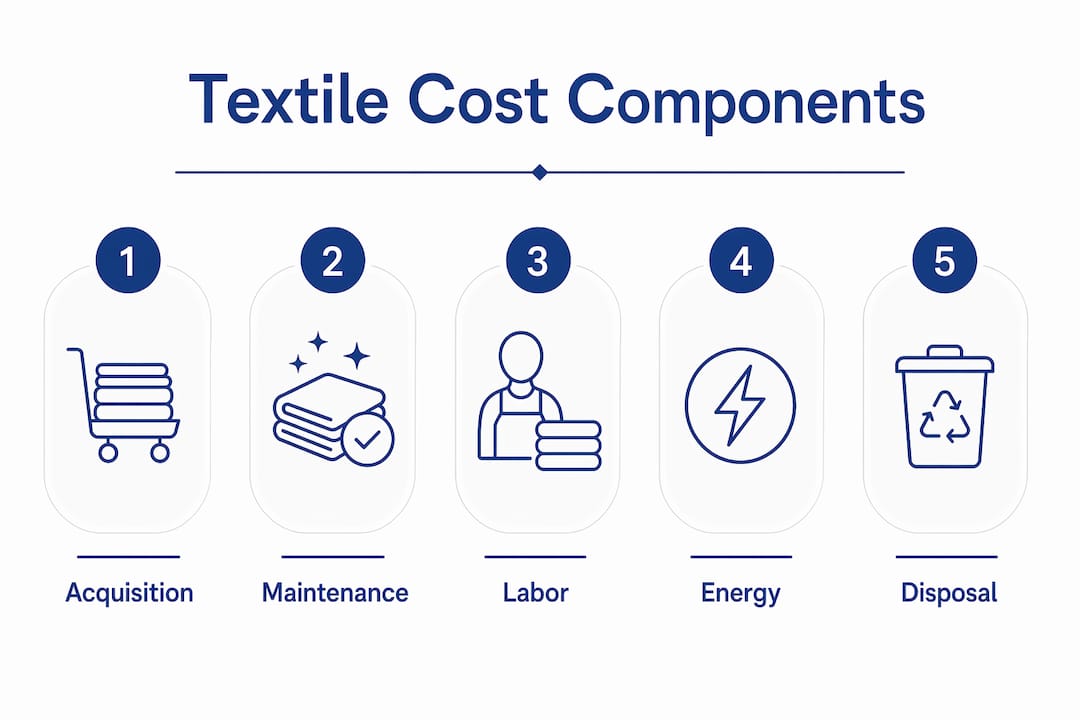
- Total textile ownership costs include procurement, energy, labor, maintenance, and disposal expenses throughout a product’s lifecycle. Managing these costs with real-time data and activity-based models can significantly improve hospitality procurement decisions and reduce overall spending.
Total cost of ownership (TCO) for textiles is defined as the complete sum of all expenses incurred throughout a textile product’s lifecycle in hospitality operations, from initial purchase through daily use, maintenance, and final disposal. Hotel managers who evaluate textiles on purchase price alone routinely underestimate their true textile ownership costs by a wide margin. The actual cost of a bed linen set or a stack of bath towels includes laundering cycles, labor, energy, storage, quality inspections, and eventual replacement. Understanding TCO shifts procurement decisions from reactive to deliberate, and that shift directly protects your operating margin.
What factors contribute to the total cost of ownership for textiles?
Textile TCO in hospitality breaks down into eight distinct cost categories. Each one is real, measurable, and manageable once you know where to look.
- Acquisition costs. The purchase price of the textile, including material type and quality grade. Higher thread counts and durable weaves cost more upfront but last significantly longer under industrial laundering conditions.
- Yarn and raw material costs. Yarn accounts for 50–65% of total fabric cost. That single factor makes material sourcing the most consequential procurement decision in your textile cost breakdown.
- Energy consumption. Woven fabric mills consume 4–8 kWh per meter, with electricity priced at $0.08–$0.14 per kWh. Energy costs represent 8–14% of total textile manufacturing cost, and that figure carries forward into your laundry operations.
- Labor costs. Handling, sorting, laundering, folding, and distributing textiles across a hotel property requires significant staff hours. Labor is often the largest variable cost in textile lifecycle management.
- Quality control and rework. Rework and quality inspection costs are frequently invisible in traditional costing models. They add real expense every time a defective item must be re-processed or discarded early.
- Logistics, storage, and packaging. Receiving, warehousing, and distributing textiles across departments adds overhead that rarely appears in a purchase order.
- Maintenance and replacement frequency. Low-quality textiles degrade faster under repeated washing cycles, increasing replacement frequency and compressing the cost-per-use advantage of a lower purchase price.
- Disposal and end-of-life costs. Worn textiles require disposal or recycling. Sustainable disposal options carry their own cost, while unsustainable disposal creates regulatory and reputational risk.
Pro Tip: Track replacement frequency by product category for at least one full quarter. The data will reveal which “budget” textiles are actually your most expensive items on a cost-per-use basis.
How can hotel managers calculate and analyze textile TCO effectively?
Accurate textile cost analysis requires moving beyond static spreadsheets. Static spreadsheet costing causes margin calculation errors of 5–12% due to outdated yarn prices and fixed laundering assumptions. For a hotel running hundreds of rooms, that error range translates directly into budget shortfalls.
A reliable TCO calculation follows these steps:
- Establish your cost inputs at the SKU level. Record the purchase price, material composition, and expected wash cycle durability for each textile product. Generic averages across product categories hide the true cost drivers.
- Apply activity-based costing. Activity-based costing outperforms per-unit costing methods for allocating factory and operational overheads. In a hotel context, this means assigning actual labor hours and energy costs to specific textile categories rather than spreading them evenly.
- Use current, real-time input data. Yarn prices fluctuate with commodity markets. Energy rates change seasonally. Labor costs shift with staffing levels. A TCO model built on last year’s figures produces last year’s answers.
- Incorporate efficiency metrics. If your laundry operation has upgraded equipment or changed detergent protocols, those changes affect energy and labor inputs. Update your model to reflect actual current performance.
- Review and recalibrate quarterly. Manufacturers using SKU-level cost models achieve 8–15 percentage points higher gross margin compared to those using blanket averages. Quarterly recalibration keeps your model accurate and your procurement decisions grounded in reality.
Pro Tip: Build your TCO model in a shared spreadsheet that your laundry manager and procurement officer both update. Cross-department input catches errors that a single-department view misses every time.
For a deeper look at how cost factors interact in hospitality settings, textile cost efficiency principles provide a practical framework for procurement officers managing multiple product categories.

What impact do efficiency improvements and automation have on textile ownership costs?
Automation produces the most dramatic reductions in textile lifecycle costs when applied to high-volume processing tasks. The data on fabric spreading and cutting is instructive: fully automated spreading and cutting reduces cost per unit from $2.312 to $1.087. That is a reduction of more than 50% in per-unit cost.
The tradeoff is real. Automation increases energy consumption while reducing labor hours. The net savings depend on the balance between those two factors and the volume of textiles processed. For large hotel properties running industrial laundry operations, the math consistently favors automation over time.
| Cost factor | Manual processing | Automated processing |
|---|---|---|
| Cost per unit | $2.312 | $1.087 |
| Labor input | High | Low |
| Energy consumption | Lower | Higher |
| Long-term unit cost | Stable or rising | Declining with volume |
Energy-saving interventions compound these gains. Investments in energy monitoring and efficient equipment can reduce energy costs by 15–25% within 18–24 months. That reduction applies directly to your laundry operation’s share of total textile ownership costs.
The financial case for efficiency investment rests on three points:
- Automation reduces per-unit labor cost at scale.
- Energy monitoring cuts the 8–14% energy share of total costs.
- Accurate cost modeling, enabled by real-time data, captures margin improvements that manual tracking misses.
Textile manufacturers who implement real-time cost tracking see measurable improvements in profitability and operational decision-making. Hotel procurement teams that apply the same discipline to their textile programs gain the same advantage. For practical guidance on extending textile lifespan and reducing replacement frequency, maximizing hotel textile durability is a direct path to lower total ownership costs.
What are best practices for managing textile ownership costs in hotels?
Reducing total ownership costs in hospitality textiles requires discipline across procurement, operations, and supplier relationships. The following practices produce consistent results.
- Buy for durability, not price. A towel rated for 200 wash cycles costs more per unit than one rated for 80 cycles. Over a two-year period, the durable towel costs less per use and generates less waste. Durability data should appear in every procurement specification.
- Standardize laundering protocols. Incorrect water temperature, detergent concentration, or spin speed accelerates fabric degradation. A written laundering protocol, enforced consistently, extends textile life and reduces replacement frequency.
- Partner with suppliers who understand hospitality standards. A supplier with direct experience in hotel operations understands wash cycle durability, guest comfort requirements, and bulk delivery logistics. That knowledge reduces specification errors and costly returns.
- Optimize inventory and replacement schedules. Overstocking ties up capital. Understocking forces emergency purchases at higher unit prices. A replacement schedule based on actual wear data keeps inventory lean and costs predictable.
- Use lifecycle cost data in every purchasing decision. Purchase price is one input. Expected lifespan, energy cost per wash cycle, and labor cost per handling event are the other inputs. All of them belong in your procurement analysis.
- Factor sustainability into cost management. Textiles with longer lifecycles generate less waste and lower disposal costs. Sustainable procurement also reduces exposure to regulatory changes affecting textile disposal in the European market.
Pro Tip: Request wash cycle durability test results from your textile supplier before placing a bulk order. Suppliers who cannot provide this data are selling on price alone, which is the most expensive procurement strategy in hospitality.
Hospitality operators looking for practical cost-saving frameworks can also find relevant guidance on corporate stay cost management, where similar lifecycle cost principles apply to accommodation procurement decisions.
Key takeaways
The total cost of ownership for textiles is the only accurate basis for hospitality procurement decisions. Purchase price alone produces predictable budget overruns and accelerated replacement cycles.
| Point | Details |
|---|---|
| TCO covers the full lifecycle | Acquisition, energy, labor, maintenance, and disposal all contribute to true textile cost. |
| Yarn drives material cost | Yarn accounts for 50–65% of fabric cost, making sourcing the highest-impact procurement decision. |
| Static costing is unreliable | Spreadsheet-based models cause 5–12% margin errors due to outdated inputs. |
| Automation cuts per-unit cost | Automated processing reduces cost per unit from $2.312 to $1.087 at scale. |
| Durability reduces total spend | Textiles with longer wash cycle ratings cost less per use over their operational lifespan. |
What I have learned about textile cost control in hospitality
What I have learned about textile cost control in hospitality
After working closely with hotel procurement teams across the region, the pattern I see most often is this: managers know their purchase price down to the cent, but they cannot tell you their cost per wash cycle or their average replacement interval. That gap is where budget overruns live.
The uncomfortable truth is that the cheapest textile on the purchase order is almost never the cheapest textile in operation. A lower thread count means faster degradation under industrial laundering, which means more frequent replacement, more labor hours for handling, and more disposal costs. The math is straightforward once you run it. Most teams never run it.
Dynamic TCO models change that. When you integrate current yarn prices, actual energy rates, and real labor hours into a SKU-level cost model, procurement decisions become defensible. You can show your general manager exactly why a higher-quality linen set saves money over 18 months. That kind of analysis also strengthens your negotiating position with suppliers, because you know your true cost floor.
Cross-department collaboration is the other factor that most articles skip. Your laundry manager holds data that your procurement officer needs. Your housekeeping supervisor knows which textiles degrade fastest in practice. Bringing those perspectives into a single cost model produces accuracy that no single-department analysis can match. The hotels that control their textile costs well are the ones where those conversations happen regularly.
— Xpert
Gjergjihtextil’s approach to cost-effective hotel textile procurement
Gjergjihtextil has supplied hotel-grade textiles to properties including Meliá, Marriott, and Sheraton for over 30 years. That experience translates directly into procurement guidance that goes beyond product selection.

Gjergjihtextil’s wholesale hotel textile catalog covers bed linens, towels, duvets, pillows, and curtains, all specified for durability under industrial laundering conditions. The company imports at volume from Italy, China, India, and Pakistan, which produces unit costs that individual hotel buyers cannot replicate through direct sourcing. For hotel managers who want to apply TCO principles to their next textile purchase, Gjergjihtextil’s team provides advisory support on material selection, wash cycle durability, and replacement scheduling. That combination of product range and operational knowledge makes it a practical partner for procurement officers managing textile costs at scale.
FAQ
What is the total cost of ownership for textiles?
Total cost of ownership (TCO) for textiles is the complete sum of all costs associated with purchasing, using, maintaining, and disposing of textile products across their operational lifespan. It includes acquisition price, energy, labor, quality control, logistics, and replacement costs.
What affects textile costs the most in hospitality?
Yarn and raw material costs account for 50–65% of fabric cost, making sourcing the single largest cost driver. Energy consumption and labor for laundering and handling are the next most significant factors in total textile ownership costs.
How often should hotel managers recalculate textile TCO?
Quarterly recalibration is the standard practice for accurate textile cost analysis. Yarn prices, energy rates, and labor costs change frequently enough that annual reviews produce outdated figures and unreliable procurement decisions.
Does automation reduce total textile ownership costs?
Automation reduces per-unit processing costs significantly. Fully automated fabric spreading and cutting lowers cost per unit from $2.312 to $1.087, though energy consumption increases. Net savings depend on processing volume and energy pricing.
How does textile quality affect total ownership costs?
Higher-quality textiles with greater wash cycle durability cost more upfront but generate lower cost per use over their lifespan. Lower-quality textiles degrade faster, increasing replacement frequency, labor hours, and disposal costs across the ownership period.