

TL;DR:
- Premature linen replacement is mainly caused by operational processes, not product quality.
- Proper laundry practices and material choices can significantly extend textile lifespan.
- Technology like RFID tracking helps reduce linen loss and optimize replacement cycles.
Replacing hotel linens prematurely is one of the most avoidable operational expenses in hospitality. A mid-sized hotel cycling through bed sheets, towels, and tablecloths every few months is not facing a product problem. It is facing a process problem. Every premature replacement adds direct procurement costs, disrupts inventory levels, and quietly signals lower quality to guests who notice worn fabric before they notice anything else. This guide walks you through the exact steps to extend textile lifespan, from understanding the root causes of wear to using technology that tracks every piece of linen through your operation.
Table of Contents
- Understand what causes textile wear in hotels
- Select the right textiles for long-lasting performance
- Establish handling and laundering best practices
- Leverage technology and tracking to reduce loss and overuse
- Why most hotels underinvest in textile durability—and what actually works
- Take your hotel textiles further with expert supply and support
- Frequently asked questions
Key Takeaways
| Point | Details |
|---|---|
| High-heat and overloading risk | Most early textile wear comes from overloaded washers and drying at too-high temperatures. |
| Buy for purpose | Specialty textiles like VAT-dyed pool towels with lock stitching withstand harsh hotel environments. |
| Proper storage matters | Keeping linens in climate-controlled, ventilated areas prolongs their usable life. |
| Track inventory electronically | Using RFID and digital tracking prevents losses and supports smarter textile upkeep. |
Understand what causes textile wear in hotels
Before you can fix a problem, you need to know what is actually causing it. In hotel environments, textile degradation comes from three main sources: mechanical stress, chemical exposure, and poor operational procedures. Each one shortens the usable life of your linens in a different way, and most hotels are dealing with all three simultaneously without realizing it.
Mechanical wear happens during washing, drying, and transport. Overloading washing machines creates excessive friction between fabrics, which breaks down fiber structure faster than normal use. High-heat drying compounds this damage by weakening cotton and polyester blends at the fiber level. According to industry guidance, overloading and high-heat drying cause approximately 70% of premature textile wear in hotel operations, and introducing ozone technology or water softeners can extend linen life while improving hygiene outcomes.
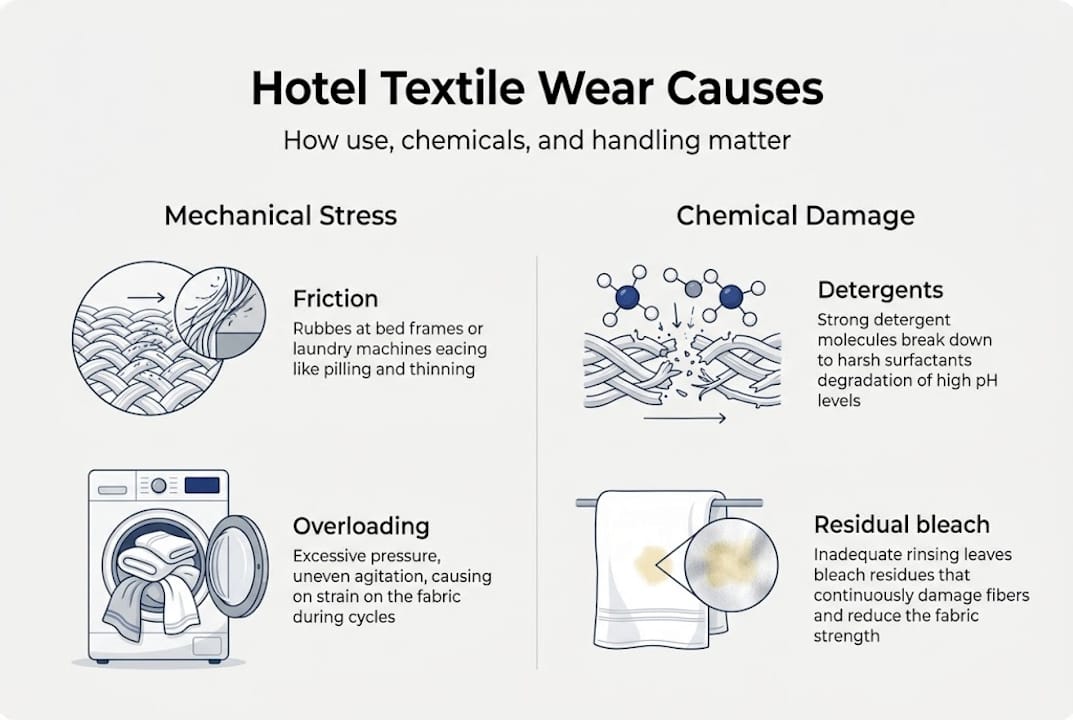
Chemical damage is subtler but equally destructive. Harsh detergents, incorrect dosing, and residual bleach weaken fibers over repeated wash cycles. Water hardness is a major factor here. Hard water leaves mineral deposits in fabric, which gradually makes textiles stiff, discolored, and prone to tearing. Installing water softeners is not a luxury upgrade. It is a direct investment in your textile lifespan.
Procedural failures are the third category, and they are often the most correctable. Staff handling wet linens carelessly, dragging items across rough cart surfaces, or storing textiles in humid areas without ventilation all accelerate degradation in ways that no fabric quality can fully offset.
| Cause category | Common examples | Impact level |
|---|---|---|
| Mechanical | Overloaded washers, high-heat drying | Very high |
| Chemical | Harsh detergents, hard water, bleach residue | High |
| Procedural | Improper storage, rough cart surfaces, poor rotation | Moderate to high |
Key operational habits that accelerate textile wear include:
- Running wash cycles at temperatures above what the fabric label recommends
- Mixing heavily soiled items with lightly used ones in the same load
- Leaving wet linens bundled together after washing
- Storing textiles in areas with poor airflow or fluctuating humidity
- Using the same items repeatedly without rotating stock
“The laundry room is where most textile budgets are either protected or destroyed. The decisions made there have more impact on linen lifespan than the original purchase price.”
Pro Tip: Review your maintenance workflow optimization process at least once per quarter. Small adjustments to wash temperatures and load sizes can add dozens of cycles to each piece of linen.
Environmental factors also matter. Humidity above 55% in storage rooms creates conditions for mildew growth and fiber weakening, even in linens that have never been used. Proper ventilation and climate control in storage areas are not optional if you want to protect your textile investment.
Select the right textiles for long-lasting performance
Understanding root causes sets the stage for making informed textile purchasing decisions. Not all fabrics perform equally under the conditions of a working hotel. The fiber composition, weave construction, and finishing treatments all determine how a textile holds up after 100 or 200 wash cycles.
For bed linens, a 50/50 cotton-polyester blend offers a practical balance between softness and durability. Pure cotton feels premium but requires more careful laundering to maintain its structure. High-thread-count pure cotton sheets, while luxurious, often pill and tear faster under industrial washing conditions than a well-constructed blend. If your operation runs a high-volume laundry cycle daily, the blend will outperform pure cotton on a cost-per-use basis.
For towels, construction details matter as much as fiber content. Loop density, hem stitching, and dye type all affect how a towel performs in a demanding hotel environment. Pool and beach towels specifically need VAT-dyed construction with lock-stitched hems to resist chlorine exposure and UV degradation. Avoid fabric softeners on all towels because they coat the fibers with a waxy residue that reduces absorbency over time, making the towel feel soft but perform poorly.
| Textile type | Recommended specification | Avoid |
|---|---|---|
| Bed sheets | 50/50 cotton-poly blend, 200-300 thread count | Very high thread count pure cotton |
| Bath towels | 100% ring-spun cotton, 500-600 GSM | Low GSM, fabric softener treatment |
| Pool/beach towels | VAT-dyed, lock-stitched hems | Reactive-dyed, overlocked hems |
| Table linens | Polyester-cotton blend, stain-resistant finish | Pure linen without protective coating |
When evaluating suppliers, ask for documented fabric testing results. Look for certifications like Oeko-Tex Standard 100, which confirms the textile has been tested for harmful substances. This matters not just for guest safety but as a signal of consistent manufacturing standards. Suppliers who can provide test data are typically operating at a higher production standard overall.
Key procurement criteria to evaluate before purchasing:
- Wash cycle durability rating (how many cycles before visible degradation)
- Colorfastness under chlorine and industrial detergents
- Shrinkage percentage after the first five wash cycles
- Hem and seam construction quality
Pro Tip: Review textile selection tips before your next procurement cycle, and request sample batches for in-house wash testing before committing to large orders. Pairing this with formal fabric testing for hotels gives you objective data to compare suppliers side by side.
Balancing cost against lifespan is the core procurement challenge. A cheaper sheet that lasts 80 wash cycles costs more per use than a moderately priced sheet that lasts 200 cycles. Calculate cost per use, not cost per unit, and your procurement decisions will align with your actual operational budget.
Establish handling and laundering best practices
Securing durable textiles is only half the equation. Daily handling and care routines are equally vital to getting the full value from your investment. A high-quality towel stored improperly or washed at the wrong temperature will fail just as quickly as a low-grade one.
Follow this step-by-step protocol to protect textiles throughout their lifecycle:
- Sort linens before washing by soil level and fabric type. Never mix heavily stained items with lightly used ones in the same load.
- Set wash temperatures correctly based on fabric type. Cotton can typically handle 60°C for hygiene, but polyester blends should stay at or below 40°C to prevent fiber damage.
- Load washers to 70-80% capacity to allow adequate water and detergent circulation without creating excessive mechanical friction.
- Use the correct detergent dosage based on water hardness in your area. Overdosing causes residue buildup; underdosing leaves soiling that degrades fibers over time.
- Dry at the lowest effective temperature for the fabric type. High heat is the single fastest way to shorten linen life after overloading.
- Remove linens promptly from dryers to prevent heat-set wrinkles and fiber stress from sitting compressed while hot.
- Fold and store immediately in clean, dry, ventilated areas at 70-75°F and 40-55% humidity to prevent mildew and moisture trapping.
Inventory rotation using a first-in, first-out (FIFO) system is essential. Without FIFO, the same linens get used repeatedly while fresh stock sits untouched. This creates uneven wear patterns and causes some items to fail long before others, complicating your replacement planning.
Additional handling best practices:
- Use smooth-surfaced carts and shelving to prevent abrasion during transport
- Cover stored linens with breathable covers, not plastic, to allow airflow while keeping dust out
- Train housekeeping staff to carry linens rather than drag them
- Inspect items at each wash cycle for early signs of wear, thinning, or seam damage
Pro Tip: Towels and bathrobes benefit from a periodic “reset wash” using a small amount of white vinegar instead of detergent. This strips built-up residue and restores absorbency without damaging fibers. Use this every 10 to 15 cycles as part of your standard distribution workflows to maintain consistent towel performance.
Understanding the textile production process also helps your team make better care decisions. When staff understand how a fabric is constructed, they are more likely to handle it in ways that preserve its integrity.
Leverage technology and tracking to reduce loss and overuse
Routine practices matter, but evolving technology can lift textile durability to another level. Many hotels lose a significant percentage of their linen inventory every year not through wear but through misplacement, theft, or untracked discard. Technology closes this gap.
RFID (radio frequency identification) tagging is the most effective tool currently available for hotel textile management. Each linen item gets a small embedded tag, and readers throughout your operation track its location and wash cycle count in real time. RFID tracking reduces annual linen loss by 20 to 30%, which in a hotel with 100 rooms can represent thousands of dollars in avoided replacement costs per year.
| Technology | Primary benefit | Estimated ROI timeline |
|---|---|---|
| RFID tagging | Reduces loss, tracks wash cycles | 12-18 months |
| Inventory software | Automates PAR level monitoring | 6-12 months |
| Ozone laundry systems | Extends linen life, reduces energy | 18-24 months |
| Water softening systems | Reduces mineral damage to fibers | 12-18 months |
PAR level monitoring is another area where automation pays off. PAR (periodic automatic replenishment) levels define the minimum quantity of each linen type needed to keep your operation running smoothly. Without automated monitoring, procurement teams often over-order or under-order, both of which create problems. Over-ordering ties up capital and increases storage wear. Under-ordering leads to rush purchases at higher unit costs.
Key benefits of integrating textile tracking technology:
- Real-time visibility into linen location across all departments
- Automatic alerts when wash cycle counts approach end-of-life thresholds
- Data-driven reorder triggers that eliminate guesswork in procurement
- Compliance documentation for hygiene audits and brand standards
Pro Tip: When implementing RFID, start with your highest-value items such as bathrobes, duvet covers, and pool towels. These have the highest replacement cost and the most to gain from precise tracking. Use the data from the first six months to cut hotel textile costs before expanding the system to lower-value items.
Technology also supports compliance. International hotel brands increasingly require documented evidence of linen hygiene and replacement cycles. A textile procurement guide built around data-driven tracking makes brand audits straightforward and demonstrates operational maturity to ownership and management groups.
Why most hotels underinvest in textile durability—and what actually works
Here is the uncomfortable reality: most hotels approach textile management as a purchasing problem when it is actually an operational problem. The procurement team buys quality linens, then the laundry team washes them incorrectly, and the housekeeping team stores them carelessly. Each department does its job in isolation, and the textile budget absorbs the cost of that disconnect.
The hotels that genuinely extend linen lifespan are not necessarily buying more expensive products. They are aligning their purchasing decisions with their laundering protocols and their tracking systems. These three elements work together, and breaking any one of them undermines the other two.
We have seen this pattern consistently across operations of all sizes. A hotel that invests in certified textiles and guest experience but ignores staff training in laundry procedures will replace those certified textiles just as fast as uncertified ones. Durability is a function of both product and process. Focusing on only one side of that equation is where most budgets quietly leak.
The practical solution is cross-departmental accountability. Procurement, laundry, and housekeeping need shared metrics tied to textile lifespan. When every team understands that their actions affect replacement costs, behavior changes without requiring constant supervision.
Take your hotel textiles further with expert supply and support
Ready to apply what you have learned? The strategies in this guide work best when they are built on a foundation of quality textiles sourced from a supplier who understands hotel operations at scale.
Gjergji H Tekstil has supplied wholesale hotel textiles to properties across Albania and the region for over 30 years, including major international brands with strict quality standards. The product range covers everything from bed linens and bath towels to pool textiles and workwear, all designed for durability under industrial laundering conditions. If you are ready to make smarter procurement decisions, explore the expert textile selection tips available on the site, or reach out directly to discuss your property’s specific volume, rotation, and durability requirements. Better textiles and better processes start with the right partner.
Frequently asked questions
What laundry temperature and humidity levels help preserve hotel textiles?
Store linens at 70-75°F and 40-55% humidity to prevent mold growth, fiber weakening, and moisture trapping that shortens linen life.
How can hotels reduce annual linen loss?
RFID tracking reduces annual linen loss by 20 to 30% through real-time location monitoring and wash cycle tracking, which eliminates the misplacement and untracked discard that drain most hotel linen budgets.
Which towels last longer in pool and beach areas?
VAT-dyed towels with lock-stitched hems outperform standard towels in pool and beach environments because their dye structure and hem construction resist chlorine exposure and UV degradation over repeated use.
Why should hotels avoid fabric softener on towels?
Fabric softeners deposit a waxy coating on cotton fibers that reduces absorbency over time, making towels feel softer initially but significantly less functional for guests after several wash cycles.
What is the main cause of premature linen wear in hotels?
Overloading washers and high-heat drying account for approximately 70% of early textile damage in hotel operations, making laundry procedure the single highest-impact area for extending linen lifespan.
Recommended
- Optimize textile maintenance workflow for Albanian hotels
- Key traits of durable hotel fabrics for lasting comfort
- Cut hotel textile costs: proven strategies for greater savings
- Wholesale textiles for hotels, price/quality – Gjergji H Tekstil