

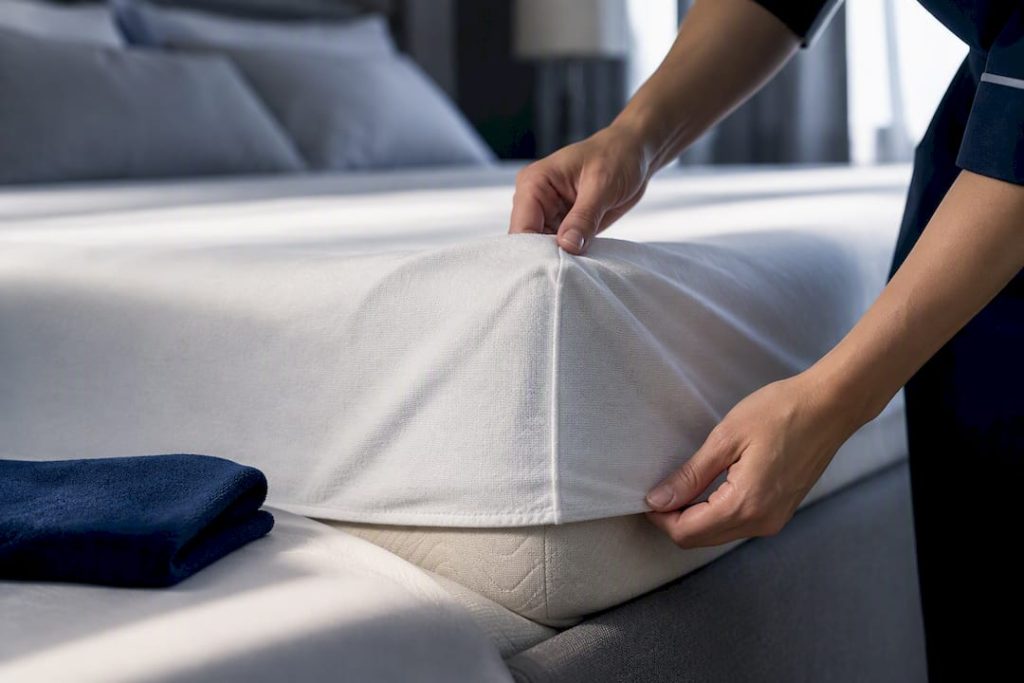
Use waterproof fitted protectors for spill-prone rooms, full zip encasements where allergy or bed-bug risk is a concern, and padded toppers when guest comfort needs a lift. Each category serves a different operational priority in a hotel setting, and the right specification usually blends two of the three across a property’s room mix. Suppliers provide all three formats to hospitality clients and work directly on custom depths and bulk specifications.
TL;DR:
- Full encasements provide the highest protection and are essential for allergy-sensitive rooms and bed-bug control, but they require longer changeover times.
- Waterproof membrane-backed protectors made from polyurethane or TPU are more durable and feel more natural than plastic layers, but they need careful laundering at recommended temperatures to prevent degradation.
- Padded toppers improve guest comfort but often offer limited spill resistance unless combined with a waterproof layer underneath.
- Regular inspection and replacement every 12 to 24 months are necessary for cloth protectors in high-turnover hotel environments, with wear often evident before outright failure.
- Custom sizing and single-source procurement streamline delivery and ensure protectors fit actual mattresses, especially during renovations or large property overhauls.
Table of Contents
- Llojet e Mbrojtëseve Dyshekut: Fitted, Encasement, and Padded Options
- Which Materials Perform Best Under Hotel-Grade Laundering?
- How To Choose Mattress Protectors: A Procurement Checklist
- Care, Laundering, and Replacement: What Housekeeping Needs To Know
- Procurement Realities Behind Hotel-Grade Mattress Protection
- Sourcing Hotel-Grade Mattress Protectors That Hold Up to Daily Turnover
- Sources
- FAQ
Llojet e Mbrojtëseve Dyshekut: Fitted, Encasement, and Padded Options
Understanding llojet e mbrojtëseve dysheku starts with knowing that hotels are not choosing between good and bad protectors; they are choosing between three distinct tools built for different jobs.
Fitted, five-sided protectors cover the top and sides of the mattress like a deep-pocket sheet, leaving the bottom exposed. They are the workhorse of budget and mid-tier hotel rooms because housekeeping can strip and replace them almost as fast as a fitted sheet. A waterproof fitted protector handles coffee spills, sunscreen, and the occasional wine incident without touching the mattress underneath, which keeps a room bookable instead of pulling it out of rotation for a deep clean.
Full encasements wrap all six sides of the mattress and seal shut with a zipper, usually a reinforced or toothless design to resist snagging. Encasements enclose the entire mattress and are the standard hotel response to allergy complaints and bed-bug risk, since nothing can get in or out once the zipper closes. That total seal is also the trade-off: putting an encasement on and taking it off takes housekeeping longer than swapping a fitted sheet, and staff need training on proper zipper closure to keep the barrier intact.
Padded mattress pads and toppers add a cushioned layer for guest-facing comfort, often marketed as pillow-top or quilted covers. They soften an aging mattress and reduce the sensation of springs or pressure points, but most only offer light moisture resistance unless a membrane is built in underneath the padding. Hotels use them selectively in premium rooms where feel matters more than spill defense.
The operational trade-offs break down like this:
- Fitted protectors: fastest changeover, moderate protection, best for high-turnover budget and mid-tier rooms.
- Full encasements: slowest changeover, highest protection, necessary for allergy-sensitive floors and bed-bug prevention protocols.
- Padded toppers: moderate changeover, comfort-first, best paired with a waterproof layer underneath in premium suites.
Matching the format to the room type, rather than standardizing one protector across an entire property, tends to control laundry labor without sacrificing coverage where it counts.
Which Materials Perform Best Under Hotel-Grade Laundering?
Waterproofing in most modern protectors comes from a polyurethane or TPU membrane laminated to the underside of the fabric, not from a heavy plastic layer. That membrane blocks liquid while the surface fabric on top determines how the protector actually feels and breathes against a sleeping guest. A tightly woven cotton fabric without a membrane is water-resistant, not waterproof. It slows a spill but eventually lets liquid through, which matters for procurement teams trying to distinguish marketing language from actual performance.
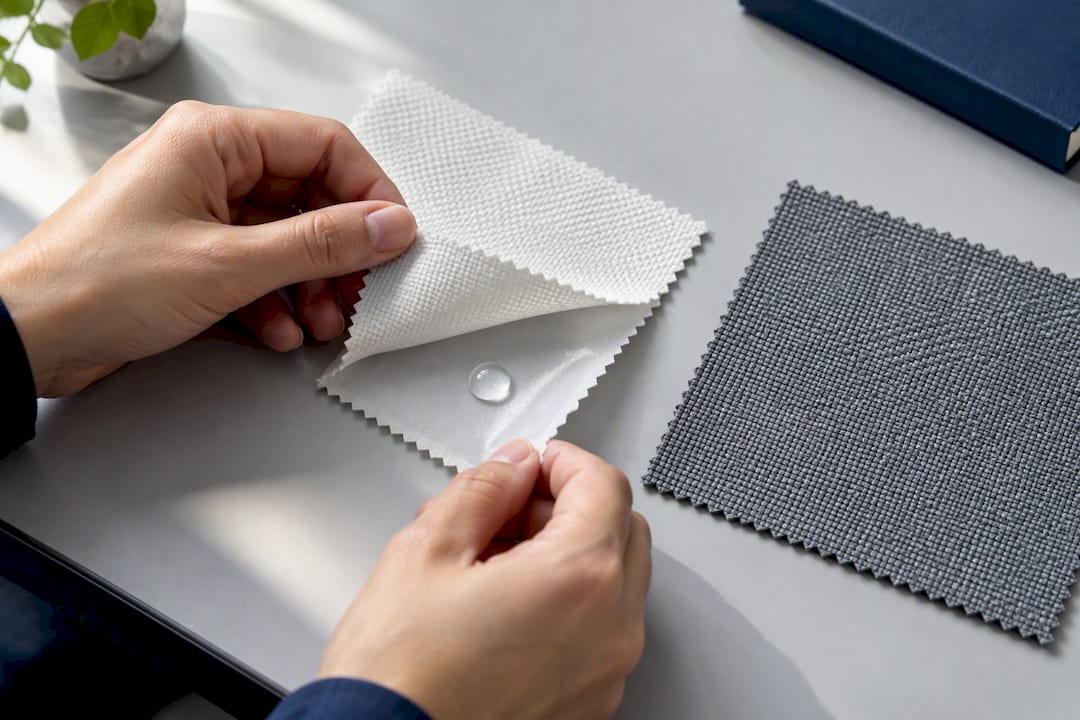
Pro Tip: Ask suppliers directly whether a protector is membrane-backed or simply tightly woven. “Waterproof” and “water-resistant” get used interchangeably in catalogs, and the difference shows up fast the first time a guest spills a full glass of red wine.
Surface material choice affects sleep temperature more than most procurement teams expect. TENCEL and cotton knits sleep cooler than polyester-backed alternatives, which trap more heat against the body overnight. That single variable can shape guest reviews on hot summer nights in air-conditioned or older-HVAC properties.
A quick material comparison for hotel buyers:
- Cotton: soft, breathable, moderate durability, widely available at competitive cost.
- TENCEL/bamboo blends: cooler surface temperature, naturally hypoallergenic, better moisture-wicking, usually a higher unit price.
- Polyester/microfiber: most durable under industrial washing, most cost-effective at scale, but retains more heat.
- Wool blends: premium feel and natural wicking, best suited to boutique or luxury tiers rather than high-volume laundry cycles.
For allergen control specifically, pore size in the fabric weave matters as much as the material itself. Effective allergen barriers typically use pore sizes below 6 microns to block dust mite allergens from passing through, a detail worth requesting in writing from any supplier claiming allergy-grade performance. Memory foam mattresses generally pair better with lighter, more breathable covers, since foam already retains heat; hybrid mattresses have more tolerance for heavier padded toppers.
How To Choose Mattress Protectors: A Procurement Checklist
Room-by-room risk assessment should drive the specification, not a single property-wide default. Selection logic breaks down cleanly by threat type: moisture concerns call for a fitted protector, allergy complaints call for a full encasement, and any bed-bug history calls for a bed-bug-rated encasement with a reinforced zipper.
- Identify the primary risk per room category. Budget and family rooms usually need spill protection first; allergy-sensitive floors need full encasement; any unit with a bed-bug history needs a rated encasement, no exceptions.
- Measure every mattress precisely. Width, length, and depth all vary by mattress model, and pocket or skirt depth on a fitted protector needs to match the actual mattress profile, not a generic “queen size” assumption.
- Set laundering specs before ordering. Confirm the protector tolerates your industrial wash temperature and detergent chemistry, since some membranes degrade under high heat or bleach-based cycles.
- Request certification and test documentation. Ask for OEKO-TEX or GOTS documentation and, where allergy or bed-bug claims are made, specific wash-cycle durability data behind those claims. Hospitality procurement increasingly treats these documents as a baseline requirement rather than a nice-to-have.
- Model total cost of ownership. Multiply unit price against expected replacement interval and laundry cost per cycle, not just the sticker price at checkout.
Pro Tip: A protector that costs 20% more but survives twice as many industrial wash cycles is almost always the cheaper option over a two-year window. Run the math per cycle, not per unit, before signing a purchase order.
Matching protector family to room tempo also protects labor budgets. High-turnover budget rooms do best with fast-changeover fitted protectors, while premium rooms can absorb the slower changeover time that encasements or padded toppers require.
Care, Laundering, and Replacement: What Housekeeping Needs To Know
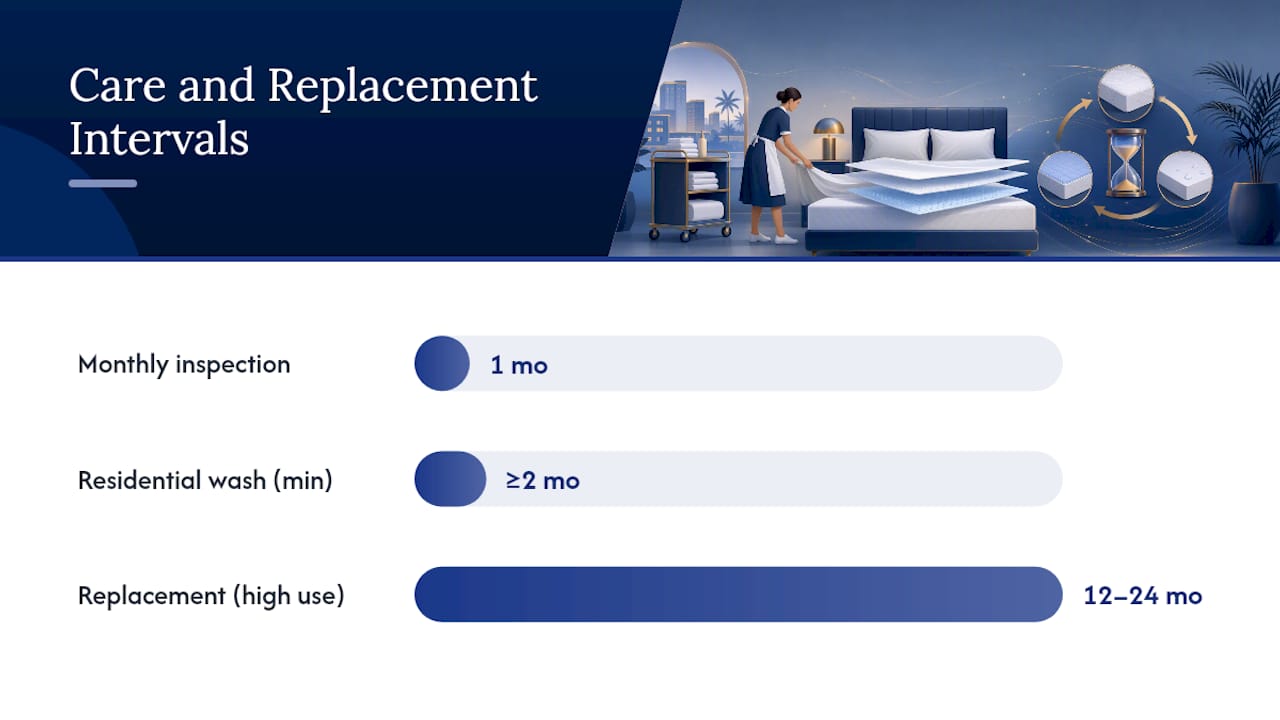
Hotel-grade protectors need far more frequent washing than a home mattress protector, which manufacturers typically recommend washing every two months at minimum for residential use. Daily or near-daily hotel turnover means most properties are laundering protectors every few changeovers rather than every few months, and industrial laundry programs need to be built around that reality from the start.
Temperature control protects the investment. Membrane-backed waterproof protectors can degrade under repeated high-heat cycles, so confirm the manufacturer’s maximum wash temperature and avoid chlorine bleach unless the product specifically tolerates it.
A monthly inspection routine catches problems before they become guest complaints:
- Test zipper function on every encasement for smooth closure and full seal.
- Check seams for fraying or separation, especially at corners.
- Feel for thinning or cracking membrane sections, usually near the center of the mattress top.
- Look for pilling or fabric breakdown on the sleeping surface.
As a practical guideline, plan for replacement every 12 to 24 months on high-use items, with actual wash-life depending heavily on cycle count and detergent chemistry rather than calendar time alone. A protector nearing the end of its wash-life usually shows visible wear well before it fails outright, which is exactly what the monthly inspection is designed to catch.
Procurement Realities Behind Hotel-Grade Mattress Protection
Most hotel procurement teams underestimate how much custom sizing matters until a shipment of “standard queen” protectors arrives and fits half the property’s mattresses loosely. Full supply-chain control, from import through in-house production, lets a supplier adjust pocket depth and zipper length to match actual mattress inventory rather than forcing hotels to accept generic dimensions.
Lead time is the other constant friction point. Hotels rarely order mattress protectors on their own. They order them alongside sheets, duvets, and towels during a renovation cycle or brand refresh, which means a supplier needs the production capacity to bundle categories without stretching timelines. Some suppliers have built capacity over decades supplying hotel brands and understand that a missed delivery window on protectors can delay an entire room’s return to inventory.
— Xpert
Sourcing Hotel-Grade Mattress Protectors That Hold Up to Daily Turnover
Some suppliers offer a one-source model handling import, custom production, and bulk distribution for every protector format a property needs, instead of requiring multiple vendors for fitted covers, encasements, and toppers separately. That single-source model matters most when a renovation deadline is fixed and procurement cannot afford mismatched lead times across categories.

The Tekstile për Hotel & AirBnB line covers custom-sized protectors built for industrial-wash cycles, with options across fitted, encasement, and padded formats depending on a property’s room mix. Hotels working through a full bedding refresh can also review bedroom textile design options for how protectors pair with linens and duvets across different room tiers. Contact suppliers directly for exact specifications, sample requests, and bulk pricing tailored to your property’s mattress inventory and laundering setup.
Sources
- Mattress protector
- Mattress Protectors and Encasements: Types, Benefits, and Selection Tips
- How To Choose a Mattress Protector: What To Look For Guide
- Best Waterproof Mattress Protector 2026: Cotton vs Tencel vs Polyester Tested – MattressHelp
FAQ
How often should hotels replace mattress protectors?
Plan on replacing high-use protectors every 12 to 24 months, though actual wash-life depends on cycle count and detergent chemistry more than calendar time. Monthly inspections for zipper function, seam wear, and membrane thinning will flag protectors that need replacing sooner.
Do hotels really need full encasements, or are fitted protectors enough?
Fitted protectors handle everyday spills well, but they leave the mattress bottom and sides exposed. Full encasements are the standard choice for allergy-sensitive rooms and any unit with bed-bug history, since they seal the entire mattress rather than just the sleeping surface.
How long does a bed-bug encasement need to stay on the mattress?
Bed-bug encasements need to stay sealed for an extended period, often many months, to ensure trapped pests and eggs die off completely. Removing the cover too early can allow a relapse, so housekeeping teams should treat the seal as a long-term fix, not a quick swap.
What makes a mattress protector “waterproof” versus “water-resistant”?
Waterproof protectors use a polyurethane or TPU membrane laminated beneath the fabric to block liquid completely. Water-resistant fabrics are just tightly woven, which slows a spill temporarily but eventually lets moisture through.
Does Gjergji H Tekstil offer custom mattress protector sizing for hotels?
Gjergji H Tekstil works directly with hotel procurement teams on custom depths and bulk specifications through its hotel textile line. Current pricing and sizing options are available by contacting the company directly for a property’s specific mattress inventory.