

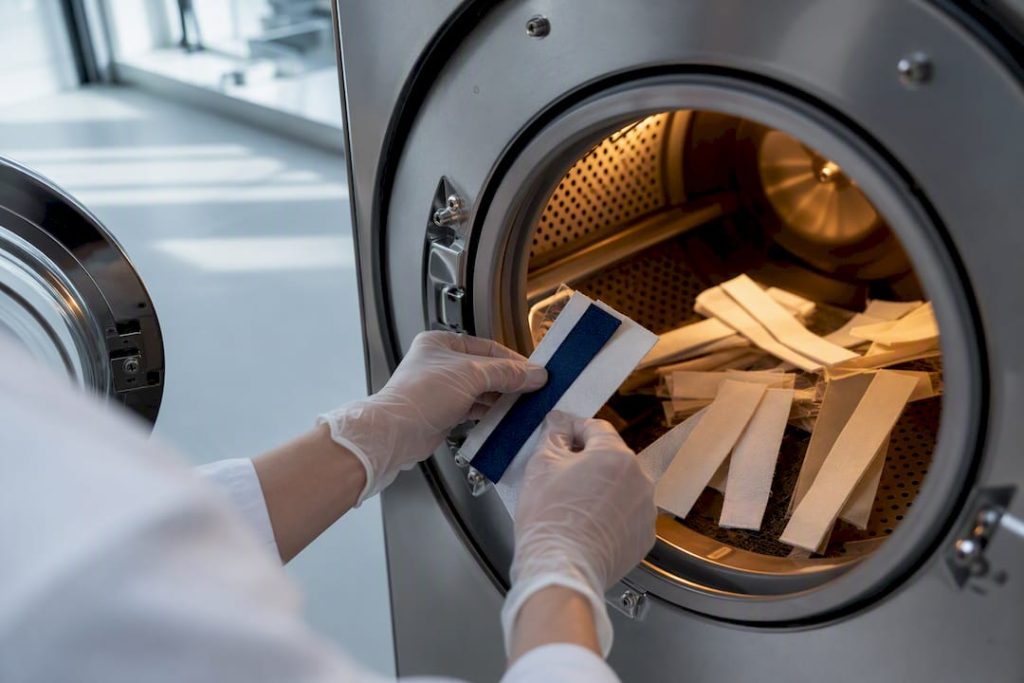
Match the fiber to the heat: white bed linen and towels can usually take 60 to 90°C for sanitation, colored cottons and blends run best at 40 to 60°C, and wool, silk, and technical fabrics rarely need more than 30 to 40°C. Always defer to the care label first, since finishes and blends change the safe ceiling. Industrial sanitation sometimes justifies a higher setting paired with a chemical adjunct instead of heat alone. The reference table below breaks temperature down by fabric so you can set programs with confidence.
TL;DR:
- Maintaining proper wash temperatures by fabric type prevents early linen deterioration and aligns with recommended ranges such as 40-60°C for cotton and 30-40°C for wool and silk.
- Using chemical disinfectants at lower temperatures can achieve sanitation goals typically requiring higher heat, saving fiber lifespan and energy costs.
- Regularly verifying actual machine temperatures with a probe thermometer ensures consistent performance and avoids damage caused by thermostat drift or scale buildup.
- Higher heat settings at 90°C are only justified for linen directly contaminated by illness, while delicate fabrics always require gentle cycles and lower temperatures.
- Procuring textiles with higher durability and colorfast dyes reduces the need for high-temperature washes, thereby extending linen life and reducing replacement costs.
Table of Contents
- Temperatura Larjeje Tekstile: Recommended Ranges by Fabric
- Why Wash Temperature Changes Fiber Performance
- Industrial vs. Domestic Cycles: Setting the Machine Correctly
- Keeping Your Machines Honest: Calibration and Verification
- How Gjergji H Tekstil Approaches Temperature Strategy With Hotel Clients
- A Working Checklist for Your Next Shift
- Where to Verify These Standards
- Sources
- FAQ
Temperatura Larjeje Tekstile: Recommended Ranges by Fabric
Getting temperatura larjeje tekstile right starts with knowing that no single number works across a hotel’s linen closet. A cotton bath towel and a polyester banquet cloth have almost nothing in common once you turn up the heat, and treating them the same is how linens end up in the rag bin months early.
The table below gives working ranges for the fabrics that show up most in hospitality laundry rooms. Treat these as starting points, not absolutes: the care label on the specific item always has the final word, since finish treatments and fiber blends shift the safe ceiling up or down.
| Fabric Type | Recommended Wash Temp | When to Raise for Sanitation | Rinse/Dry Notes |
|---|---|---|---|
| Cotton (sheets, towels) | a moderate temperature range suitable for many cotton items | Higher temperatures for white linens when sanitation is required, if fabric allows | Tumble dry medium heat or air-dry; expect shrinkage above 60°C on lower-quality weaves |
| Linen | a moderate temperature range suitable for many cotton items | Rarely needed; use oxygen bleach instead | Air-dry or low tumble to avoid stiffening |
| Polyester and synthetic blends | lower temperature ranges recommended for polyester and synthetic blends | Avoid raising heat; use disinfectant additive instead | Low heat or air-dry; higher heat risks deformation and glazing |
| Cotton/poly blends | a moderate temperature range suitable for many cotton items | Up to 60°C only, never higher | Tumble dry low to medium |
| Wool | cool or cold temperature settings for wool | Never raise temperature | Air-dry flat; heat causes felting and permanent shrinkage |
| Silk | cool or cold temperature settings for wool, gentle cycle | Never raise temperature | Air-dry only; heat and agitation weaken fibers fast |
| Bath and pool towels | higher temperatures standard for bath and pool towels | high-temperature cycles for illness or biohazard sanitation, where applicable | Tumble dry high is generally fine given the tight, tolerant weave |
| Technical/performance textiles | lower temperature ranges recommended for polyester and synthetic blends | Follow maker instructions only | Air-dry recommended; heat degrades coatings and membranes |
A few categories need special handling beyond the table. Thermoregulating and phase-change textiles, increasingly common in premium bedding and workwear, can maintain their properties across repeated wash cycles in lab testing, but only when the operator follows the maker’s exact temperature and detergent instructions. Deviating voids that performance, and you will not get a refund on lost thermal function. Flame-retardant finishes, common in kitchen workwear and some drapery, degrade with excessive heat and harsh alkaline detergents, so check the finish specification before assuming a hot wash is safe. Blended fabrics should always be washed at the lower of the two fiber recommendations, never the average.
When sanitation is the goal but the fabric can’t take high heat, lean on chemistry instead of temperature. A properly dosed chlorine or peroxide-based disinfectant, or a quaternary ammonium additive, can hit hygiene targets at 40°C that would otherwise require 60 to 90°C. This is the single most underused lever in hospitality laundry rooms, and it protects both fiber life and energy costs.
Why Wash Temperature Changes Fiber Performance
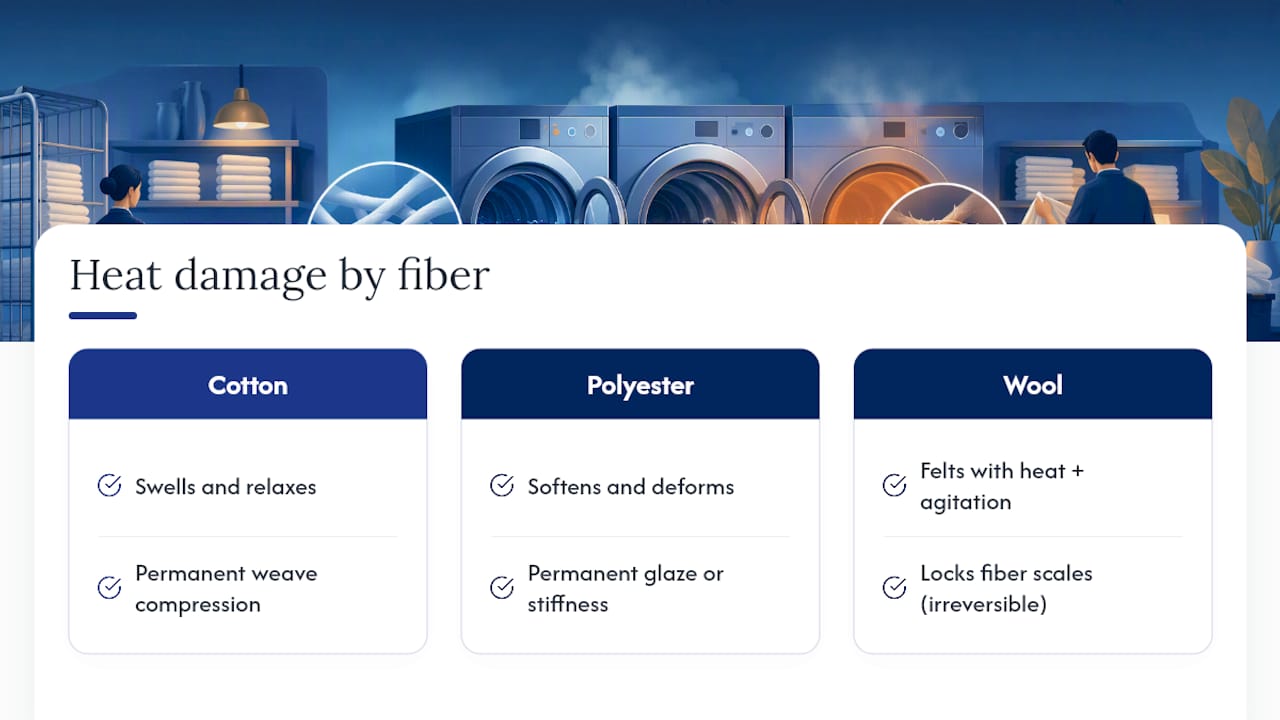
Heat does different damage to different fibers, and understanding the mechanism helps you make faster calls on the floor. Cotton fibers swell and relax under hot water, and repeated cycles above the fiber’s tolerance compress the weave permanently, which is the actual cause of shrinkage rather than any single wash. Polyester behaves more like plastic than fabric under heat: push it past its safe range and the fiber can soften and deform, leaving a permanent glaze or stiffness that no amount of fabric softener fixes. Wool felts when hot water and agitation combine, locking fiber scales together in a way that cannot be reversed. Silk simply loses tensile strength with heat exposure, so a garment that survives ten hot washes may tear on the eleventh with no warning.
Fiber type is only part of the story. Weight, weave density, and finish all shape how a fabric tolerates heat, which is why two cotton sheets can behave completely differently at the same temperature depending on thread count and construction. Laboratory fastness testing backs this up directly: higher wash temperatures consistently accelerate color fading and mechanical fiber breakdown, which is exactly what shows up on the floor as faded napkins and thinning sheets months before their expected replacement date.
The operational cost is concrete. A hotel that runs every load at 90°C to save time on sorting will cut its linen lifespan noticeably, and guests notice dull, stiff towels long before management does.
Industrial vs. Domestic Cycles: Setting the Machine Correctly
Industrial washers hold temperature far more precisely than domestic units and sustain it for a controlled dwell time, which is the real reason commercial laundries can use higher heat safely. A home machine might approximate 60°C for a few minutes during heating; a commercial extractor holds that temperature steady for the full wash phase, which is what actually achieves thermal disinfection rather than just a warm rinse.
Use higher heat deliberately, not by default:
- 60°C for 10 to 15 minutes on standard white bed linen and bath towels, paired with a standard alkaline detergent, covers routine hygiene needs.
- 90°C sustained for at least 10 minutes is the range industrial laundry guides recommend for white linens following guest illness, bodily fluid contamination, or known infection risk, always on items rated for it.
- moderate temperature washes combined with disinfectant additives for delicate fabrics replaces high heat for colored linens, blends, and printed items where 90°C would ruin the fabric or the finish.
- gentle low to medium heat washing for delicate fibers such as wool, silk, and technical textiles is the ceiling for wool blankets, silk drapery, and technical textiles, regardless of soil level.
The dryer matters just as much as the washer. Tumble drying at high heat after a cool wash can undo the benefit of choosing a gentler cycle, so match dryer settings to the same fiber logic used for the wash itself.
Keeping Your Machines Honest: Calibration and Verification
A wash program that says 60°C means nothing if the heating element can’t actually deliver it. Scale buildup on heating elements and thermostat drift are the two most common causes of a machine running cooler than its display claims, and both happen gradually enough that nobody notices until linens start failing early.
Build a simple verification habit into your QA routine:
- Check actual water temperature with a calibrated probe thermometer at the start of the hot-fill phase, not just the display readout.
- Run this check weekly on high-use machines, monthly on lower-volume units.
- Log every reading against the program’s target temperature, and flag any deviation past 5°C for maintenance.
- Descale heating elements on a fixed schedule rather than waiting for a visible temperature drop.
- Recalibrate or replace the thermostat immediately if logged temperatures drift consistently low.
Pro Tip: Keep the probe thermometer log next to the machine, not in an office binder. Operators are far more likely to record a reading if it takes ten seconds standing at the machine rather than a trip down the hall.
Regular verification is cheap insurance. A ten-minute weekly check costs far less than replacing a shipment of towels that failed early because the heater was running 15 degrees cold for three months without anyone noticing.
How Gjergji H Tekstil Approaches Temperature Strategy With Hotel Clients
Over time supplying hotel and restaurant textiles across the region, some suppliers have watched the same pattern repeat: properties that treat wash temperature as an afterthought replace linens two to three times more often than properties that plan for it at the procurement stage. The advice given often starts before the first order ships, not after the first shrinkage complaint.
Choosing a tighter weave, a higher gram weight, or a colorfast dye process at purchase time often does more for linen life than any single laundry adjustment made later. The right fabric spec means your laundry team can hit hygiene targets without pushing every load to maximum heat.
In practice, that means recommending higher temperatures standard for bath and pool towels, cycles for bed linen and bath towels with an occasional sanitation run reserved for actual need, 40°C cycles for table linens and printed napkins to protect color, and washable, tumble-tolerant workwear fabrics for staff uniforms that see daily heavy-duty washing. Specifying the right textile durability profile at the buying stage saves far more money over a linen’s life than any laundry-room fix applied afterward.
A Working Checklist for Your Next Shift
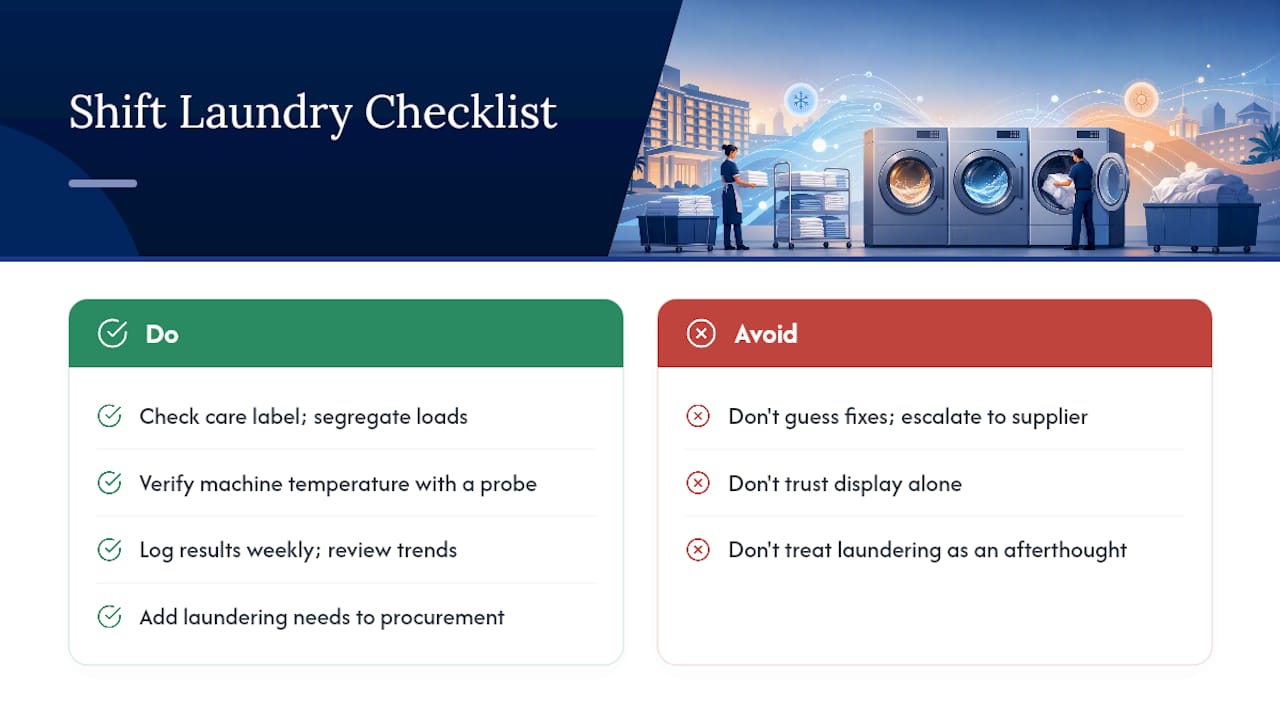
Three habits fix most temperature problems fast. First, check the care label before every new item type enters rotation and segregate loads accordingly. Second, verify actual machine temperature with a probe rather than trusting the display. Third, log results weekly and review the trend, not just isolated readings.
If a performance or thermoregulating textile behaves unexpectedly after washing, escalate to the supplier or manufacturer rather than guessing at a fix. And when you’re writing procurement specs for new linen or workwear, build laundering requirements into that document from day one instead of treating them as a separate problem later.
— Xpert
Where to Verify These Standards
Care-label symbols follow standardized interpretation guidance worth keeping posted near your sorting station. For deeper technical grounding, review the thermoregulating textile research cited throughout this guide, and see Gjergjihtextil’s hotel textile selection guidance for procurement that matches your laundry’s real capacity.
Sources
- Udhëzuesi përfundimtar për interpretimin e simboleve të larjes në etiketat tuaja të tekstilit
- How durability of textile fabric can be enhanced: suitable washing-fastness testing of fabric in textile laboratory
- Advances in Thermoregulating Textiles: Materials, Mechanisms, and Applications
- Temperature-adaptive dual-modal photonic textiles for thermal management | Science Advances
FAQ
What Temperature Should Hotel Bed Linens Be Washed At?
Standard cotton bed linen holds up best at 40 to 60°C, with 90°C reserved for sanitation after illness or heavy contamination, provided the care label allows it.
Can Washing Too Hot Shrink Cotton Towels Permanently?
Yes. Heat above a cotton fiber’s tolerance compresses the weave in a way that does not reverse, which is the primary mechanical cause of towel shrinkage over repeated hot washes.
Do Polyester and Blended Fabrics Need Lower Wash Temperatures?
Yes, synthetics and most blends should stay at 30 to 40°C, since higher heat can soften or deform polyester fibers and cause permanent glazing or stiffness.
How Often Should Laundry Machines Be Checked for Temperature Accuracy?
Weekly probe checks on high-use machines and monthly checks on lower-volume units catch heater scale buildup and thermostat drift before they damage linen stock.
What’s the Alternative to High Heat for Sanitizing Delicate Fabrics?
A properly dosed chlorine, peroxide, or quaternary ammonium disinfectant additive can achieve hygiene targets at 40°C, protecting fabrics that cannot tolerate 60 to 90°C cycles.