


TL;DR:
- Hotel textile lifecycle management involves optimizing fabric selection, inventory, laundry, and storage to reduce costs and enhance durability. Properly tracking key metrics like cost-per-wash and maintaining accurate par levels based on hotel star ratings improves operational efficiency. Investing in high-quality fabrics and following best laundry practices extends textile lifespan and lowers long-term expenses.
Hotel textile usage analysis is the systematic assessment of fabric performance, inventory requirements, laundry processing impacts, and lifecycle costs to maximize durability, guest comfort, and cost efficiency in hospitality settings. For hotel managers and procurement specialists, this process is not optional. It is the difference between a textile budget that compounds waste year over year and one that delivers measurable returns. This guide integrates 2026 industry standards on thread count thresholds, inventory par levels, storage protocols, and data-driven procurement to give you a complete operational framework.
What does hotel textile usage analysis cover?
Hotel textile usage analysis covers four interconnected areas: fabric selection, inventory sizing, laundry handling, and storage conditions. Each area affects the others directly. A poor fabric choice raises laundry costs. Undersized inventory forces emergency washes. Improper storage degrades textiles before they ever reach a guest. The industry term for this integrated approach is textile lifecycle management, and it is the standard framework used by procurement teams at properties ranging from economy hotels to luxury resorts.
The core metrics tracked in a textile lifecycle management program include inventory turnover rate, cost-per-wash (CPW), replacement rate, and wash cycle tolerance. CPW is the most telling number. It divides the total cost of a textile item, including purchase price, laundry chemicals, energy, and labor, by the number of wash cycles it survives. A cheap sheet that fails at 80 cycles costs far more per wash than a premium sheet that endures 250 cycles.
What are optimal textile inventory levels by hotel star rating?
Hotels should maintain 2.5–3.5 sets of towels per room depending on star rating. This range accounts for laundry turnover time, damage reserves, and peak occupancy demand. Getting this number wrong in either direction creates operational problems. Too few sets forces emergency washes. Too many sets ties up capital in idle inventory.
The towel count breaks down by type and property tier:
| Hotel Category | Total Towels per Room | Breakdown |
|---|---|---|
| Economy | 18–23 | Bath, hand, washcloth, bath mat |
| Mid-range | 21–27 | Bath, hand, washcloth, bath mat |
| Luxury resort | 25–32 | Bath, hand, washcloth, bath mat, pool towel |
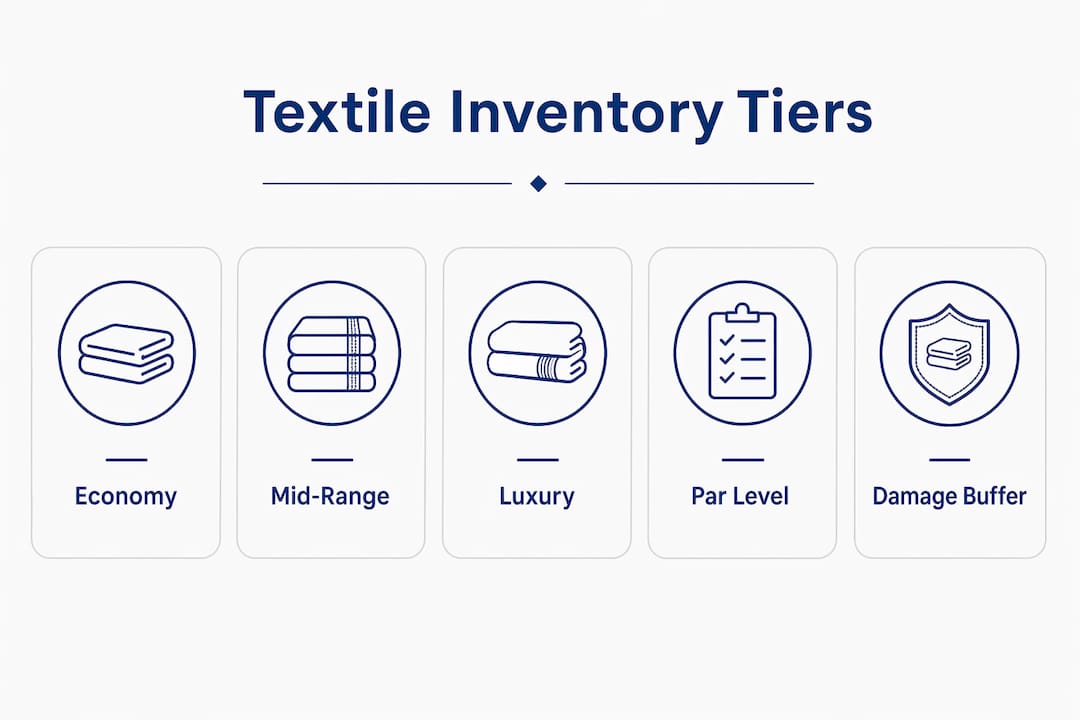
Bed linen inventory follows the same tiered logic. A 3-Par system means three complete sets in circulation: one on the bed, one in the laundry, and one in storage. A 4-Par system adds a fourth set as a reserve buffer for damage, peak demand, or laundry delays. Luxury properties and high-occupancy resorts should default to 4-Par.
The reserve factor matters beyond just towel counts. Procurement specialists should account for a 10–15% damage buffer on top of the base par level. Textiles exit service through staining, tearing, and fiber degradation, not just scheduled replacement. Building that attrition into your initial inventory calculation prevents shortfalls during high-season operations.
Pro Tip: Run a bed linen efficiency analysis quarterly. Compare your current par level against your average occupancy rate and laundry cycle time. If your laundry turnaround exceeds 24 hours, move from 3-Par to 4-Par immediately.
How does fabric quality affect durability and laundry costs?
Fabric selection is the single biggest lever in controlling long-term textile costs. 72% of star-rated hotels use fabrics within the 200–420 thread count range because this window balances durability with wash cycle resistance. That finding has a direct implication: thread count is not a luxury metric. It is a durability metric.
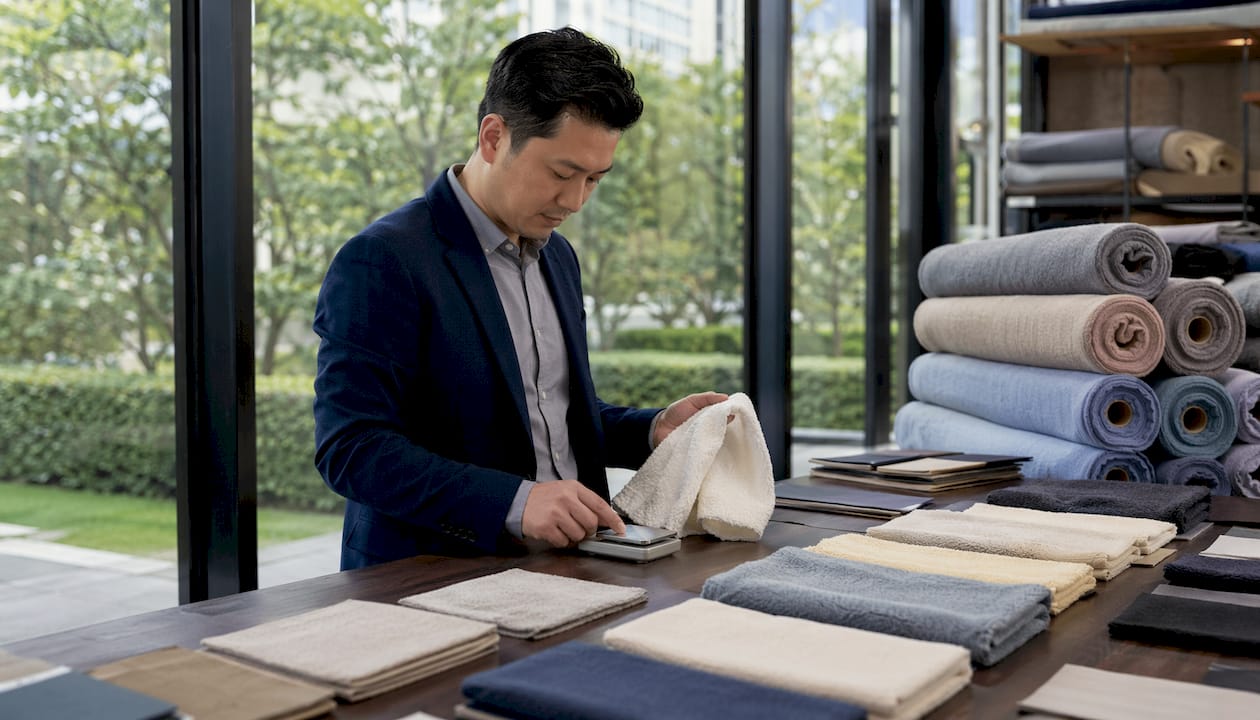
Fabrics above 800 thread count fail under industrial washing conditions. The tight weave traps heat and moisture during high-temperature cycles, causing fiber breakdown far earlier than mid-range thread counts. Commercial textiles endure over 250 wash cycles compared to 150 cycles for institutional-grade textiles. That gap represents roughly 100 additional uses per item before replacement.
Weave type also affects operational costs in ways most procurement teams underestimate:
- Percale weave (plain weave, crisp feel) dries faster, reducing energy consumption per load and extending dryer life.
- Sateen weave (smooth, lustrous finish) retains more moisture, increasing drying time and energy costs per cycle.
- Ring-spun cotton offers higher tensile strength than open-end spun cotton, surviving more mechanical stress during industrial washing.
Premium ring-spun textiles deliver longer lifecycles and lower laundry operational costs despite a higher purchase price. This is the core argument against the “Cheap Linen Trap,” where managers focus on acquisition cost and ignore total lifecycle cost. A sheet that costs 30% more upfront but lasts twice as long costs less per wash, less per guest night, and less per year.
Towel GSM (grams per square meter) follows the same logic. 600–800 GSM towels balance plushness with drying efficiency, making them the preferred choice for prestigious properties. Towels above 800 GSM feel luxurious but increase drying time and energy costs per load. For high-volume properties, that energy premium compounds quickly across thousands of wash cycles annually.
Pro Tip: When evaluating fabric suppliers, request CPW data alongside the unit price. Any supplier who cannot provide wash cycle tolerance data is selling you a product they have not tested under commercial conditions. Learn more about durable fabric attributes before finalizing any procurement decision.
What are best practices for laundry processing and textile handling?
The best laundry practice for extending textile life is implementing a FIFO (first in, first out) rotation system within a 4-Par or 3-Par inventory structure. FIFO and 4-Par rotation stabilize textile use, allow fiber rest between washes, and significantly extend lifecycles. Emergency washes, where a half-load runs to cover a shortage, waste water, energy, and labor while accelerating fiber wear.
A structured laundry protocol covers five operational areas:
- Sorting at collection. Separate whites, colors, and heavily soiled items before they reach the laundry room. Cross-contamination during washing causes staining that forces early retirement.
- Temperature standardization. Use the lowest effective wash temperature for each textile category. High heat degrades fibers faster than mechanical agitation. Most commercial linens wash effectively at 140–160°F.
- Chemical dosing control. Over-dosing detergent or bleach is one of the most common causes of premature fiber breakdown. Calibrate dosing pumps quarterly and track chemical consumption per pound of laundry.
- Drying cycle management. Remove textiles promptly at the end of the drying cycle. Over-drying causes brittleness. Under-drying promotes mildew and odor, which leads to rewashing and double energy consumption.
- Stain treatment at source. Housekeepers trained to immediately treat stains and use proper transport methods reduce premature linen replacement rates by 20–25%. That reduction translates directly to lower annual procurement spend.
Allowing linens to rest for 24 hours after an industrial wash cycle allows fibers to rehydrate. This prevents the brittleness caused by repeated washing stress and measurably improves tensile strength over the textile’s lifespan. A property running a 4-Par system can build this rest period into the rotation without any disruption to room readiness.
Storage conditions are the final variable in the handling chain. Ideal linen storage requires 45–55% relative humidity and 60–70°F temperature. UV and fluorescent light exposure causes invisible fiber degradation and yellowing over time. Storing linens in open shelving under direct fluorescent lighting is a slow, invisible cost that most properties never track. Covered shelving or linen bags in a climate-controlled room eliminates this loss entirely. For more on preventing textile damage through housekeeping practices, external hospitality experts offer detailed protocols aligned with these standards.
How can data analytics improve textile procurement and reduce costs?
Data-driven textile procurement starts with three KPIs: Replacement Rate, Cost per Pound of laundry processed, and Pounds per Operator Hour. These three numbers tell you whether your current textile program is performing or bleeding money. Replacement Rate tracks how often items exit service ahead of their expected lifecycle. Cost per Pound captures total laundry spend relative to volume. Pounds per Operator Hour measures labor efficiency in the laundry operation.
RFID tagging and barcode systems give procurement teams precise inventory audits and damage tracking at the item level. Without item-level tracking, you are estimating replacement rates from aggregate counts. With it, you can identify which textile categories fail earliest, which laundry shifts cause the most damage, and which room types generate the highest attrition. That specificity makes procurement decisions defensible and accurate.
The following KPI framework gives you a starting structure for a hotel inventory analysis program:
| KPI | What It Measures | Target Benchmark |
|---|---|---|
| Replacement Rate | % of items replaced per quarter | Below 5% per quarter |
| Cost per Pound | Total laundry cost divided by pounds processed | Varies by property size |
| Pounds per Operator Hour | Labor efficiency in laundry operations | Maximize within safety limits |
| CPW (Cost per Wash) | Total item cost divided by wash cycles survived | Lower than initial-price alternatives |
Seasonal and occupancy-driven demand forecasting prevents both stockouts and excess inventory. A property that runs 95% occupancy in july and august needs a different par level than the same property at 60% occupancy in february. Procurement orders placed without occupancy data consistently result in either emergency purchases at premium prices or capital tied up in overstocked storage. Integrating your property management system data with your textile inventory records closes that gap. Gjergjihtextil works with hotel procurement teams to align supply chain timing with seasonal demand patterns, reducing both lead time risk and excess inventory costs.
Key Takeaways
Effective hotel textile lifecycle management requires matching inventory par levels to star rating, selecting fabrics in the 200–420 thread count range, and tracking cost-per-wash rather than purchase price alone.
| Point | Details |
|---|---|
| Set par levels by star rating | Economy hotels need 18–23 towels per room; luxury resorts need 25–32, plus a 4-Par linen buffer. |
| Choose the right thread count | Fabrics in the 200–420 TC range survive over 250 commercial wash cycles; avoid 800+ TC for industrial use. |
| Track cost-per-wash, not unit price | A higher-priced textile with a longer lifecycle consistently costs less per wash than a cheaper alternative. |
| Implement FIFO rotation with rest periods | A 24-hour fiber rest between wash cycles prevents brittleness and extends textile lifespan measurably. |
| Control storage conditions | Store linens at 45–55% humidity and 60–70°F, away from UV and fluorescent light, to prevent invisible degradation. |
What most procurement guides get wrong about textile costs
After working closely with hospitality procurement teams across the region, the pattern I see most often is not a lack of data. It is a misreading of which data matters. Managers track purchase price obsessively and ignore replacement rate almost entirely. That inversion is expensive.
The “Cheap Linen Trap” is real and it is widespread. A property buys the lowest-cost sheet available, runs it through 80 industrial wash cycles, and replaces it. Meanwhile, a property that paid 30% more for a ring-spun percale sheet is still using the same item at cycle 220. The second property spent less per guest night on linens. The math is not complicated, but it requires tracking CPW, which most properties do not do.
The other gap I see consistently is the disconnect between housekeeping and procurement. Housekeepers are the frontline guardians of your textile assets. When they are not trained on immediate stain treatment, proper folding, and careful transport, they accelerate replacement rates without anyone in procurement knowing why the numbers are climbing. Bridging that communication gap, through shared KPIs and cross-department training, is one of the highest-return investments a hotel can make in its textile program.
Hospitality textile trends in 2026 are moving toward sustainable fiber sourcing and extended lifecycle certification. Properties that build lifecycle analysis into their procurement process now will be positioned to meet those standards without a disruptive overhaul later. The cost efficiency framework behind textile lifecycle management is not just an operational tool. It is a competitive position.
— Xpert
Gjergjihtextil’s hotel textile solutions for procurement teams
Gjergjihtextil has supplied commercial-grade hotel textiles to properties including Meliá, Marriott, and Sheraton for over 30 years. The product range covers bed linens, towels, duvets, pillows, and curtains, all specified for durability under industrial washing conditions and consistent with hospitality-grade standards.
For hotel managers and procurement specialists, Gjergjihtextil offers tailored consultation on par level sizing, fabric selection, and procurement timing based on your property’s occupancy profile and laundry capacity. The company imports from Italy, China, India, and Pakistan at volume, which translates to competitive unit pricing without sacrificing wash cycle tolerance. Visit the hotel textiles catalog to review the full product range and request a procurement consultation aligned with your property’s operational requirements.
FAQ
What textiles are used in hotels?
Hotels use bed linens, bath towels, hand towels, washcloths, bath mats, duvets, pillows, and curtains as core textile categories. Luxury properties add pool towels and decorative textile elements to the standard inventory.
What thread count is best for hotel linens?
The 200–420 thread count range is the industry standard for commercial hotel linens. Fabrics in this range survive over 250 industrial wash cycles, while fabrics above 800 TC degrade rapidly under high-temperature commercial laundering.
How many towels does a hotel need per room?
Economy hotels need 18–23 towels per room, mid-range properties need 21–27, and luxury resorts need 25–32. These figures include bath, hand, washcloth, and bath mat allocations with a reserve buffer for laundry turnover.
What is cost-per-wash and why does it matter?
Cost-per-wash divides the total cost of a textile item by the number of wash cycles it survives. It is the most accurate metric for comparing textile value because it accounts for durability, not just purchase price.
How should hotel linens be stored to maximize lifespan?
Store linens at 45–55% relative humidity and 60–70°F, away from UV and fluorescent light. These conditions prevent fiber degradation and yellowing that cause premature replacement even in textiles that have never been used.