

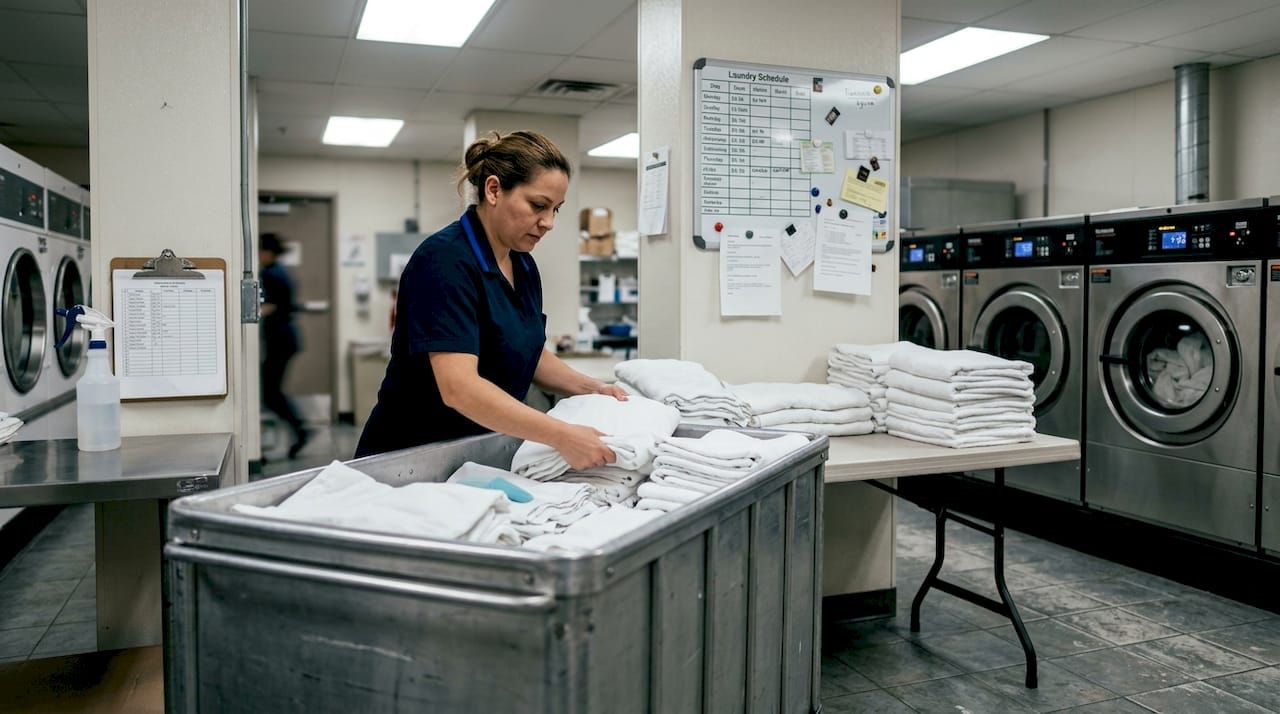
In Albania’s competitive hospitality market, a single frayed towel or yellowed pillowcase can push a guest toward a one-star review. Hotels and resorts operating in coastal and urban centers face real pressure to maintain spotless, durable textiles across every room, every day. Textile maintenance is not a back-of-house afterthought. It directly shapes guest perception, drives repeat bookings, and controls one of the largest operational cost lines in any property. This guide gives you a practical, step-by-step workflow for managing hotel linens and textiles efficiently, from collection to storage, with specific guidance on troubleshooting, outsourcing decisions, and supplier strategy.
Table of Contents
- Defining textile maintenance workflow: What you need and why it matters
- Step-by-step workflow for linen and textile care in hotels
- Troubleshooting common textile maintenance issues
- Choosing in-house versus outsourced textile maintenance
- An expert perspective: What most guides miss about textile maintenance in Albanian hospitality
- Explore the best textiles and solutions for Albanian hotels
- Frequently asked questions
Key Takeaways
| Point | Details |
|---|---|
| Adopt standard workflow | Following collection, sorting, washing, and storage steps ensures linen longevity and guest comfort. |
| Keep inventory at 3-4 PAR | Maintain three to four sets of linens per room for smooth operations and fewer shortages. |
| Select workflow approach wisely | Compare in-house versus outsourcing options based on cost, space, and control for optimal efficiency. |
| Address edge cases proactively | Special items like blackout drapes and guest laundry need tailored cleaning to avoid costly mistakes. |
| Partner with trusted suppliers | Local sourcing in Albania can optimize textile quality and maintenance workflow for hotels and resorts. |
Defining textile maintenance workflow: What you need and why it matters
A textile maintenance workflow is the structured sequence of actions your team takes to keep linens, towels, curtains, and other hotel textiles clean, functional, and guest-ready. Without a defined workflow, you get inconsistency. Rooms go out with under-washed sheets. Towels develop gray tones. Curtains accumulate dust that guests notice immediately.
The standard textile maintenance workflow in hotels covers eight core stages: collection, sorting, pre-treatment, washing, drying, folding, inspection, and storage. Each stage has specific requirements, and skipping or rushing any one of them creates downstream problems that cost more to fix than to prevent.
Before you can run this workflow effectively, you need the right infrastructure in place. That means:
- Industrial washers and dryers sized to your property’s daily linen volume
- Sorting carts and labeled bins to separate textiles by type, soil level, and color
- Pre-treatment chemicals including enzyme-based stain removers and pH-neutral detergents
- Inspection lighting to catch tears, stains, and fabric thinning before items return to rooms
- Shelving and climate-controlled storage to prevent mildew and odor buildup
For hotel textile basics, the quality of the textile itself also determines how long your workflow can sustain it. A low-thread-count sheet degrades faster under industrial washing cycles, regardless of how precise your process is.
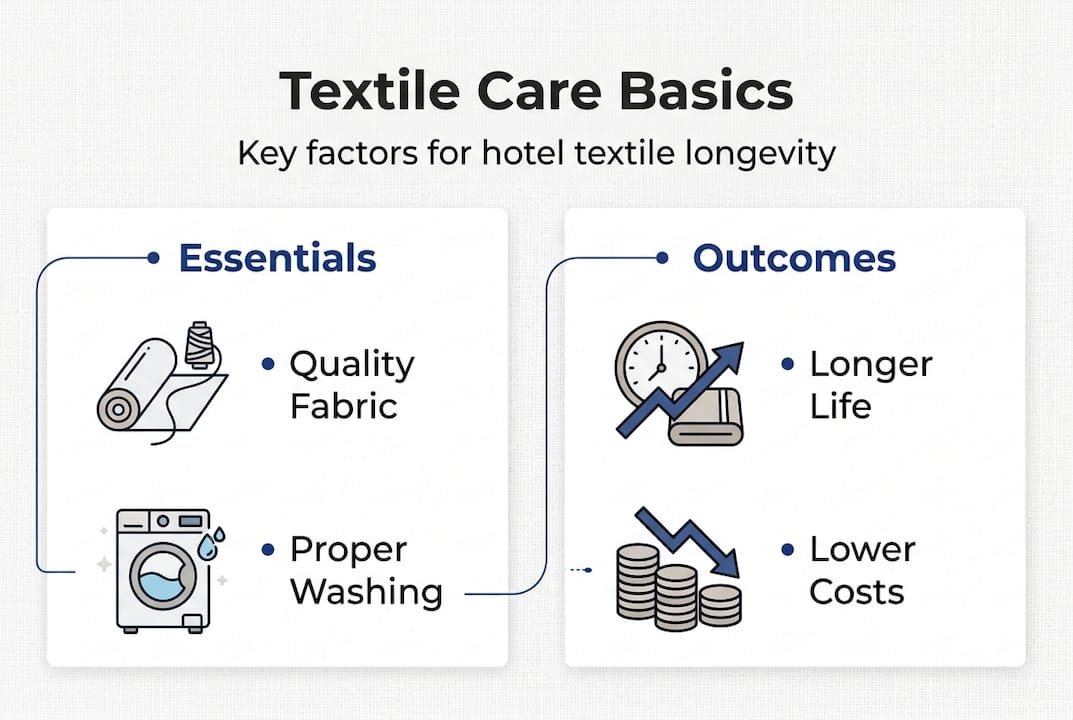
One of the most overlooked elements of workflow management is PAR level control. PAR (periodic automatic replenishment) refers to the number of complete linen sets you maintain per occupied room. Industry guidance is clear: you need at least three to four complete sets in rotation to absorb washing cycles, inspection delays, and unexpected demand spikes.
Pro Tip: Maintain 3 to 4 PAR levels across all linen categories. This buffer prevents shortages during peak season, reduces emergency purchases, and keeps your workflow moving without bottlenecks.
The financial case for a disciplined workflow is straightforward. Proper sorting and temperature control extend linen life by 30 to 40 wash cycles on average. That translates directly into reduced replacement frequency and lower procurement costs. For restaurant textiles overview, the same logic applies to tablecloths and napkins, where consistent care extends usable life significantly. Review your laundry essentials checklist regularly to ensure nothing critical is missing from your operation.
| Workflow stage | Key requirement | Common mistake |
|---|---|---|
| Collection | Labeled carts by zone | Mixing room types |
| Sorting | Separate by soil and color | Skipping pre-sort |
| Pre-treatment | Enzyme spray on stains | Delayed treatment |
| Washing | Correct temp and chemical dose | Overloading machines |
| Drying | Low heat for blends | Over-drying whites |
| Inspection | Bright lighting, trained staff | Rushing the check |
| Storage | Climate-controlled shelving | Stacking damp linens |
With the groundwork set, let’s examine the detailed steps for maintaining linens and textiles.
Step-by-step workflow for linen and textile care in hotels
Now, with the workflow defined, let’s break down the process for day-to-day textile and linen care. A consistent, repeatable sequence is what separates hotels that maintain quality at scale from those that struggle with linen complaints.
- Collection: Assign housekeeping staff to collect soiled linens using designated carts. Never place soiled and clean items in the same cart, even temporarily.
- Sorting: Separate textiles by type (sheets, towels, pillowcases), soil level (lightly soiled, heavily soiled, stained), and color (whites, pastels, darks). The sorting by type and soil level step is critical because mixing categories leads to cross-contamination and color transfer.
- Pre-treatment: Apply enzyme-based stain remover to visible stains within 15 minutes of collection. Delayed treatment allows stains to set into fibers, making them significantly harder to remove in the wash cycle.
- Washing: Use cold water (below 30°C) for delicate blends and colored items. For white hotel linens, wash at 60 to 71°C to achieve sanitization without damaging fibers. Chemical dosing must match load size precisely. Overdosing detergent leaves residue that irritates skin and attracts soil faster.
- Drying: Tumble dry whites at medium heat. Use low heat for blended fabrics to prevent shrinkage and fiber breakdown. Over-drying is one of the most common causes of premature linen deterioration.
- Folding: Fold immediately after drying to prevent wrinkles from setting. Assign trained staff to this step. Inconsistent folding creates storage inefficiencies and a poor visual impression at turndown.
- Inspection: Hold each item under bright light. Check for thinning fabric, persistent stains, tears, and loose seams. Items that fail inspection go to a separate bin for repair or retirement, never back into rotation.
- Storage: Store folded linens on labeled shelves in a cool, dry, ventilated space. Rotate stock using a first-in, first-out system to ensure even wear across your inventory.
| Approach | Cost structure | Quality control | Best for |
|---|---|---|---|
| In-house laundry | High upfront, lower per-cycle | Full control | Large hotels (100+ rooms) |
| Outsourced laundry | Predictable per-unit cost | Dependent on vendor | Mid-size and seasonal hotels |
For curtain care tips and heavier textiles, adjust drying and folding protocols to account for weight and fabric density. Your textile product selection decisions at procurement directly affect how manageable each of these steps becomes in daily operation. Properties that follow hotel laundry standards consistently report fewer linen complaints and lower annual replacement costs.
Troubleshooting common textile maintenance issues
Even with careful workflows, hotel managers often run into persistent problems. Here’s how to tackle them.
Blackout curtains and heavy drapes require a different approach than standard linens. High heat damages the blackout coating, causing it to crack and peel. Always use steam cleaning or professional dry-cleaning for these items. Schedule an annual deep clean for all drapes, and train housekeeping staff to dust curtain care items daily using a soft brush or low-suction vacuum attachment.
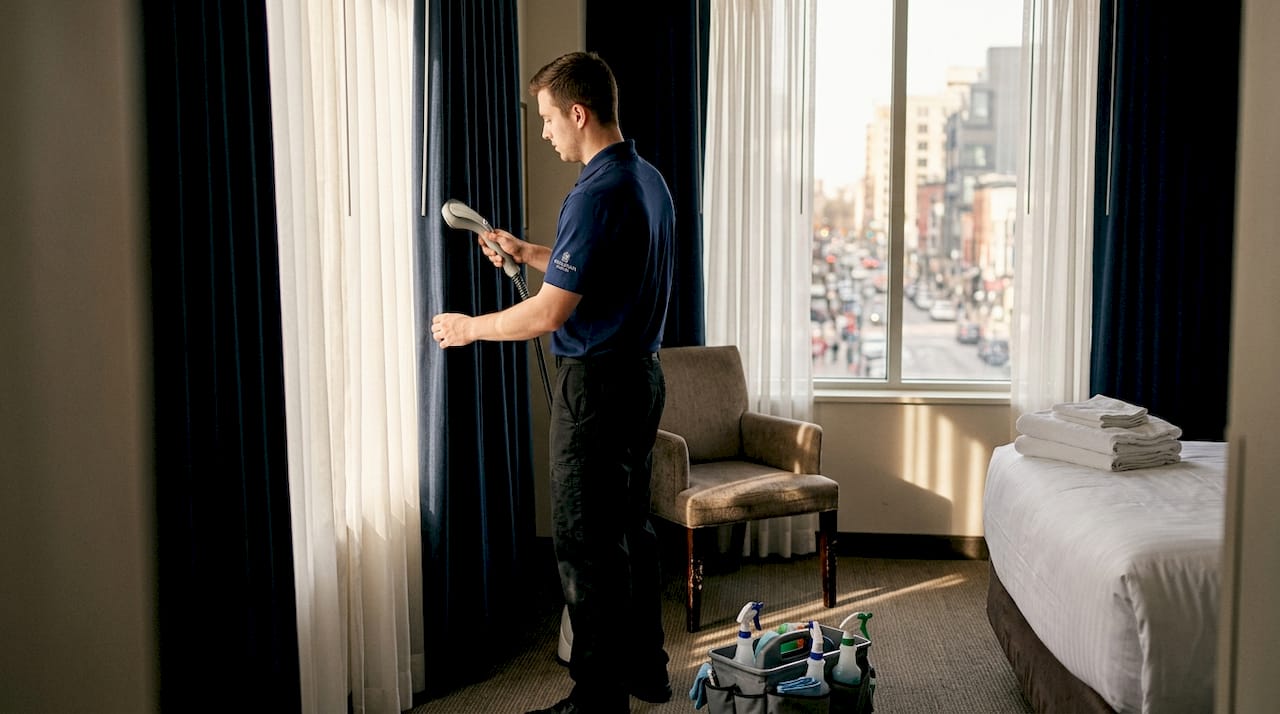
Pro Tip: Daily dusting of curtains and drapes removes surface particulates before they embed into the fabric. This single habit can extend drape life by one to two years and reduce the frequency of professional cleaning cycles.
Guest laundry handling is a separate workflow with its own risks. Before processing any guest garment, staff must check all pockets. Forgotten items (coins, pens, tissues) damage machines and ruin entire loads. Document stains present on arrival using a condition sheet, and have the guest sign off before processing. This protects your property from liability claims.
Here are the most common textile maintenance problems and their direct solutions:
- Gray or yellowed whites: Caused by insufficient water temperature or detergent underdosing. Increase wash temperature and verify chemical dosing calibration.
- Persistent odors after washing: Usually a sign of mildew from damp storage. Improve ventilation in your linen room and ensure textiles are fully dry before shelving.
- Pilling on towel maintenance items: Caused by mixing terry cloth with sheets in the same wash load. Terry loops snag sheet fibers. Always wash these separately.
- Shrinkage in blended fabrics: Result of excessive drying heat. Lower dryer temperature and reduce cycle time for synthetic blends.
- Linen tearing at seams: Often caused by overloading machines. Respect the manufacturer’s load capacity guidelines strictly.
For quilt cleaning tips, always check fill material before selecting wash temperature. Down and synthetic fills require different handling, and incorrect washing destroys the insulation structure permanently.
Critical reminder: Never mix terry cloth items with flat sheets in the same wash cycle. The abrasive texture of terry causes friction damage to sheet fibers, accelerating wear and creating a rough surface that guests notice immediately.
Your hospitality services partner should be able to advise on fabric-specific protocols. Review the guest laundry SOP to ensure your team follows documented procedures for every edge case.
Choosing in-house versus outsourced textile maintenance
After mastering troubleshooting, you’re ready to choose the workflow approach that fits your hotel’s needs. This decision affects your cost structure, quality consistency, and operational flexibility for years.
In-house laundry operations give you full control over timing, chemical selection, and quality standards. But the cost structure is demanding. In-house laundry costs typically break down as 50% labor and 8 to 10% utilities, with the remainder covering chemicals, equipment maintenance, and linen replacement. For a 150-room property, annual in-house laundry costs can reach $75,000 or more when you factor in all variables.
Outsourcing transfers those fixed costs into a predictable per-unit fee. You pay per kilogram or per item processed. This model works well for seasonal Albanian resorts that see dramatic volume swings between summer and winter. You avoid maintaining staff and equipment through low-occupancy months.
Here is a practical checklist to guide your decision:
- Room count: Properties with fewer than 80 rooms rarely justify the capital investment in full in-house laundry equipment.
- Seasonality: High seasonal variation favors outsourcing. Consistent year-round occupancy favors in-house.
- Space availability: In-house laundry requires dedicated square footage. If that space generates more value as a guest amenity, outsourcing makes financial sense.
- Quality requirements: Five-star properties often prefer in-house control to maintain brand standards without dependency on a vendor.
- Local vendor quality: Albanian outsourcing options such as Bora Laundry offer hotel-grade processing in tourism-heavy areas, making outsourcing a viable and efficient choice for many properties.
| Factor | In-house | Outsourced |
|---|---|---|
| Upfront cost | High | Low |
| Per-cycle cost | Lower at scale | Fixed per unit |
| Quality control | Full | Vendor-dependent |
| Flexibility | Low | High |
| Best fit | Large, year-round hotels | Mid-size, seasonal resorts |
For guidance on choosing textile suppliers that align with your maintenance approach, consider how your procurement decisions interact with your chosen workflow model. The right textile quality reduces processing time and extends usable life regardless of whether you wash in-house or outsource.
An expert perspective: What most guides miss about textile maintenance in Albanian hospitality
Most workflow guides treat textile maintenance as a universal process. Apply the right temperatures, use the right chemicals, follow the steps. That framing misses something important for Albanian hotels specifically.
Albanian hospitality operates at the intersection of strong local traditions and rapidly rising international guest expectations. Guests arriving from Western Europe or the Gulf bring standards shaped by Marriott and Sheraton properties. They notice the difference between a linen that was sourced and maintained with care and one that was not.
What we have observed over decades working with hotels across Albania is that the gap between good and excellent textile management is almost never about equipment. It is about supplier reliability and review frequency. Hotels that schedule quarterly reviews with their textile suppliers catch quality drift early. Those that treat procurement as a one-time decision absorb quality degradation silently until guest complaints force a response.
Global standards mirror Albanian needs, but local outsourcing and sourcing decisions can optimize both efficiency and cost in ways that generic guides never address. Work with partners who understand your specific operational calendar, not just your room count. Review your hotel textile selection tips at least once per season to ensure your inventory matches current demand and quality benchmarks.
Explore the best textiles and solutions for Albanian hotels
If you’re ready to implement or upgrade your hotel’s textile maintenance workflow, here’s where to start.
Gjergji H Tekstil has supplied hotel-grade textiles to properties across Albania for over 30 years, including internationally branded hotels with strict quality requirements. Whether you need durable hotel textiles wholesale, high-performance towel options built to withstand industrial washing cycles, or a full review of your current textile solutions, the team brings practical expertise to every consultation.

The right textile partner does not just sell you product. They help you build a workflow that reduces replacement costs, improves guest satisfaction scores, and keeps your operation running without interruptions. Contact Gjergji H Tekstil to discuss your property’s specific needs and volume requirements.
Frequently asked questions
What is the ideal PAR level for hotel linen inventory?
Aim for 3 to 4 PAR levels per room category to ensure smooth rotation, minimize shortages during peak periods, and control replacement costs effectively.
How should blackout curtains be cleaned in Albanian hotels?
Use steam cleaning or professional dry-cleaning to protect the blackout coating, and schedule annual deep cleaning combined with daily dusting to extend drape life and maintain appearance.
Is outsourcing linen maintenance more cost-effective than in-house laundry?
Outsourcing reduces labor and shrinkage costs and provides predictable pricing, but the right choice depends on your room count, seasonality, and access to quality local vendors in Albania.
What are common mistakes to avoid in textile maintenance workflows?
Never mix terry cloth with flat sheets, always check guest laundry pockets before processing, and avoid excess bleach, which weakens linen fibers and shortens usable life significantly.