


Textile procurement is often treated as a routine purchasing task, but for hotel and resort managers in Albania, it is one of the most consequential operational decisions you will make. The linens on your beds, the towels in your bathrooms, and the tablecloths in your restaurant directly shape how guests perceive your property. Textile procurement directly impacts guest satisfaction, operational costs, and brand perception. In Albania’s growing hospitality market, where supplier options vary widely in quality and reliability, getting this process right is not optional. It is a competitive advantage.
Table of Contents
- Defining textile procurement in hospitality
- Core methodologies for sourcing hotel textiles
- Evaluating textile quality, certifications, and sustainability
- Practical strategies for operationalizing textile procurement
- Why traditional procurement misses the mark for Albanian hotels
- Explore textile sourcing solutions with Gjergji H Tekstil
- Frequently asked questions
Key Takeaways
| Point | Details |
|---|---|
| Strategic procurement matters | Textile procurement directly influences guest satisfaction, brand quality, and operational savings. |
| Methodologies boost efficiency | Structured sourcing, supplier vetting, and quality evaluation prevent costly mistakes and ensure standards. |
| Certifications drive sustainability | GRS, GOTS, and OEKO-TEX certifications ensure textiles meet modern eco and guest expectations. |
| Lifecycle cost wins | Prioritizing durability and total cost of ownership yields smarter, long-term textile investments. |
| Operational tactics yield results | Using par levels, RFID tracking, and supplier partnerships optimizes efficiency and minimizes losses. |
Defining textile procurement in hospitality
Textile procurement in a hotel or resort context is not simply placing an order for towels. Textile procurement includes sourcing, evaluating, and purchasing textiles such as bedding, linens, towels, and furnishings. It is a structured process that touches every department that interacts with guests, from housekeeping to food and beverage.
The scope of hotel textile procurement typically covers:
- Bedding and sleep textiles: Sheets, pillowcases, duvets, and mattress protectors
- Bath textiles: Towels, bath mats, robes, and hand towels
- Food and beverage textiles: Tablecloths, napkins, and runners, which you can explore further through restaurant textiles sourcing
- Soft furnishings: Curtains, drapes, and decorative fabrics, including options available through curtain procurement
- Workwear: Staff uniforms and operational garments
Each category carries distinct performance requirements. A bath towel must survive hundreds of industrial wash cycles without losing absorbency or structural integrity. A tablecloth must resist staining and maintain a pressed appearance across multiple service sittings per day. These are not aesthetic choices alone. They are operational specifications.
“The quality of your textiles is a silent signal to every guest. It communicates whether your property invests in their comfort or simply meets the minimum standard.”
For Albanian hotels, the procurement challenge is compounded by local market realities. The Albanian textile sector carries labor and quality risks that managers must account for when selecting domestic suppliers. Inconsistent production standards and limited certification infrastructure mean that relying solely on local sourcing without rigorous vetting can expose your property to quality failures at scale. Understanding this context is the first step toward building a procurement strategy that protects both your guests and your operating budget.
Core methodologies for sourcing hotel textiles
A structured sourcing methodology prevents the reactive purchasing that drains budgets and creates inconsistency. The sourcing process involves needs assessment, supplier identification through B2B platforms and trade fairs like Heimtextil, multi-dimensional evaluation covering quality, certifications, sustainability and logistics, sample testing, and building long-term partnerships with OEM/ODM capabilities.
Here is a practical step-by-step approach:
- Conduct a needs assessment. Audit your current textile inventory, calculate par levels for each category, and identify gaps in quality or volume.
- Map your supplier landscape. Use B2B sourcing platforms, attend regional trade fairs, and request referrals from peer properties.
- Evaluate on multiple dimensions. Do not limit evaluation to price. Assess product quality, available certifications, delivery logistics, and sustainability commitments.
- Request physical samples. Test samples under real operating conditions before committing to a full order. This is non-negotiable for high-use items like sheets and towels.
- Negotiate partnership terms. Aim for long-term agreements that include volume pricing, custom production options, and consistent quality guarantees.
When comparing sourcing models, the choice between group purchasing organizations (GPOs) and direct manufacturer sourcing matters significantly.
| Sourcing model | Key advantage | Key risk |
|---|---|---|
| GPO/Consortium | Lower unit price through volume | Less flexibility on specifications |
| Direct manufacturer | Full customization, OEM/ODM options | Higher minimum order quantities |
| Local distributor | Faster delivery, local support | Variable quality, limited certification |
| Integrated supplier | Supply chain control, consistent standards | Requires strong partnership vetting |
For managers sourcing quality sheets or evaluating quilts sourcing options, the integrated supplier model typically delivers the best balance of cost control and quality consistency. You can review a broader hotel textile service range to understand what full-service sourcing looks like in practice.
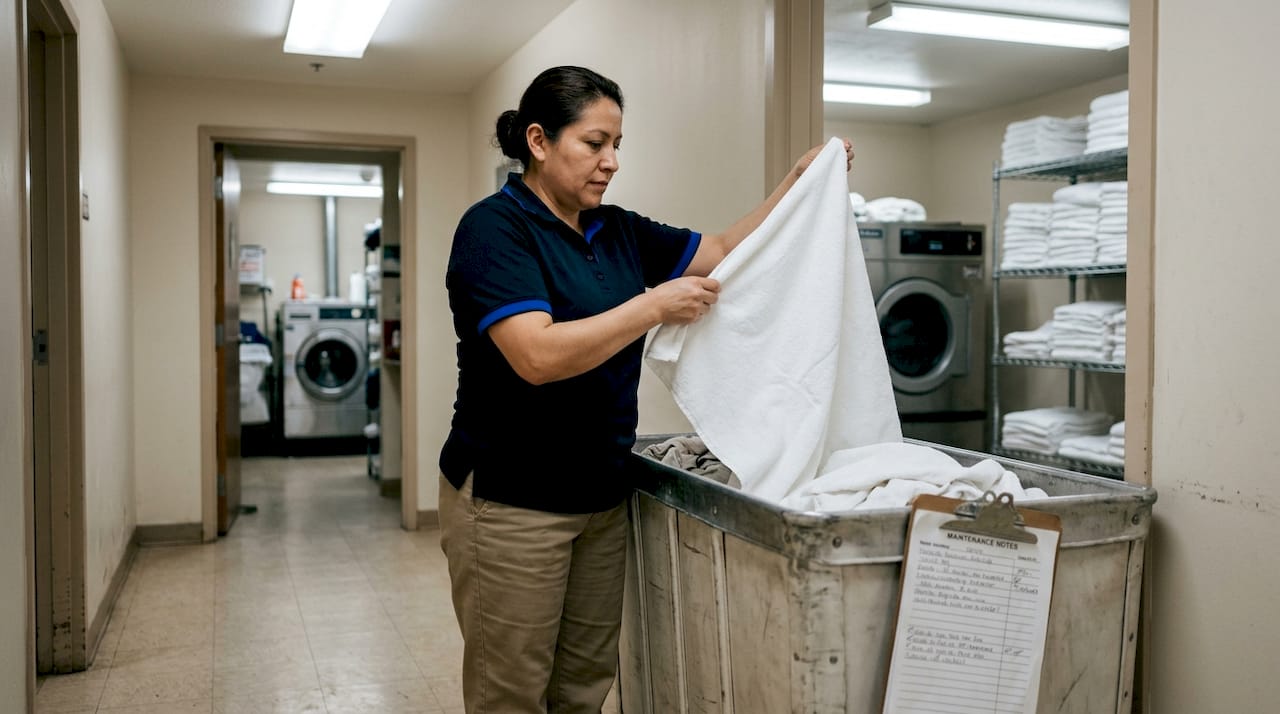
Building procurement partnerships rather than transactional vendor relationships is where long-term savings are generated. A supplier who understands your property’s operational rhythm will proactively flag quality issues and adjust lead times to match your seasonal demand.
Pro Tip: Always test samples through at least 10 industrial wash cycles before approving a supplier. Textiles that look excellent on delivery often reveal shrinkage, color fade, or pilling after repeated laundering, and catching this early saves significant replacement costs.
Evaluating textile quality, certifications, and sustainability
Once you have identified potential suppliers, the evaluation phase requires specific technical benchmarks. Empirical benchmarks and certification standards such as GSM ratings, par levels, GRS/OEKO-TEX certifications, and cost-per-use calculations are the tools that separate informed procurement from guesswork.
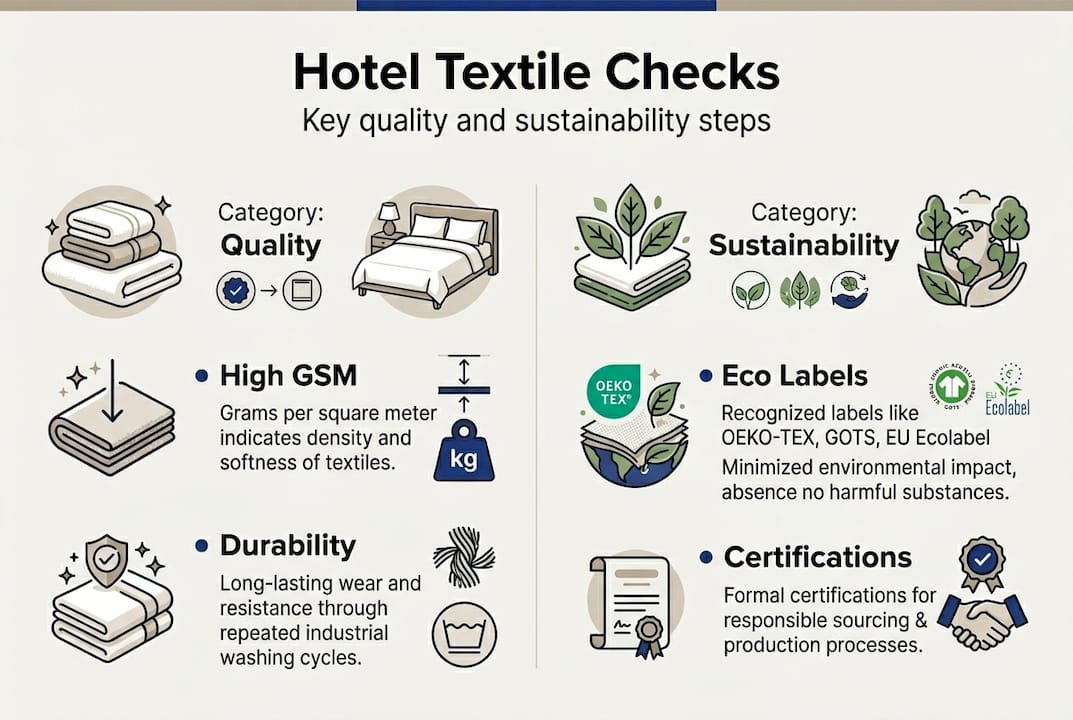
GSM, or grams per square meter, is the primary density indicator for towels and sheets. Higher GSM generally means greater absorbency and durability, though the relationship is not always linear. Use these benchmarks as a starting reference:
| Textile type | Recommended GSM | Wash cycle durability target |
|---|---|---|
| Bath towels | 500 to 600 GSM | 150 to 200 cycles |
| Hand towels | 400 to 500 GSM | 150 cycles |
| Bed sheets | 200 to 300 GSM | 200 cycles |
| Tablecloths | 180 to 250 GSM | 100 to 150 cycles |
Certifications tell you whether a supplier’s quality claims are independently verified. The key ones to look for include:
- OEKO-TEX Standard 100: Confirms the textile is free from harmful substances, relevant for guest skin contact items
- GOTS (Global Organic Textile Standard): Verifies organic fiber content and responsible processing
- GRS (Global Recycled Standard): Confirms recycled material content and chain-of-custody integrity
For hotel towel benchmarks and sunbed textile sustainability requirements, these certifications are increasingly expected by international guests. You should also review sustainable tablecloths options if your property hosts events or operates a restaurant.
The lifecycle cost approach is more accurate than comparing unit prices. A towel that costs 30% more but lasts twice as long delivers a lower total cost of ownership. Factor in replacement frequency, laundry wear, and storage requirements when making final supplier decisions. Focusing on hotel textile certification from EU-aligned suppliers also reduces compliance risk as Albanian hospitality standards continue to converge with European norms.
Practical strategies for operationalizing textile procurement
Knowing the theory is one thing. Applying it inside a running hotel operation is another. Strategic procurement shifts from transactional buying to partnerships that emphasize total cost of ownership (TCO), par stocking at 3 to 4 sets per room, RFID tracking for loss reduction achieving up to 6% savings, and seasonal timing to optimize efficiency.
Here is how to translate this into operational practice:
- Calculate your par levels accurately. A par level of 3 to 4 sets per room means you have enough inventory in rotation, in laundry, and in reserve without over-investing in stock. Undercounting creates service failures during peak season.
- Adopt a TCO framework. Document the full cost of each textile category over its expected lifespan, including purchase price, laundry cost per cycle, and replacement frequency.
- Implement loss controls. RFID tagging of high-value items like robes and premium towels reduces theft and misplacement. Properties using RFID tracking report meaningful reductions in linen loss rates.
- Time your purchasing strategically. Pre-season procurement, typically in late winter for Albanian summer properties, allows you to negotiate better pricing and ensure delivery before peak demand.
- Build supplier review cycles. Schedule quarterly reviews with key suppliers to assess quality consistency, address issues early, and plan for upcoming seasonal needs.
Understanding how bulk hotel textiles are chosen in practice can help you benchmark your own process against established approaches used by larger Albanian properties.
Integrating guest comfort and sustainability drivers into your procurement criteria also pays operational dividends. Guests increasingly notice and comment on textile quality in online reviews. Properties that invest in certified, high-durability textiles consistently report stronger satisfaction scores in housekeeping categories. Read more on hotel textile sourcing tips to refine your approach further.
Pro Tip: Calculate cost-per-use by dividing the unit price by the expected number of wash cycles before replacement. A 1,200 lek towel lasting 180 cycles costs 6.7 lek per use. A 700 lek towel lasting 80 cycles costs 8.75 lek per use. The cheaper towel costs more in practice.
Why traditional procurement misses the mark for Albanian hotels
Most procurement guides treat the process as universally applicable. In practice, Albanian hotels face a distinct set of variables that standard frameworks do not address. The Albanian textile sector carries specific labor and production quality risks that require managers to prioritize EU-aligned suppliers and sustainability as active risk mitigation strategies, not just ethical preferences.
Traditional procurement focuses on price and availability. It misses the compounding cost of inconsistent quality, the reputational exposure from textiles that fail mid-season, and the operational disruption of unreliable supply chains. A towel that arrives without certification documentation is not just a compliance risk. It is a guest experience liability.
We believe that the most effective procurement strategy for Albanian hospitality is built on three principles: lifecycle cost over unit price, certified suppliers over unverified ones, and long-term partnerships over transactional orders. Properties that follow hotel textile best practices consistently outperform those that treat procurement as an administrative function. The difference shows up in guest reviews, in laundry budgets, and in the frequency of emergency replacement orders.
Explore textile sourcing solutions with Gjergji H Tekstil
If you are ready to move from reactive purchasing to a structured procurement strategy, the next step is connecting with a supplier who understands Albanian hospitality operations at scale. Gjergji H Tekstil has supplied wholesale hotel textiles to properties across Albania and the region for over 30 years, including international brands with strict quality standards.

From certified bath towels and durable bed linens to custom workwear and event textiles, the product range is built for high-volume, high-frequency use. You can explore sheet sourcing options and the full product catalog to identify where Gjergji H Tekstil can replace underperforming suppliers or fill gaps in your current procurement plan. Contact the team directly for volume pricing, sample requests, or tailored procurement advisory.
Frequently asked questions
What textiles are most critical for Albanian hotel procurement?
Bedding, linens, towels, and furnishings form the core procurement categories. Prioritize items with high guest contact frequency and the greatest durability requirements first.
How do I determine ideal par levels for linens?
Industry benchmarks recommend maintaining 3 to 4 sets per room to ensure you always have inventory available in rotation, in laundry, and in reserve without overstocking.
What certifications should hotel textiles have in Albania?
Look for GRS, GOTS, or OEKO-TEX certifications, which confirm eco-compliance, quality standards, and responsible production practices aligned with EU expectations.
Should I prioritize lifecycle cost or unit price when sourcing textiles?
Lifecycle cost is more accurate than unit price because it accounts for durability, wash cycle performance, and actual replacement frequency, which together determine your true cost per use.