

TL;DR:
- Textile stock audits verify the physical condition and accuracy of hotel linen inventories, helping reduce losses and improve standards. Regular audits identify wear, theft, and miscounts, saving money and enhancing guest satisfaction through better stock management. Proper ownership and standardized procedures ensure effective audits that support cost control and operational efficiency.
What is a textile stock audit and why do hotels conduct them?
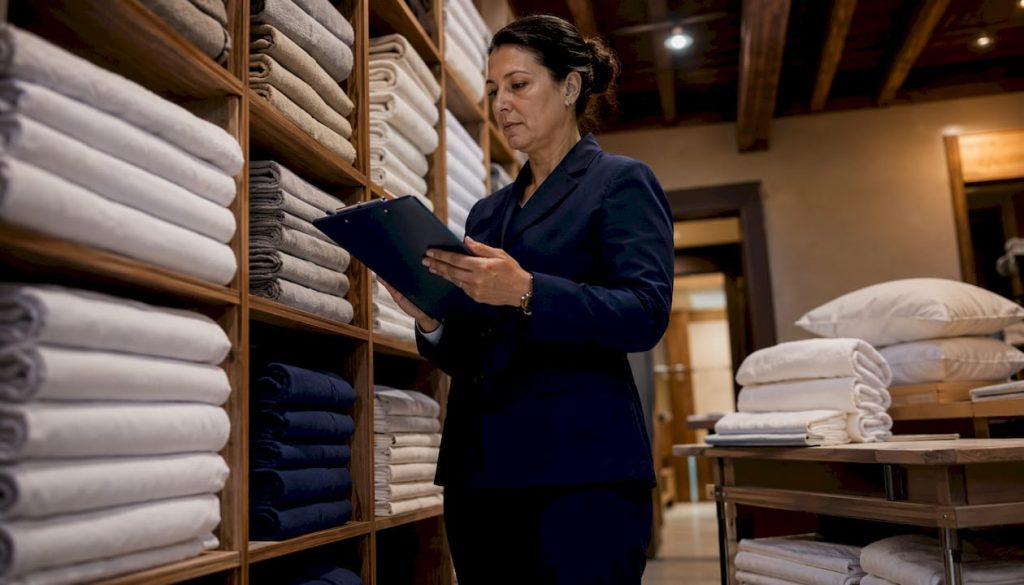
A textile stock audit is a systematic physical count and condition review of every linen and fabric item a hotel operates, from bed sheets and bath towels to robes, napkins, and staff uniforms. Its core purpose is straightforward: verify that what the inventory records say exists actually exists, in usable condition, at the right par level.
Hotels conduct these audits for three concrete reasons:
- Inventory accuracy: Confirm physical counts match system records across all locations, including rooms, storage, and laundry.
- Loss detection: Identify worn, damaged, stained, or missing textiles that inflate paper counts without contributing to guest-ready stock.
- Standards compliance: Verify that par levels meet operational requirements, typically a 3-par minimum for most properties, rising to 4–5 par for luxury or off-site laundry operations.
Key audit elements include a physical inventory count, quality grading (guest-ready, backup, or discard), par level verification, stain and whiteness analysis, structural integrity checks, and loss tracking against the prior audit period. Housekeeping managers, laundry supervisors, and department heads all share responsibility for the count, with signed handoffs at each stage creating an auditable trail.
Why hotels need textile stock audits: the operational and financial case
Unaudited linen programs bleed money quietly. Hotels lose 10%–20% of their linen inventory annually due to stains, tears, theft, and miscounts. Poorly tracked operations can reach loss rates of 20%–30%. For a property spending a substantial amount annually on linens, even low loss rates represent a notable annual cost that is often unaccounted for as a discrete expense.
The benefits of regular auditing are direct and measurable:
- Shrinkage reduction: Audits expose where losses occur, enabling targeted corrective action rather than blanket reordering.
- Guest satisfaction protection: Stained or thinning textiles that remain in circulation because they were never graded out generate complaints before they generate replacement orders.
- Replenishment accuracy: Knowing your true usable stock prevents both emergency orders at premium prices and unnecessary overstocking that ties up capital.
- Supplier accountability: Audits create the documentation needed to enforce service-level agreements with laundry providers and identify whether losses originate in-house or in transit.
Statistic callout: A 1% increase in linen shrinkage can cost a 200-room hotel approximately $12,000 annually in premature replacements.
Audits also connect directly to textile inventory best practices around lifecycle management. When you track condition systematically, you replace on a proactive schedule rather than after a guest complaint, protecting both the brand and the budget simultaneously.
Best practices for conducting textile stock audits in hotel operations
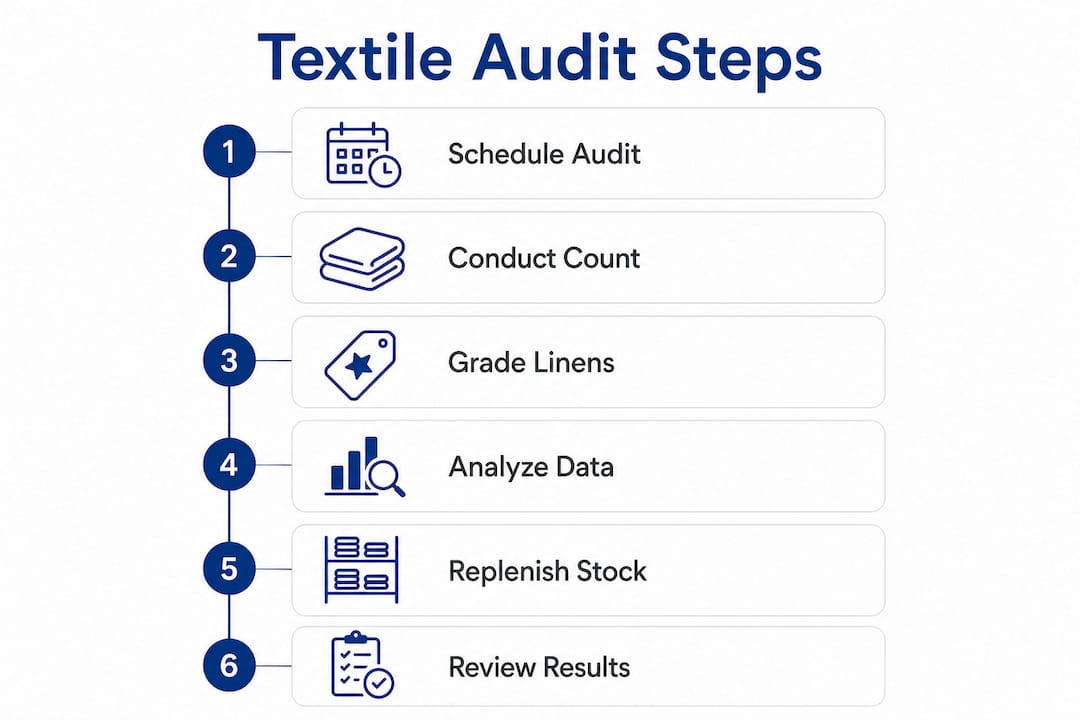
Effective audits do not happen by accident. They require scheduling, standardized procedures, and the right tools.
Schedule audits before peak season. Most professional properties complete their audit 90 days before peak occupancy. That window allows time for manufacturing, shipping, and an initial pre-wash cycle on new stock before the first guest checks in.
Separate categories and grade condition rigorously. Sort every item into three tiers: “A” (guest-ready), “B” (slight wear, suitable as backup), and “C” (discard or repurpose as rags). Linen loss is often underestimated because damaged items remain counted as inventory when they are never properly graded and removed.
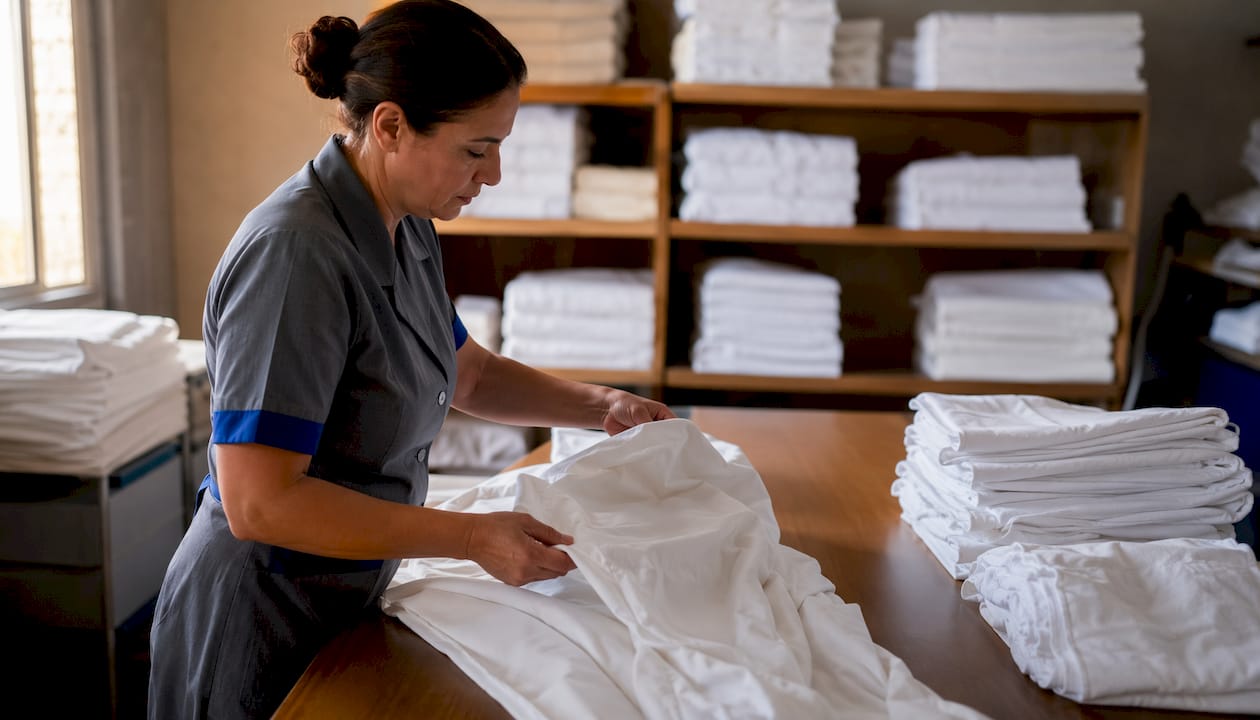
Standardize procedures and require signed counts. Daily or per-shift linen counts signed at handover provide immediate alerts to discrepancies, reducing losses that would otherwise go undetected until a quarterly review. Each signed count creates a timestamped record of who counted what and when.
Involve your laundry provider. Laundry partners often know which fabric categories are failing faster and why, making them a valuable source of audit intelligence. For properties using off-site laundry, a two-way signed handoff at the vendor dock is the single control most operations skip, yet it is the only way to distinguish in-house shrinkage from vendor short-shipping.
Adopt RFID tracking where volume justifies it. RFID systems create accountability trails and deter theft by tracking linen movement through laundry portals and storage checkpoints, exposing specific loss hotspots that manual counts cannot pinpoint.
Pro Tip: Separate your shrinkage into two categories: explained losses (wear, stains, documented damage) and unexplained losses (theft, misrouting, unlogged discards). Tracking the source of loss by this split, as the Textile Rental Services Association recommends, enables targeted prevention measures like secure storage adjustments or laundry chemical changes rather than generic reordering.
How to conduct a textile stock audit: a step-by-step process
-
Prepare by reviewing records and par levels. Pull your current inventory records, confirm par targets for each textile category based on current occupancy forecasts, and note any categories that have had emergency replacements since the last audit.
-
Conduct the physical count, separated by condition. Count every item across all locations: guest rooms, storage rooms, laundry facility, and housekeeping carts. Keep guest-ready, backup, and discard items in separate piles from the start.
-
Inspect for wear, staining, and structural integrity. Check each sampled item for stains, fraying hems, thinning fabric, and discoloration. Run a whiteness comparison against a new sample to identify “grey-out” or yellowing that signals optical brightener degradation. Photograph items tagged for discard so disposal decisions are traceable.
-
Calculate shrinkage rates and compare to prior audits. Divide items lost or discarded by your opening inventory count to get your shrinkage rate. Compare that figure to the previous audit period to identify whether losses are growing, stable, or improving.
-
Document discrepancies and assign corrective actions. Record every unexplained variance with a root-cause review. Assign a named owner and a due date to each corrective action, whether that means adjusting storage conditions, retraining staff on bundle handoffs, or escalating a vendor SLA issue.
-
Collaborate with your laundry provider on findings. Share stain analysis and fabric failure patterns with your laundry partner. Recurring rust stains, for example, point to a water chemistry issue; recurring makeup stains suggest a need to adjust the chemical mix.
-
Update replenishment orders based on audit results. Use the formula: target par quantity minus usable stock on hand equals units to order. A 100-room property targeting 3-par on king sheets (300 sets total) with only 220 in good condition needs to order 80 sets immediately, not at the start of peak season.
Common challenges hotels face during textile stock audits
Inaccurate record-keeping is the most common starting point for audit failure. When par levels are based on old occupancy patterns, shortages look like losses when the real issue is demand growth. Reviewing par targets before each audit, not just at property opening, prevents this misread.
Inconsistent counting methods undermine trend comparisons. If one team counts by room and another counts by storage location, the quarterly figures are not comparable. Standardizing the sampling method and count sequence across every audit cycle is what makes shrinkage trends meaningful over time.
Staff resistance and accountability gaps are real friction points, particularly when counts reveal losses that reflect on a specific shift or department. Signed handoffs address this directly. When a staff member signs out a sealed bundle of linens, the accountability is personal and specific, not diffuse.
Tracking textiles outsourced to off-site laundry facilities adds a layer of complexity that manual systems handle poorly. Without a two-way signed handoff at the vendor dock, a vendor short-ship and in-house theft look identical in the records. Inventory management tools that integrate with laundry workflows can close this gap by logging items at each transfer point automatically.
Poor storage conditions create a separate category of loss. Linen rooms exposed to moisture or mixed soiled and clean stock generate re-soiling and mold damage that shows up as unexpected discard volume at the next audit. A storage environment inspection should be a standing item on every audit checklist.
How textile stock audits support cost control and financial health
Most hotel operators know their supplier invoice total. Very few know their cost per wash cycle, which is the figure that actually determines whether a linen program is running efficiently or leaking money. Divide the unit purchase price by the expected wash cycle lifespan to get that number. A $24 sheet lasting 320 cycles costs $0.075 per wash. An $18 sheet lasting 150 cycles costs $0.12 per wash, which is 60% more expensive per use despite the lower purchase price.
Operating below recommended par inventory levels accelerates linen wear because lower stock results in more frequent washing cycles than designed. That accelerated wear forces premature replacement, which is exactly the cost spiral audits are designed to prevent.
Statistic callout: Operating below a 3-par linen inventory level accelerates wear by up to 30%, resulting in higher annual replacement costs compared to properties maintaining recommended par levels.
Audits also surface supplier tariff risks. If your current supply chain relies on categories subject to active US Section 301 tariffs, an audit that includes a supplier lead time and certification review gives you the data to renegotiate pricing or diversify sourcing before the next contract renewal. Proactive replacement scheduling, driven by wash cycle tracking rather than guest complaints, consistently produces lower total spend than reactive purchasing. You avoid both the brand damage of a guest-visible failure and the premium pricing of an emergency order. For more on cutting textile costs through structured procurement, the operational levers are well-documented.
Real-world examples of audit impact
A London-based laundry operation serving luxury 5-star hotels illustrates what happens when manual counting is replaced with systematic tracking. Royal Jersey Laundry managed roughly 30,000 linen items per 300-bed hotel client, with inventory “always moving” across beds, cupboards, transit, and the laundry facility itself. Manual staff counts produced chronic uncertainty: hotels would call to report lost pillowcases, triggering emergency washes and extra deliveries, only to find the items in a linen room that had not been checked. After implementing an RFID-based tracking system combining LinTRAK tags and HID’s Acuity platform, the laundry estimated the system paid for itself through efficiency and productivity gains, with hotel clients gaining real-time visibility into stock levels and delivery status.
The pattern repeats across property types. A food and beverage manager using a quarterly linen audit template to verify napkins and specialty table textiles before large events prevents last-minute shortages and reduces emergency rental costs. A housekeeping director tracking par accuracy by property across a multi-site portfolio catches a single location quietly losing towels before it surfaces as a stockout at check-in. The audit does not create the solution in either case. It creates the visibility that makes a solution possible.
Who owns the textile audit process in a hotel?
Textile audits work when responsibility is clearly assigned, not shared vaguely across departments.
Executive housekeeper or housekeeping director: Owns the overall audit process, sets the schedule, reviews shrinkage trends across audit periods, and signs off on corrective actions. At multi-property groups, this role typically holds portfolio-level visibility into par accuracy and loss rates.

Housekeeping supervisors and shift leads: Conduct the physical counts, sign the per-shift handoff records, and photograph items tagged for discard. Their signed counts are the primary data source for the audit.
Laundry manager (on-site) or laundry vendor contact (off-site): Provides wash cycle data, flags fabric categories showing accelerated wear, and co-signs the vendor handoff records for outsourced operations. Involving this role in the audit debrief is where stain analysis and chemical adjustments get actioned.
Procurement or purchasing manager: Uses audit findings to build replenishment orders, evaluate supplier performance, and assess whether current textile specifications are delivering the expected wash cycle durability. The hotel textile supply chain decisions that follow an audit are only as good as the procurement team’s ability to act on the data.
General manager: Reviews audit summaries for financial impact, approves capital replacement budgets, and holds department heads accountable for corrective action completion. The GM does not conduct the count but does own the outcome.
Key Takeaways
Regular textile stock audits are the most direct tool hotels have for controlling linen costs, preventing inventory loss, and protecting guest experience before problems become visible.
| Point | Details |
|---|---|
| Annual loss rates are high | Hotels lose 10%–20% of linen inventory annually; poorly tracked operations reach 20%–30%. |
| Shrinkage has a direct dollar cost | A 1% shrinkage increase costs a 200-room hotel approximately $12,000 per year in premature replacements. |
| Par level discipline prevents overspend | Operating below 3-par accelerates linen wear by up to 30%, forcing early replacement cycles. |
| Cost per wash cycle is the real metric | Tracking wash cycle durability reveals true linen value; a cheaper sheet can cost 60% more per use. |
| Signed shift counts catch losses early | Per-shift signed handoffs surface discrepancies the same day, not at the next quarterly review. |
How Gjergjihtextil supports your audit-driven replenishment

When an audit reveals gaps in your linen inventory, the replenishment decision matters as much as the audit itself. Ordering textiles that fail within two seasons puts you back at the same audit table with the same shortfall. Gjergjihtextil supplies hotel-grade linens built for industrial wash durability, with supply chain control spanning import, production, and distribution across the region. Properties that have supplied Marriott, Meliá, and Sheraton-level standards understand what specification-grade stock looks like in practice.
For hotels ready to align their replenishment orders with audit findings, Gjergjihtextil’s wholesale hotel textile solutions cover bed linens, towels, duvets, and more, priced for volume procurement. If you are also working through textile selection decisions after an audit, the guidance on durability specifications and guest comfort trade-offs is practical and direct.