

TL;DR:
- Textile cost savings can be achieved by auditing usage, adopting RFID technology, and optimizing processes.
- Local regional suppliers offer faster delivery and flexibility, reducing overall procurement costs.
- Investing in quality textiles and staff training provides long-term savings and enhances guest experience.
Textile expenses rank among the most persistent operational headaches for hotel and resort managers across Albania and the broader Balkan region. A mid-size property can spend tens of thousands of dollars each year on linens, towels, and uniforms, only to watch a significant portion disappear through loss, misuse, or inefficient laundering. The gap between what you spend and what you actually need to spend is often wider than managers realize. This guide walks you through four practical areas where you can recover real money: auditing current spend, adopting smarter technology, refining internal processes, and choosing the right regional suppliers.
Table of Contents
- Assessing current textile usage and losses
- Leveraging technology to monitor and control textile losses
- Optimizing in-house textile processes and staff engagement
- Sourcing strategies: balancing cost, quality, and logistics in the Balkans
- The surprising truth: it’s not just about cheaper textiles
- Unlock textile savings with local expertise
- Frequently asked questions
Key Takeaways
| Point | Details |
|---|---|
| Track textile losses | Frequent inventory checks quickly reveal wasted costs and shrinkage trends. |
| Adopt technology | RFID monitoring delivers significant savings by reducing theft and miscounts. |
| Engage staff and guests | Motivate teams and launch reuse programs to minimize laundry and replacement needs. |
| Prioritize local suppliers | Regional sourcing cuts logistics costs and adapts to shifting hospitality market conditions. |
Assessing current textile usage and losses
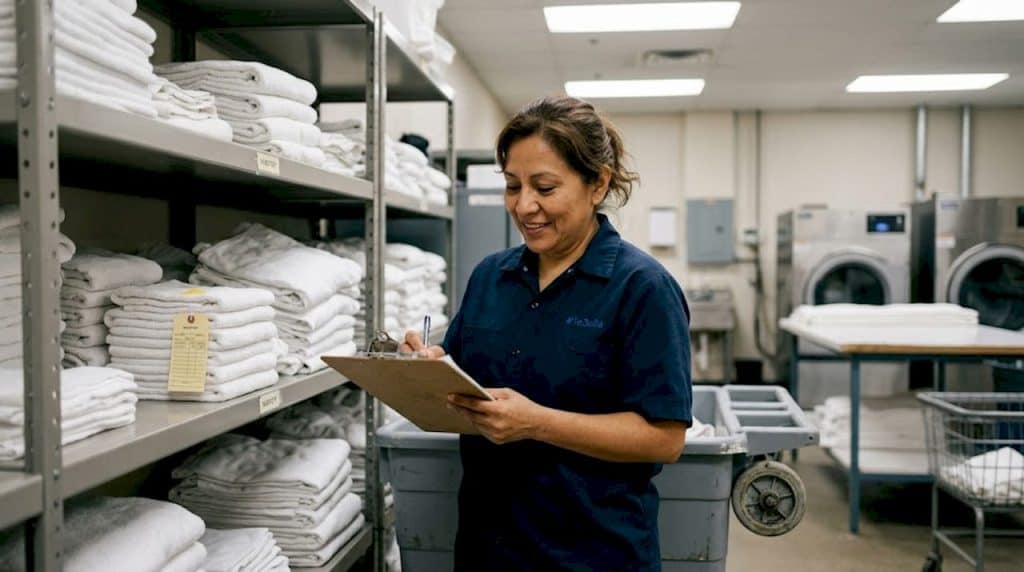
Before you can reduce textile costs, you need to know exactly where the money is going. Many managers have a rough sense of their annual linen budget, but few have a clear picture of the full cost picture, which includes purchase price, industrial laundry cycles, repair, and replacement. Start by pulling together twelve months of invoices across all three categories. Add in staff time spent sorting, counting, and redistributing linens. The real number is almost always higher than the line item on your procurement spreadsheet.
According to hospitality industry data, luxury hotels lose $50,000 annually to textile losses through a combination of labor costs and item replacement. For a mid-tier Balkan property, the figure is lower but proportionally just as damaging. Losses typically come from four sources:
- Shrinkage during washing: Incorrect temperature settings and overloading machines accelerate fabric degradation.
- Guest misuse or removal: Towels and bathrobes are the most commonly taken items.
- Inventory errors: Items marked as “in service” that are actually lost or damaged.
- Improper storage: Moisture and pests cause silent damage that only surfaces at the next audit.
A practical starting point is a quarterly spot check. Pull a random sample of 10% of your linen inventory and compare it against your records. Note condition, location, and whether items match your par levels. Par level refers to the minimum quantity of each textile item needed to keep the property running smoothly through one full laundry cycle. If your actual count falls below par consistently, you have a structural loss problem, not just a one-time shortage.
| Textile category | Typical annual spend (100-room property) | Average annual loss rate |
|---|---|---|
| Bed sheets and pillowcases | $8,000 to $12,000 | 12 to 18% |
| Bath towels | $5,000 to $8,000 | 15 to 22% |
| Restaurant tablecloths and napkins | $3,000 to $5,000 | 10 to 14% |
| Staff uniforms | $2,500 to $4,000 | 8 to 12% |
Once you have your baseline numbers, review your textile procurement guide to identify whether your current purchasing decisions are aligned with your actual usage patterns.
Pro Tip: Prioritize tracking for high-loss items first. Towels and fitted sheets consistently show the highest shrinkage and removal rates. Getting those two categories under control typically recovers 60 to 70% of total textile losses.
Once you know the magnitude of textile waste, it is time to find smart reductions.
Leveraging technology to monitor and control textile losses
RFID (Radio Frequency Identification) technology has moved from a niche innovation to a practical tool for mid-size hospitality operations. Each linen item gets a small washable tag. Readers placed at laundry entry points, storage areas, and room service carts scan items automatically, giving you a real-time count without manual sorting. The system flags items that leave the building or go missing between cycles.
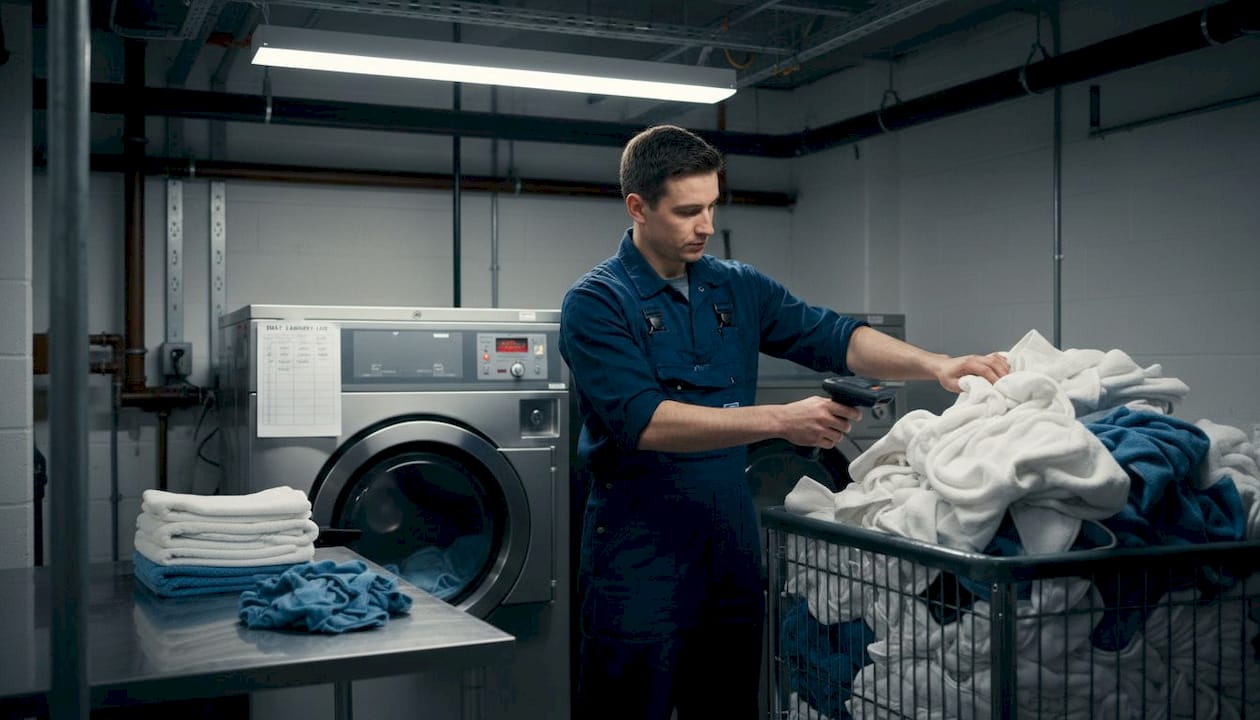
The results are measurable. Hotels that implement RFID tracking reduce linen losses by 20 to 50%, improve inventory accuracy to 95 to 99%, and cut replacement costs by 15 to 20%. One well-documented case involved a Marriott property that brought its loss rate down to 2%, saving $180,000 per year. That is not a marginal improvement. That is a structural change in operating costs.
| System type | Inventory accuracy | Labor required | Loss reduction |
|---|---|---|---|
| Manual counting | 70 to 80% | High | Minimal |
| Barcode scanning | 85 to 90% | Moderate | 10 to 15% |
| RFID tracking | 95 to 99% | Low | 20 to 50% |
Implementing RFID does not require a full-property overhaul from day one. A phased approach works well:
- Audit your highest-turnover areas first, typically housekeeping and laundry intake.
- Tag a pilot batch of 500 to 1,000 items in one category, such as bath towels.
- Install two or three readers at key transition points: laundry intake, storage room, and floor carts.
- Run the pilot for 60 days and measure loss rates against your pre-RFID baseline.
- Scale based on results, expanding to bed linens and restaurant textiles in subsequent phases.
Review your maintenance workflow tips to ensure your laundry and storage processes are ready to support a tracking system before you invest in hardware. Aligning your distribution workflow with the new data outputs is equally important for getting full value from the technology.
Pro Tip: Start your RFID pilot with towels, not bed sheets. Towels move faster, get lost more often, and give you cleaner data in a shorter time frame. A 60-day towel pilot will tell you more than a 6-month full-property rollout.
With tech in place to curb losses, optimizing daily textile usage drives further savings.
Optimizing in-house textile processes and staff engagement
Technology solves part of the problem. People solve the rest. Staff handling practices, laundry scheduling decisions, and guest communication programs together account for a substantial share of avoidable textile costs. The good news is that process improvements cost very little to implement.
Laundry is the most underestimated cost center in hotel textile management. Laundry costs $6.50 per occupied room per night on average. For a 200-room property running at 70% occupancy, that adds up to over $330,000 per year. Guest linen reuse programs, where guests are invited to reuse towels and sheets for stays of two or more nights, can cut laundry loads by 17%, saving approximately $260,000 per year for a property of that size.
Beyond reuse programs, three staff engagement tactics produce consistent results:
- Assign a textile champion per floor or department. This person is responsible for daily linen counts, flagging damaged items before they complete another wash cycle, and reporting discrepancies. Accountability at the floor level catches problems before they compound.
- Train housekeeping on proper folding and storage. Incorrect folding creates pressure points that weaken fabric over time, shortening the usable life of each item. A 30-minute training session can extend average linen life by several wash cycles.
- Schedule laundry runs based on actual demand, not fixed daily cycles. Running half-empty machines wastes water, energy, and chemical costs. Batch laundry by occupancy forecast and reduce unnecessary cycles during low-occupancy periods.
A 200-room hotel that introduced a guest reuse program, assigned floor-level textile champions, and shifted to demand-based laundry scheduling reported a combined annual saving equivalent to replacing its entire towel inventory twice over, without purchasing a single additional item.
For guidance on selecting textiles that hold up better across high-frequency wash cycles, review these expert textile selection tips before your next procurement cycle.
Pro Tip: Pair your reuse program with a small in-room card that explains the environmental and cost benefit. Guests respond better when they understand the reason, and participation rates climb noticeably.
Alongside refining internal operations, smart supplier choices further amplify savings.
Sourcing strategies: balancing cost, quality, and logistics in the Balkans
Where you buy matters as much as what you buy. The Balkan hospitality market is under real pricing pressure. Room rates in Albania and neighboring markets have faced compression as tourism volumes grow and competition increases. That pressure flows directly into procurement budgets, making supplier selection a strategic decision rather than a routine purchase order.
Cost pressure from tourism shifts is increasing reliance on local and nearby suppliers like those in Albania and Turkey, which offer lower logistics costs and better flexibility than distant imports from China or South Asia. The math is straightforward: a shipment from China may carry a lower unit price, but 8 to 12 weeks of lead time, import duties, and minimum order quantities of 5,000 units or more can erode that advantage quickly.
| Supplier region | Lead time | Minimum order | Logistics cost | Flexibility |
|---|---|---|---|---|
| Albania (local) | 3 to 7 days | Low | Very low | High |
| Turkey | 7 to 14 days | Moderate | Low | Moderate |
| China | 8 to 12 weeks | High | Moderate to high | Low |
| India or Pakistan | 6 to 10 weeks | High | Moderate to high | Low |
When evaluating a regional supplier, demand clarity on these points:
- Minimum order quantities that match your actual usage, not the supplier’s preferred volume.
- Sample availability before committing to a full order, particularly for new product categories.
- Documented quality standards, including thread count, wash resistance, and shrinkage tolerances.
- Flexible contract terms that allow order adjustments based on seasonal occupancy shifts.
- Local or regional warehousing that supports fast replenishment without large safety stock requirements.
Explore the full range of Balkans textile solutions available to regional operators, and review the operational case for bulk textile imports when your volume justifies the investment.
Now that strategic sourcing rounds out your cost reduction toolkit, let us reflect on applying these insights sustainably.
The surprising truth: it’s not just about cheaper textiles
After working with hospitality operators across Albania and the region for over 30 years, we have seen a consistent pattern. Hotels that focus exclusively on finding the lowest unit price for linens almost always spend more in the long run. Cheap textiles wear out faster, require more frequent replacement, and often fail to meet the durability standards that industrial laundry cycles demand. The savings on the purchase order disappear within two seasons.
The properties that genuinely reduce textile costs do three things differently. They invest in staff training and process discipline. They use technology to create visibility into where items go. And they build long-term relationships with suppliers who understand their operational rhythm and can respond quickly when needs change.
One composite example from a mid-size Balkan resort illustrates this well. The property switched to a slightly higher-grade towel with better abrasion resistance (rezistence ndaj ferkimit), extended its average towel lifespan by 40%, and reduced annual replacement orders by nearly a third. The per-unit cost was 15% higher. The total annual spend dropped by 22%. That is the counterintuitive reality of textile procurement.
Investing in the right quality, paired with the right process, delivers higher returns than chasing the cheapest price available.
Building those visual impact strategies into your procurement thinking also pays dividends in guest perception, which ultimately protects your rate positioning.
Pro Tip: Develop a preferred supplier relationship with one or two regional partners who know your property’s needs. Responsive local suppliers can adjust orders, expedite shipments, and advise on product upgrades in ways that distant importers simply cannot match.
Unlock textile savings with local expertise
The strategies in this guide, from loss auditing and RFID adoption to process optimization and regional sourcing, are not theoretical. They are the same approaches that well-run hospitality operations across Albania and the Balkans use to keep textile costs under control without sacrificing guest experience.

Gjergji H Tekstil has supported hotel textile wholesale operations since 1994, supplying properties from boutique resorts to international brands like Marriott and Sheraton. Whether you need custom textile solutions tailored to your property’s specifications or want to work through a structured procurement manager’s guide to identify your next savings opportunity, we are ready to be a practical partner in your cost reduction efforts.
Frequently asked questions
What is the largest source of textile cost for hotels?
Textile losses and excessive laundry are the top cost drivers, with linen losses alone reaching up to $50,000 each year in luxury hotels. For most properties, combining loss prevention with laundry optimization delivers the fastest return.
How does RFID help reduce hotel textile costs?
RFID tracking cuts losses by 20 to 50% and reduces replacement costs by up to 20% by improving inventory accuracy and preventing shrinkage at every stage of the linen cycle.
Do towel and linen reuse programs really save money?
Yes. These programs can cut laundry loads by 17% and save up to $260,000 per year for a typical 200-room hotel, making them one of the highest-return, lowest-cost initiatives available to hotel managers.
Are local or international textile suppliers more cost-effective for Balkan hotels?
Local and regional suppliers in Albania and Turkey are now favored because cost pressure favors nearby sourcing over distant imports, offering better logistics flexibility, shorter lead times, and lower minimum order requirements than suppliers in China or South Asia.