

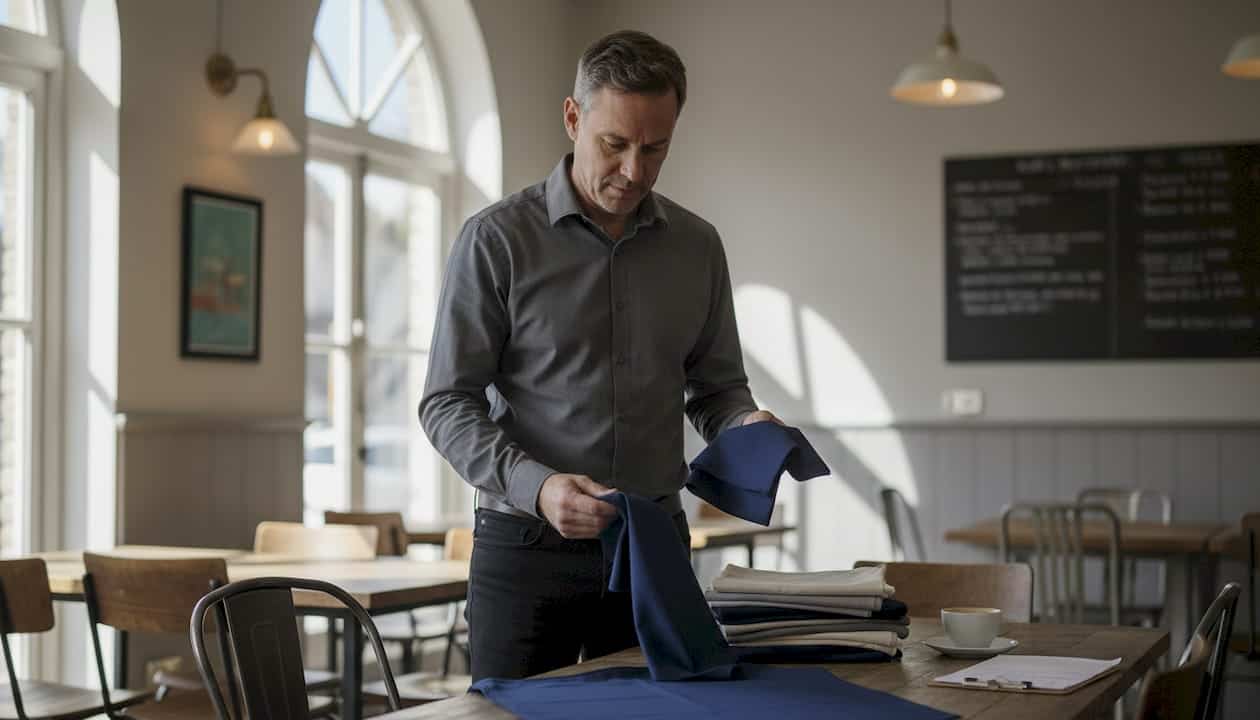
TL;DR:
- Choosing durable textiles based on material, washability, and lifecycle costs saves money long-term.
- Polyester and blends are practical for high-volume settings; cotton offers better guest feel but requires more care.
- Reliable suppliers and testing for shrinkage and color stability prevent costly operational issues.
The wrong tablecloth can quietly cost you more than you think. A fabric that looks presentable on day one but shreds after thirty wash cycles forces frequent replacements, inflates laundry costs, and sends subtle signals to guests that your operation cuts corners. For hospitality businesses in Albania and across the region, restaurant textile selection is a genuine operational decision, not a styling choice. The right textiles protect your brand, support your service team, and reduce long-term costs. This guide walks you through the key evaluation criteria, the major textile types, and a practical framework for matching the right fabric to every setting in your operation.
Table of Contents
- How to evaluate restaurant textiles: Criteria for success
- Major restaurant textile types and their best uses
- Comparing textile types: Performance and cost overview
- Situational recommendations: The right textile for every setting
- What most overlook when choosing restaurant textiles
- Wholesale and expert solutions for restaurant textiles
- Frequently asked questions
Key Takeaways
| Point | Details |
|---|---|
| Match textile to purpose | Different hospitality settings require specialized types and materials for cost-effectiveness and guest satisfaction. |
| Prioritize durability | Choose textiles that withstand frequent washing and heavy use to minimize long-term costs. |
| Mind maintenance routines | Proper care, like avoiding bleach on polyester and prompt folding, extends textile life and preserves appearance. |
| Don’t overlook guest perception | The feel and look of textiles directly affect guest impressions and reviews. |
How to evaluate restaurant textiles: Criteria for success
With the importance of textiles clearly established, the next step is understanding what separates a smart purchase from a costly mistake. Every textile decision in a restaurant or hotel dining environment should be measured against a consistent set of criteria before any order is placed.
Material composition is the starting point. The fiber content of a textile determines almost everything else, including how it performs under industrial washing, how it feels to a guest, and how long it holds its shape and color. A fabric that looks excellent in a showroom but loses its integrity after repeated high-temperature cycles is not a good investment for a high-volume operation.
Durability under repeated laundering is arguably the most critical factor for any restaurant buyer. Unlike domestic use, hospitality textiles go through dozens or even hundreds of wash cycles per year. A tablecloth used in a busy restaurant may be washed three to five times per week. Over a single year, that translates to over 150 wash cycles. A textile that cannot handle that load will deteriorate fast, and the cost of replacement adds up quickly.
Ease of care directly affects your labor and operational costs. Textiles that require ironing after every wash cycle add significant time and energy cost to your laundry operation. Wrinkle-resistant fabrics or materials that can be folded warm to avoid creasing reduce that burden considerably.
Cost per use, not cost per unit, is the correct way to evaluate price. A cheaper tablecloth that needs replacing every six months is more expensive over three years than a premium option that holds up for two years or longer. This lifecycle cost perspective is something experienced procurement managers apply consistently.
Restaurant textile types include tablecloths, napkins, upholstery fabrics, uniforms, kitchen towels, and hotel towels, and each category has its own performance demands. For textile selection tips specific to dining environments, the criteria above must be applied per use-case rather than across the board.
Guest impact should also factor into your evaluation. The tactile experience of a soft, well-maintained napkin or a crisp tablecloth contributes directly to perceived quality. Guests may not articulate it, but they notice when linens feel rough, smell stale, or look faded.
Pro Tip: When budgeting for textiles, always calculate cost per wash cycle rather than cost per unit. A textile that costs 20% more upfront but lasts twice as long delivers significantly better value over its operational lifetime. For structured guidance on hospitality textile procurement, this lifecycle lens is the foundation of smart purchasing.
Key criteria at a glance:
- Material composition and fiber quality
- Durability across high-frequency wash cycles
- Ease of care and ironing requirements
- Lifecycle cost versus upfront price
- Guest-perceived tactile and visual quality
- Compatibility with your existing laundry equipment
Major restaurant textile types and their best uses
Once you know what to look for, breaking down the most important restaurant textile types by their core features and best uses makes the selection process much more manageable.
Tablecloths are the visual anchor of any dining table and are typically made from spun polyester, cotton, or a polyester-cotton blend. Tablecloths and napkins from spun polyester hold their shape well and resist wrinkling, making them ideal for high-turnover casual and mid-range dining. Cotton tablecloths offer a richer, softer feel that suits fine dining environments, but they require more careful laundering and tend to wrinkle more easily. Blended options often strike a balance between appearance and durability.
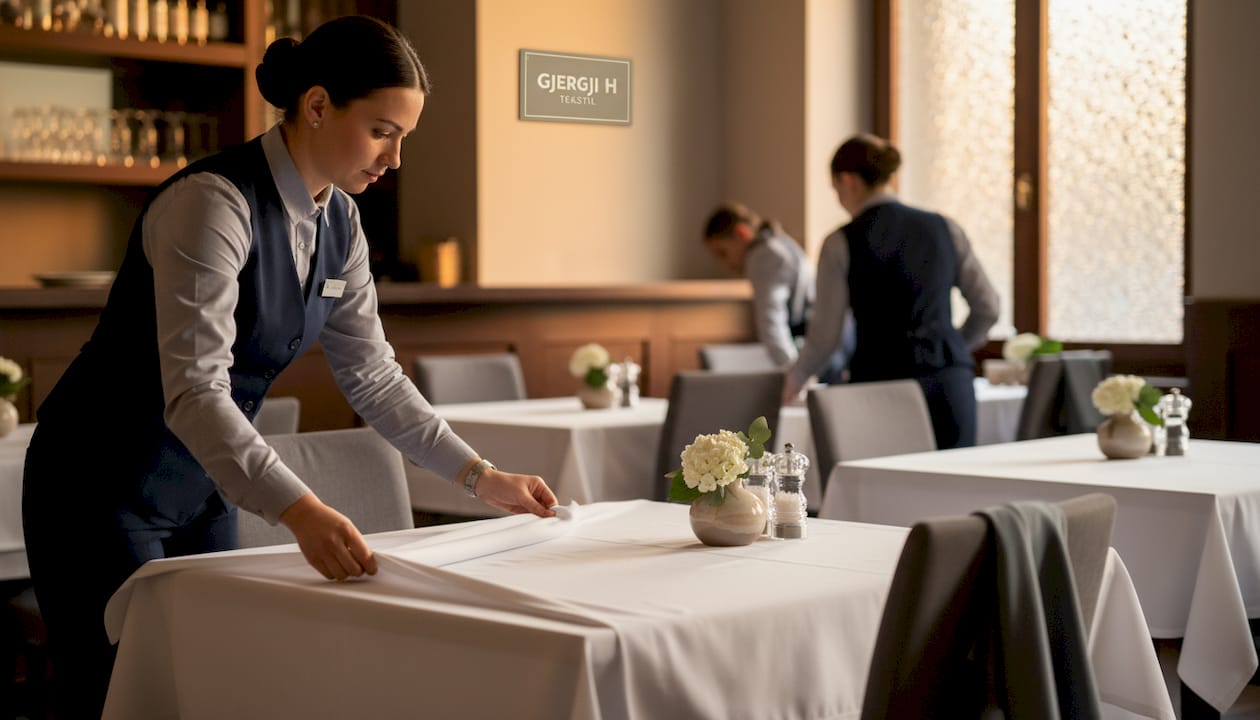
Napkins follow similar material logic. Spun polyester napkins are particularly practical for restaurants because they tolerate frequent washing without significant shrinkage or color degradation. Cotton napkins deliver a premium tactile experience that guests in upscale dining settings expect. For most volume-driven operations, polyester or a poly-cotton blend is the operationally sound choice.
Upholstery fabrics cover seats, booths, and decorative panels. They must resist friction (abrasion resistance), staining, and fading under regular cleaning. Synthetic blends and treated fabrics with protective coatings are common in hospitality seating because they can be wiped clean and maintain their appearance far longer than untreated natural fabrics. Explore the full range of restaurant textile varieties to understand which upholstery materials suit your specific seating setup.
Uniforms and workwear serve a functional and brand identity role. They should be durable, comfortable during long shifts, and easy to clean. Polyester-cotton blends are standard for kitchen and service staff because they handle heat, movement, and repeated washing well. Fabric weight and breathability matter significantly in kitchen environments where staff operate under high heat.
Kitchen towels are a back-of-house essential. Kitchen towels from 100% cotton flour sack fabric are the preferred choice in professional kitchens due to their high absorbency, quick-drying properties, and ability to withstand frequent high-temperature washing. They also lint less than terry cloth alternatives, which matters when handling glassware or plating dishes.
Hotel and restaurant guest towels require softness, absorbency, and color stability. Terry-weave cotton is the standard, and the weight of the towel (measured in grams per square meter, or GSM) determines how plush and durable it will be. For more details on sourcing the right options, the hotel and kitchen towels range covers the key specifications.
| Textile type | Recommended material | Best setting |
|---|---|---|
| Tablecloths | Spun polyester, cotton blend | Casual to formal dining |
| Napkins | Spun polyester | High-volume restaurants |
| Upholstery | Synthetic treated fabric | Booths, seating areas |
| Uniforms | Poly-cotton blend | Kitchen and service staff |
| Kitchen towels | 100% cotton flour sack | Back-of-house |
| Guest towels | Terry cotton (high GSM) | Hotels, restrooms |
Pro Tip: Standardize your tablecloth and napkin colors around two or three core shades. This simplifies inventory management, reduces sorting time in the laundry, and makes reordering faster. White and ivory are the most operationally flexible choices because they can be bleached safely and match any décor. Review your tablecloth options and restaurant napkins to identify which colors and sizes align with your service style.
Comparing textile types: Performance and cost overview
With individual textile types explained, a side-by-side comparison makes strengths and weaknesses instantly visible and helps you weigh tradeoffs based on your operational reality.
Cotton is valued for its softness and breathability. It absorbs moisture quickly, which benefits both guest towels and kitchen towels. However, cotton shrinks more than synthetics, tends to wrinkle under normal wash-and-dry cycles, and requires more careful temperature management to avoid fabric degradation over time. It also tends to cost more per unit than comparable polyester options.
Polyester and spun polyester are operationally efficient. They resist wrinkles, retain color well across many wash cycles, and are generally less expensive per unit than comparable cotton goods. The main tradeoff is tactile: polyester feels less natural against the skin, which can affect guest perception in upscale environments. A critical care note is that chlorine bleach yellows polyester fibers and should be avoided entirely. For food stains, an enzyme presoak is the recommended approach before the regular wash cycle.
Poly-cotton blends capture benefits from both materials. They are softer than pure polyester but more durable and wrinkle-resistant than pure cotton. They are a strong default choice for uniforms and napkins where both performance and appearance matter.
Here is a direct comparison of the main material types:
| Material | Durability | Ease of care | Cost | Guest feel |
|---|---|---|---|---|
| 100% cotton | Moderate | Requires ironing | Higher | Excellent |
| Spun polyester | High | Low, no ironing needed | Lower | Good |
| Poly-cotton blend | High | Moderate | Moderate | Very good |
| Terry cotton (towels) | High | Easy | Moderate to high | Excellent |
Key tradeoffs to keep in mind:
- Cotton offers superior feel but higher maintenance and cost
- Polyester delivers durability and low maintenance at a lower price point
- Blends balance both factors and are versatile across use-cases
- Terry cotton is non-negotiable for towels where absorbency is the primary function
For a detailed look at how pricing varies by textile category and volume, the hotel textile pricing section provides a practical reference for larger-scale operations. Pricing in high-volume procurement shifts considerably when you factor in order size, material spec, and supplier reliability.
Situational recommendations: The right textile for every setting
Now that the attributes of each textile are clear, applying them to real-world hospitality scenarios clarifies your purchasing decisions at the operational level.
-
Formal dining environments demand cotton or high-quality cotton-blend tablecloths and napkins. The tactile quality of natural fiber against a guest’s skin at a fine dining table is part of the experience. Accept the higher maintenance cost as a brand investment. Ensure your laundry team is trained to handle cotton properly, including correct wash temperatures and pressing procedures.
-
Casual and mid-range restaurants are the ideal use-case for spun polyester table linens. Volume is high, turnover is fast, and the operational savings from reduced ironing time are significant. Spun polyester napkins are ideal for restaurants because they require no ironing if folded while still warm from the dryer, which is a practical advantage that adds up quickly across hundreds of covers per week.
-
Event and banquet settings require flexibility. Large tablecloths, runners, and chair covers must be available in volume and stored efficiently. Polyester is the smart choice here because it resists creasing during storage and can be deployed quickly without pressing. Consistent color matching across large quantities matters more in event settings than in everyday dining.
-
Kitchen and back-of-house environments call for 100% cotton flour sack kitchen towels and durable poly-cotton uniforms. The kitchen is not a guest-facing environment, so aesthetics matter less than performance, absorbency, and heat resistance. Replace kitchen towels on a fixed schedule rather than waiting for visible wear.
-
Outdoor dining and terrace settings introduce additional demands: UV resistance, moisture resistance, and faster drying. Treated polyester or outdoor-specific fabric blends are the appropriate choice. Avoid standard cotton in outdoor settings where humidity and sun exposure will degrade the fabric significantly faster.
“The biggest textile mistake in restaurants is optimizing for the purchase price rather than the total operational cost. A textile that lasts 200 wash cycles instead of 80 cuts your replacement frequency by more than half, and the savings compound every season.”
Pro Tip: Map your textile needs against your laundry workflow before placing any order. If your operation washes linens daily, prioritize textiles with fast-dry and no-iron properties. If you outsource laundry, check that your supplier’s equipment is compatible with the fabrics you select. Reviewing a structured textile maintenance workflow before finalizing your procurement plan can prevent costly mismatches. For formal quality verification, fabric testing for restaurants gives you the tools to validate textile specs against your actual operating conditions.
What most overlook when choosing restaurant textiles
Most textile selection guides stop at material specs and price tables. After more than thirty years of supplying hospitality businesses across Albania and the region, we have observed a consistent pattern: the decisions that hurt operators most are not the obvious ones.
Shrinkage over time is a genuine operational problem that rarely appears in product descriptions. A tablecloth that fits your table correctly on arrival but shrinks by five percent after twenty washes creates a visible, unprofessional result. Ask for tested shrinkage data before committing to any order.
Color loss is equally damaging. Faded napkins and tablecloths signal wear and neglect to guests even when the fabric itself is structurally intact. The frequency and chemistry of your laundering routine must be matched to the dye stability of your chosen fabric. This is especially true for darker-colored linens.
Guest reviews increasingly reference the feel of linens, not just the visual appearance. A scratchy towel or a stiff napkin creates a negative tactile memory that guests describe in reviews. This matters more now than it did a decade ago. Textile feel is a legitimate quality signal.
Finally, supply reliability is an underweighted factor. Getting the right fabric once is not enough. If your supplier cannot consistently deliver the same spec at the same quality over multiple orders, your inventory will drift into inconsistency. Partner with suppliers who control their complete textile solutions from source to delivery. Reliability is not a luxury in hospitality supply chains. It is a baseline requirement.
Wholesale and expert solutions for restaurant textiles
For those ready to implement smarter textile choices, specialized support makes the process faster and more cost-effective.
Gjergji H Tekstil has been supplying hotels, restaurants, and event companies across Albania and the region since 1994. With full supply chain control from import to distribution, the company delivers consistent quality at wholesale pricing, backed by over thirty years of operational experience with hospitality clients. Whether you need bulk quantities of restaurant textile sourcing, custom-spec solutions for hotel textile experts, or a structured approach for events through the event textile checklist, the team is equipped to advise on fabric selection, volume pricing, and long-term supply planning. Contact us directly to request a catalog or a tailored quote for your operation.
Frequently asked questions
What fabric is best for restaurant napkins?
Spun polyester is the top choice for most restaurants because of its durability, color retention, and no-iron finish if folded warm, which saves significant laundry labor over time.
How should restaurants clean and maintain their textiles?
Use an enzyme presoak for food stains before the main wash cycle, and avoid chlorine bleach on polyester as it yellows the fibers and shortens fabric life.
Are 100% cotton kitchen towels better for restaurants?
Yes, 100% cotton flour sack kitchen towels are the professional standard because they absorb quickly, dry fast, and withstand the high-temperature washing that commercial kitchens require.
What restaurant textiles require the least maintenance?
Spun polyester table linens are the lowest-maintenance option available. They resist wrinkles and need no ironing when removed from the dryer and folded while still warm, making them ideal for high-volume operations.