

TL;DR:
- Hospitality textiles impact guest experience, operational efficiency, and brand reputation.
- Durable, easy-maintenance fabrics like blends offer the best long-term value.
- Expert guidance is essential for selecting textiles that align with guest expectations and operational needs.
The textiles you choose for your hotel or restaurant do more than fill a room. They set the tone for every guest interaction, from the moment someone touches a pillow to the second they unfold a table napkin. For B2B decision-makers at large hotels and premium dining venues in Albania, this choice carries real operational weight. Get it right, and you reduce costs, build loyalty, and protect your brand reputation. Get it wrong, and you face frequent replacements, guest complaints, and a visual identity that falls short of your standards. This guide walks you through the key criteria, fabric options, and decision frameworks that experienced hospitality operators rely on.
Table of Contents
- Understand key selection criteria for hospitality textiles
- Top fabric types and their pros and cons for hotels and restaurants
- Comparison table: Best textile options for key hospitality uses
- Smart textile decisions: Matching products to guest experience goals
- Our perspective: Why textile choices define hospitality success in Albania
- Upgrade your hotel or restaurant textiles with expert partners
- Frequently asked questions
Key Takeaways
| Point | Details |
|---|---|
| Prioritize durability | Select textiles built to withstand frequent use and laundering for long-term value. |
| Match materials to use | Choose fabrics tailored for each hospitality area, from bedding to restaurant linen. |
| Consider guest comfort | Material feel and performance directly shape the guest experience and reviews. |
| Align with brand image | Colors, patterns, and finishes should enhance your venue’s visual identity. |
Understand key selection criteria for hospitality textiles
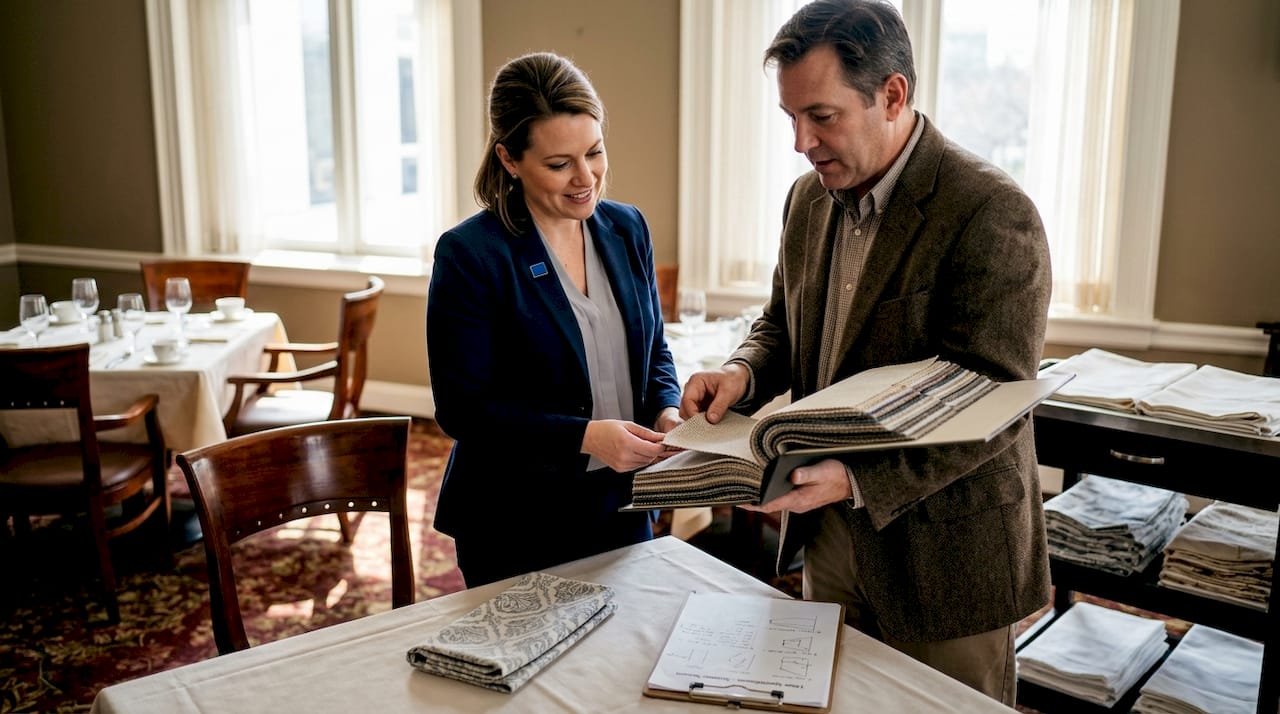
Before you evaluate a single fabric swatch, you need a clear framework. Textile decisions in hospitality are not purely aesthetic. They involve operational realities that affect your laundry cycles, your housekeeping workload, your guest reviews, and your annual procurement budget.
Here are the core criteria every decision-maker should assess:
- Durability and fabric longevity: Can the material withstand 200 or more industrial wash cycles without significant degradation? Fabrics that pill, shrink, or fade quickly drive up replacement costs.
- Visual impact and brand alignment: Does the textile reinforce your property’s positioning? A five-star hotel requires a different look and feel than a mid-scale resort.
- Guest comfort: Particularly for bedding and seating, comfort is non-negotiable. Thread count, weave type, and softness directly affect how guests rate their stay.
- Ease of maintenance: High-maintenance fabrics create operational bottlenecks. Prioritize materials that clean efficiently and dry fast.
- Total cost of ownership: A cheaper fabric that needs replacing every six months costs more than a premium option that lasts three years. The textile procurement process should always factor in lifecycle costs, not just unit price.
- Health and safety compliance: Especially for restaurant linens and hotel bedding, fabrics must meet hygiene standards and, where required, fire-retardancy regulations.
High-quality textiles increase guest satisfaction and reduce replacement costs, which is why procurement decisions deserve careful analysis rather than quick purchasing.
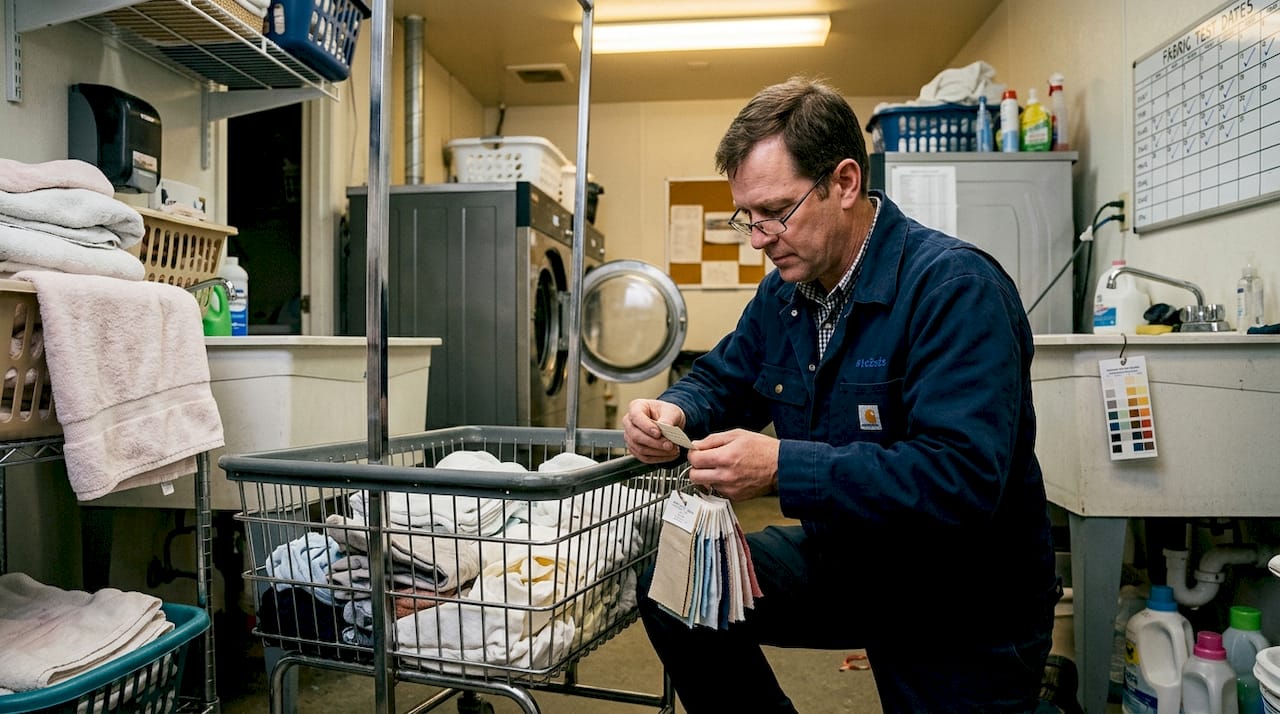
Beyond the checklist, you also need to think about quality testing protocols before bulk orders. Requesting fabric samples and running them through your actual laundry conditions gives you real data, not just manufacturer claims.
Pro Tip: Always calculate cost-per-wash rather than cost-per-unit. A fabric that costs 30% more but lasts twice as long is the smarter investment for any high-volume hospitality operation.
Top fabric types and their pros and cons for hotels and restaurants
With your criteria defined, the next step is understanding which materials actually perform in hospitality environments. Not all fabrics are created equal, and each has a specific role where it excels or falls short.
- 100% cotton: Soft, breathable, and comfortable. Guests love it. However, pure cotton wrinkles easily, shrinks under high-temperature washing, and wears faster in high-frequency laundry cycles. Best for luxury bedding where guest comfort is the top priority.
- Polyester: Highly durable, wrinkle-resistant, and cost-effective. It holds color well and dries fast. The downside is reduced breathability and a less premium feel. More suitable for budget or high-volume operations.
- Cotton-polyester blends: This is where most hospitality operators find the sweet spot. Cotton-poly blends balance luxury feel with resilience and easy laundering, making them a practical choice for both hotels and restaurants.
- Linen: Elegant, naturally antibacterial, and highly breathable. Linen is a strong choice for upscale restaurant table settings. It does wrinkle significantly and requires more careful laundering.
- Stain-resistant and performance weaves: Specialty fabrics treated with stain-resistant finishes are increasingly popular in restaurant environments. They maintain appearance through heavy service periods without requiring immediate replacement.
- Fire-retardant fabrics: Required by regulation in many hospitality settings, particularly for curtains and upholstery. Always verify compliance before purchasing.
“Investing in quality fabrics is not a cost center. It is a guest experience investment that pays back through reviews, repeat bookings, and reduced operational disruption.” This is a perspective shared consistently by experienced hospitality procurement managers across the region.
When evaluating durable hotel fabrics, look beyond the initial feel. Ask suppliers for wash-cycle test data and abrasion resistance ratings. For restaurant textile options, stain resistance and quick turnaround between service sittings should drive your decision.
Pro Tip: In high-traffic dining areas, use cotton-poly blend tablecloths and napkins. You get the visual warmth of cotton with the practical resilience of polyester, keeping your service running smoothly through multiple covers per day.
Comparison table: Best textile options for key hospitality uses
With the material qualities covered, here is a direct comparison to help you match fabric types to specific hospitality applications. This table is designed to support faster, more confident purchasing decisions.
| Use case | Top fabric types | Durability rating | Guest comfort | Maintenance | Standout feature |
|---|---|---|---|---|---|
| Bedding | 100% cotton, cotton-poly blend | High (blends), Medium (pure cotton) | Excellent | Moderate | Softness and breathability |
| Towels | Egyptian cotton, terry cotton blend | High | Excellent | Easy | Absorbency and texture |
| Table linens | Linen, cotton-poly blend | Medium to High | Good | Moderate | Visual elegance and stain resistance |
| Curtains and drapery | Polyester, fire-retardant blends | Very High | N/A | Easy | Light control and compliance |
| Upholstery | Performance weave, polyester blend | Very High | Good | Easy | Abrasion resistance and durability |
Certain materials provide superior comfort and appearance retention for hotel bedding and towels, which is why blended fabrics dominate procurement lists at well-managed properties.
For luxury venues, the priority shifts toward comfort and aesthetics. Egyptian cotton towels and high-thread-count cotton bedding signal quality to guests immediately. For high-volume properties, durability and ease of maintenance take precedence, making polyester blends the practical choice.
The visual impact of textiles on overall ambiance is often underestimated. Curtains and upholstery that fade or pill within a year undermine the entire aesthetic investment of a renovation. Selecting the right fabric for each application protects that investment over time.
For hotel textile selection, always cross-reference your supplier’s product specifications against your laundry equipment settings. Mismatched washing temperatures or spin cycles can degrade even the best fabrics prematurely.
Smart textile decisions: Matching products to guest experience goals
Knowing your fabric options is only half the work. The other half is aligning those choices with the specific experience you want to deliver and the operational model you run.
Here is a practical step-by-step approach:
- Define your guest segment clearly. A luxury urban hotel, a family beach resort, and a high-volume city restaurant each have different textile needs. Identify your primary guest profile before making any purchasing decision.
- Map textiles to touchpoints. List every point where a guest physically interacts with a textile: bedding, towels, bathrobes, table linens, napkins, curtains. Each touchpoint is an opportunity to reinforce or undermine your brand.
- Set performance benchmarks. Decide upfront how many wash cycles a fabric must survive before replacement. This becomes your minimum specification for supplier negotiations.
- Consult your supplier for customization options. Many operators overlook this step. A good supplier can advise on fabric weight, weave, and finish options that are not always listed in standard catalogs.
| Guest segment | Recommended textiles | Typical ROI impact | Notes |
|---|---|---|---|
| Luxury hotel guests | Egyptian cotton bedding, premium terry towels | High (reviews, repeat stays) | Prioritize comfort and appearance |
| Family resort guests | Cotton-poly blend bedding, durable towels | Medium to High | Focus on durability and easy maintenance |
| Premium dining guests | Linen or cotton-poly table linens | High (perceived value) | Stain resistance is critical |
| High-volume restaurant | Cotton-poly blend, stain-resistant napkins | Medium | Prioritize fast turnaround and wash efficiency |
Properties that prioritize textile quality report better guest reviews and lower replacement rates, which directly supports profitability over a multi-year horizon.
For operators looking to elevate hospitality ambiance, the data is clear: quality textiles are not a luxury expense. They are a cost-management tool. And for those who want tailored solutions, exploring custom textile solutions allows you to align every fabric choice with your specific brand standards and operational requirements.
Our perspective: Why textile choices define hospitality success in Albania
After more than 30 years supplying hotels and restaurants across Albania and the wider Balkans region, we have seen a consistent pattern. The properties that invest thoughtfully in textiles outperform those that treat fabric as a commodity purchase.
Albania’s hospitality sector is growing fast. International tourists are arriving with higher expectations, and local guests are increasingly sophisticated. In this environment, the gap between a property that feels premium and one that feels merely adequate often comes down to tactile details: how a towel feels, how a tablecloth drapes, how bedding holds up after six months of continuous use.
We have seen Albanian hotels transform their guest satisfaction scores after switching to better-specified bedding and towels. The change is not invisible to guests. It shows up in reviews, in return rates, and in word-of-mouth referrals.
Cutting corners on fabric selection creates a false economy. You save money upfront and spend more on replacements, laundry inefficiencies, and reputation repair. The smarter path is to invest in lasting comfort for guests from the start, with materials that are specified correctly for your operational context. That is not a luxury position. It is a sound business decision.
Upgrade your hotel or restaurant textiles with expert partners
Selecting the right textiles for a large hotel or premium dining venue is a decision that benefits from expert guidance, not just product browsing. Working with a knowledgeable supplier means you get advice on fabric specifications, wash-cycle performance, and customization options that are matched to your actual operational needs.
Gjergji H Tekstil has supplied hotel textile specialists and premium dining operators across Albania for over 30 years, working with brands like Marriott, Meliá, and Sheraton. Whether you need restaurant textile solutions or a complete hotel linen program, the team offers sourcing, customization, and quality textile sourcing support from import to delivery. Reach out to discuss your property’s specific requirements and find a solution that works at your scale.
Frequently asked questions
What textile qualities are most important for hotel bedding?
Durability, comfort, easy laundering, and resistance to pilling are top priorities for hotel bedding textiles. Superior comfort and appearance retention are the benchmarks that separate high-performing bedding from budget alternatives.
How can I ensure restaurant textiles remain stain-free and hygienic?
Choose fabrics treated for stain resistance and prioritize easy-wash materials for restaurant use. Cotton-poly blends balance luxury feel with resilience and easy laundering, making them a reliable choice for busy dining environments.
Is it better to buy local or import hospitality textiles in Albania?
Local suppliers offer faster response times and customization flexibility, while imports may provide broader variety and competitive pricing. Either way, high-quality textiles increase satisfaction and reduce replacement costs, so quality standards should drive the decision regardless of origin.
What fabrics provide the best ROI for premium hotels?
Blended and specialty fabrics designed for durability and guest comfort typically achieve the best ROI in luxury environments. Properties prioritizing textile quality consistently report better guest reviews and lower long-term replacement rates.